.svg)
What if, instead of creating an artwork, an artist created the rules through which an artwork could emerge?
Imagine a painter standing in front of a blank canvas. Traditionally, we might imagine the painter deciding where to place every line, every color, every shape. But what if the painter established a set of instructions instead? Draw a circle, let it move across the surface, change its direction whenever it encounters another circle, and leave a trace of every movement.
The artist would no longer determine every detail of the final composition. Instead, the artist would establish a system capable of generating it.
This is one of the fundamental ideas behind generative art, an artistic practice in which rules, processes, and systems participate in the creation of a work. And while generative art is often associated with computers, its conceptual foundations extend far beyond digital technology.
This year marks the 25th anniversary of Processing, the open-source creative coding environment developed in 2001 by artists and programmers Casey Reas and Ben Fry. To celebrate this milestone, 100 collectors welcomed Casey Reas for the first of our online Meet the Artist encounters, bringing together our members and participants of the 101 program to explore how programming became accessible as a medium for artistic expression.
The history of Processing is not simply the history of a programming tool. It is a story about artistic agency, experimentation, education, and the possibility of creating not only artworks, but the tools through which art can be made.
Before Processing: Artists and the Computer
Long before Processing existed, artists were already exploring the creative possibilities of computation.
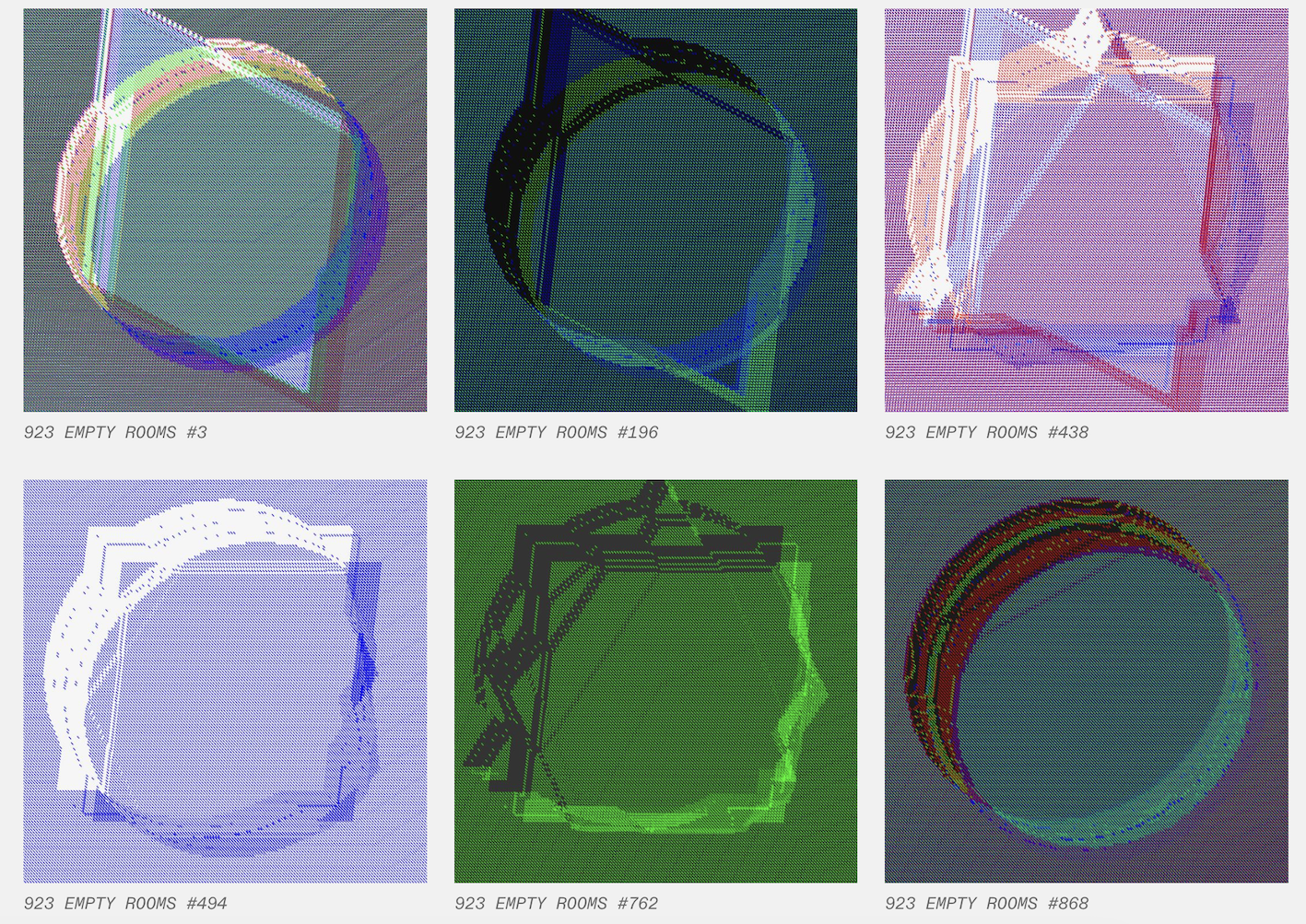
In the 1960s, pioneers such as Vera Molnár, Georg Nees, and Frieder Nake began experimenting with algorithms and computer-generated images. Working at a time when computers were expensive, technically demanding machines, often accessible primarily through universities and research institutions, they demonstrated that mathematical instructions could become the basis of visual compositions.
Early computer artworks were frequently produced using pen plotters: machines that translated programmed instructions into physical drawings on paper. The artist defined a process, and the machine executed it.
These experiments raised questions that remain central to generative art today. Where does authorship reside when an artwork is produced through a system? What is the relationship between an instruction and its execution? How much control should an artist retain over the final result?
At approximately the same time, conceptual artists were investigating similar questions through entirely different means.
Sol LeWitt, for example, developed wall drawings based on written instructions that could be executed by other people. The artwork was not necessarily identified with a single physical realization. Its conceptual structure, expressed through a set of rules, was central to its identity.
The relationship between conceptual art and computational art is particularly important to understanding Casey Reas's practice. Both explore the possibility that an artwork can exist as a system of instructions, capable of producing different realizations.
Computers, however, introduced something new: the ability to execute instructions at extraordinary speed, repeat processes, incorporate variation, and generate complex behaviors from relatively simple rules.
Over the following decades, personal computers and digital software became increasingly accessible. Artists gained new tools for producing images, animation, video, and interactive experiences.
Yet an important distinction remained between using software to create an artwork and writing the software through which the artwork would be created.
Most general-purpose programming languages and development environments had been designed primarily for engineers, computer scientists, and software developers. Artists who wanted to write their own programs often faced substantial technical barriers.
Although creative programming environments already existed, the relationship between programming education and visual artistic practice remained an area of active experimentation.
This was the context from which Processing emerged.
From MIT to Processing: Learning to Sketch with Code
The origins of Processing can be traced to a particular intellectual environment at the Massachusetts Institute of Technology.
In 1975, graphic designer Muriel Cooper helped establish the Visible Language Workshop at MIT, where experiments in typography, information design, and computation challenged conventional distinctions between graphic design and technology.
This tradition continued through John Maeda's Aesthetics and Computation Group at the MIT Media Lab, founded in 1996.
Maeda was interested in making programming accessible to designers, not simply as a technical skill, but as a way of thinking visually. His project Design By Numbers, developed with contributions from Casey Reas and Ben Fry and released in 1999, introduced programming through simple visual exercises.
The principle was straightforward: learning to program could begin with drawing a line, creating a shape, or changing a composition.
In 2001, Reas and Fry began developing Processing, extending these educational experiments into a more flexible environment.
Their ambition was not to invent computer art or generative art, both of which already had established histories. Rather, they wanted to make programming more approachable for people whose primary interests were visual and creative.
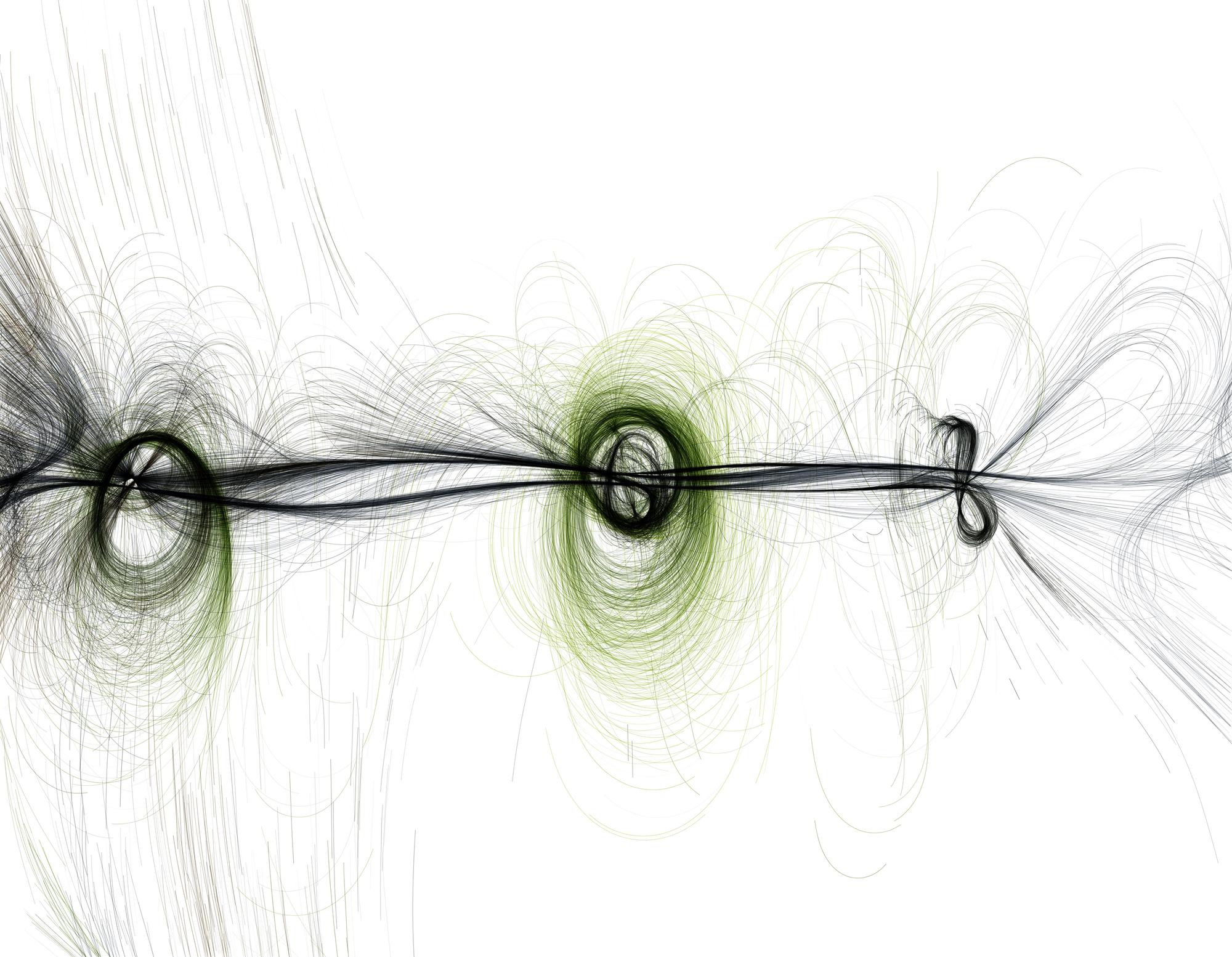
Processing was conceived as a digital sketchbook: an environment where artists could write code, immediately see the results, and experiment through continuous adjustments.
Instead of beginning with abstract technical problems, a student could begin by drawing a circle.
From there, the circle could move, change color, respond to the mouse, multiply, or interact with other elements. A simple experiment could gradually become a complex visual system.
This approach connected programming to the familiar process of artistic experimentation: making, observing, adjusting, and discovering.
Processing was built around Java, an established programming language, but provided a simplified environment for visual work. Its accessibility did not mean that it was limited to elementary exercises. Artists could begin with a few lines of code and gradually develop sophisticated animations, installations, simulations, and generative systems.
Processing helped transform programming from a specialized technical activity into an accessible form of visual experimentation.
When Instructions Become Art: The Practice of Casey Reas
Processing's history cannot be separated from Casey Reas's own artistic investigations.
Reas is an American artist and educator whose practice explores the relationship between computational systems, visual forms, and artistic authorship. His works span software, prints, drawings, video, and installations, and have been exhibited internationally at institutions including the Whitney Museum of American Art, Centre Pompidou, and San Francisco Museum of Modern Art.
One of the most important bodies of work for understanding his approach is Software Structures, which developed in dialogue with the instruction-based wall drawings of Sol LeWitt.
Rather than beginning with a predetermined image, Reas developed written descriptions of systems that could subsequently be implemented through software.
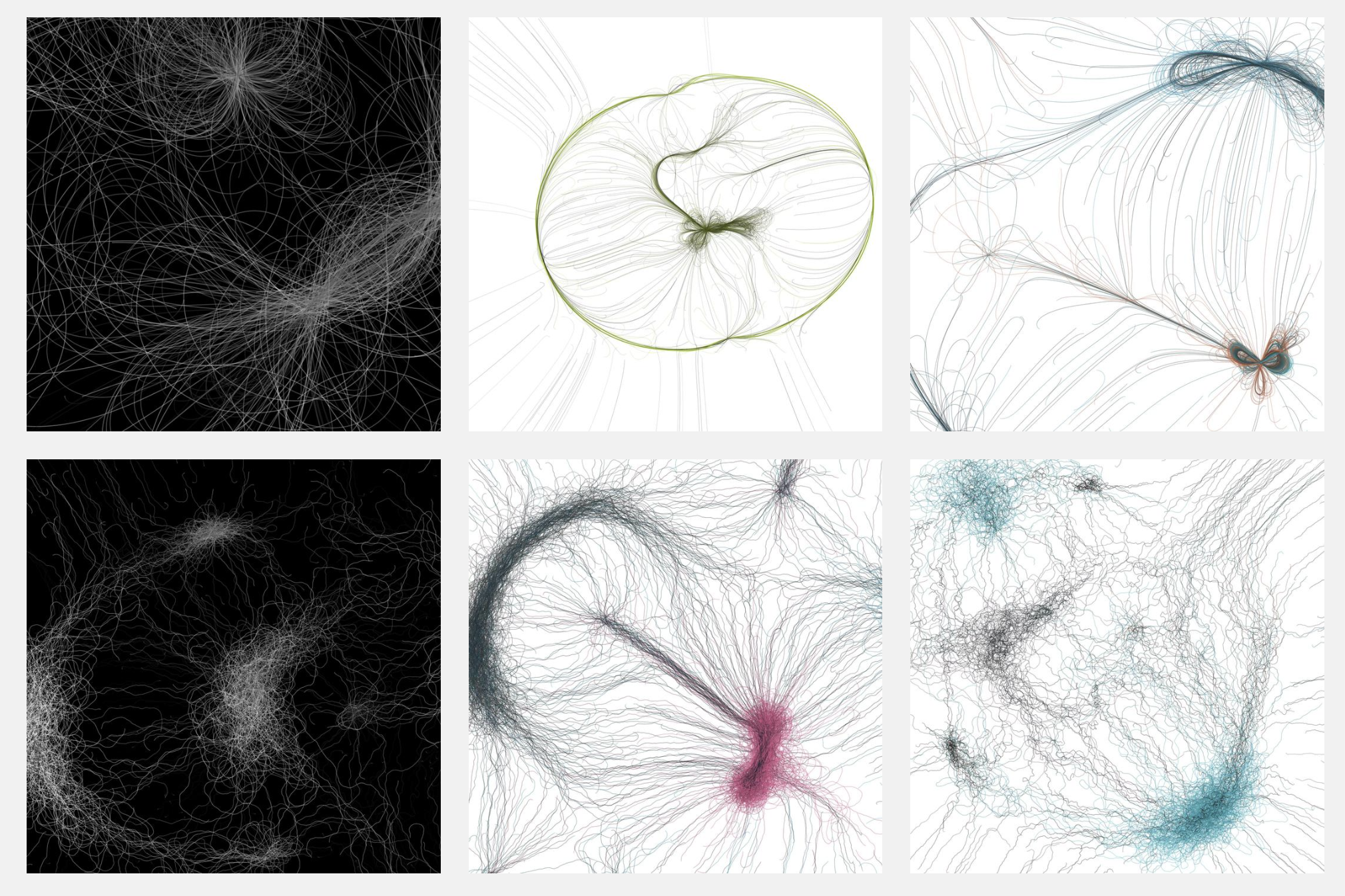
This approach became central to his Process series, in which visual forms are assigned behaviors and allowed to interact within defined environments.
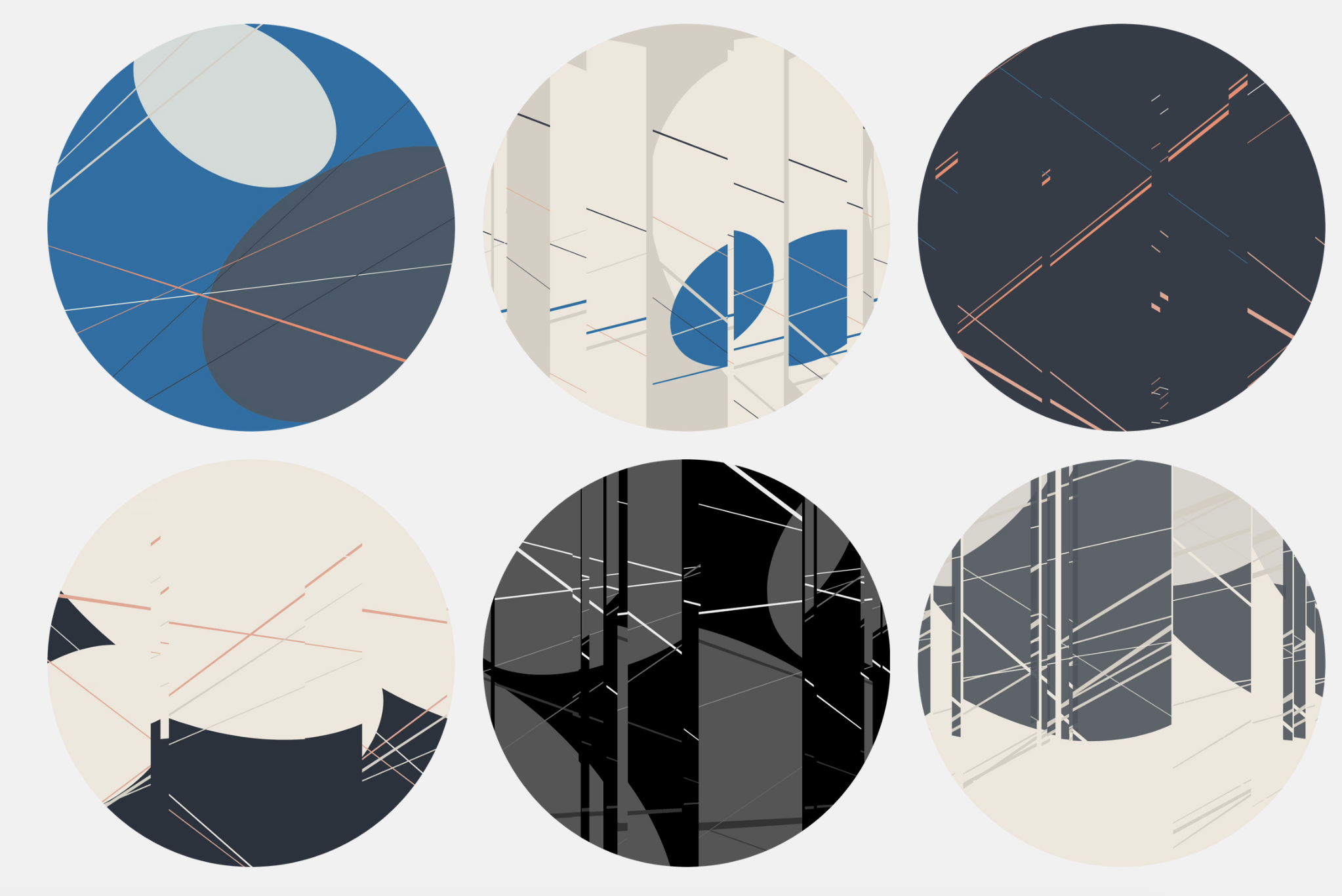
A circle, for example, might move in a straight line, change direction when encountering another element, or move away from an overlapping form. As these simple behaviors interact, increasingly complex visual compositions emerge.
The resulting images are not individually composed in the conventional sense. They are realizations of an underlying system.
This introduces a different understanding of artistic authorship.
The artist creates the rules, determines the relationships between elements, and establishes the conditions of the work. But the system participates in producing its visible form.
The distinction between the system and its individual outcomes is fundamental to generative art. A single image may represent only one possibility among many.
Reas's practice therefore connects the history of conceptual art with the particular capabilities of computation, demonstrating how software can function not merely as a tool for producing images, but as an artistic medium in itself.
Generative Art, Creative Coding, and Processing: Understanding the Difference
Although the terms are frequently used together, generative art, creative coding, and Processing describe different things.
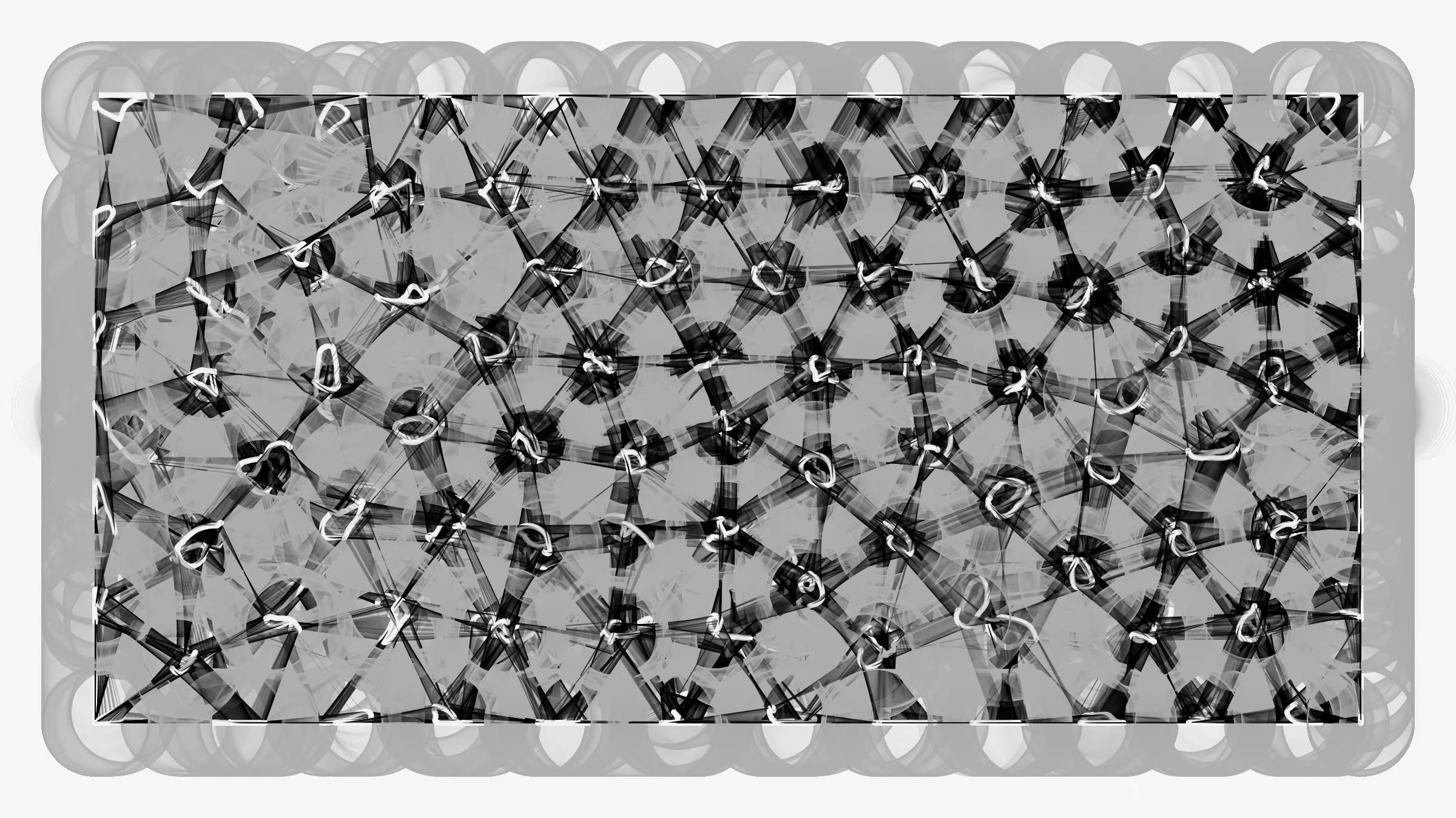
Generative art is an artistic approach. It involves creating systems, rules, or processes that contribute to producing an artwork. These systems may be computational, mechanical, physical, or even based on human participation.
Creative coding is a practice. It describes the use of programming for creative and expressive purposes, rather than exclusively for conventional software development.
Processing is a tool. It is one of the environments through which artists can engage in creative coding and produce generative artworks.
Not every artwork made with Processing is generative. The environment can also be used for animation, interactive installations, visual experimentation, and data visualization.
Likewise, generative art does not require Processing, or even a computer.
Understanding these distinctions helps place Processing within a broader artistic history rather than treating it as synonymous with generative art itself.
From Processing to p5.js: Bringing Creative Coding to the Web
Over time, Processing developed far beyond its original desktop environment.
In 2013, artist Lauren McCarthy created p5.js, a project that carried Processing's educational philosophy into the web browser.
While Processing was built around Java, p5.js uses JavaScript, a different programming language widely used for interactive websites and web applications.
The distinction is important, but the underlying artistic ambition remains closely connected.
With p5.js, artists can create visual and interactive experiences that run directly in a browser, making them easier to share, access, and integrate into online environments.
An artwork can respond to a viewer's mouse movements, keyboard input, or other forms of interaction without requiring the viewer to install a dedicated application.
p5.js also extends the idea of accessibility beyond the programming environment itself. It supports a culture of learning, experimentation, documentation, and community participation.
The project illustrates how Processing's original philosophy could evolve in response to changes in technology and the ways people create and encounter digital experiences.
From a Tool to an Institution: The Processing Foundation
As Processing grew, it became increasingly clear that maintaining an open-source creative environment required more than the work of its original creators.
In 2012, Casey Reas, Ben Fry, and Daniel Shiffman established the Processing Foundation, a nonprofit organization dedicated to supporting the development of creative coding tools and expanding access to programming education.
The Foundation supports Processing and p5.js, alongside educational resources, accessibility initiatives, community programs, and the broader ecosystem of contributors who sustain these projects.
Its existence reflects an important transformation: what began as an educational experiment became a shared cultural infrastructure.
And at the center of this evolution is the principle of open source.
Open-source software makes its underlying code available for people to inspect, modify, and redistribute according to the terms of its license.
For artists, this has important implications.
Rather than being limited to the functions provided by a proprietary software company, artists can potentially examine the tools they use, modify them, develop new possibilities, and share their contributions with others.
The creative tool itself becomes open to experimentation.
Open source also encourages a different model of knowledge production, one based on collaboration, exchange, and collective development.
But maintaining this openness presents a challenge.
Free software still requires continuous work: updating code, maintaining compatibility with new operating systems, improving accessibility, fixing problems, and supporting contributors.
As Processing celebrates its 25th anniversary, the Processing Foundation is addressing these questions through its Maintenance Fund, dedicated to supporting the long-term sustainability of Processing and p5.js.
The question is no longer simply how to make creative tools accessible, but how to ensure that they remain accessible for future generations.

Twenty-Five Years Later: Why Processing Still Matters
The significance of Processing extends beyond the software itself.
Its contribution lies in helping establish programming as something artists can learn, question, and use as part of their own creative vocabulary.
It contributed to a cultural shift in which writing code could become as integral to an artistic practice as drawing, photography, or sculpture.
And twenty-five years later, this history takes on renewed relevance.
We are now entering a period in which artificial intelligence is changing how people interact with software. Increasingly, artists can describe what they want a program to do and ask an AI system to generate the code.
This raises new questions about artistic agency and technological literacy.
If artists no longer need to write every instruction themselves, what does it mean to understand the systems through which they create? How does the relationship between an artist's intention and a system's behavior change? And how can artists retain the ability to question and shape their tools?
These questions echo some of the concerns that have accompanied generative art since its earliest experiments.
The relationship between an artist and a system has never been only technical. It is also conceptual, aesthetic, and cultural.
In this sense, Processing's original ambition remains deeply relevant: to give people the means to engage creatively with technology, rather than simply consume what technology makes available.
Twenty-five years after its creation, Processing represents more than a programming environment. It represents an enduring proposition about the relationship between art and technology.
Artists should not only have access to the tools of their time. They should have the possibility to understand them, transform them, and imagine entirely new ways of creating with them.
This article was developed on the occasion of Casey Reas's Meet the Artist presentation with 100 collectors, part of our ongoing program of encounters exploring digital art and contemporary artistic practices.
Here is the recording of the session.