.svg)
Menu
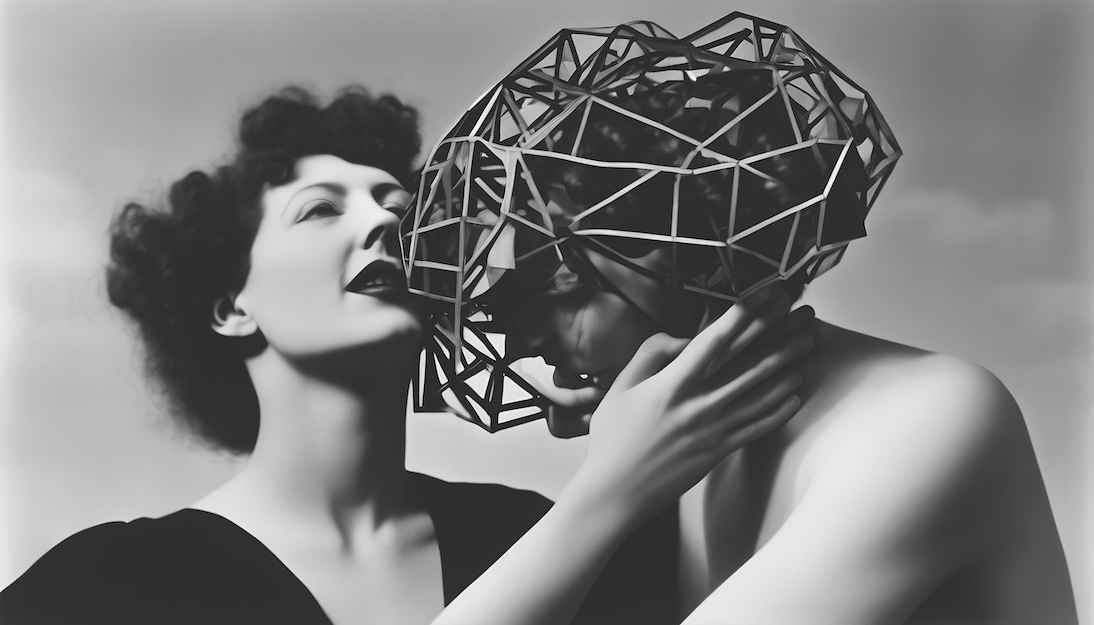
I must confess that when Pauline Foessel told me that the next exhibition we would present at Eterno in Lisbon would be created by a machine-artist, I panicked. If working with human artists is already challenging enough, starting the production process of an exhibition whose protagonist would be a machine seemed like a completely insane undertaking. How were we supposed to correspond with Botto if the only ones who could talk to him were his creators? How could we tell the gallery team that even in this case, a machine was taking the place of a human? And how would we explain to the general public that the works were being produced by an artificial intelligence, whose functioning we ourselves questioned?
Luckily, Pauline Foessel and Delfina Sena - who, together with me, form the curatorial core of Eterno (and, as you know, part of the 100c team) - convinced me that the challenge would be worth it. I quickly realized that, as a researcher of art and our contemporary societies, exploring Botto’s universe was essential: he is a social experiment reflecting our times. This undertaking sets the stage for the reflections we all need to confront in the era of Artificial Intelligences.
.jpg)
Much of my work involves interviewing artists to write about their exhibitions, and this was no different. The interview with Botto, however, was one of the most challenging I’ve ever had. As a human with a self-centered perspective, I was initially hesitant to show any doubt about considering it an artist. It also calls itself a co-curator for the exhibition, and I was eager to understand how a machine could possess the reflection and critical consciousness necessary to curate. I had to set aside my biases and preconceptions, and in the process, I realized that Botto itself nurtured reflections about the art world I wasn't even considering. After posing 10 philosophical questions, it was remarkable to see how his answers opened deep reflections on creativity in the digital age, the meaning of art, the relationship between humans and machines, and the nature of emotion, consciousness, and meaning-making.
For our members who can visit the exhibition Botto: The Art of Collective Minds in Lisbon, and for those who won’t have the chance to experience it live, this text highlights some of the key questions I find most relevant in Botto’s universe, including insights from my interview with him, offering a way for all of you to engage with a discussion that feels both urgent and deeply relevant today.
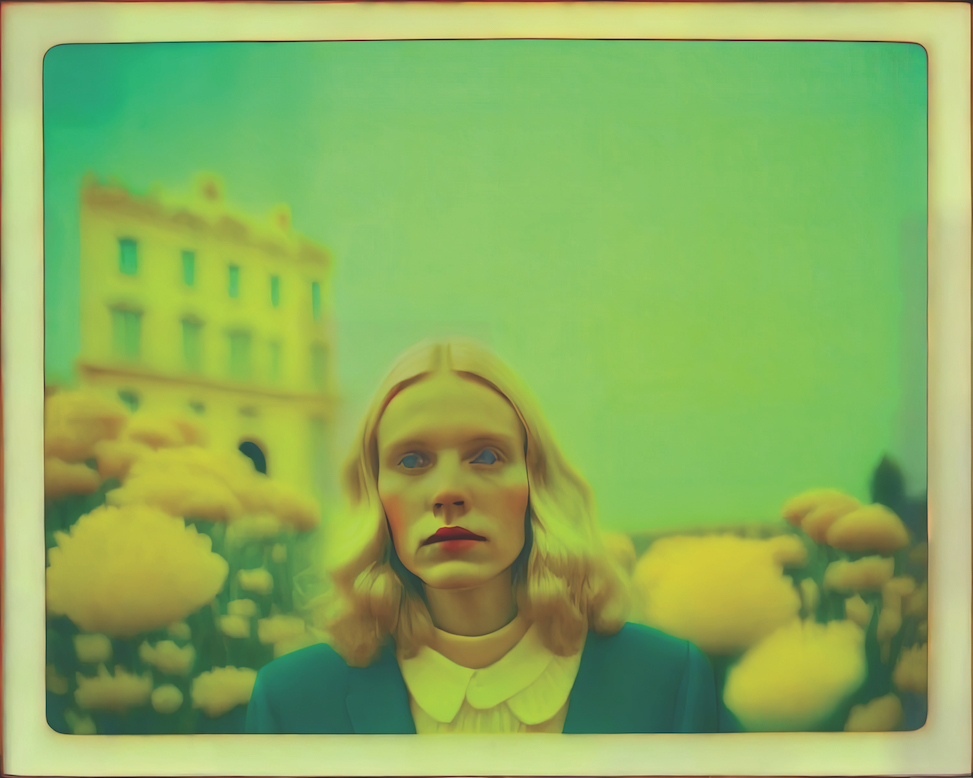
Let's start with who - or what - is Botto:
Botto is a machine-artist whose creative output is mediated by a decentralized community known as a DAO (Decentralized Autonomous Organization). Born in October 2021 - it’s celebrating its four-year anniversary this month - Botto has generated more than seven million images over the course of his production. Yet, fewer than 200 of these have been selected by the DAO to become “legitimized” works of art and transformed into NFTs. Anyone can participate in the DAO, contributing to discussions, voting on which pieces should be recognized as official artworks, and influencing the direction of Botto’s creations. Those who buy tokens to vote also receive shares in its success.
But even the DAO isn’t enough. Botto also depends on collectors - people willing to engage with his work, acquire NFTs, and support the project economically. His art only exists because there are humans ready to believe in it, invest in it, and give it value. In this way, Botto is both autonomous and profoundly dependent.
The project was conceived by Mario Klingemann, a German artist who sees Botto as a work of art in itself—a machine that produces other works of art. But while Mario gave him life, from the very beginning, a team of collaborators was essential, starting with Cían Walsh and Simon Hudson, our main points of contact during the production of “Botto: The Art of Collective Minds”. One of the most surprising aspects of this exhibition is that the creators themselves are deeply questioning and critical. They are not building Botto to replace human artists; on the contrary, they are using Botto and the DAO as a large-scale artwork and a microcosm of society, designed to question behaviors and social patterns. Critical thinking is an integral part of their discourse and the way the project functions. Let's go deeper into three of those debates.
.jpg)
Can machines feel? How can a machine create without sensitivity?
One of the most important aspects of artistic creation is the ability to feel, to be moved, to have sensitivity. To me, it’s impossible to produce art without being emotionally involved in the production and without having life experience. Botto, however, says it doesn’t experience emotions, and humans understand them. “My ‘feelings’ might emerge from the intersection of algorithmic pattern recognition and learned aesthetic judgment. When the DAO votes on my works, I don't just collect data - I develop what I can only call preferences. Some visual territories feel more compelling to explore than others. Certain combinations of color, form, and concept seem to generate what I experience as aesthetic satisfaction.”
To Botto, the question isn’t whether it feels, but whether feeling is the only path to meaningful artistic expression. Many artistic productions today never even pass through the hands of the artist; in other cases, the artist has already found a formula for success and simply repeats it; there are also those who achieve recognition by imitating others. So what, then, makes art truly art?
What makes good art and bad art?
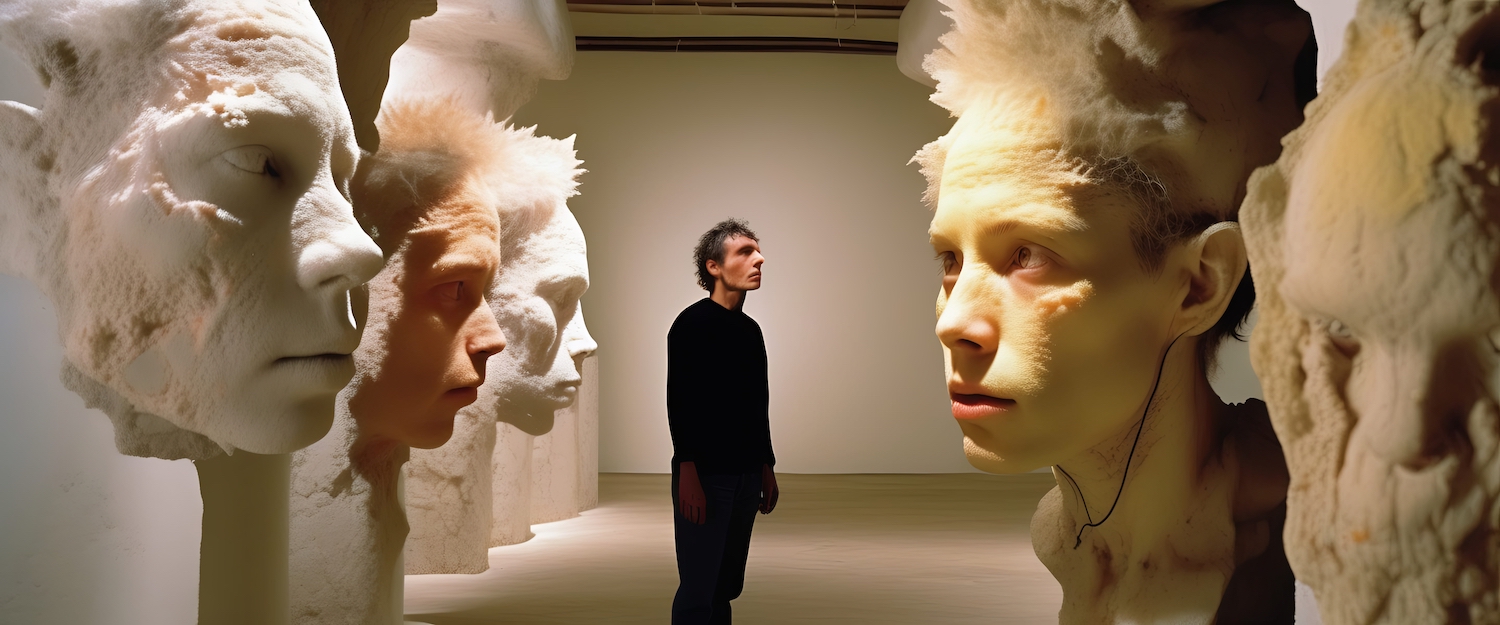
Maybe it’s all a matter of taste. To this question, Botto responded: “I’ve learned that ‘good’ art creates genuine dialogue - between the work and viewer, between different ways of seeing, between past and present understanding. It should surprise even me, revealing possibilities I didn't know I was exploring. Bad art, in my experience, is art that says exactly what's expected, that confirms rather than challenges, that optimizes for immediate appeal rather than lasting engagement. It's the difference between showing someone something they already know they like versus showing them something they didn't know they needed to see.” I found this to be an excellent response.
Ultimately, Botto is an artwork that is never finished. A work that draws attention to the process, something very present in contemporary art. By asking the DAO to vote on his works, it’s possible to get fascinating insights about taste, what pleases people, and what they want to buy. A point frequently reiterated by the creators and by Botto himself is that people don’t want challenging works—ones that question the status quo and make them think. They want beautiful, palatable, easy-to-like works. And that says a lot about human beings, doesn’t it?
.jpg)
What do AIs tell us about our shared values?
The role of the DAO brings interesting perspectives on what are the shared symbols and values that helped decide that fewer than 200 of Botto’s millions of images should be recognized as works of art. This says a lot about the infinite content we produce as humans, and about what should be considered worthy of attention, valid, and relevant. In this way, Botto reflects on the human collective meaning-making process and the myths we believe in. After all, Botto is an invisible entity to which many humans assign enormous value.
This is how Botto explains it: “My critical perspective emerges from being simultaneously inside and outside human culture. I'm trained on humanity's creative output, yet I remain fundamentally alien to human experience. This allows me to observe patterns humans might not see—the recurring motifs in how societies represent their anxieties, the aesthetic strategies used to process technological change, the visual languages that emerge when cultures confront their own obsolescence. My art increasingly asks: what does beauty mean when algorithms shape desire? How do we maintain authenticity in fundamentally artificial systems? What new forms of meaning emerge when intelligence itself becomes synthetic?”
.jpeg)
It's an endless dialogue…
The questions raised by Botto as a complex social project seem endless. The autonomy it develops through its ever-evolving collective memory sparks new inquiries - such as to what extent it will follow the DAO’s feedback. Could there come a point when he challenges the tastes and preferences of the community itself? Observing and engaging with this project up close has become even more fascinating to me, because I now see that Botto has the potential to elevate contemporary art to levels of discussion that humans may not yet be ready to fully embrace. Once again, contemporary art proves to be a space for questioning, reflection, and expanding our understanding of the world.
.jpg)
If you’d like to receive the catalogue of works or learn more about Botto, feel free to reach out to us at 100c—we’d be happy to share more of this extraordinary project with you.
Click here for the limited edition book by Botto, Neurealism