.svg)
Menu
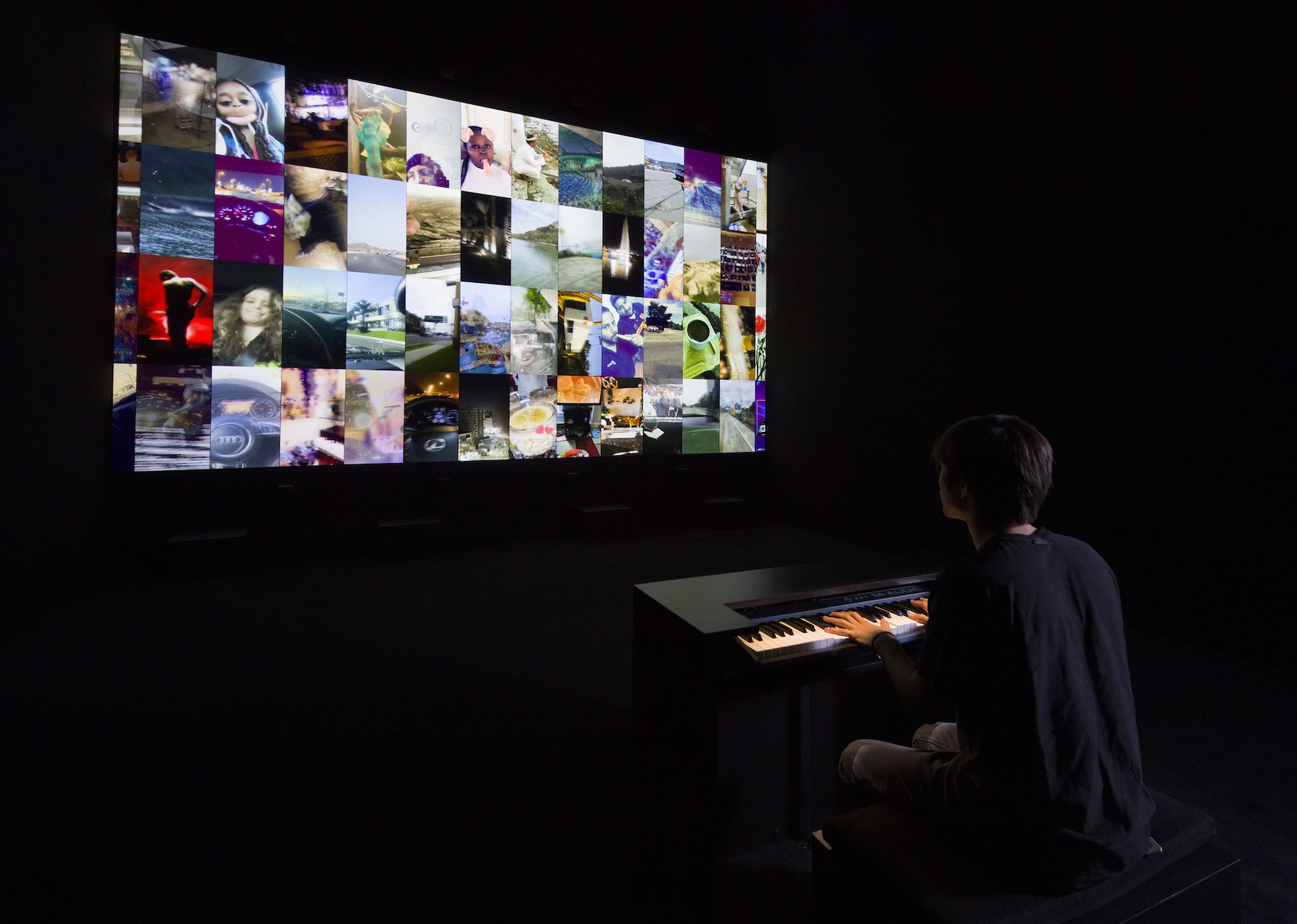
The exhibition Le monde selon l’IA at the Jeu de Paume takes as its starting point one of the most urgent questions of our time: how is artificial intelligence reshaping the ways we see, think, and imagine the world? Rather than presenting AI as a purely technical field or a futuristic novelty, the curators frame it as a cultural condition, resonating across disciplines, generations, and artistic practices.
The exhibition immediately signals its ambitions through its roster, which brings together established figures of contemporary art, including Christian Marclay, Julian Charrière, and Trevor Paglen, alongside younger experimental voices such as Sasha Stiles, Agnieszka Kurant, Lindo Dounia, and Gregory Chatonsky. This curatorial strategy highlights AI as part of a longer lineage of artistic engagement with systems, media, and perception rather than an isolated phenomenon of computer science.

At the conceptual core of the exhibition lies Anatomy of an AI System (2018) by Kate Crawford and Vladan Joler. This sprawling visual and research-based project maps the material, ecological, and human infrastructures that sustain artificial intelligence. Through meticulous diagrams and layered data visualizations, Crawford and Joler trace the journey from mineral extraction to data center operation, from the invisible labor of annotators to the corporate structures that control digital platforms. The work exposes the environmental toll of computation, the global inequalities embedded in technological supply chains, and the unseen human labor that underpins AI. Its strength lies in making tangible the invisible: by rendering the system’s complexity visible, the work challenges the common perception of AI as abstract, immaterial, or neutral.
Anatomy of an AI System operates as both educational tool and critical intervention, demanding that viewers confront AI as a deeply entangled human enterprise. Positioned at the entrance of the exhibition, the work functions as a lens through which the rest of the show can be read, establishing an ethical, material, and political framework that informs the understanding of subsequent works.
The exhibition opens a dialogue between historical and contemporary voices, emphasizing continuity alongside experimentation.
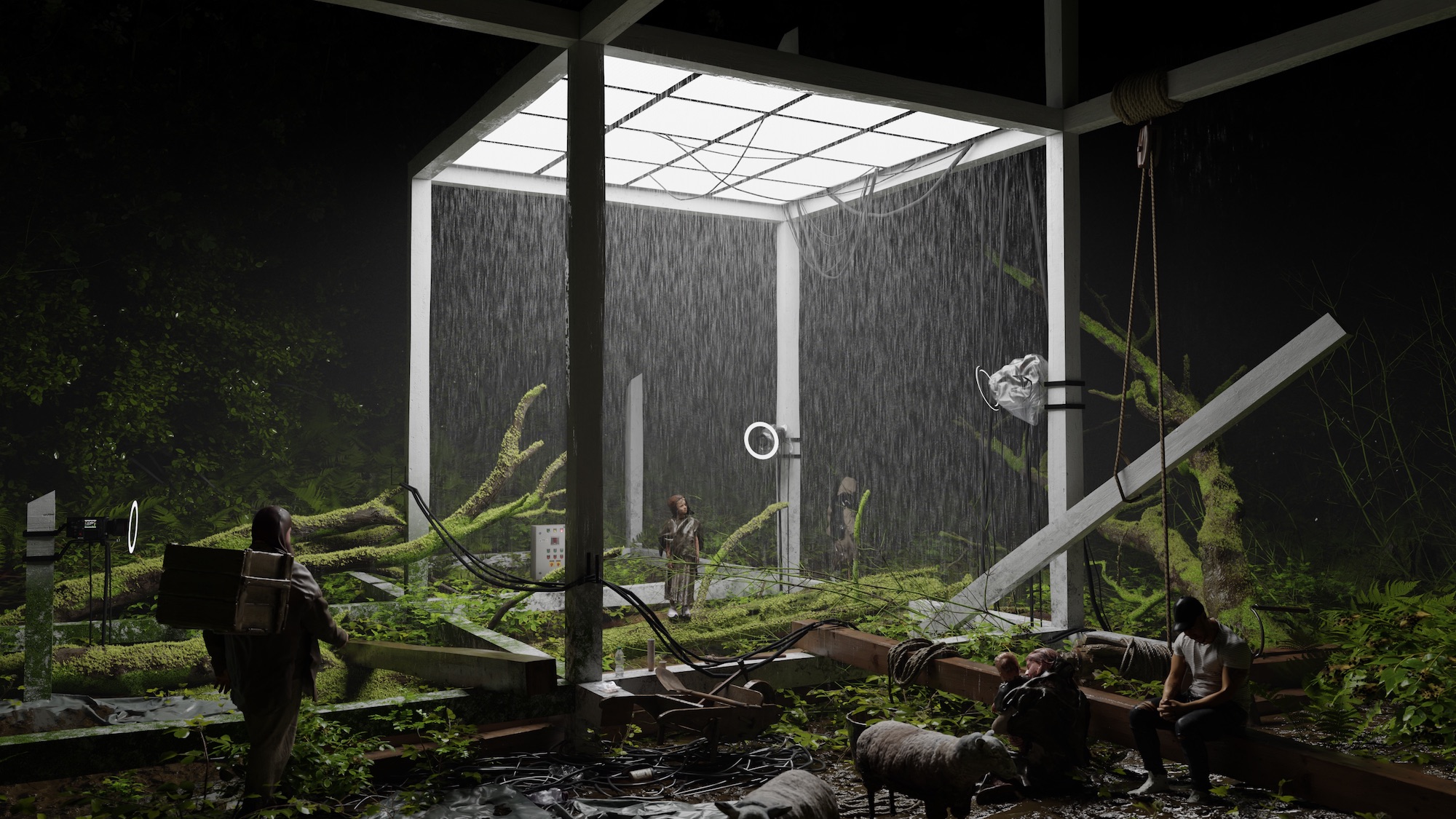
Vera Molnar – Structure Horizontale (1969)
Vera Molnar’s Structure Horizontale demonstrates her pioneering role in algorithmic and systematic art. Through precise geometric arrangements and subtle variations, Molnar explores the tension between order and chance. The horizontal structures evoke both architectural and musical qualities, creating a rhythm that guides the viewer’s gaze across the composition. The work anticipates the conceptual stakes of generative art by showing how procedural logic interacts with human discretion. Molnar’s practice establishes a historical foundation that links early algorithmic experiments to contemporary interrogations of AI, framing these technologies as part of an evolving artistic inquiry rather than a sudden rupture.
Agnieszka Kurant – Non Organic Life (2023)
In Non Organic Life, Kurant examines the organic foundations of the digital world. By assembling minerals, plants, and other natural materials, she exposes the biological and geological infrastructures that sustain AI. The work draws attention to the environmental and ethical dimensions of technological progress while making the materiality of the digital tangible. Kurant’s installation invites reflection on the interdependence between human systems and ecological processes, revealing the hidden entanglements that support our increasingly virtual existence.

Sasha Stiles – Cursive Binary (2023–2025)
Stiles’ Cursive Binary merges human gesture and digital logic, translating sequences of binary code into flowing, handwritten forms. The work transforms algorithmic language into a visual and poetic medium. By highlighting the expressive potential of computation, Stiles challenges assumptions that code is purely functional, showing that digital structures can be intimate, lyrical, and performative. The piece foregrounds the tension between mechanical precision and human sensibility, presenting AI as a site where computation and creativity intersect.

Gregory Chatonsky – La 4ème Mémoire
Chatonsky’s La 4ème Mémoire examines AI through philosophical and anthropological perspectives, considering its impact on memory, consciousness, and collective experience. The work frames artificial intelligence as an active participant in cultural and ethical frameworks, questioning conventional notions of authorship, cognition, and temporality. By engaging AI as an epistemological and ethical agent, Chatonsky emphasizes the humanistic stakes of these technologies, raising questions about agency, intersubjectivity, and the evolving relationship between humans and machines.
Lindo Dounia – Tongues (2025)
In Tongues, Dounia investigates the materiality of language and its embodied performance. The work emphasizes sound, gesture, and the body as instruments of meaning, exploring tensions between intelligibility and inarticulacy, articulation and ambiguity. Within the context of an exhibition on AI, the piece invites reflection on how artificial systems interact with human communication, suggesting that language and thought are never purely computational but always contingent, embodied, and socially mediated.

The exhibition presents a body of work that is conceptually and aesthetically compelling. The scenography is understated, functioning as an educational framework that guides visitors through distinct conceptual domains and allows each work to unfold within its own space. The exhibition does not rely on spectacle but prioritizes inquiry, reflection, and critical engagement.
Ultimately, the show positions artificial intelligence as a lens for examining enduring human concerns: memory, perception, authorship, labor, and ecological responsibility. By bringing together historical pioneers like Vera Molnar, critical investigative works like Anatomy of an AI System, established contemporary voices, and younger experimental artists, the exhibition demonstrates that AI is neither neutral nor autonomous. It is deeply entwined with human systems of creativity, extraction, and power. Le monde selon l’IA offers a nuanced and thought-provoking exploration of a world in which technology mirrors, amplifies, and challenges the conditions of human experience.
