.svg)
Menu
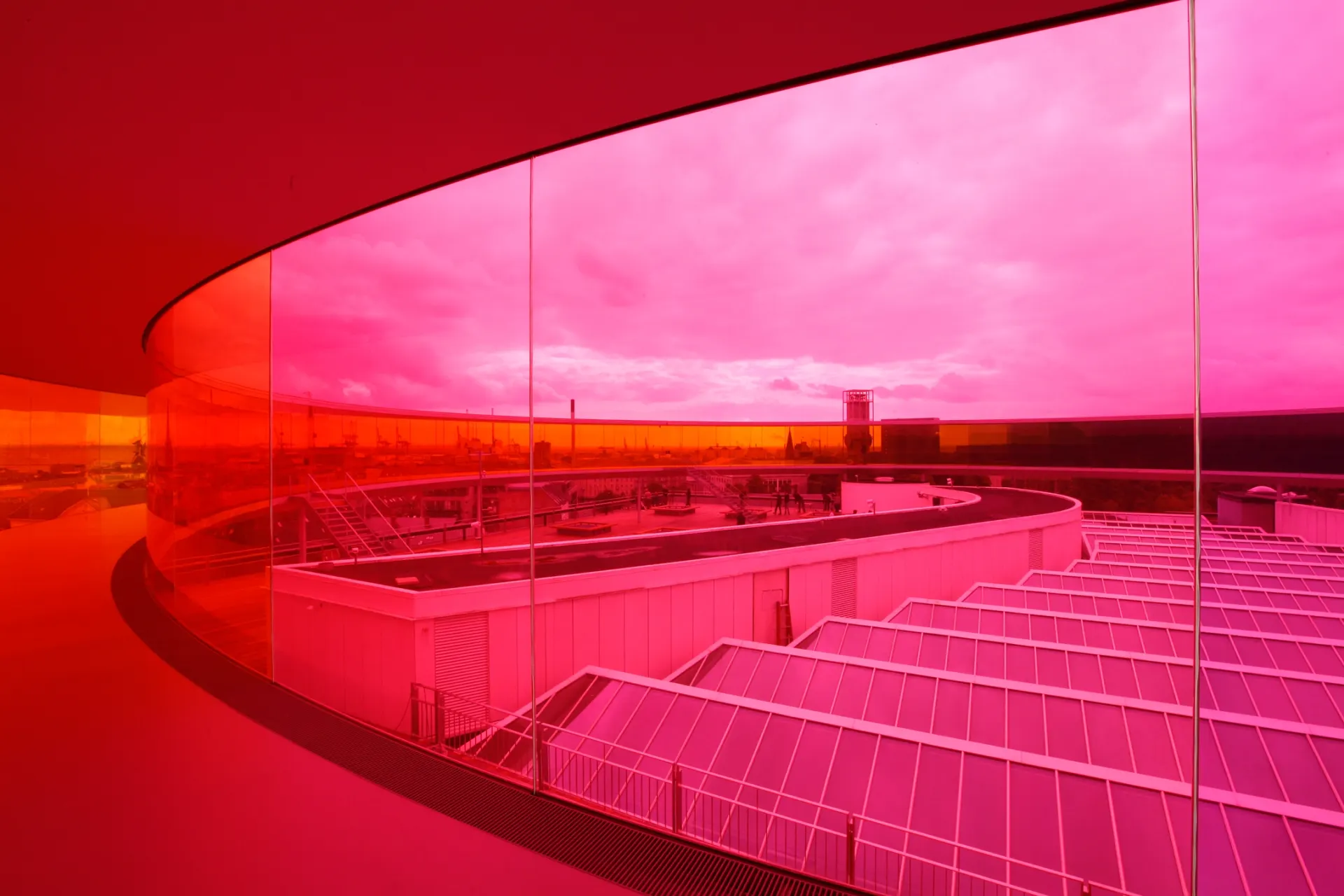
I can hardly think of another artist with a more far-reaching and international social impact than Olafur Eliasson. His commitment to sustainability and the number of people engaged by his projects make his practice almost unique in the world. This is not the first time I have visited an Olafur Eliasson exhibition—I recently experienced Your Curious Journey at the Taipei Fine Arts Museum, and I have seen other major shows across the globe—yet I am always surprised by the way he manages to unite the concept behind his socially, environmentally, and politically engaged works with the visitors’ experience in the exhibitions, all while delivering an impeccable execution of pieces primarily built from light and color.
In this feature, inspired by the exhibition in Taipei, I have selected some of the artist’s most remarkable projects for you, 100 Collectors’ members, to explore and better understand the complexity of Eliasson’s oeuvre, which brings together technology, science, architecture, and nature. He raises questions about our responsibility as individuals toward the environment, and by provoking collective experiences, he reminds us that only by working together can we make the world a better place.
Olafur Eliasson was born in Copenhagen, Denmark, in 1967, a year after his parents, Icelandic immigrants, moved to the city. He graduated from the Royal Danish Academy of Art and, in 1995, founded Studio Olafur Eliasson in Berlin — a “spatial research laboratory” that brings together engineers, architects, artisans, and specialists from diverse fields to create installations, sculptures, and interdisciplinary projects.
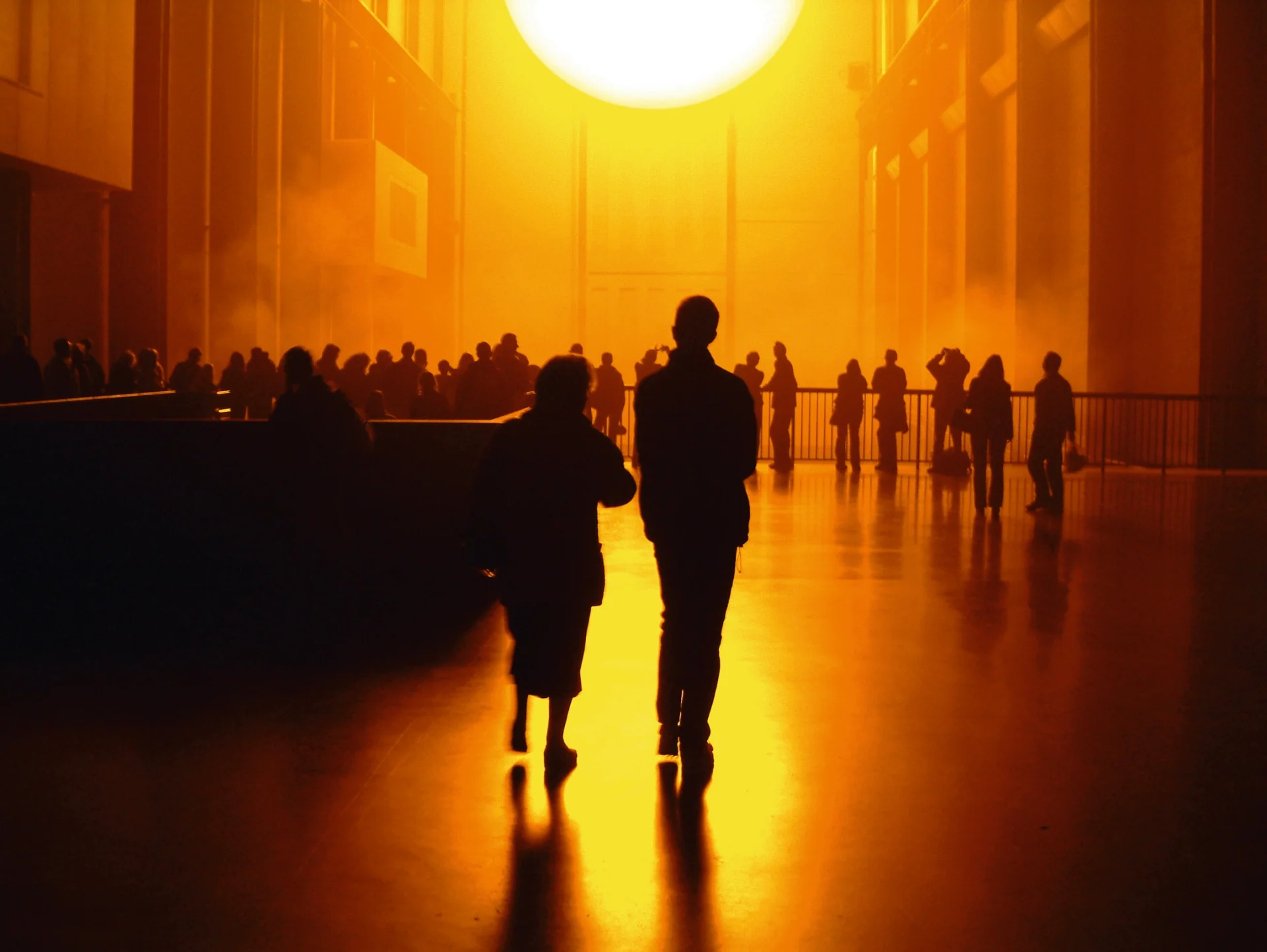
1 - THE WEATHER PROJECT (2003)
Installed in the monumental Turbine Hall at Tate Modern, in London - the most important space in the world dedicated to site-specific installations - this work became one of the most relevant works ever created in contemporary art (and the art history). Eliasson created an artificial sun using monofrequency lamps, a giant mirror on the ceiling, and a mist that filled the space. Visitors lay on the floor to see an ongoing sunset. The work invited a reconnection with nature - yet a constructed one.
In preparation for the exhibition, Eliasson devised a questionnaire for the employees at Tate Modern that included questions such as: ‘Has a weather phenomenon ever changed the course of your life dramatically?’ ‘Do you think tolerance to other individuals is proportional to the weather?’ The results were published in the catalogue accompanying the exhibition, which also included a roundtable discussion about the communication of art, meteorological reports of freak weather events, weather statistics, and a series of essays on the weather, time, and space.
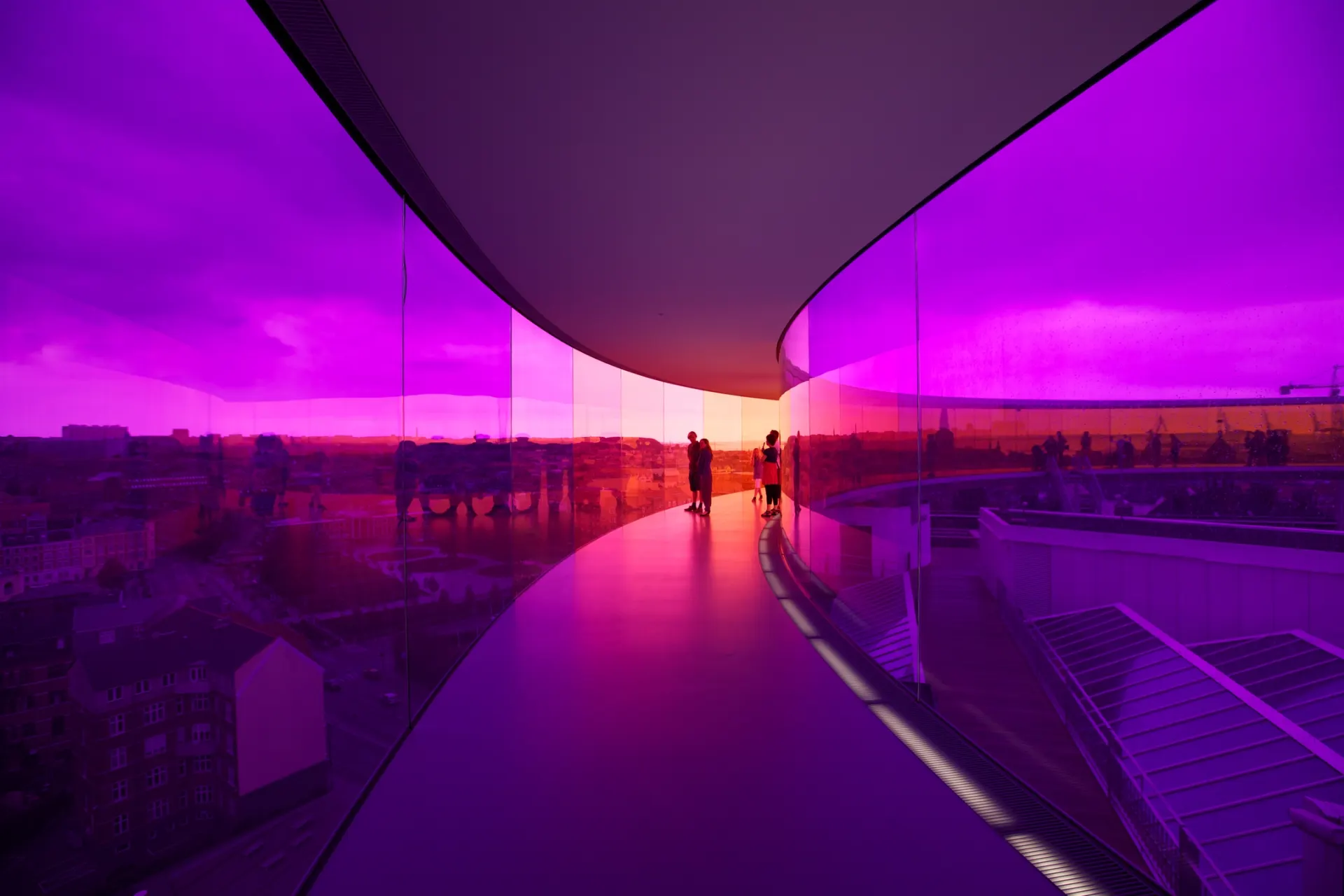
2 - YOUR RAINBOW PANORAMA (2011)
What if we could put on different glasses, with colored lenses, to see the world anew? To analyze a problem from another angle? To recognize and respect the other? Eliasson has a profound connection to light and color. By playing with them, he creates illusions that transform the way we perceive the world. This monumental installation atop the ARoS Kunstmuseum in Denmark is a circular walkway lined with colored glass panels that form a rainbow spectrum. As visitors move through the corridor, they experience panoramic views of the city bathed in shifting hues.
The work turns perception into an active act - also reminding us that pausing to truly look at the world is something we rarely allow ourselves to do these days.
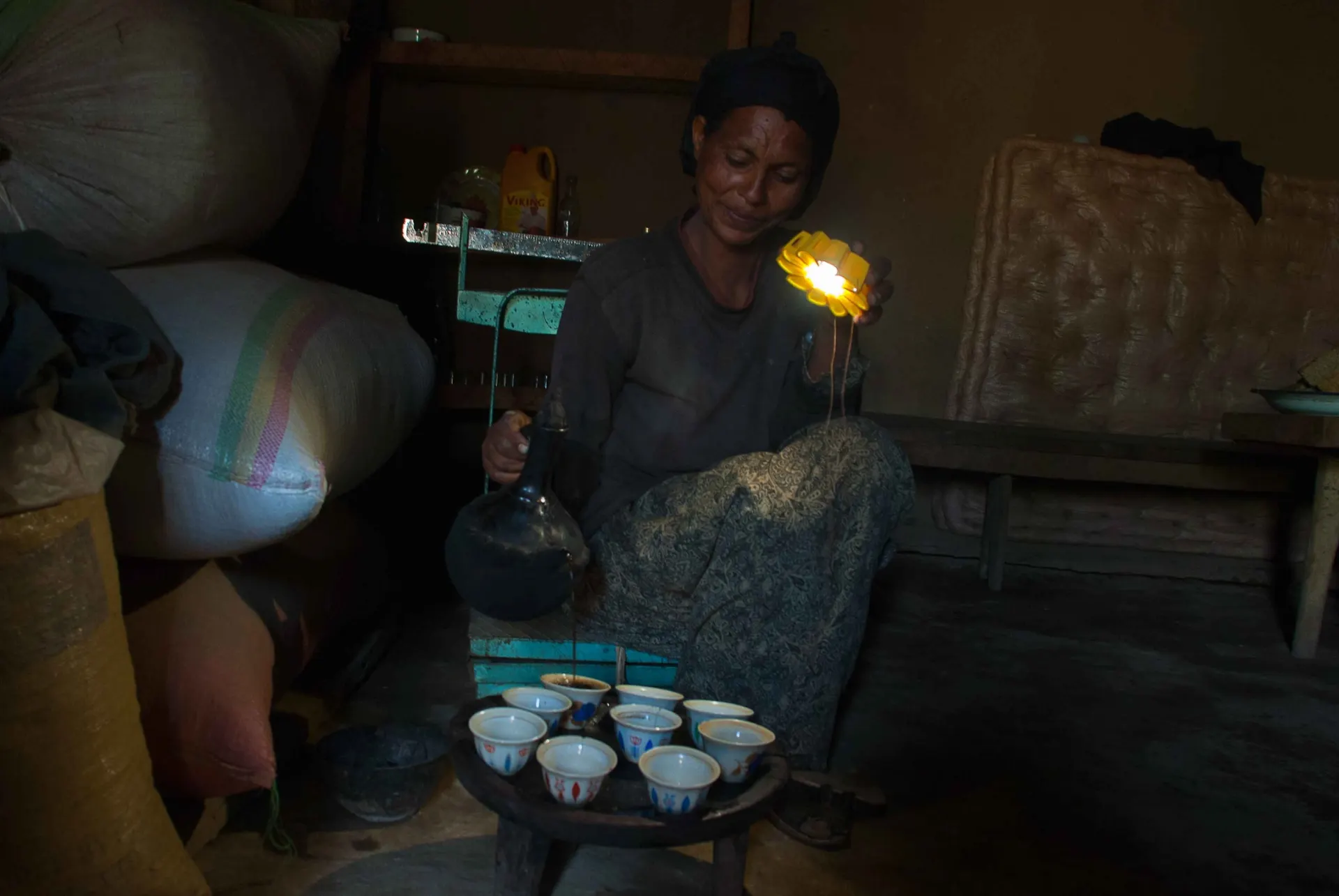
3 - LITTLE SUN (2012)
This may be one of Eliasson’s tiniest works, but it is also the one that moves me the most. Little Sun is a social project in the form of a flower-shaped solar lamp, inspired by the artist’s monumental Weather Project at Tate Modern. Created in collaboration with engineer Frederik Ottesen, these small, affordable lamps are designed for communities living off the electrical grid: for each lamp sold in countries with electricity, another is distributed to regions without access to energy.
You can find Little Sun in museum shops around the world (Lisbon members, you’ll spot it at MAAT!).
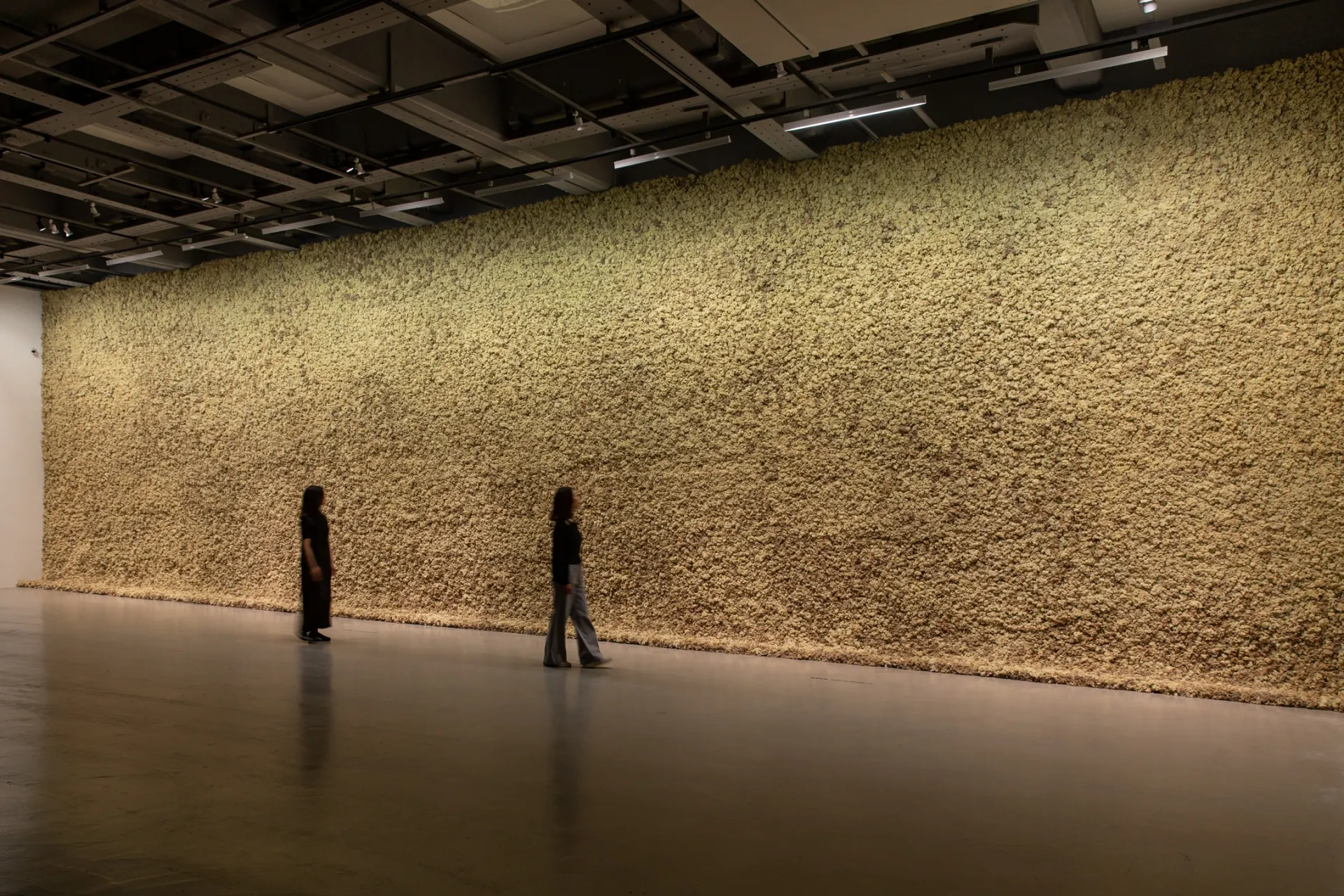
4 - MOSS WALL (1994)
This was Eliasson’s first time bringing living nature into an exhibition space. He covered an entire wall with moss, transforming it into a vast, organic tapestry. You can smell the living organism even before entering the room, and you are invited to touch it as well. Moss, one of the planet’s oldest and most resilient plants, plays a vital role in ecosystems by retaining moisture, purifying the air, and stabilizing the soil. Yet it is also fragile, disappearing in many places due to pollution and climate change. Experiencing art through the senses is a hallmark of Eliasson’s work, as he seeks to awaken responsibility and awareness about the climate crisis not by stating facts or numbers, but by triggering emotions.
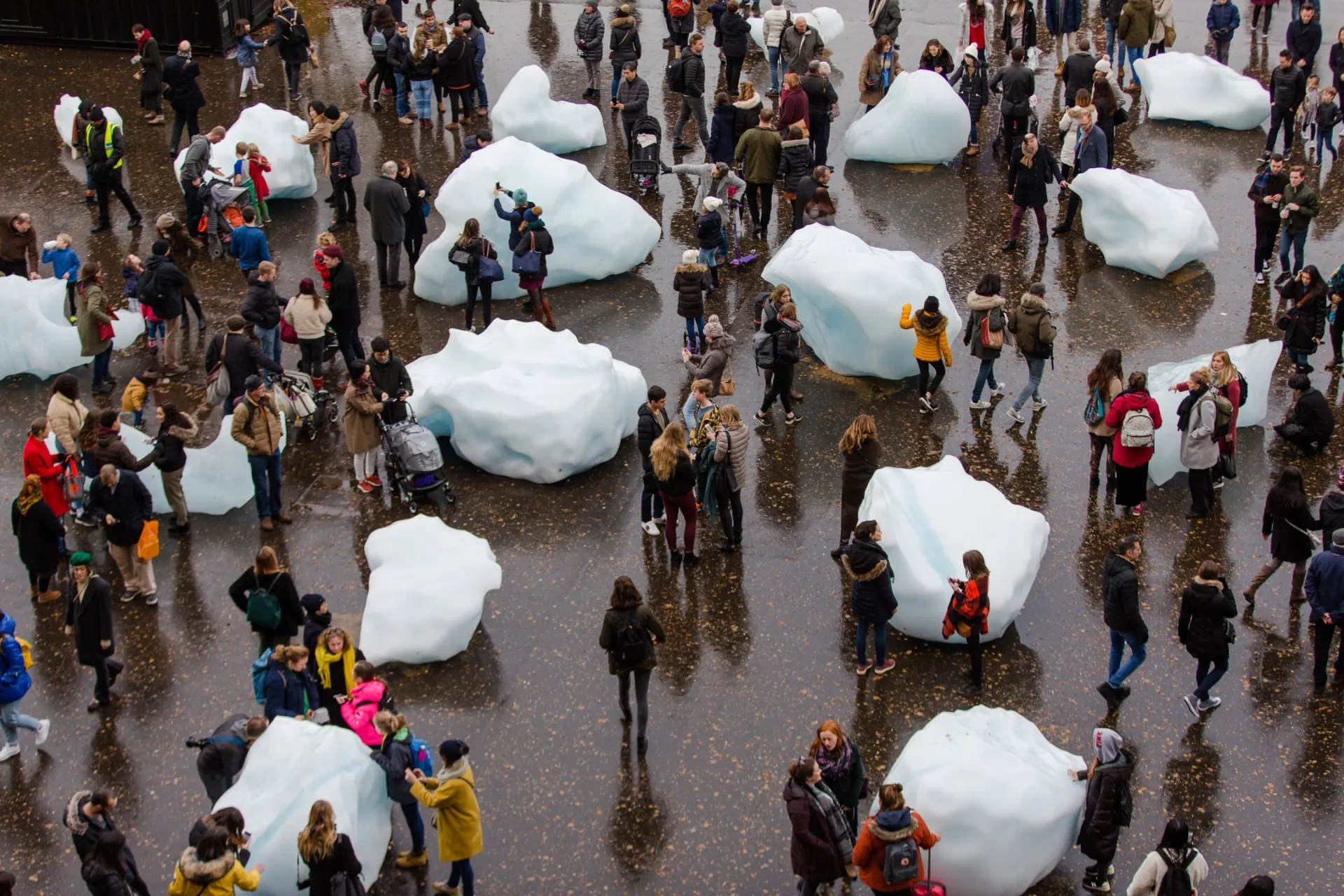
5 - ICE WATCH (2018)
On a cold Tuesday morning in December 2018, Londoners woke up to an extraordinary sight: 24 massive icebergs installed along the banks of the River Thames, with another six placed outside Bloomberg’s headquarters in the city’s financial district. Working with Greenlandic geologist Minik Rosing, Eliasson transported these blocks - each weighing between 1.5 and 6 tons - from the Nuup Kangerlua fjord in southwestern Greenland to the heart of London. Once part of the Greenland ice sheet, the world’s second largest body of ice after Antarctica, thousands of similar blocks break away every second. Click here to access compelling information about this project.
The icebergs were shipped in nine refrigerated containers, in a project that inevitably carried an environmental footprint—something Eliasson’s studio actively worked to minimize through sustainable solutions. Installed in public space, the ice was left to melt slowly before the eyes of passersby, turning the city itself into a stage for witnessing climate change in real time.
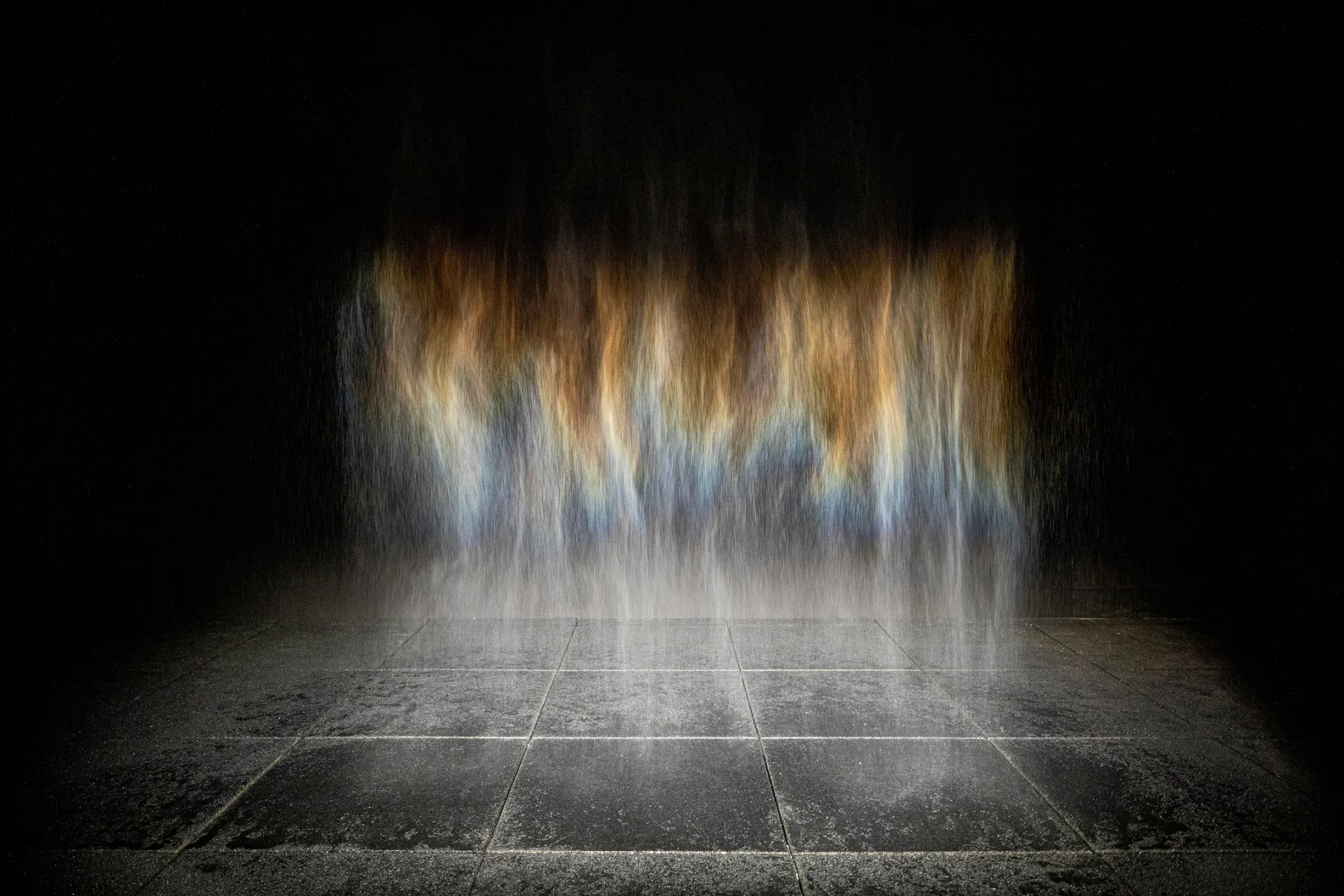
6 - BEAUTY (1993)
There is something enchanting about works of art without tangible matter, as if they speak of those precious things in life that we cannot touch. This is a recurring poetics in Olafur Eliasson’s practice - works that take shape through air, water, light, fog, and other elements that are part of our everyday lives, yet also create natural phenomena. Beauty is pure poetry: a sculpture of water and light that forms a rainbow. Our actions, stillness, perspective, and movement all shape the experience, making this fleeting visual phenomenon profoundly personal.
.webp)
7 - WATERFALL (2016)
At the heart of Versailles, a yellow steel tower rises like a luminous skeleton. From its summit, water plunges in free fall, breaking the carefully choreographed stillness of the canal. There is no attempt to conceal the mechanics: pipes, pumps, and girders expose the artifice of the cascade, reminding us that the traditional French gardens themselves are products of human desire. In this interplay between construction and nature, the waterfall becomes both spectacle and reminder: that even the most elaborate designs are always at the mercy of the elements.
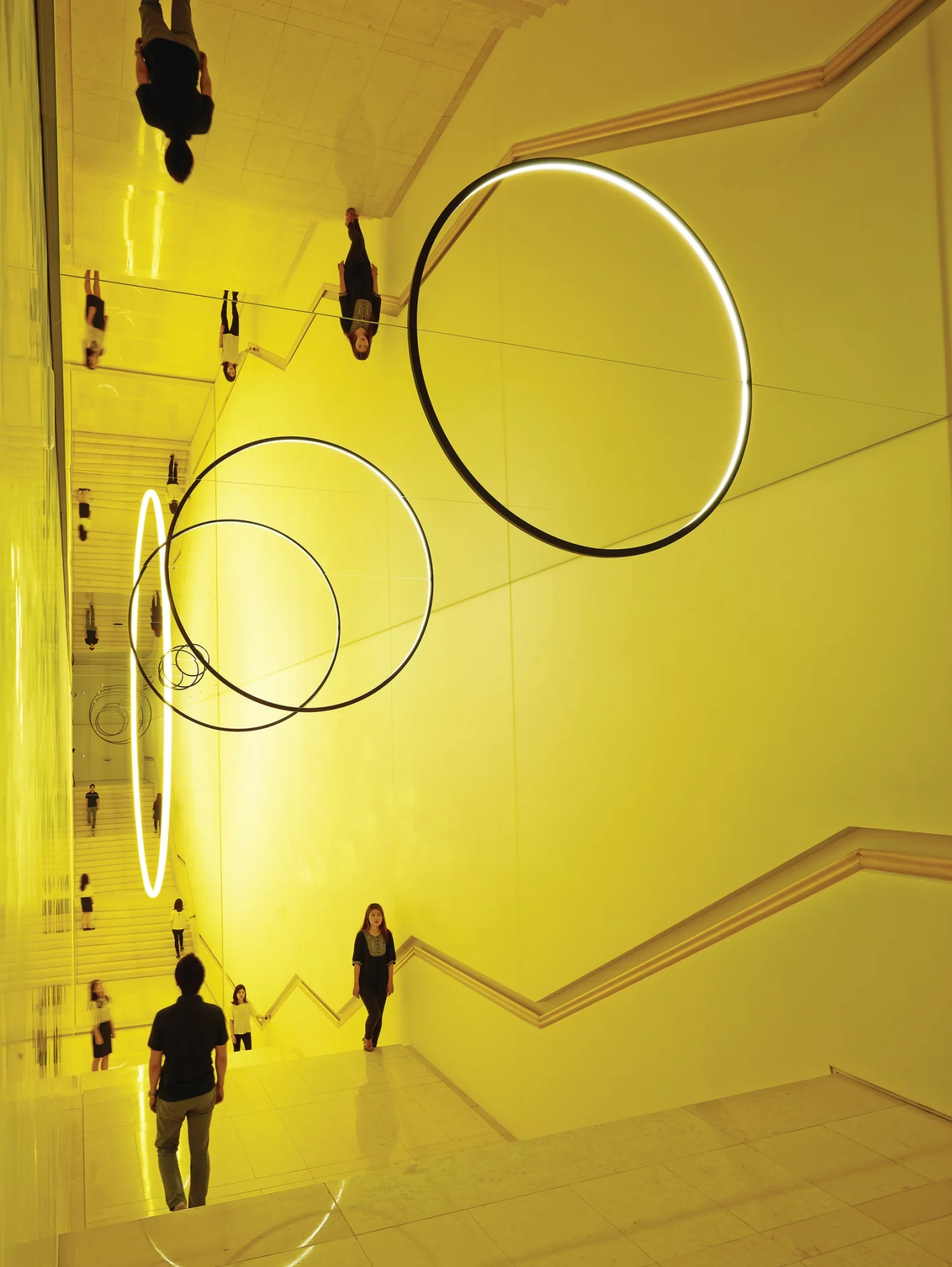
8 - GRAVITY STAIRS (2014)
A defining characteristic of Olafur Eliasson’s practice - inherited from the artists of Land Art - is site-specificity: works conceived for a particular space, shaped by its architecture, context, and atmosphere. They could not exist anywhere else. This demands that the viewer come to them, that one’s presence in that exact place and moment becomes part of the work itself.
At the Leeum Museum in Seoul, this principle unfolds in a site-specific installation that I was privileged to experience last April. The museum itself feels like a work of art. At the end of the journey, visitors descend a stairway beneath a vast schematic model of our solar system, composed of mirrors and illuminated ring segments. Semi-circles of light are doubled by their reflections, transforming into full orbits that represent the planets revolving around the sun. Presence, once again, is central: as we move through the space, shifting our perspective, new constellations emerge from the mirrored fragments - semi-circles multiplying into infinite systems - while our own image is folded back into the work.
9 - THE CUBIC STRUCTURAL EVOLUTION PROJECT (2004)
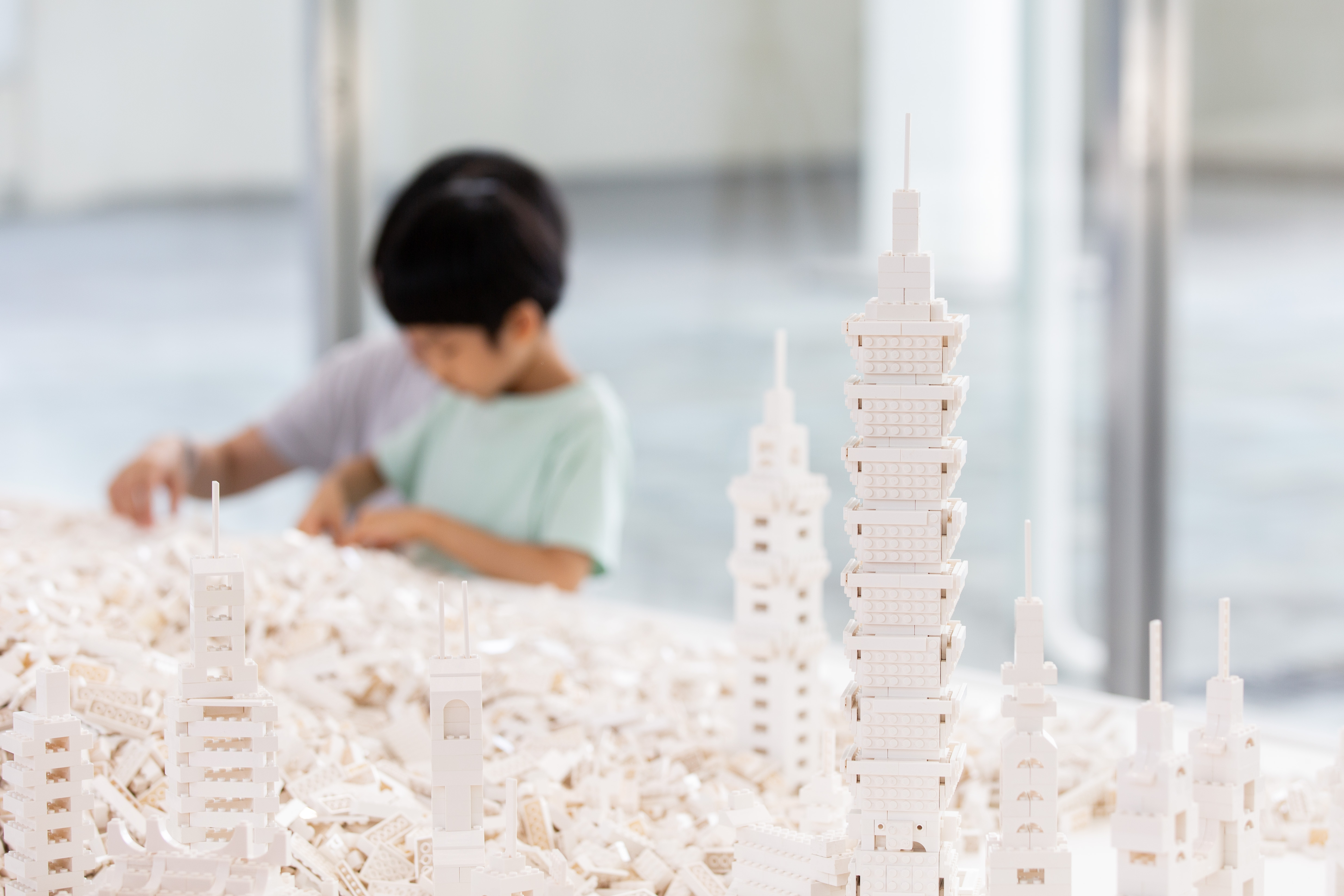
Can Lego be art? Not only can it - it turns every visitor into an artist. This is one of Olafur Eliasson’s simplest works, yet also one of the most playful: three tons of white Lego bricks spread across a long table, inviting people to build their own vision of a future city. Over time, each model is modified, expanded, or reshaped by others, creating a living, collective landscape. What makes this work especially powerful is its familiarity: we all know Lego, and we all know how to play with it. There is no need for prior knowledge of art history or theory: the invitation is immediate and universal.
By using a material rooted in childhood memory, Eliasson levels the ground between audience and artwork, transforming play into a collective act of imagination. What is at stake here goes beyond creativity - it is about participation and community, about imagining and constructing an ideal city together. When I visited, I could barely reach the bricks, as so many people were joyfully immersed in building.
10 - ROOM FOR ONE COLOUR (1997)
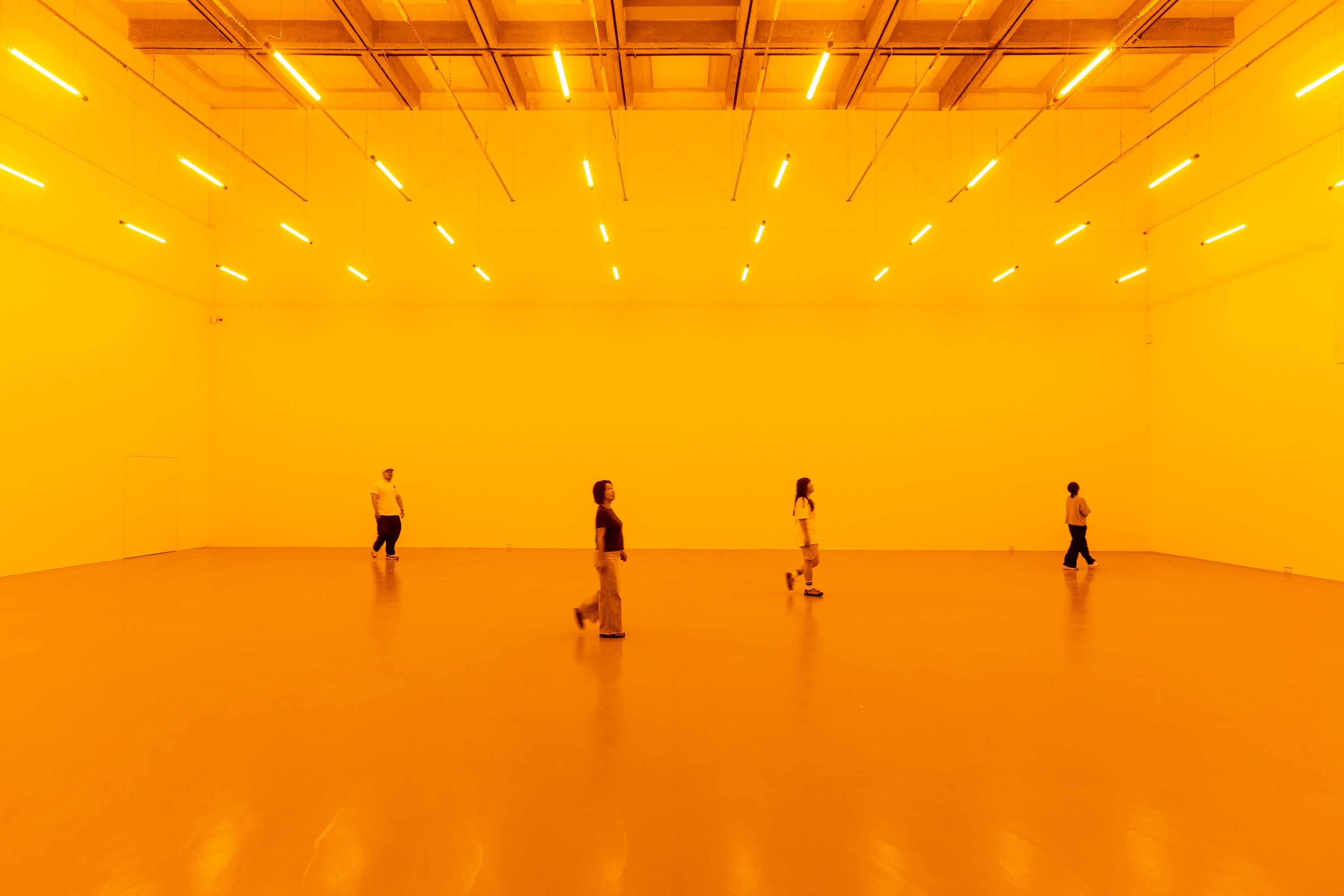
What a priviledge to experience this work at the Taipei Fine Arts Museum - an installation that appears deceptively simple, yet is a landmark in the study of color and perception in contemporary art. Room for One Colour is an empty space, filled only with the visitors’ encounter with the orange light emitted from fluorescent tubes on the ceiling.
This delicate gesture - replacing white light with orange - completely transforms how we perceive the world. We see others differently; we see ourselves tinted with unexpected hues. The longer one remains in the room, the more subtle distinctions of color begin to emerge, as the eye adjusts to the yellowish glow. Upon leaving, a bluish afterimage lingers, a reminder that perception is never fixed, but always in flux.