.svg)
Menu
For the third edition of Collecting Minds, this conversation turns to DagieDee, an anonymous member of the 100 Collectors community whose perspective brings unusual clarity to how the digital art scene is evolving. He speaks about something few articulate so directly: how parts of the digital space are rebuilding the artistic myth - a moment where artists, rather than institutions, begin shaping a new visual language.
Interviewed by Julia Flamingo, he expands on why Tezos may be the birthplace of the next major movement, how software is emerging as a new form of materiality, and why the most meaningful innovation of NFTs was not aesthetic but infrastructural. A rare and illuminating look into a collector who sees digital art not as a trend, but as the beginning of a historical shift.
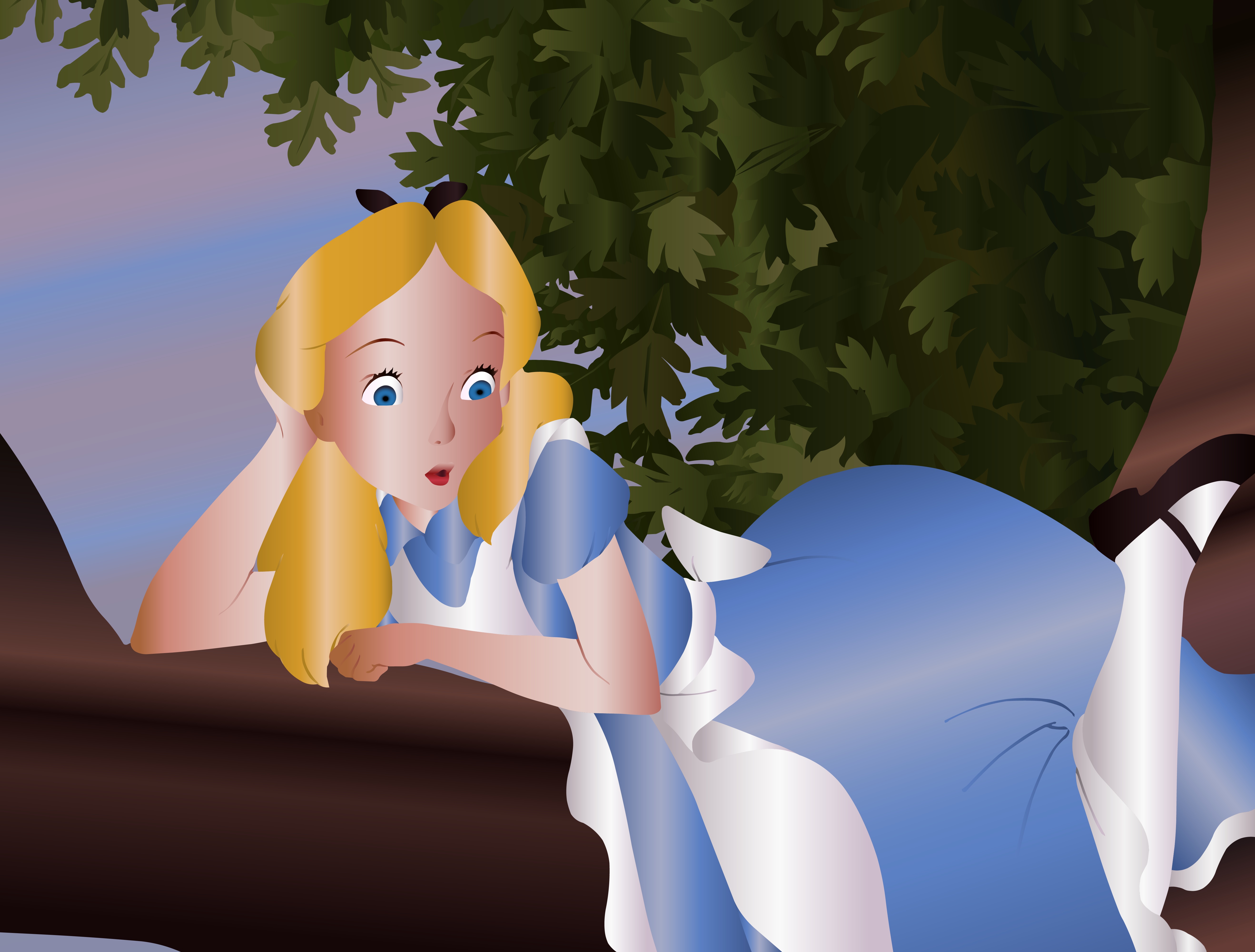
Cover image: "Alice" by @danctrl
I don’t remember the exact first piece because I’ve always had many artist friends - painters, sculptors - so I’m sure the first thing I collected came from one of them. I’ve been surrounded by art since childhood. My stepdad was a contemporary artist, and my mom’s best friend ran a contemporary art gallery, so being immersed in that world felt completely natural from a young age.
I got interested in blockchain around 2017. When NFTs started going mainstream, I looked into them, but at first I only had time to see the surface layer. I understood the crypto culture, the excitement of digital collectibles, but I struggled to understand the high prices of early NFT art.
Take Fidenzas, for example. The idea behind them wasn’t entirely new, Sol LeWitt was already doing generative instructions in the 70s. The novelty was that it was now happening on-chain. I like Fidenza’s but couldn’t understand why these things were suddenly worth as much as a Picasso.
I also didn’t realise that many of these artists such as Kim Asendorf, Xcopy or Tyler Hobbs had been releasing work on Tumblr and Cargo years before NFTs, so I missed the excitement of them finally being able to sell work in a truly digital-native way, something they’d been building toward for years.
So it took me some time to get into the trenches. I started collecting more seriously around 2022. Kevin Abosch, Shl0ms and James Bloom were among the first digital artists I collected.
The idea of a system that is based on no trust, where you can transact anything without a central authority… that felt revolutionary. Bitcoin, Ethereum fascinated me.
So I studied the technology deeply, even taking a course at MIT.
I wouldn’t call NFTs conceptual - not at all - but some definitely relate to conceptual frameworks. Still, my interest isn’t based on that comparison.
What fascinates me more is how NFTs introduced a new system of distribution. For me, that’s actually the only real innovation NFTs brought. Before, artists had to knock on gallery doors with a portfolio. Crypto art created new technological railways, thanks to projects like CryptoPunks, the Pepe meme art and early generative art, which made decentralised, peer-to-peer art collecting possible. Yet this small innovation in distribution changed everything.
It didn’t just change how art is sold. It changed how artists think about making art. What once only made sense to a few coding or digital artists showing work on Tumblr and Cargo suddenly became accessible to painters and sculptors, who could now imagine making art within this new peer-to-peer environment. That’s how the digital screen became an open field for new expressions.
There were precedents - early digital artists in the 60s and 70s, VJs, generative film and photography - but what’s happening now is something else entirely. This culture has only existed for three or four years, and we’re watching it develop in real time.
For me, it’s the same reason you buy physical art: to own a piece of history. If I had lived at the start of Cubism, I would have been excited by that shift and wanted to participate. That’s how I feel now: something new is unfolding, and collecting is a way of being part of it.
I follow collectors I respect and check platforms like Verse, Foundation or Objkt, Teia and Raster of course. I also talk to many artists, but usually after collecting them. Once I buy a few pieces, we start talking about the work. Most of the time, I end up collecting several works from the same artist. When I connect with someone’s practice, I go deeper.
I’m really captivated by the Tezos ecosystem. I think there’s a scene there that somehow echoes the energy of the Paris streets a century ago. Few people are paying attention to it, but I believe that’s where the real heart of the digital art world beats right now. You can feel it in the way artists influence each other and how styles develop over time through that mutual exchange. That kind of back-and-forth is crucial, because when artists start engaging with the same questions together, it often marks the beginning of a movement. And if history teaches us anything, it’s that these moments of shared experimentation usually end up being pivotal.
Prices on Tezos are also quite low compared to other chains, and there’s a lot being minted, which can make it a bit overwhelming. Watching Pocobeli’s shows helped me a lot in the beginning.
Besides that, I also collect on Solana, Bitcoin and, of course, Ethereum.
I don’t have a TV. I find TVs ugly and visually disruptive; so that makes it harder to display digital art. This is one of the big problems with collecting digital: we still don’t have a great way to display it at home. So mostly, I wander through my collection online. I revisit pieces I love, sometimes every two days. I’m still looking for good solutions to show my collection.
Some artists are addressing this, like Yuran Yakon: I saw pieces recently where the artist sells the NFT together with a tiny custom screen and a Raspberry Pi. I like that.
I have a very broad interest, so I have favourite artists in almost every decade or art movement. One of my all-time favourites must be Cézanne, because of how he disrupted traditional perspective. That disruption is, in my opinion, one of the most meaningful shifts that paved the way for the modernism we know today. Others include Chaïm Soutine, James Ensor, Duchamp, Jasper Johns, René Magritte, Joseph Kosuth, Donald Judd, Robert Smithson, Albert Oehlen, Pierre Huyghe and Susan Te Kahurangi King.
As I’m becoming more serious about my collection, I try to look for artists who add interesting perspectives to the digital art scene. In that context, I recently bought a piece from Marc Kokopeli, one of his latest Cartmen works.
I think what’s happening now feels very close to what you see throughout art history: a group of artists and misfits inventing a new language. To outsiders it looks strange or unimportant, but inside that circle, the artists know exactly what they’re doing. That kind of myth-making used to be everywhere in art history. Over the last twenty or twenty-five years, that myth slowly faded. The story of art shifted from being shaped by artists to being shaped mostly by galleries. The myth became institutional.
What excites me now is that parts of the digital scene are rebuilding that myth, this time driven again by artists rather than galleries. Outside this bubble, people still see screens as utility devices, so hardly anyone pays attention. And I say “parts of the scene” because there’s also a group of collectors trying to build a narrative around crypto art and the Web3 community, and that story isn’t led by artists in the same way.
Meanwhile, quietly, the screen is becoming a new field of expression with tools painters never had: compression, resolution, color spaces, frame rates, glitches. It echoes how the impressionists shifted focus by painting light instead of figures, or how the cubists broke perspective by showing a subject from multiple angles. Back then, people struggled to accept that painting could be more than representation. Something similar is happening now with the digital screen and the network behind it.
Some do, some don’t. What’s funny is that my mom’s friend - she’s around 70 who used to run a gallery - is more curious about this space than most of my contemporary-artist friends. Many traditional artists aren’t interested. They show a bit of curiosity, but they don’t dig deeper. And I understand why. Paintings and sculptures have an aura, a very established one. Screens don’t. They’re mass-produced, utilitarian, associated with emails, obligations or pure entertainment.
But a banana taped to a wall has no aura, and people still love it…
Sure - but once it’s in a gallery, it becomes interesting. Space creates an aura. Value creates aura. And today, it takes courage to value a whole generation of artists whose work isn’t validated by curators, critics, galleries, or journalists.
You mentioned gravitating toward digital artists who engage with art history. Could you talk about some of them?
When I say I gravitate toward digital artists who engage with art history, I mean artists who are dealing with questions that used to be explored through physical materials. One of the most exciting developments to me is the return of materiality through software.
Throughout art history, the meaning of materials has constantly shifted. In the Middle Ages, marble and gold symbolised eternity or divinity. Ultramarine was reserved for holiness. With Impressionism, painting became more about the paint itself, a moment where the medium started to speak. Later, Joseph Beuys politicised and personalised the meaning of materials in radical ways.
I see something similar happening in the digital space, but now the “material” is software. And this plays out on different levels.
Some artists make software inseparable from the image. With Yuri J, the way he composes his images in layers using an old photoshop version (CS6) and the way they ultimately look are fused into one process. DanCtrl also lets the software take control, allowing something as simple as an alignment tool to dictate the destruction or abstraction of an image. Shl0ms often does similar things and looks for the limit of digital systems.
Others approach software as a challenge to representation itself. Skomra uses AI in a way that feels like an argument about what an image even is, or how it forms meaning.
And then you have a completely different approach in someone like Waffles, an artist who still flies under the radar. He works with old 80s software or combines it with new tools to create images that feel both new and nostalgic. His exploration of software as a medium goes far beyond aesthetics, and to me he’s one of the most exciting artists in the digital scene today.
There’s so much more to say about software as materiality, but that’s the core of what excites me: digital artists reinventing questions that have shaped art history for centuries, now through the logic and limitations of code.
Would you prefer if this scene remained mysterious and underground?
No. I’d actually be happy if these artists got more attention. That’s partly why I started giving interviews. There are some very loud voices dominating the NFT conversation, always framing NFTs as investment vehicles or as a Web3 community movement. Maybe that made sense four or five years ago, but the space has evolved. So I sometimes speak out because I think artists deserve voices who talk about this space differently.