.svg)
Menu

Explore how to display digital art at home using various methods like smart screens, projectors and physical installations. This guide will allow you to properly showcase your collection.
"How do you display a digital artwork?" This is often the first question people ask when they're new to digital art.
Instead of just viewing your collection on your phone or, even worse, on OpenSea, there are many ways to enjoy digital art at home and share it with your guests.
Digital art's beauty—and challenge—lies in its fluidity and multi-dimensionality. As curator Julia Walsh explained at this Tezoz x Art Basel panel in Miami back in December 2022, each digital work transforms uniquely when displayed in a physical space, requiring site-specific considerations.
Christiane Paul, digital art curator at the Whitney Museum of American Art in New York City, suggests that collectors should begin by examining each artwork and considering three key questions:
Here are some ideas to help you plan how to display your collection at home. To illustrate these examples, we're delighted to share exclusive images from The Edicurial Collection by Elsie, one of our supporting collectors. She graciously welcomed us into her home to show how she seamlessly integrates crypto art with traditional artworks within a 19th-century Hudson River artist studio home setting.
When it comes to recent digital art, particularly blockchain-based works, most artists are alive and accessible. This should be your starting point when planning to display their work in your home. If you can't reach the artist directly, contact their estate or the gallery that sold you the work for display recommendations. Many artists have strong preferences about whether their work should be shown on screens or in print format. It's astonishing that most exhibitions—both private and public—still proceed without consulting the artist.

A work by Travess Smalley in the Edicurial Collection
Modern TVs connect to the Internet, letting you display JPGs, videos, Google slide decks, websites, or files from USB drives. While this may not satisfy Web3 purists, it's currently the most practical solution. Note that Samsung's NFT support for Frame TVs is limited to Samsung-approved collections rather than direct wallet connections.
Both The Frame by Samsung and Smart OLED TVs by LG remain the top display options available.
Several streaming services, such as Niio (paid) and Zeroframe (free), enable you to showcase your collections on any screen.
Additionally, NFT platforms like Nifty Gateway and fxhash have developed various display solutions, including a Samsung app and fullscreen viewing options.
To enhance your display and avoid the "TV" or "screensaver" effect, consider these tips:
- Display one work at a time instead of rapid rotations. While you can change works periodically (daily, weekly, or monthly), constant rotation tends to make viewers tune out the display.
- Match the work to your screen's aspect ratio to eliminate black or white bars. It's perfectly fine to request properly formatted files from the artist (aspect ratio and resolution).
- Consider vertical screen orientation to break away from the traditional TV look and emphasize the artistic nature of the display.

A work by Mattia Cuttini from the Edicurial Collection
Projectors offer an alternative display option that frees digital art from traditional screens, allowing you to showcase works without being confined to TV-centric spaces.
Both short throw and very short throw projectors enable simple setup using a Fire Stick, laptop, or AirPlay connection to display files, websites, or presentations.
Epson offers portable projectors that integrate seamlessly with home décor, such as this one. Choose a projector with at least 3,000 lumens to ensure your art remains visible in daylight.
Consider ultra-short throw projectors, which are more expensive but can be placed very close to the wall, minimizing visible wiring.
For a more dramatic presentation, you might commission video mapping to create a site-specific installation on an exterior façade or large, textured surfaces.
Since 2021, many hardware companies like Meural, Canva and Tokenframe and Muse Frame have added NFT support to their art screens. However, several of these companies have since then shut down, making it essential to research a company's stability before investing.
Currently, WHIM, Blackdove, and Atomic Form offer high-end NFT-enabled screens in various sizes and shapes (square is a nice touch). Each comes with a dedicated app for displaying NFT collections, though buyers should consider the long-term viability of these pricey solutions.
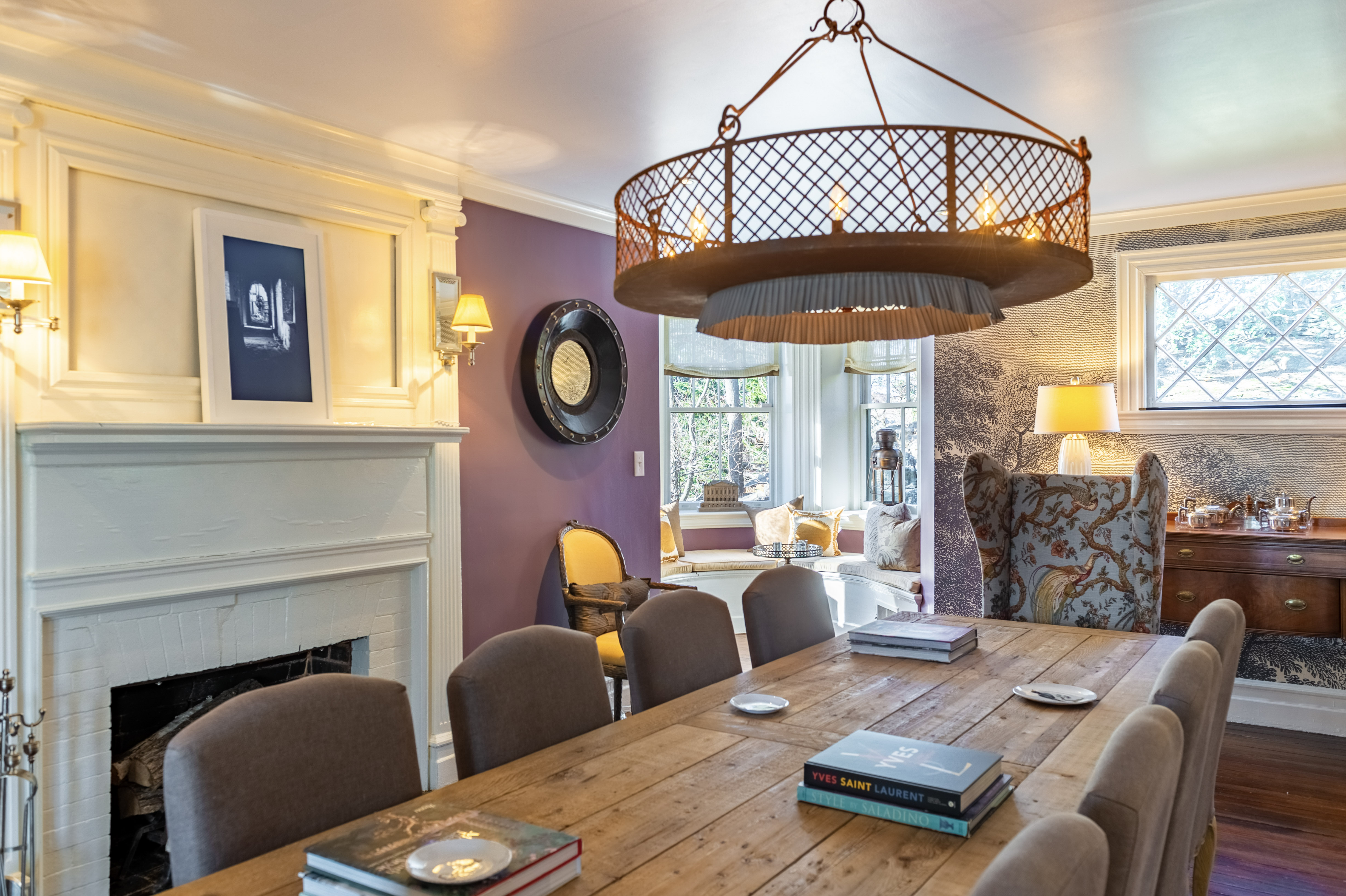
A work by Eoin O Connor from the Edicurial Collection displayed on a Canva connected screen
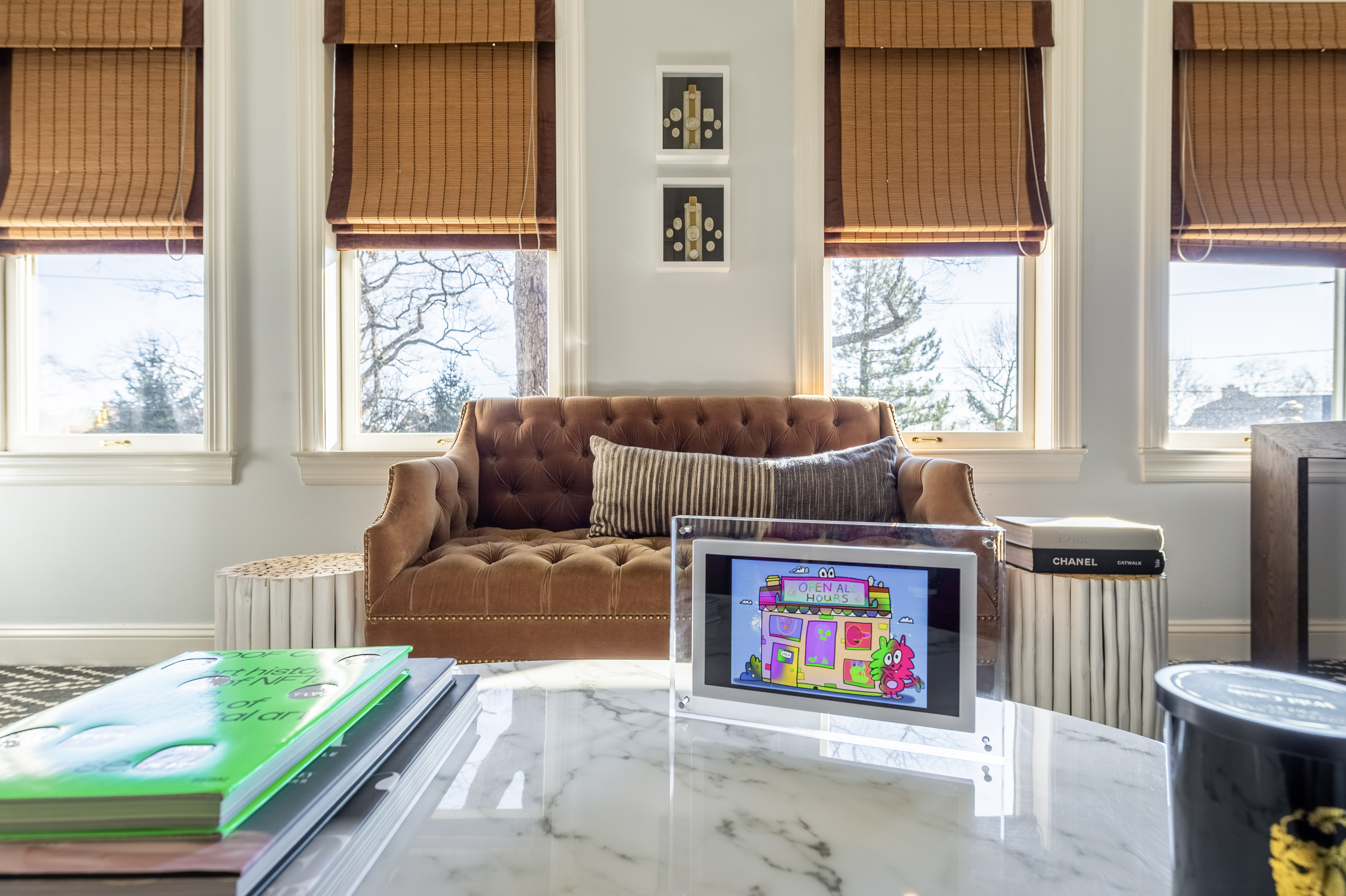
Open All Hours by Jon Burgerman on an Infinite Objects pre-loaded screen
Some companies have adopted a unique artwork approach by preloading a single still or video piece onto their displays.
VTV, an Argentinian-French company, repurposes bar screens and older displays to create distinctive presentation options for still digital works.
Infinite Objects provides various solutions for displaying video or moving works on compact screens that complement any desk or home décor.
For the technically adventurous, creating your own display using an old TV monitor and a Raspberry Pi is relatively straightforward.
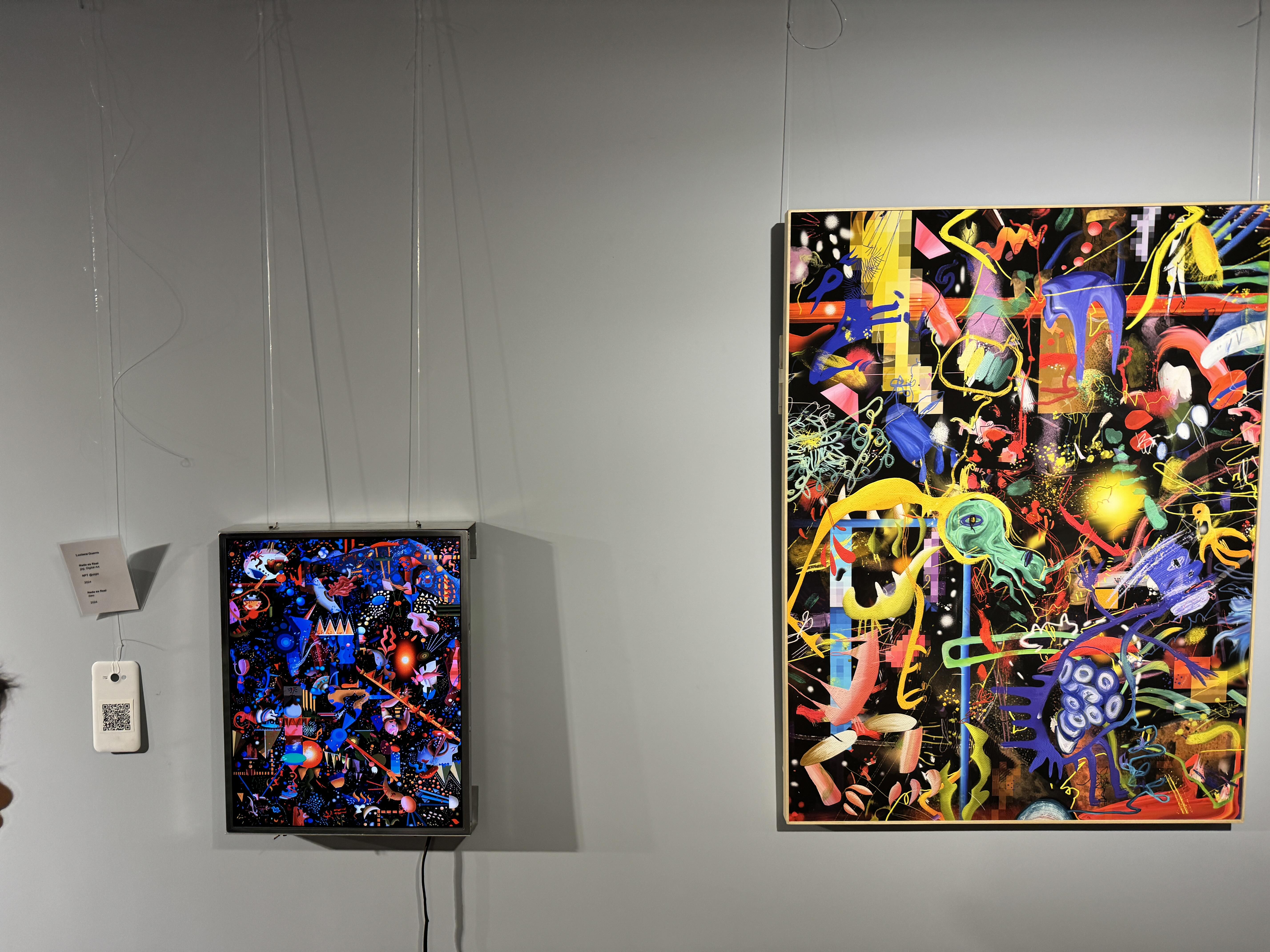
A physical print by Luciana Guerra paired with the digital work displayed on a VTV screen
Digital artworks frequently come with physical counterparts, as artists recognize collectors' desire for tangible art experiences and have proactively developed physical manifestations alongside their digital creations.
Artists approach physical editions differently, so it's important to consult each artist about their specific link between physical and digital works. For example, Layla Pizarro includes physical artworks (such as cyanotypes) with digital purchases for collectors to enjoy, while others—like Frenetik Void with their lightbox pieces—keep their physical and digital collections separate.

Cyanotype by Layla Pizzarro & Lightbox by Frenetik Void, Collection of Fanny Lakoubay
Before printing any digital artwork, consulting with the artist is essential. Though services like SolidNFT enable metal printing of owned NFTs, artists often have very strong preferences regarding physical representations of their work.
Many artists prefer to maintain quality control through limited-edition prints produced by trusted vendors. Notable examples include Operator and Tyler Hobbs, who create exclusive physical prints available only to owners of the corresponding digital pieces. Artists like Martin Lukas Ostachowski take a slightly different approach, offering limited runs of five prints for each digital work (only for specific collections).
In an innovative fusion of digital and physical art, the Frank Stella collection released by ARSNL provides comprehensive 3D printing specifications, enabling collectors to materialize their digital sculptures using any compatible 3D printers.
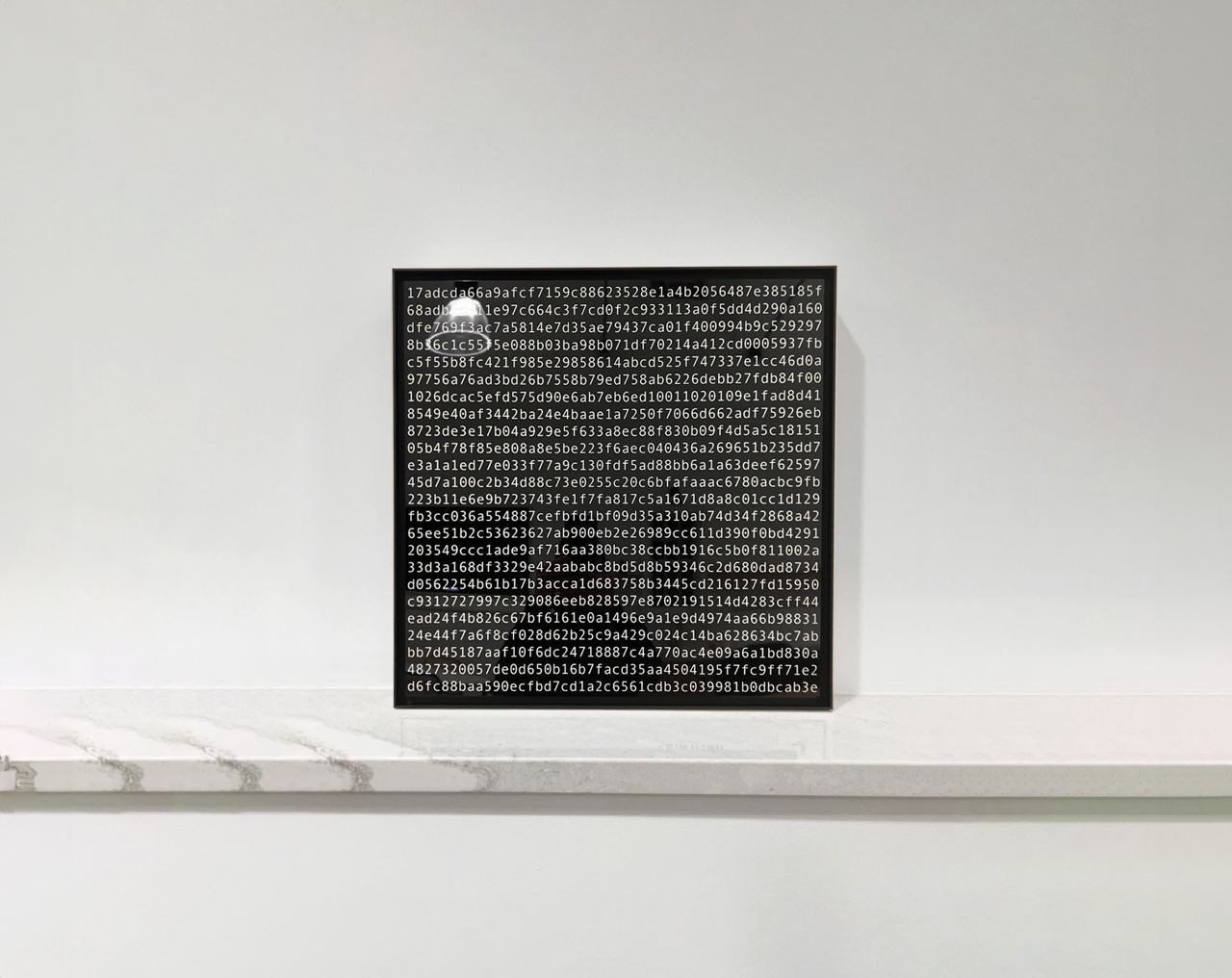
1111 by Kevin Abosch printed with SolidNFT on metal, in the Edicurial Collection
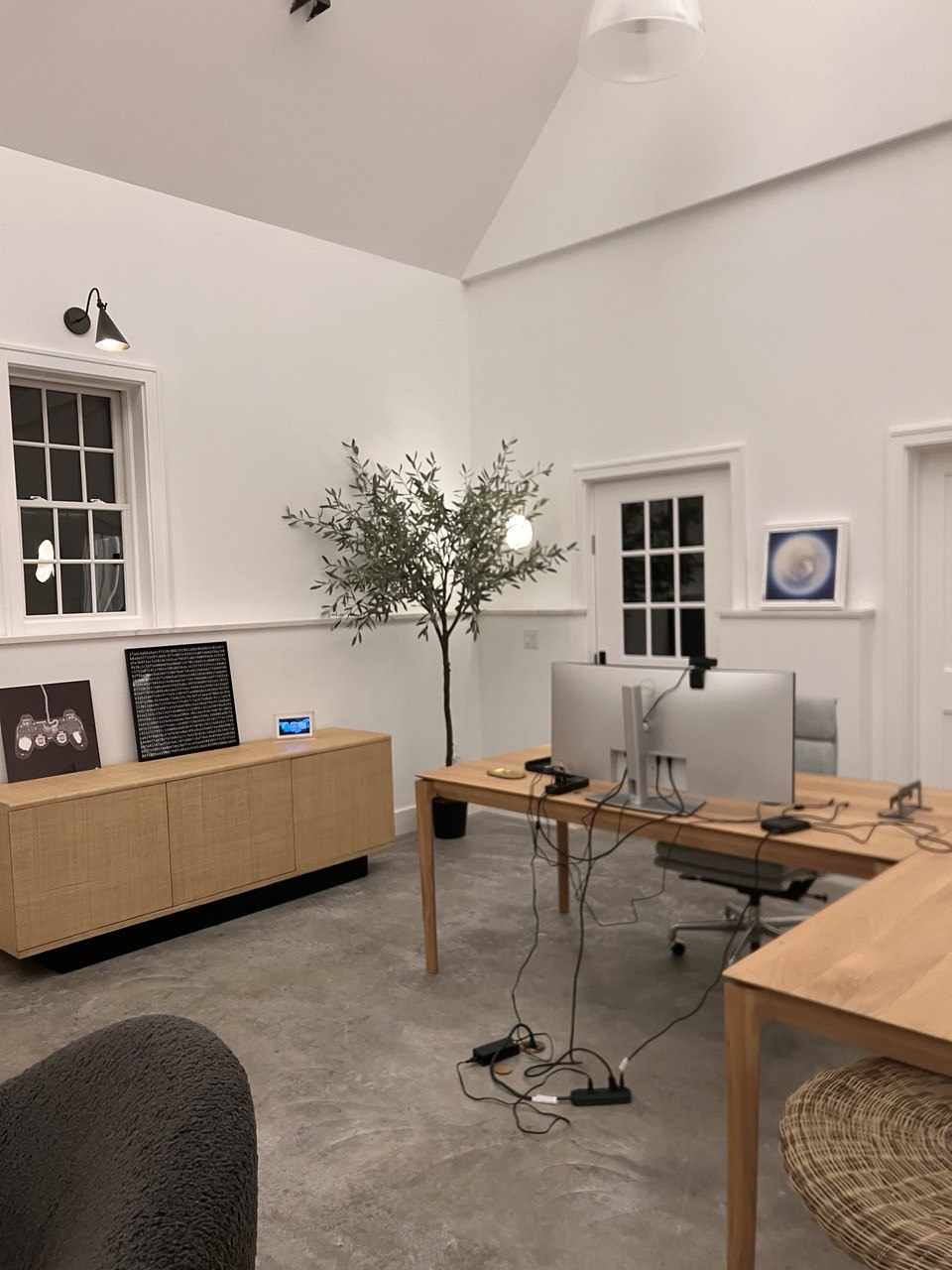
View of some printed works from the Edicurial Collection
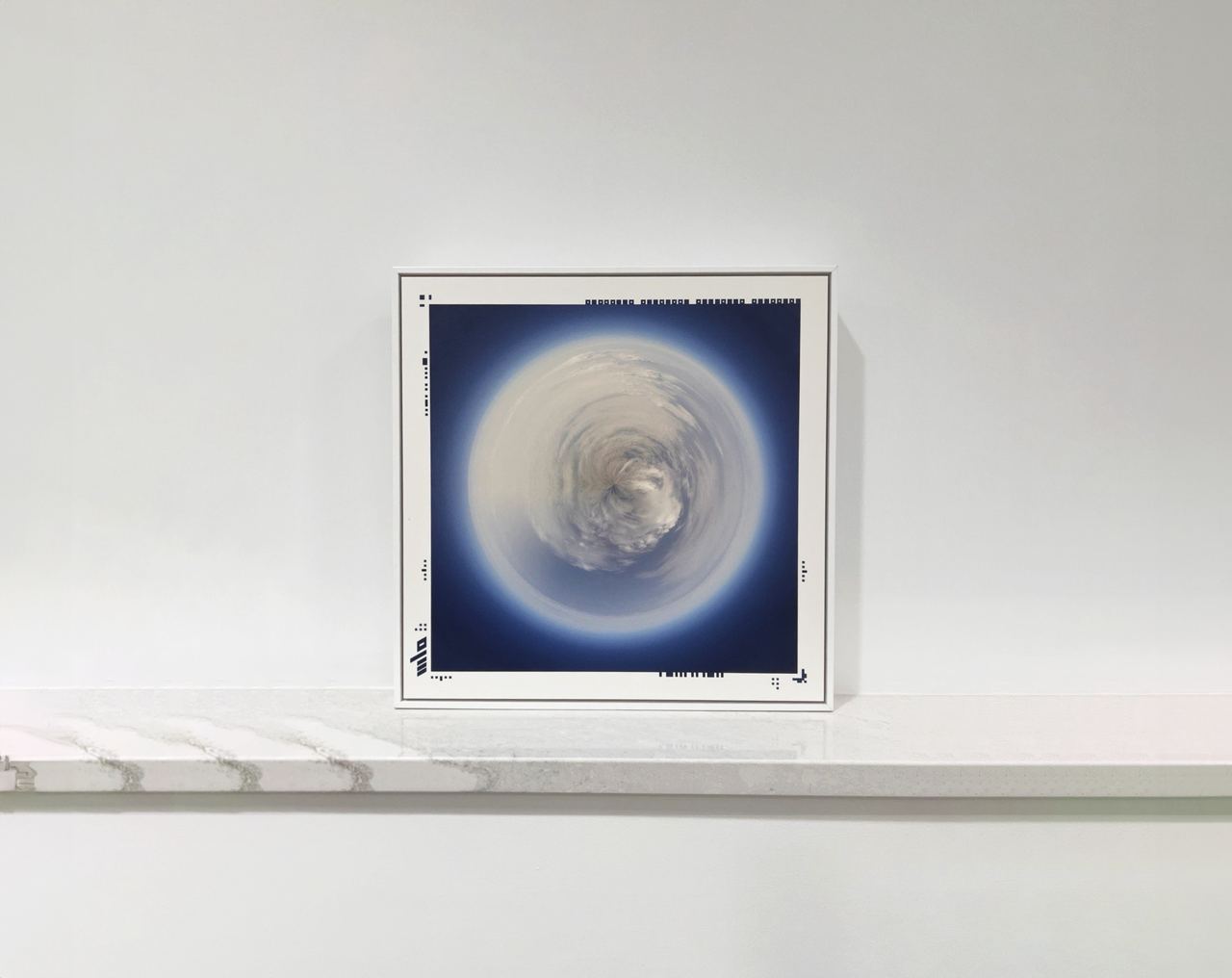
Tokenized Cloud Sphere by Martin Lukas Ostachowski in the Edicurial Collection
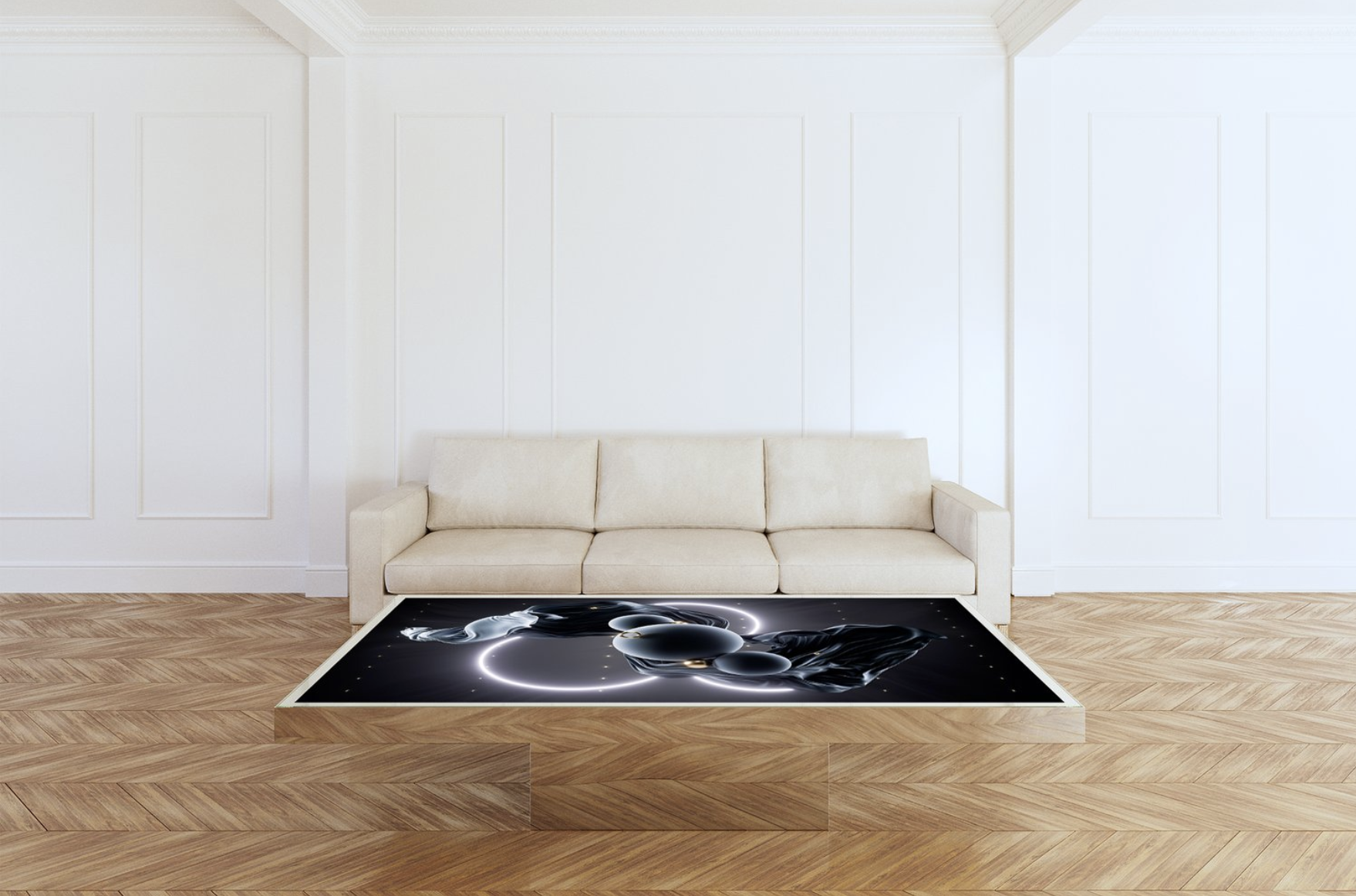
Digital art can also be incorporated into everyday design objects.
Dalbin Paris has created coffee tables with screens as their tops, elegantly integrating digital artworks into centerpiece furniture.
Trame Paris applies generative art patterns to traditional rattan chairs, stainless steel windows, and carpets, working with select generative artists.
For neon art enthusiasts, Yellowpop design studio can create custom neon signs based on your NFTs (where feasible).
Working with local artisans and artists, you can commission custom wallpapers or carpets directly. The digital artist duo Lovid frequently creates such pieces for both public exhibitions and their personal space. Their work includes this rug available on Artsy based on their Artblocks collection, Augury.
Digital artists' coffee table books offer another way to seamlessly bring digital art into your space. Notable examples include Technelegy by Sasha Stiles and other digital art books as recommended by 100 collectors.

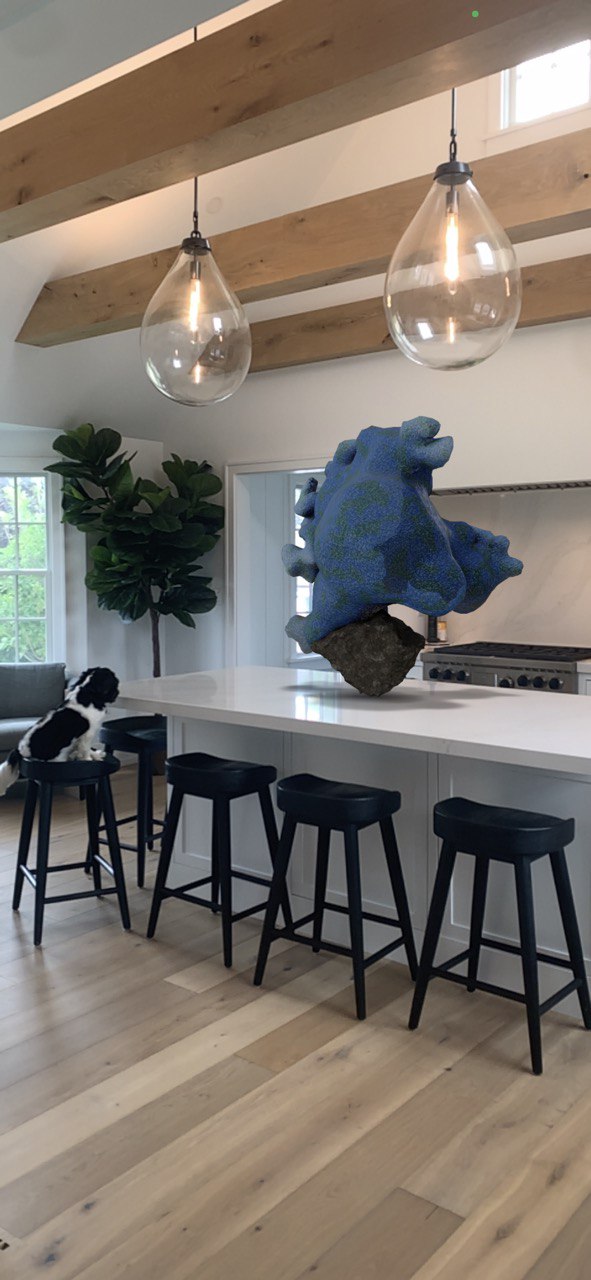
Finally, if you're not ready to display works on screens or in physical spaces, augmented reality (AR) offers a way to experiment with the physicality of digital art.
Artist Auriea Harvey primarily works in digital media, creating digital sculptures and 3D objects that collectors can view through a custom AR app. She also produces 3D-printed sculptures that serve as physical manifestations of her digital works, rather than the other way around.
Digital artists like Auriea, Manuel Rossner, Damjanski and Nancy Baker Cahill incorporate AR into their practice in innovative and ever-evolving ways.
The AR platform Artivive offers AR-activated prints for collectors who wish to surprise their guests by bringing physical works to life on their screens. Hackatao demonstrated this capability with their Imago 2k2 painting.
While displaying digital art presents unique challenges, it's also an exciting frontier of artistic experimentation. There's no definitive rulebook - each artwork demands its own thoughtful approach, whether through screens, projections, physical adaptations, or AR experiences. Rather than seeking a universal solution to "How do you display digital art?", embrace the opportunity to create a presentation that honors both the artwork's digital nature and your space. Your guests will be amazed to discover how seamlessly digital art can inhabit the physical world.
If you need help with any display option mentioned above, please let us know. The 100 collectors team will be happy to help.

While displaying digital art presents unique challenges, it's also an exciting frontier of artistic experimentation.
There's no definitive rulebook - each artwork demands its own thoughtful approach, whether through screens, projections, physical adaptations, or AR experiences. Rather than seeking a universal solution to "How do you display digital art?", embrace the opportunity to create a presentation that honors both the artwork's digital nature and your space. Your guests will be amazed to discover how seamlessly digital art can inhabit the physical world.
If you need help with any display option mentioned above, please let us know. The 100 collectors team will be happy to help.