Permanence is one of the main concerns regarding art on the blockchain, but it is also one of the blockchain's miracles.
Well, this is until quantum computing takes over, but that’s another story.
The “durability” that is usually discussed amongst the communities of blockchain art creators is the one achieved through the tech, so we are not considering the permanence of a community, for instance, or of a project that is so culturally influential that it will forever be present in the future development of the space.
This takes us to two - amongst many others - big debates:
1) Are artworks that record the full image data fully on-chain more permanent than a ‘regular’ NFT, where usually only a hash of the metadata is stored on the blockchain while the actual image is hosted off-chain on decentralized archives (e.g., on IPFS, Arweave, etc.)?
2) Is art on Bitcoin more permanent than art on Ethereum, for instance?
People question whether putting all data on-chain clogs the blockchain or takes up too much block space, potentially making the network more centralized or less efficient. On Bitcoin, for example, Ordinals inscribe actual image data directly onto satoshis, which increases the competition for block space. Some argue that this drives up transaction fees and prioritizes art over financial transactions, deviating from Bitcoin’s original purpose as a monetary network. On Ethereum, fully on-chain NFTs work differently. Instead of directly inscribing image data, they store either generative code inside smart contracts (e.g., Art Blocks) or actual image data inside contract storage. While this doesn’t “clog” Ethereum’s blockchain in the same way as Bitcoin Ordinals, it increases gas costs due to storage demands. This can make minting or interacting with NFTs expensive but doesn’t fundamentally slow down Ethereum’s base-layer transactions. So, while both blockchains face scalability challenges, another debate within the debate arises: Is the tradeoff for permanence worth it? Does storing art fully on-chain contribute to or threaten decentralization?
We will never come out alive from these arguments, but for now, returning to the first question, we assume that yes, in the most widely shared perspective, fully on-chain art is more permanent.
What about our second point? Why would we consider art on Bitcoin more permanent instead?
There are different reasons. For instance, many consider Bitcoin a more permanent home for digital art than Ethereum due to its historical significance, immutable protocol, and true on-chain storage. As the first and most battle-tested blockchain, Bitcoin holds unmatched historical value, making anything inscribed on it part of crypto’s foundational record. Unlike Ethereum, which evolves through upgrades and relies on smart contracts that can introduce risks, Bitcoin’s conservative, stable nature ensures long-term security. Also, for instance, one of the art projects on Bitcoin, Ordinals, allows full data inscription directly on-chain, unlike many Ethereum NFTs that - as we previously mentioned - store only a hash while relying on external storage or store the data in the smart contract. Additionally, Bitcoin’s robust decentralization and unwavering store-of-value mindset further solidify its role as the most reliable blockchain for truly permanent digital art, reinforcing the idea that art inscribed on Bitcoin is more likely to remain accessible and intact for generations to come.
What are some of the most known art projects on Bitcoin?
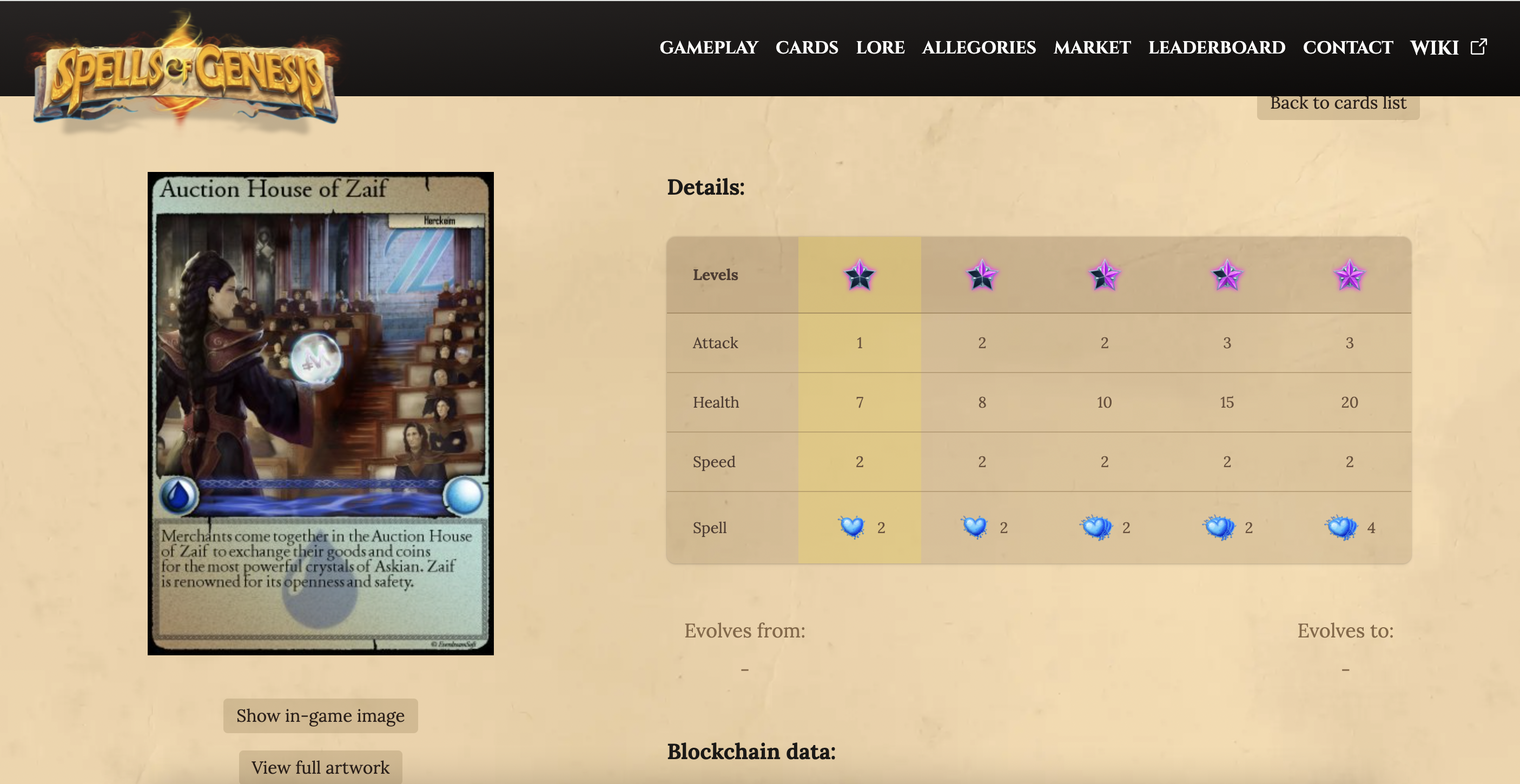
Although Bitcoin was not originally designed for NFTs or digital art, several projects have emerged over the years, utilizing different methods like Counterparty, Stacks, and Ordinals to bring art onto the Bitcoin blockchain. While Counterparty was one of the earliest protocols that facilitated the creation, trading, and ownership of digital assets on Bitcoin, including digital art, in the last years, we also witnessed the rise of projects that enable full on-chain art storage, like Ordinals and Stamps.
In this article, we are going to talk about Counterparty.
Counterparty - What is it?
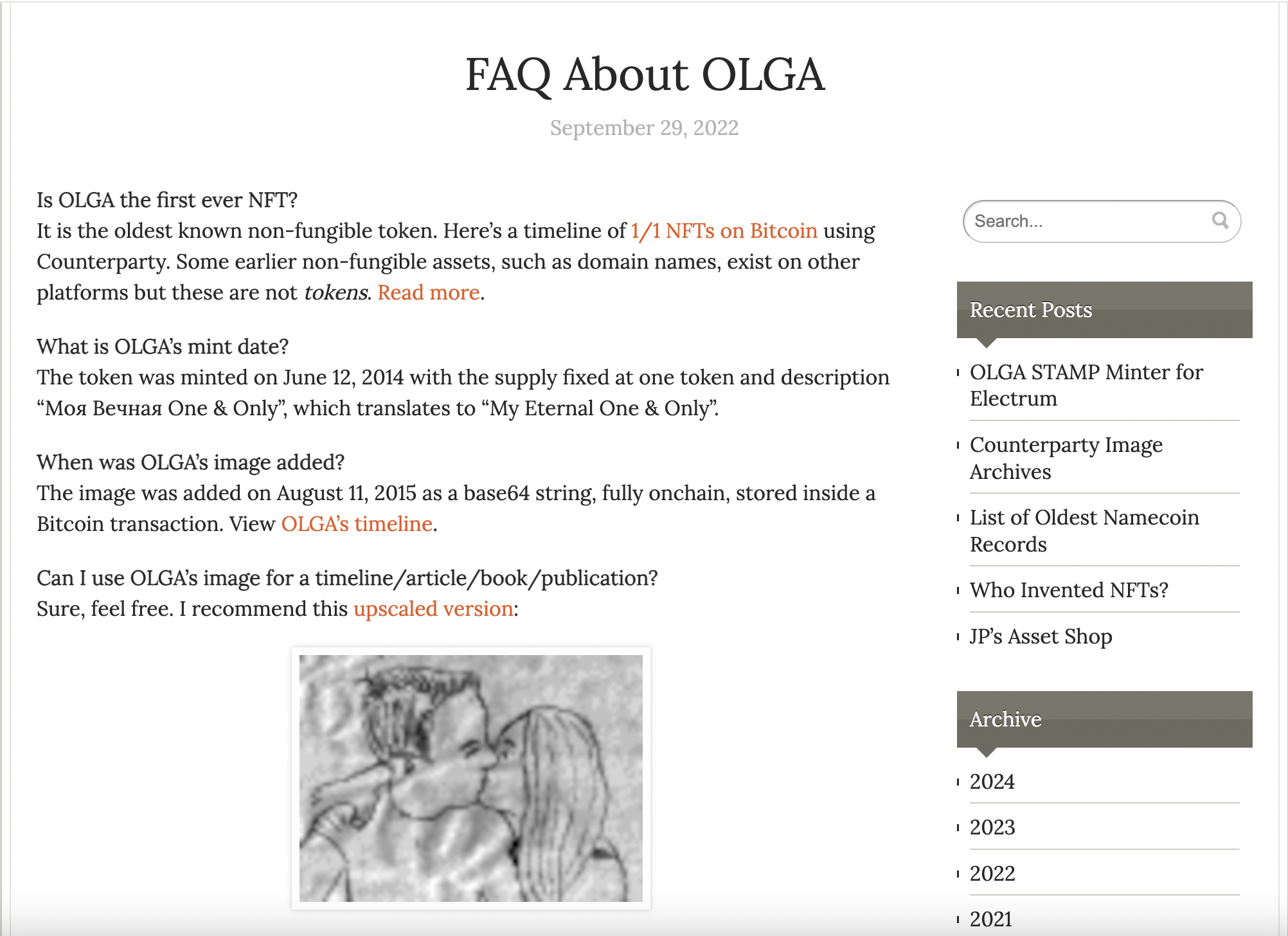
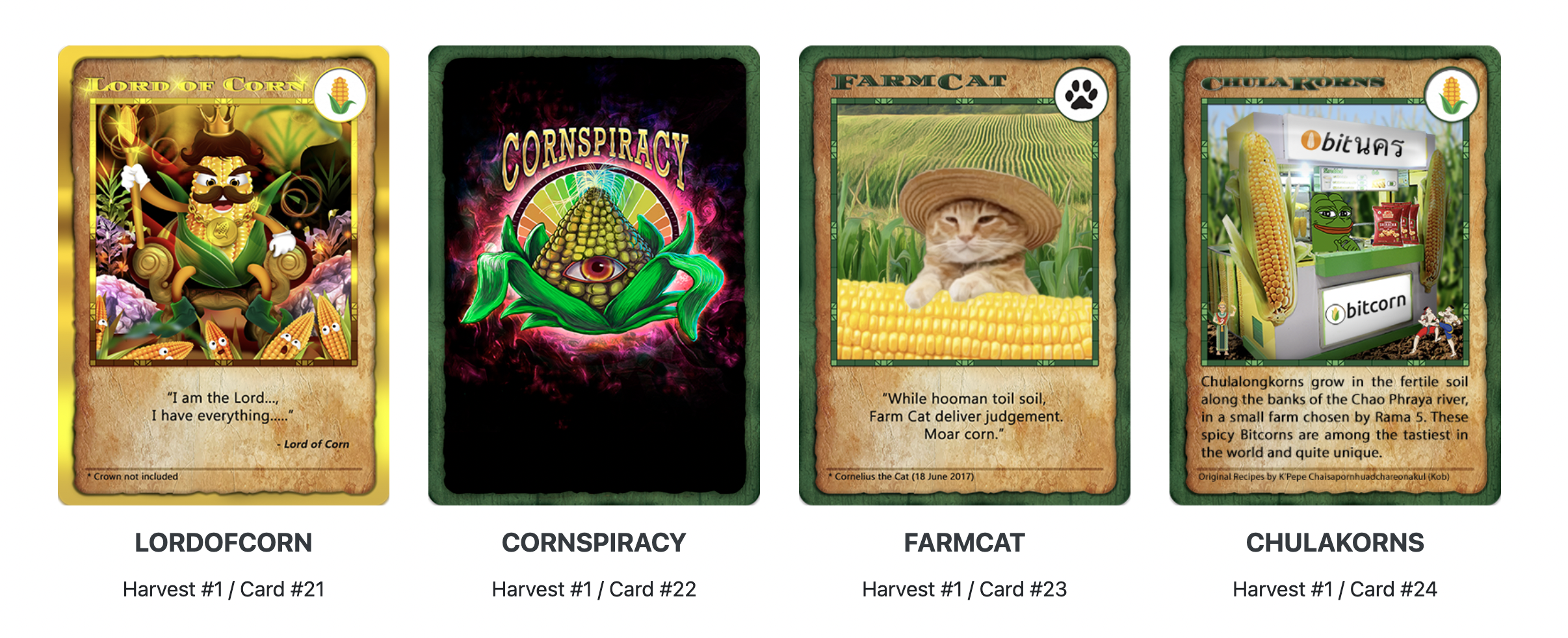
Counterparty is a protocol built on top of Bitcoin that enables to create, trade, and store digital assets on the Bitcoin blockchain. Launched in 2014, it was one of the first platforms that made it possible to issue NFT-like collectibles and tokens on Bitcoin, long before Ethereum popularized digital assets. Bitcoin’s blockchain was designed primarily for sending and receiving BTC, not for handling digital assets like NFTs or tokens. Counterparty solves this by embedding extra information into Bitcoin transactions, allowing users to:
- Create and manage digital assets (Similar to ERC-20 tokens, but on Bitcoin)
- Issue and trade collectibles (similar to NFTs)
- Exchange tokens directly on Bitcoin through a decentralized system
- Have Escrow & Betting Mechanisms (some smart contract-like functionality is possible using Bitcoin script conditions)
To do this, Counterparty stores metadata in Bitcoin transactions using a special method called OP_RETURN, which allows small amounts of additional data to be written on Bitcoin’s blockchain. This makes it possible to track ownership and transfer digital assets while still benefiting from Bitcoin’s security.
Are Counterparty Assets NFTs? The short answer is that they function similarly to NFTs but are not exactly the same as Ethereum-based NFTs (ERC-721 or ERC-1155).
How They Are Similar to NFTs:
- Each token is unique or issued in limited quantities, making them collectible.
- They can be owned, traded, and verified on a blockchain (Bitcoin, via Counterparty).
- They were among the first digital collectibles ever issued on a blockchain, predating Ethereum NFTs.
How They Are Different from NFTs:
- No Standard NFT Format: Counterparty has no ERC-721 or ERC-1155 equivalent. Instead, it uses custom token issuance rules.
- Metadata: Counterparty assets store metadata differently—they don’t have a built-in system for linking images like Ethereum NFTs. Instead, the metadata is often referenced externally.
- No Smart Contracts: Unlike Ethereum, Counterparty does not use smart contracts for NFT functions like royalties, staking, or utility-based interactions.
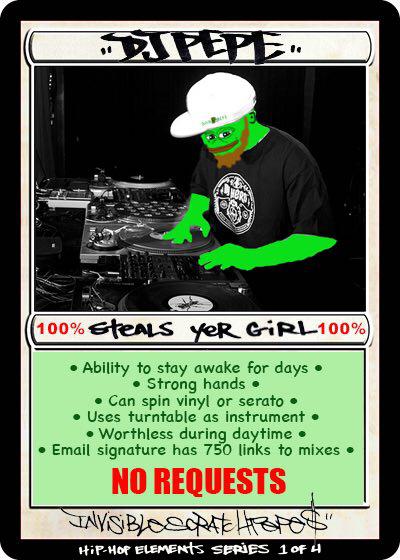
Counterparty assets are best described as “proto-NFTs” or “historical blockchain collectibles.” Although they are not technically NFTs by today's Ethereum standards, they played a foundational role in blockchain-based digital art and collectibles. Please don’t miss this gem, an article written by Scrilla (artist, dj, co-founder of Fake Rares and creator of DJPEPE) in 2017 about how to create a token on Counterparty.
.svg)

.png)
.jpg)