Ordinals inscriptions live within witness data, which means they take advantage of SegWit’s efficiencies and do not interfere with Bitcoin’s fundamental transaction model. However, because witness data is not essential for Bitcoin’s core functionality, node operators can choose to prune it, deleting it to save disk space. This does not mean Ordinals disappear entirely, but it does introduce an element of uncertainty: if enough nodes decide to prune witness data, certain inscriptions may become inaccessible. That being said, Bitcoin’s ecosystem is currently structured in a way that makes widespread pruning unlikely. Many full nodes still store witness data, and archival services actively back up inscriptions, ensuring that Ordinals remain retrievable even if individual nodes discard them.
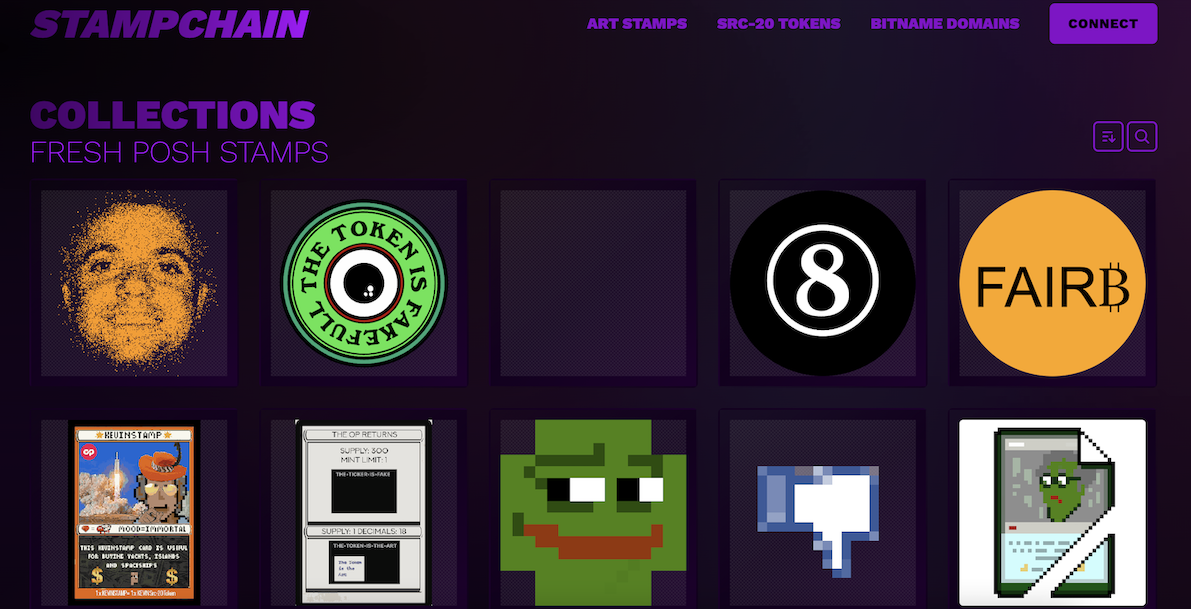
Stamps, by contrast, take a radically different approach. Instead of utilizing witness data, they embed inscriptions directly into Bitcoin’s UTXO set. Because every node must maintain a full record of all unspent transaction outputs for the network to function, Stamps are truly immutable. They cannot be pruned, deleted, or removed without breaking Bitcoin’s transaction model. This permanence comes at a price—quite literally. Since UTXOs are fundamental to Bitcoin’s operation, embedding data in them takes up more valuable block space, making Stamps significantly more expensive to create than Ordinals. They also contribute to UTXO bloat, increasing the size of Bitcoin’s state and making it more resource-intensive for nodes to operate over time.
Ordinals optimize for efficiency and flexibility, while Stamps prioritize absolute immutability, even at the cost of scalability. The contrast between these two approaches encapsulates one of the ongoing philosophical and technical tensions within Bitcoin’s emerging art scene: should digital artifacts on Bitcoin prioritize permanence above all else, or should they aim for a balance between practicality and decentralization?
At present, Ordinals have gained significantly more traction. Their relatively low cost and efficiency have encouraged adoption, and marketplaces dedicated to trading them have flourished. So far, no large-scale pruning events have taken place, meaning Ordinals remain accessible across the network. Stamps, meanwhile, have carved out a niche among collectors who see permanence as non-negotiable, even if it comes at the cost of efficiency. Some view them as a conceptual counterpoint to Ordinals, an alternative that reinforces the idea that Bitcoin inscriptions should be permanent, no matter the computational burden they impose.
What is undeniable is that both Ordinals and Stamps have pushed Bitcoin’s artistic potential far beyond what was previously imagined. No longer just a system for financial transactions, Bitcoin is now a medium for cultural inscription, a ledger that is as much about art as it is about money. Whether the future of Bitcoin-based art leans toward the efficiency of Ordinals or the permanence of Stamps remains to be seen, but the fact that such discussions are happening at all marks a fundamental shift in how Bitcoin is perceived. It is no longer just a network for value transfer; it is becoming a platform for cultural permanence.
.svg)
.png)



.png)

.png)