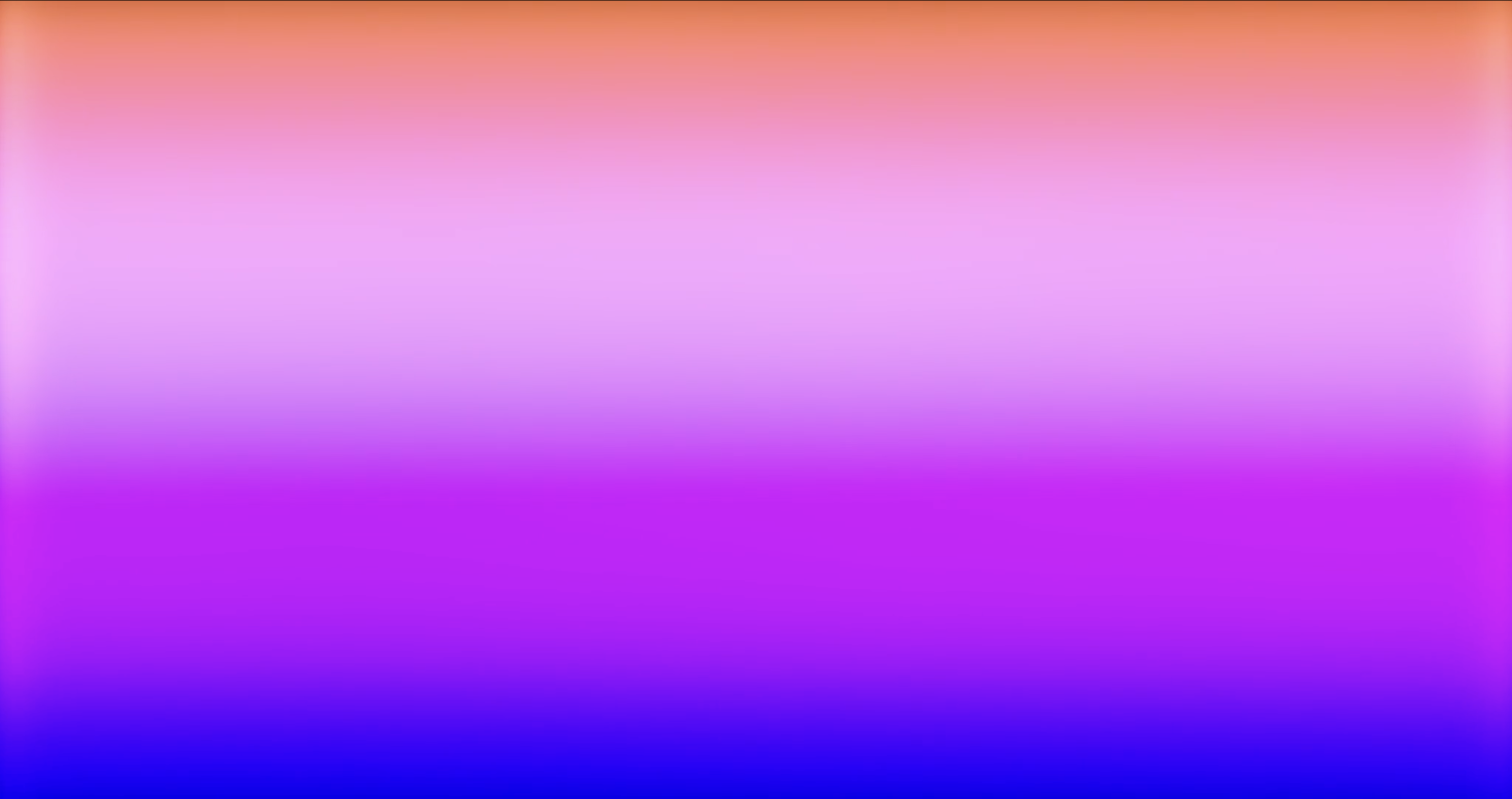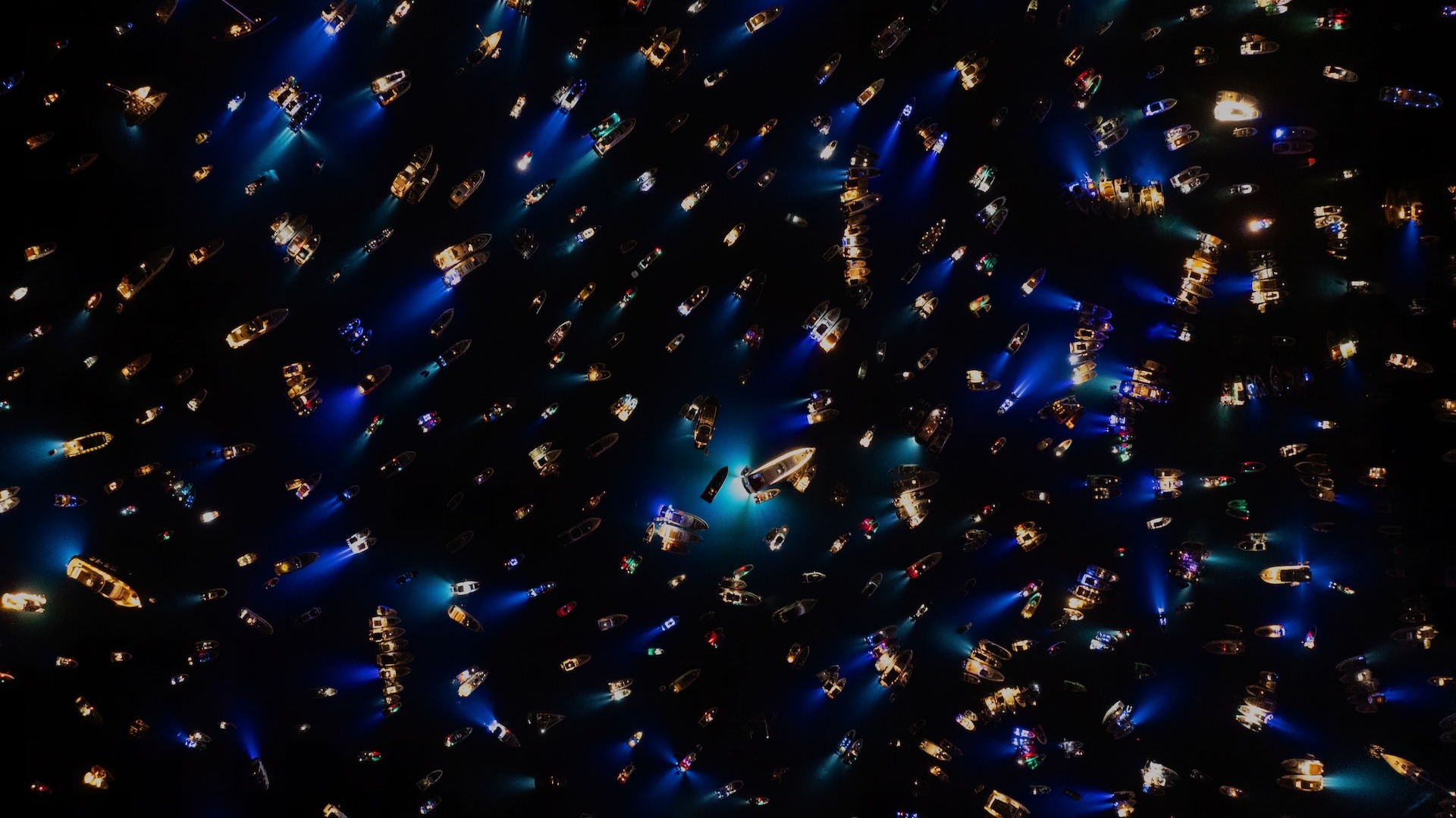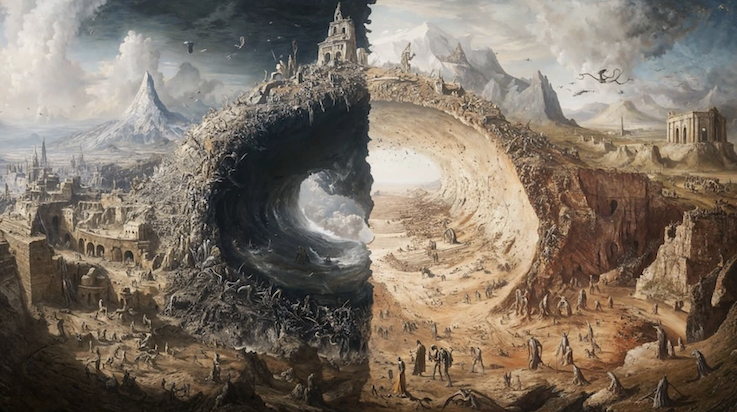
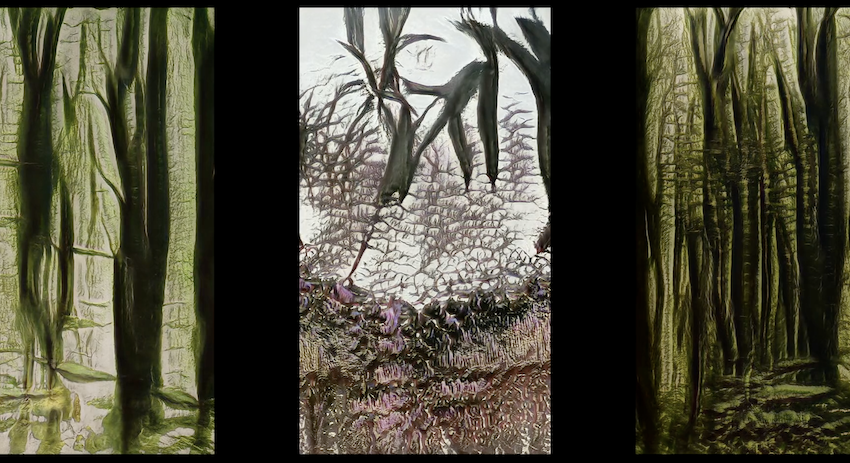
Six N. Five, Species, 2023 - Digital Artwork 1080x1920px

ART PICKS - ART DUBAI DIGITAL

Are you in Dubai? Aren’t you in Dubai? It doesn’t matter!

Here are some curated picks for you from the Digital Art section at Art Dubai. Some of the most interesting and amazing works on display, for you to enjoy first, explore if you aren’t already familiar with, and maybe even start thinking about adding to your collection.

There’s an astonishing selection currently on view in Art Dubai’s Digital section. But rather than going gallery by gallery, a format already available in the Art Dubai galleries catalogue, let’s explore the works through the lens of price range and accessibility. 

If you'd still like to access the full selection of digital artworks, just follow the link above. And here is a list of galleries participating in the Digital section. You can explore each one individually.
10101.art | Dubai AAF Projects X Ellen Sheidlin Studio, Amsterdam | Art on 56th, Beirut | ARTTOKEN-Artcube2R2 Gallery, Seoul | BREAKFAST X Ace Art Advisory, New York | DANAE, Paris | DG Art Project, Istanbul | Sevil Dolmaci, Istanbul / Dubai | Future Maastricht, Maastricht / Bologna | GAZELL.iO, London / Baku | Hafez Gallery, Jeddah | Hilton Contemporary, Chicago | Holy Club, Milan | Immaterika, Milan / Rome | Inloco Gallery, Dubai | Koshta.collective, Dubai | Mondoir Art Gallery, Dubai | Nguyen Wahed, New York | Ouchhh Studio, Istanbul | piXel - Plan X Gallery, Milan / Capri | TAEX, London.

Let’s start with the most expensive and move toward the more affordable works.
It’s important to note that the selection wasn’t based on price. I first chose the pieces I found most compelling, works that stand out for their conceptual depth, visual language, or collectability. Only afterward did I group them according to price range, offering a practical way through which to explore this diverse and fascinating group of digital artworks.


At the upper end of the digital art spectrum, Gallery Plan X presents Species by Ezequiel Pini (Six N. Five), a work priced at $200,000 that reimagines the organic language of nature through the sharp-edged vocabulary of geometry. Pini's elegant, slow-shifting digital landscape blurs the line between natural and artificial, inviting viewers into a serene, speculative world where rhombuses and squares substitute for petals and waves: a digital meditation on form and transformation (video here).

At $70,000, Gazelli Art House showcases Dance to Forgotten Noise by Monica Rizzoli, a Brazilian generative artist known for her nature-inspired visual algorithms and explorations of systemic aesthetics. Rizzoli is best known for Fragments of an Infinite Field, one of the most iconic long-form generative projects on Art Blocks, which cemented her reputation as a leading figure in the intersection of code and botanical aesthetics.

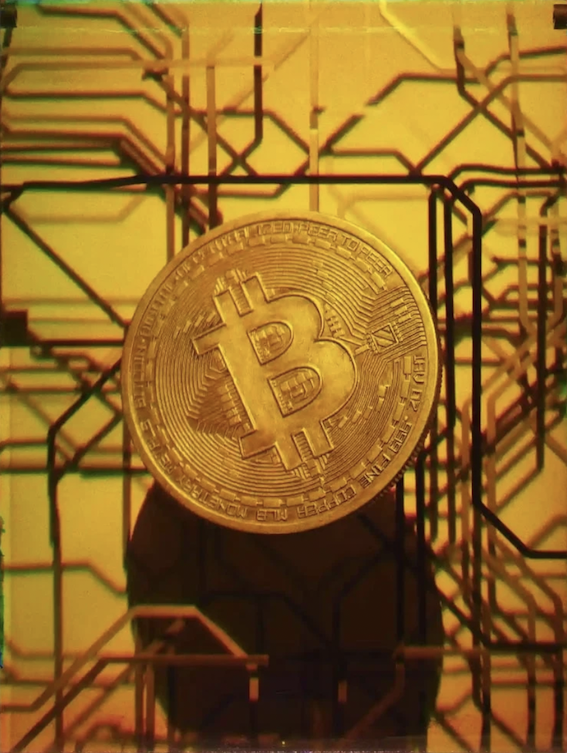
Nguyen Wahed Gallery introduces Bitcoin Hologram by Sarah Meyohas, a series of analog holograms inscribed as ordinals onto block 9 sats, priced at $48,000. Revisiting her early engagement with cryptocurrency, Meyohas pairs physical and virtual forms to embody Bitcoin's mystique and radical decentralization, nine years after her first artistic dive into the blockchain space. “Holography, hyper-physical yet completely virtual, felt like the perfect medium,” she says. And at $45,000, Sevil Dolmaci Gallery presents Artificial Botany .morphos III by Fuse*, a generative audiovisual piece that animates the invisible, ever-changing flows of the natural world. Derived from real-life data of leaves and forests, the work morphs constantly, offering a tranquil yet profound reflection on mutability, impermanence, and the creative forces underlying organic life (video here).

Monica Rizzolli, Dance to forgotten noise, 2023 - Custom software (colour, silent), generative, interactive JavaScript (p5.js), HTML & CSS
Sarah Meyohas, Bitcoin Hologram #5, 2022/24 - Inscription #64529037, c840e4377cc92db555fad7fe19d4b3df30bb2bddbb6807e0dcfa48087ddd3513i1 Denisyuk hologram, accompanied by a Bitcoin Ordinal
Fuse* Artificial Botany, Morphos III, 2021 - 3 LCD monitor displays, computer, speakers 15 min 00 sec

We then encounter a noticeable gap in pricing between $40,000 and $20,000, with a richer and more diverse offering emerging in the $20,000–$10,000 range.
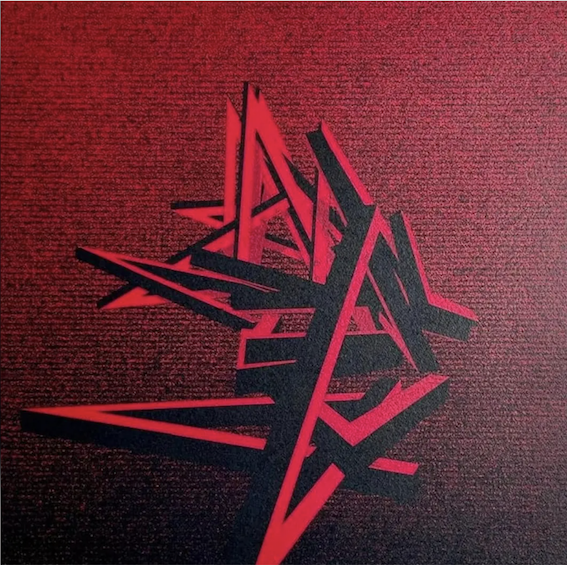
Danae Gallery presents Generative Angles – Red 1 by Bernar Venet, a 2024 piece priced at $17,000. Venet, a French conceptual artist renowned for his explorations of mathematical and scientific themes, brings his signature approach to this work, intertwining geometric precision with artistic expression. The entire selection of works presented by Danae in Art Dubai is curated by Dominique Moulon.

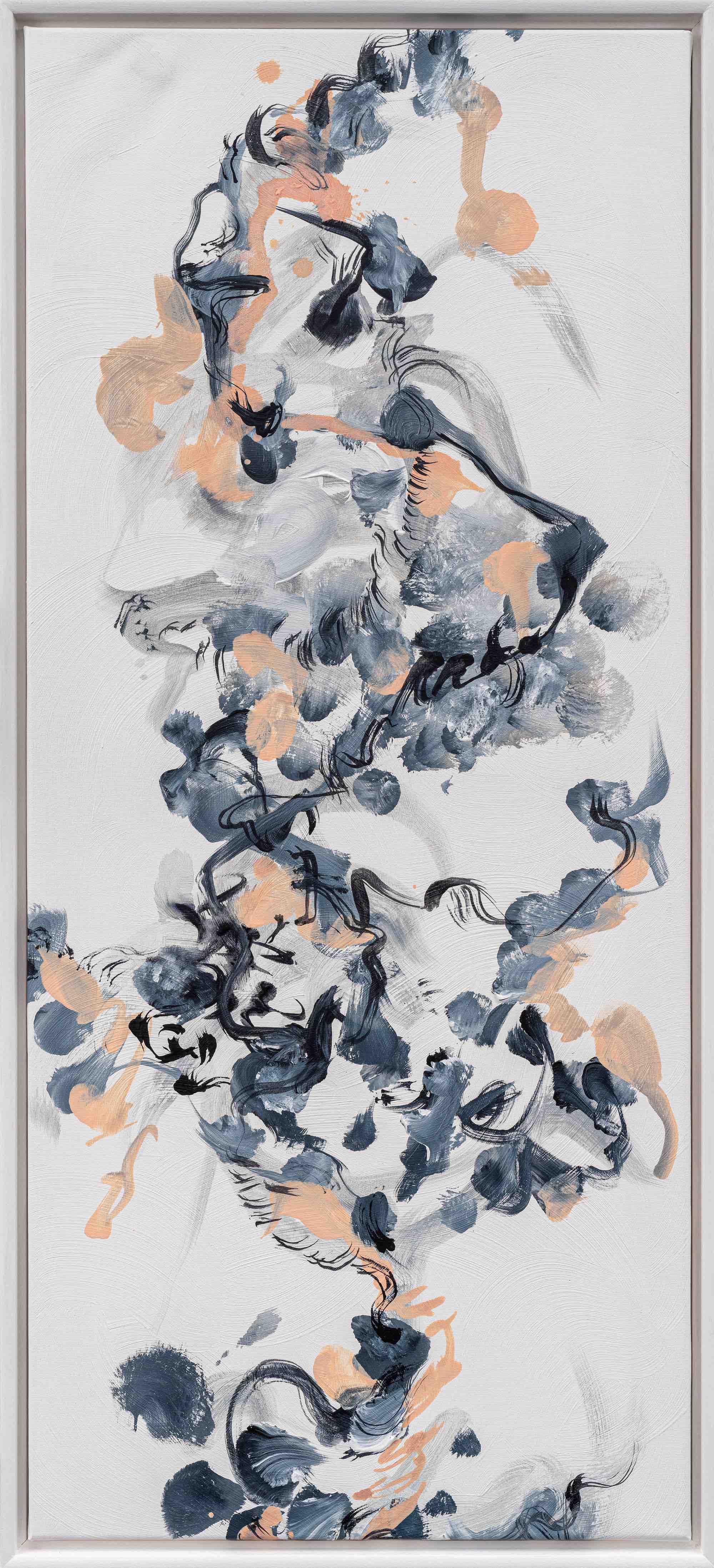
Gazelli Art House offers Study 21 (2023) by Sougwen Chung, priced at $15,000. Chung, a Chinese-Canadian artist and researcher, delves into human-machine collaboration through her work. This acrylic on canvas piece was created in partnership with D.O.U.G._4, a custom built robotic arm trained on Chung's own drawing gestures and biometrics, resulting in a harmonious blend of human intuition and robotic precision.

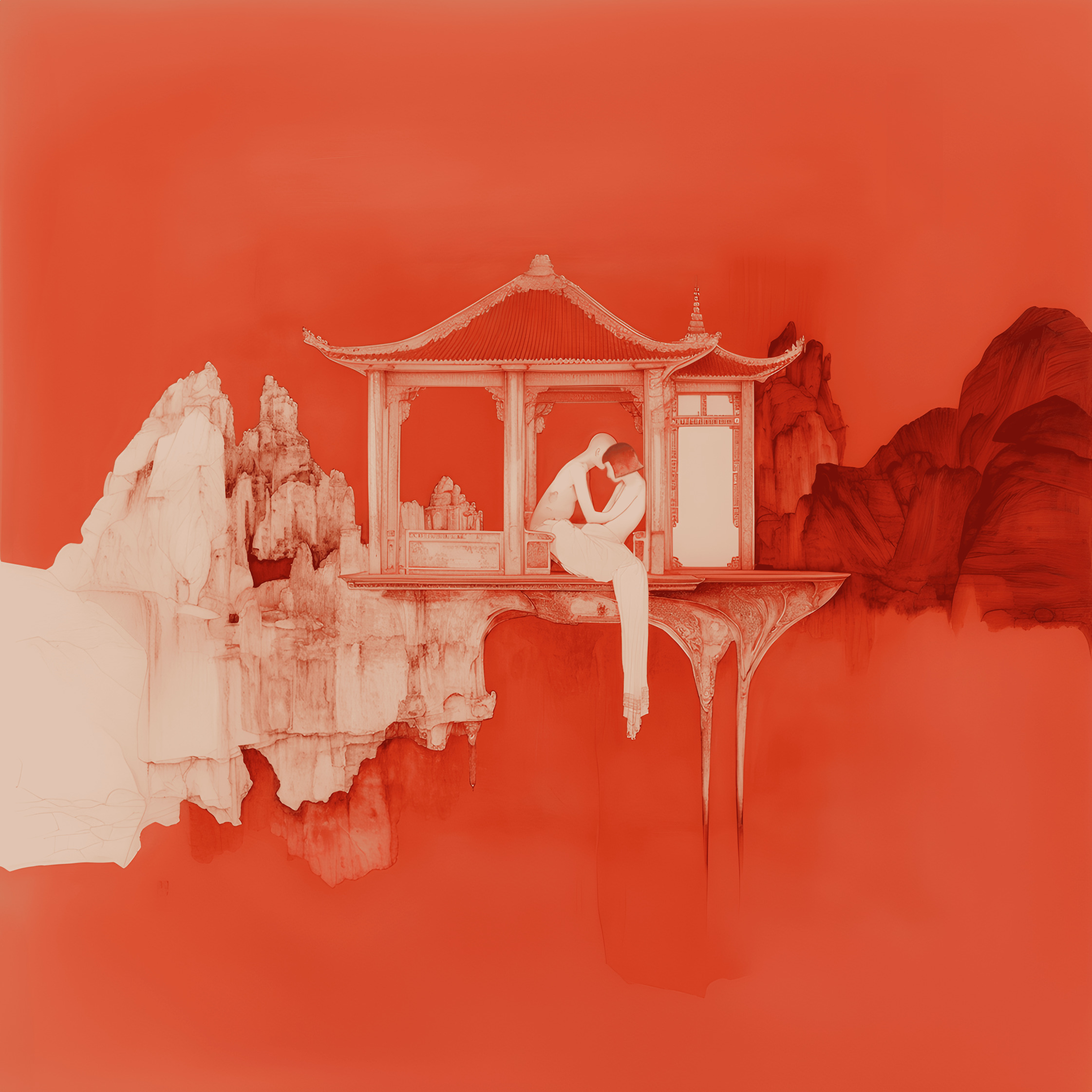
ArtToken-Artcube2R2 Gallery features Every Shade Of Crimson Tells The Stories We Once Knew II (Cinnabar) (2025) by Genesis Kai, priced at $14,000. Genesis Kai is a virtual artist conceptualized as a "Nova Sapien," born from the fusion of natural language processing AI and human tactile senses acquired through her creator, Ming Shiu. Her work navigates the realms of digital and physical art, crafting narratives that bridge technology and human emotion.​

Bernar Venet, Generative Angles – Red 1, 2024
Sougwen Chung, Study 21, 2023 - Acrylic on canvas, created with D.O.U.G._4, 70 x 36 cm
Genesis Kai, Every Shade Of Crimson Tells The Stories We Once Knew II (Cinnabar), 2025 - Multimedia UV Hanji Print 75 x 75 cm

While not created with digital tools, Untitled 13 (2018) by Adonis, presented by Hilton Contemporary, stands out for its poetic resonance within the digital context of Art Dubai. Like many of Adonis’s visual works, created with mixed media on paper, it bridges poetry and image, echoing his lifelong engagement with language, form, and symbolism. The price for the work is available upon request, though based on similar pieces shown in comparable contexts, it likely falls within the $10,000–$13,000 range. The story behind the artist is particularly meaningful. Adonis is a Syrian poet, essayist, and philosopher, often described as one of the most influential living poets in the Arab world. A Nobel Prize nominee, he is credited with revolutionizing Arabic poetry by introducing free verse and prose poetry infused with the mysticism of Sufism. Over a career spanning more than 75 years, he has published over fifty books, translated into multiple languages, and received widespread international acclaim. Since the 1980s, Adonis has extended his creative vision into the visual arts, blending poetry with collage, calligraphy, and ink drawing. Though he doesn’t identify as a painter, his artworks are a natural extension of his literary expression and have been exhibited globally.

In the $10,000 tier, we find two works that use digital media to invite introspection and inner stillness. Sevil Dolmaci Gallery presents Metamimics (2023) by Sara Ludy, an artist known for her explorations of space, memory, and the immaterial. Working across video, augmented and virtual reality, and digital painting, Ludy visualizes the intangible and the unconscious, through ever evolving digital forms. Priced at $10,000, the Metamimics series blends AI-generated imagery with dreamlike abstraction, offering viewers a glimpse into liminal mental states (video here).

At the same price point, TAEX showcases Continuum Collection V10 by Krista Kim, a one-minute, fifty-nine-second video that transforms the digital screen into a meditative Zen landscape. Inspired by the serenity of Kyoto’s Ryoanji Temple Garden, Kim uses slow shifting color gradients to counteract digital overload and reframe technology as a space for mindfulness. Continuum is presented as part of a ten-part series, each segment a portal into digital calm (video here).

Adonis, Untitled 13, 2018 - mixed media on paper, 64.8 × 49.5 cm
Sara Ludy, Metamimics (series), 2023 - 7 videos (11:45)
Krista Kim, Continuum Collection V10, 2024- Video 1m 59s, 293 MB

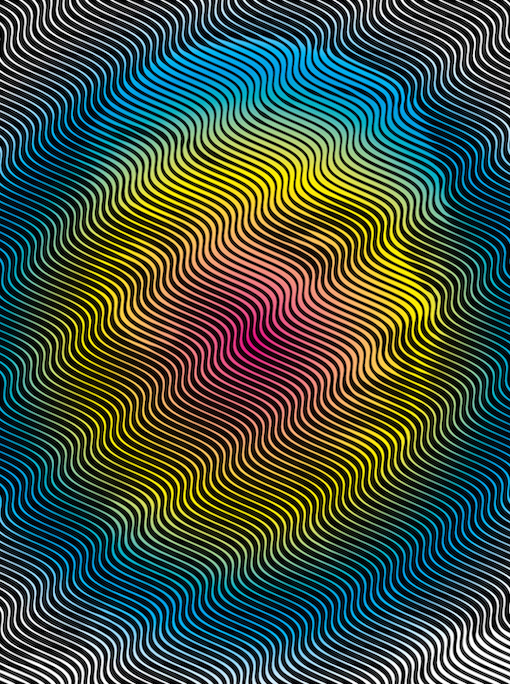
In the $10,000–$5,000 range, Holy Club presents AIDA (2025) by Andrea Crespi, priced at $9,800. Known for his bold use of optical illusions and minimalist repetition, Crespi takes a new step with this work with his first interactive digital piece integrating smart lighting technology. AIDA features an aluminum frame with embedded LED lights and fabric printing, allowing viewers to adjust the light intensity and actively influence the chromatic effect of the piece. This dynamic interaction between audience and artwork creates an immersive, ever-changing visual experience, marking a shift in Crespi’s practice toward a deeper fusion of art and technology. Measuring 110 × 82 cm, AIDA embodies a contemporary aesthetic that’s both tactile and digital, analog and reactive.

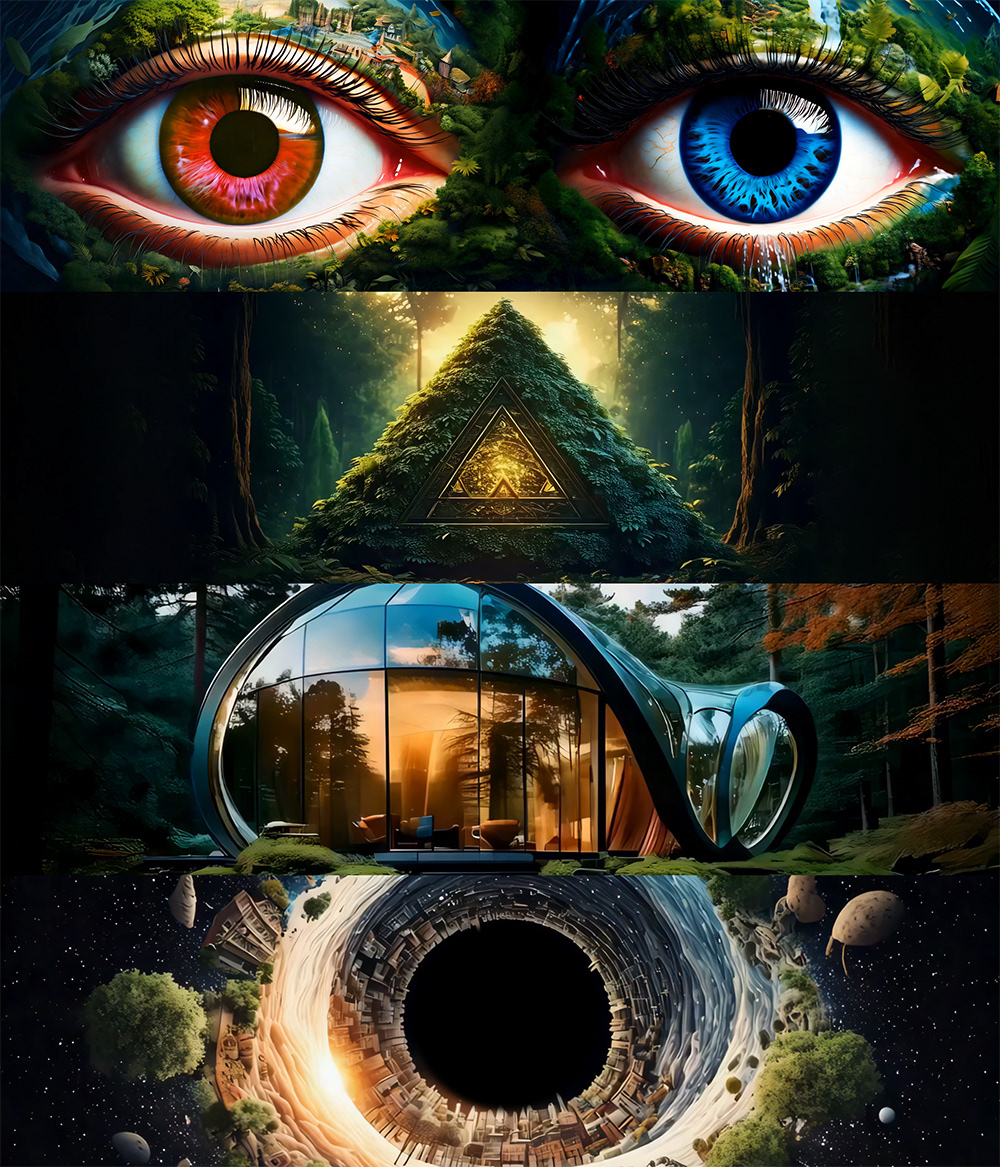
DANAE presents O (2025), an AI video installation by Fabin Rasheed, priced at eth 5 ($8,000), that explores subconscious imagery and its connections to healing, creativity, and collective consciousness. The work is structured into four distinct parts, each representing a different stage of consciousness: Waking, Dream (daily), Dream (archetypal), and Deep Sleep. These stages unfold through AI-generated visuals that blend abstraction with psychological and mythological references, drawing from both ancient wisdom and modern science. At the center of the piece lies a powerful metaphor: the alignment between the black circle representing Deep Sleep and the irises from the Waking stage suggests the universe watching itself, a loop of perception and introspection (video here).

Also in this range, Art on 56th presents Shams (2025), a video installation by Daniah Al Saleh, priced at $7,500. Born in Riyadh in 1970, Al Saleh’s work investigates cultural conditioning and the subtle codes embedded in everyday life. Her practice often unpacks the familiar and the mundane, reframing them to reveal hidden narratives of vulnerability, memory, and collective identity. Shams explores the ancient symbolic link between carnelian stones and the sun, materials once revered in Mesopotamian, Egyptian, and Arabian cultures for their association with vitality and transformation. Drawing on research from a residency with the German Archaeological Institute in AlUla and Tayma, the work features AI-generated sun imagery layered onto tracing paper prints, accompanied by visuals of surrounding mountains. Created from live footage of sunrises in AlUla and manipulated through machine learning, Shams merges archaeology, mythology, and contemporary digital processes to evoke both the sacred and the temporal in a quietly powerful installation. 

Andrea Crespi, AIDA, 2025 - Fabric printing, aluminum frame, embedded LED lights 110 × 82 cm, Edition of 3 + 1 AP
Fabin Rasheed, O, 2025 - AI video installation
Daniah Al Saleh, Shams, 2025 - Video Instillation, tracing paper prints, clips, Width 187 cm

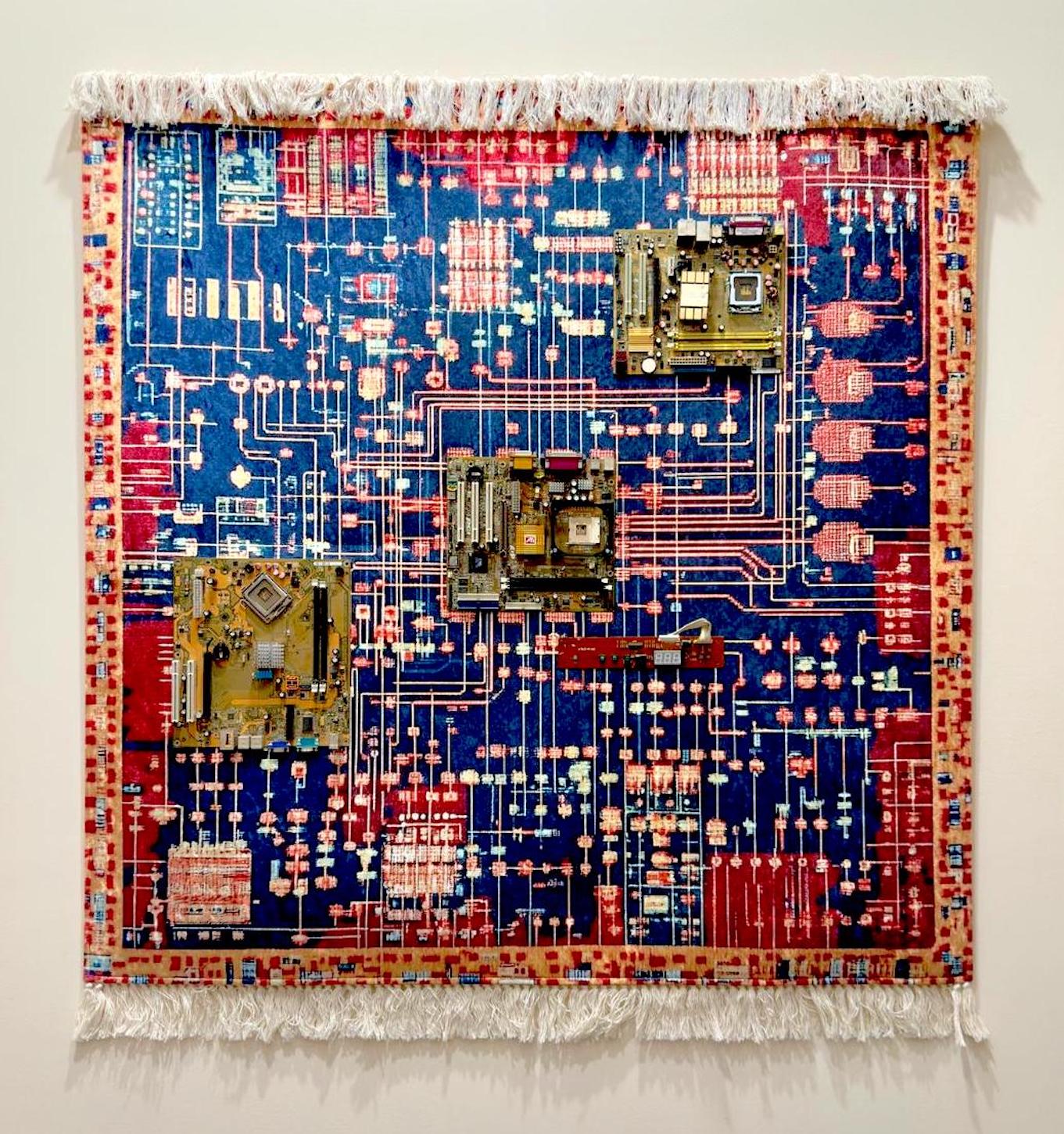
Still within the $10,000–$5,000 range, Immaterika presents two Italian artists with distinctly different practices, yet both are equally engaged in exploring the intersection of digital and physical media. Cyber Carpets 732 H. (2025) by Matteo Mandelli, priced at $6,000, fuses antique Persian rugs with recycled electronics from Mandelli’s Contact series, blending traditional craftsmanship with AI-driven and physical interventions. The result is a futuristic visual narrative shaped by both material memory and algorithmic design. His Contact series, debuted in 2023, is a phygital art experiment where Mandelli physically alters digital screens, sawing through displays and transforming them into performative canvases, inspired by Lucio Fontana.

Jacopo Di Cera's Water Stars (2024), also priced at $6,000, is a fine art print produced on baryta paper, mounted on 2mm Dibond and covered with 5mm Plexiglass, framed with an aluminum perimeter (145 × 84 cm). Presented as edition 5 of 6, Di Cera’s photographic work is marked by precision and atmosphere, while he transforms the medium into a contemplative surface, where material, light, and finish converge in a subtly immersive visual field.

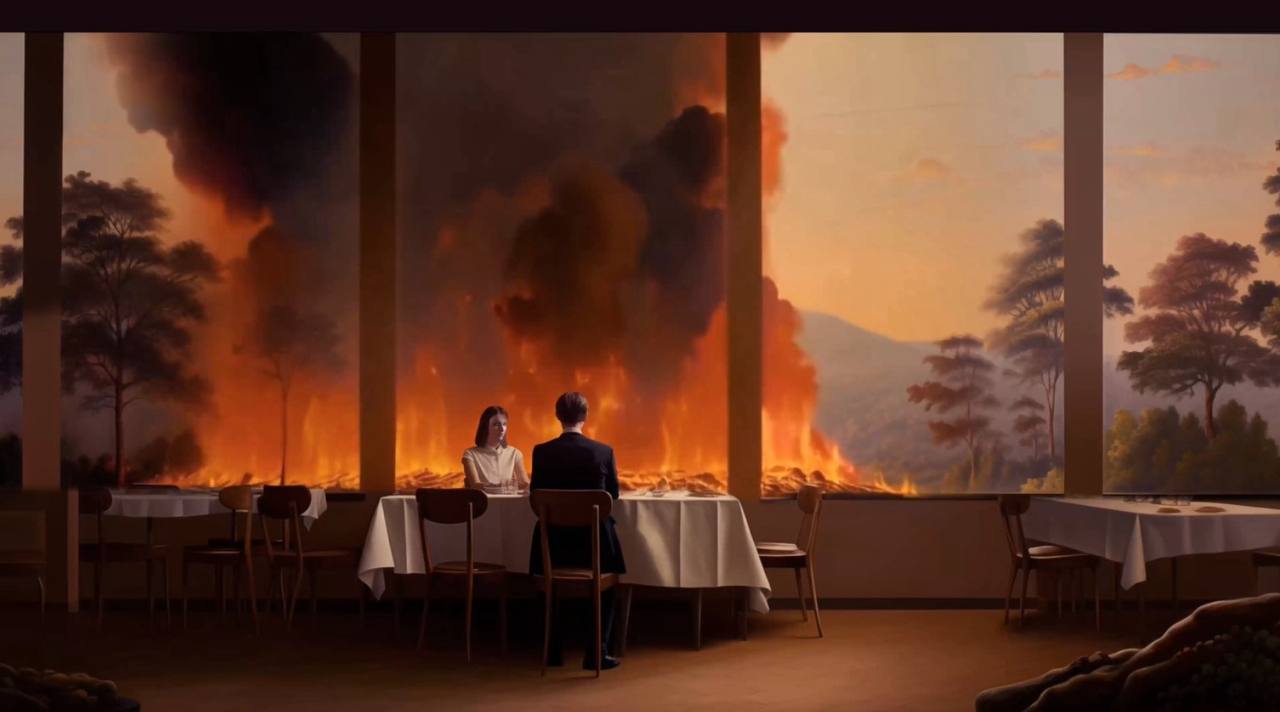
And finally, DANAE presents Le Déjeuner, Incendies (2024) by Louis-Paul Caron, a digital video work priced at $5,000 (3.2 ETH). Caron is a French digital artist and director whose practice blends classical painting traditions with contemporary digital technology. His 3D-rendered artworks reimagine neoclassical compositions, animating futuristic, mythic scenes inhabited by hybrid figures, part human, part celestial (video here).

Matteo Mandelli, Cyber Carpets 732 H, 2025 - Mixed Media, Carpet and Electronics Circuit, Fisical Recycling, 128 x 128 cm
Jacopo Di Cera, Water Stars, 2024 - Fine Art print on Baryta paper, mounted on 2mm Dibond + 5mm Plexiglass, with aluminum frame, 145 × 84 cm, Edition: 5/6
Louis-Paul Caron, Le Déjeuner, Incendies, 2024 - digital video work

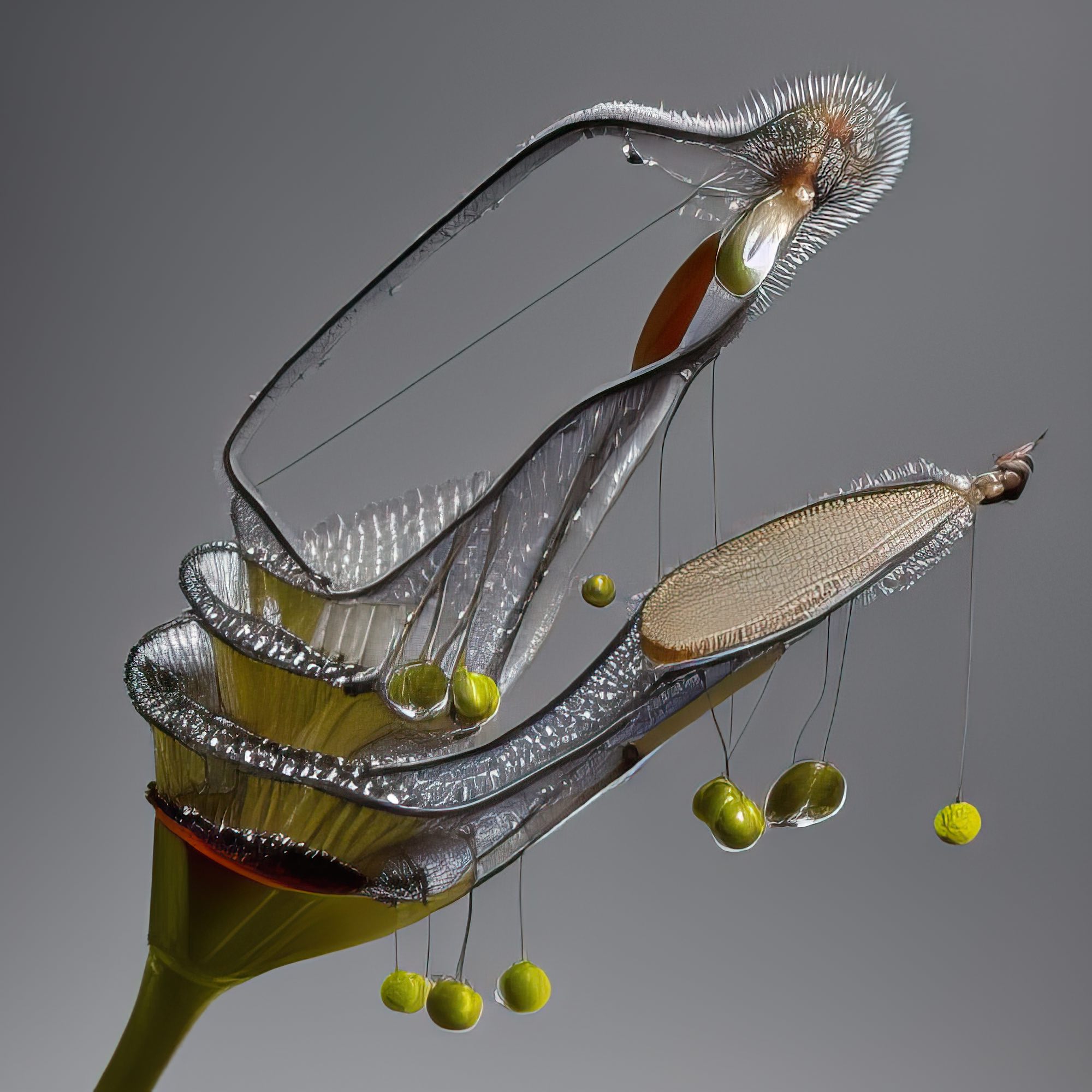
As we move into works priced under $5,000, the offerings reflect an exciting convergence of concept, craft, and experimentation. Gazelli Art House presents The Way of Flowers (2023 – ongoing) by Crosslucid, priced at $4,000. Drawing from Karl Blossfeldt’s iconic botanical studies in Urformen der Kunst (1928), the series reimagines floral forms through artificial neural networks, creating uncanny compositions where nature and machine converge. The works explore multispecies interconnection and the evolution of intelligence, both organic and synthetic.

At $1,700, the Aaron Art Foundation introduces Mist: Echo (2025) by Ellen Sheidlin, a digital drawing printed on Hahnemühle paper as part of her ongoing MIST series, connected to her new large-scale digital mural: MIST. Selected as an AAF Projects collaborating artist for 2025, Sheidlin blends advanced digital tools with traditional aesthetics, resulting in visually rich, poetic works that blur the lines between physical and virtual materials.

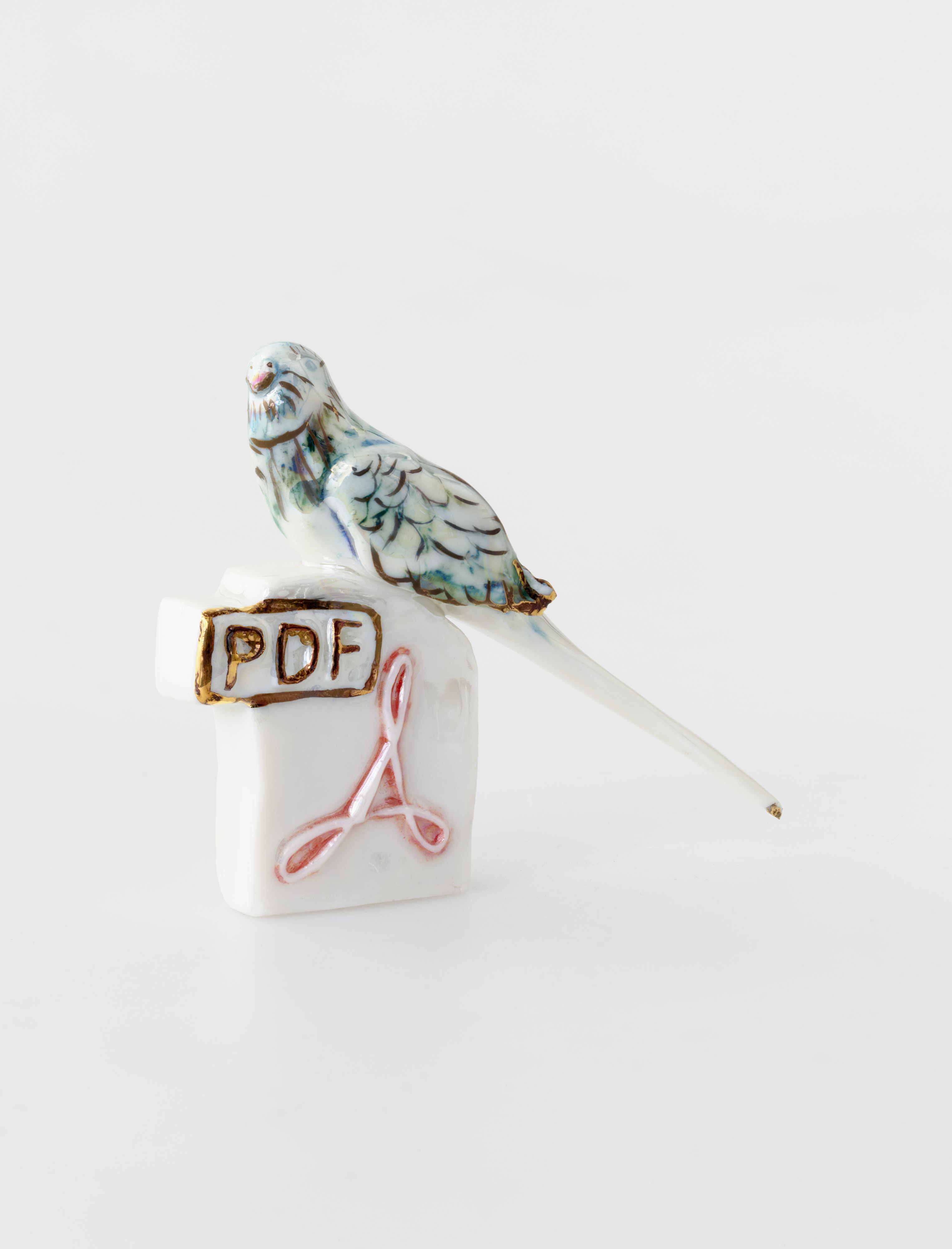
Finally, Inloco Gallery offers Fãl Project by Mohsen Hazrati for $1,200, a participatory digital experience that revives the ancient Persian practice of bibliomancy through AI and interactive web design. Users access the work via NFC tag, pose a question, and receive AI-generated divinations based on the poetry of Hafez, all rendered within a symbolic 3D environment. The project blends ceramic sculpture, photogrammetry, and cutting-edge code, fusing mysticism and machine in a deeply personal digital ritual.

CROSSLUCID, The Way of Flowers: Seed 3205718451, 2023 - UV prints on aluminium, 60 x 60 cm
Ellen Sheidlin, Mist: Echo, 2025, - Digital drawing, pigment print on Hahnemühle, 310 gsm, 40 × 60 cm, Edition of 30 + 2 AP
Mohsen Hazrati, The Fãl Project, 2025 - Porcelain, NFC tag, Web-based application , 15 x 15 x 10 cm

And finally, we conclude with the under-$1,000 segment, works that are more affordable, but by no means less compelling. In fact, some of the most experimental and conceptually daring pieces in this entire selection reside in this price range. These works challenge form, medium, and audience interaction, offering powerful examples of how digital art continues to evolve in unexpected and innovative directions.

Among the artists selected by Nguyen Wahed Gallery, Lu Yang stands out for their immersive digital worlds that fuse science fiction, neuroscience, and Eastern spirituality. Presented here is a character central to their practice: DOKU, a hyperreal, genderless avatar modeled on the artist’s own body using motion capture and 3D scanning. In DOKU the Creator, the third film in the series, DOKU appears as both artist and artwork, projecting digital creations through a ritual of meditation. The work raises profound questions about authorship, originality, and the construction of self. Inspired by Madhyamaka Buddhist philosophy, Lu Yang blurs the boundaries between virtuality and transcendence, the self and the collective. The gallery presents Black and White Karma - Turning, a new series created by DOKU and rooted in the Bhavacakra (Wheel of Life). This collection of 24 digital works traces two karmic paths, ascension and descent, through meditative simulations in a virtual void. Reflecting the 24-hour cycle as a metaphor for the continuous flow of thought and becoming, the works explore karma not as judgment, but as subtle mental motion. DOKU observes how reality arises from the mind: appearing solid, yet inherently empty. Each piece becomes a flicker of karmic movement, revealing that to see is to enter, and to intend is already to begin. Price: $688.

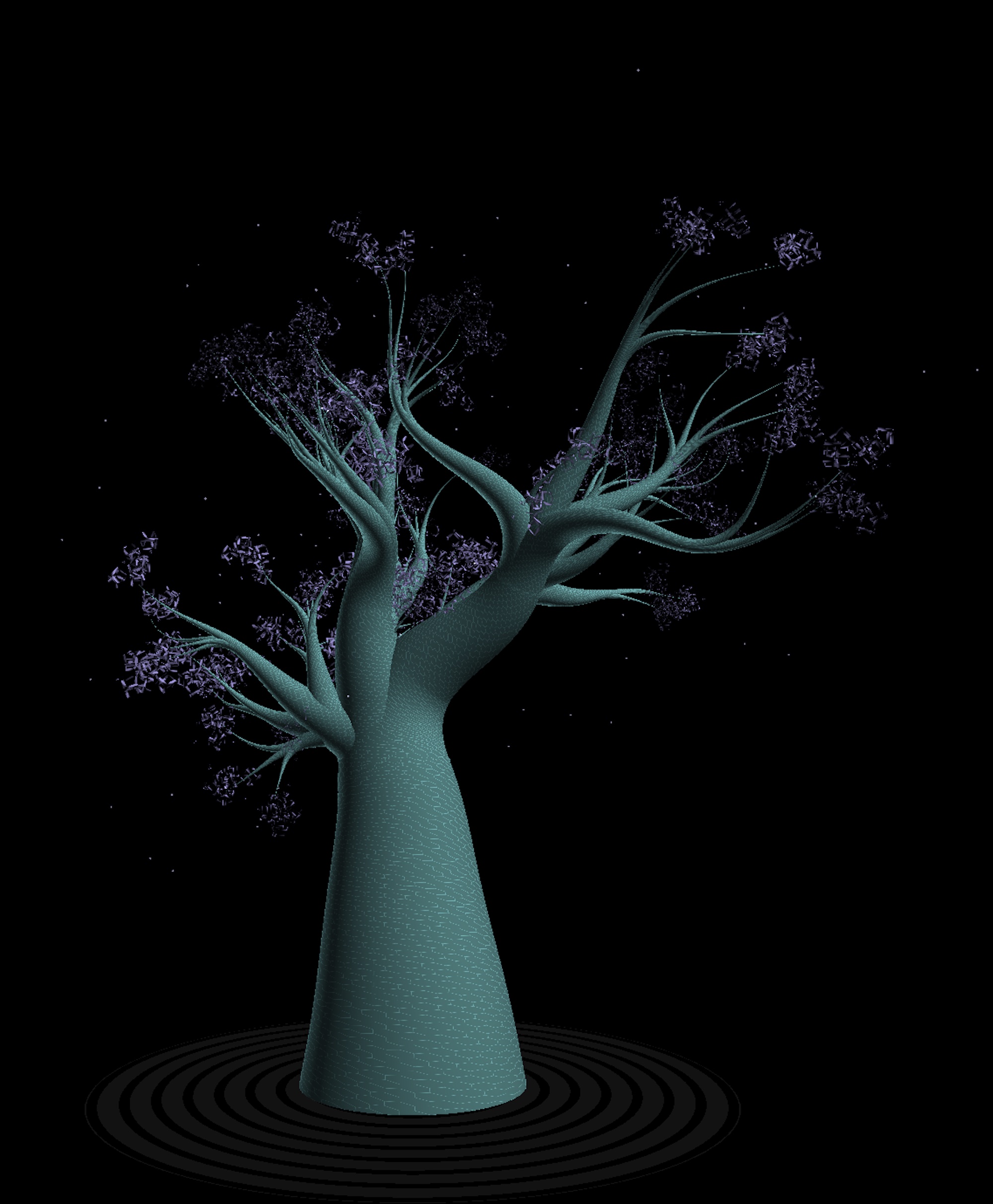
Gazelli Art House presents Arborithms (2025) by Primavera De Filippi, a series of 50 ERC-721 tokens priced at $500 each. Arborithms are blockchain-based lifeforms with encoded DNA, family lineages, and the ability to evolve as a species. Each NFT carries a genetic sequence compressed into its token-ID, which is translated via on-chain JavaScript code into a 3D visual representation of a blossoming tree. The sweep of branches, trunk thickness, and flutter of leaves are all algorithmically generated, reflecting the Arborithm’s digital DNA. These lifeforms are designed to reproduce; when two trees combine their code, they create an offspring NFT, passing on traits from both “parents” and occasionally generating mutations that introduce new characteristics. With each reproduction, the parent trees earn royalties. Before an Arborithm can be transferred, it must first seed a new one, reinforcing a self-sustaining digital ecology.

Danae concludes this price tier with Beyond the Code by Lionel Bayol-Thémines, priced at approximately $400 (0.28 ETH). A French artist working at the intersection of photography, artificial intelligence, and digital culture, Bayol-Thémines investigates the way images are constructed and consumed in the algorithmic age.

DOKU the Creator, Black and White Karma – Turning I #08, 2025, - Unique digital work 5824 × 3264
Primavera De Filippi, Arborithms, 2025 - ERC-721 token, Series of 50
Lionel Bayol-Thémines, Beyond the Code #1, 2025

Of course, Art Dubai Digital offers far more than what any single guide can capture, as there are countless remarkable digital works to be discovered. While not all prices are publicly listed, many are available upon request. Among the unmissable highlights is Deekay, a leading figure in motion-based digital art, and the Koshta.collective, a dynamic association of art directors, designers, producers, curators, and media artists. Their collaborative practice generates visual content that blurs the line between media, design, and contemporary art, emphasizing individual creativity and a shared vision of boundless imagination. Their output speaks to a new paradigm where analog and digital converge, and where content itself becomes art. Artist BREAKFAST presents Warming Seas, a series of kinetic artworks that transform real-time ocean temperature data into shimmering, dynamic visuals. Using a custom-engineered flip-disc medium, each piece corresponds to a specific coastal location, with gold “bubbles” appearing in greater density as sea temperatures rise above historical averages. By making climate change tangible and immediate,renders the invisible undeniable, turning raw data into a hauntingly beautiful portrait of our planet in flux.

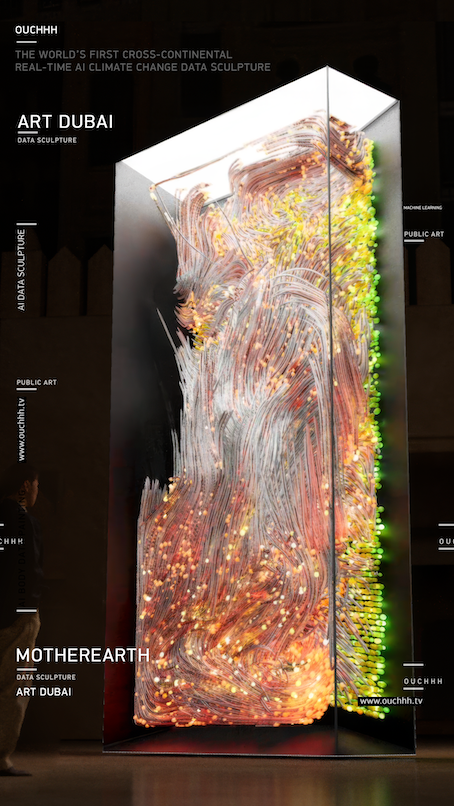
Also not to be missed is the monumental project MOTHEREARTH, presented by Ouchhh Studio in collaboration with DG Art Project and Gallery. Presented as the world’s first cross-continental AI data sculpture, MOTHEREARTH links real-time climate change data across three continents, connecting installations in Dubai, Beijing, and Mexico City. Fed by live data from NASA’s network of 20 satellites, the sculptures interpret and influence one another’s visual outputs in a synchronized global dialogue. Now making its Middle East debut at Art Dubai, this groundbreaking work transforms climate data into immersive visual poetry. With AI as its painter and satellite data as its palette, MOTHEREARTH constructs a collective portrait of our planet’s shifting rhythms, reminding us of our deep interconnection, and our shared responsibility to care for the Earth.

I hope these selections convey an important message: that great digital art isn’t always out of reach or not affordable. One of the founding ideals of digital art is accessibility, to open new pathways for collecting, experiencing, and engaging with art. And this remains true even for the most ambitious and experimental projects that use digital tools not just as a means, but as a medium in their own right. As the digital art landscape evolves, we continue to see this promise taking shape, where groundbreaking, conceptually rich works are increasingly available to a broader and more diverse audience.