.svg)
Menu
2/2 Nazareno Biondo Studio: “It was the hand of God!”
In 2021, director Paolo Sorrentino created one of his most personal works, as it is semi-autobiographical: the movie The Hand of God (E’ stata la mano di Dio).
The film’s title directly references Diego Maradona’s infamous goal in the 1986 World Cup quarter-final against England. Maradona punched the ball into the net with his hand, but the referees missed it, and the goal stood. He later famously described it as “a little with the head of Maradona and a little with the hand of God.”
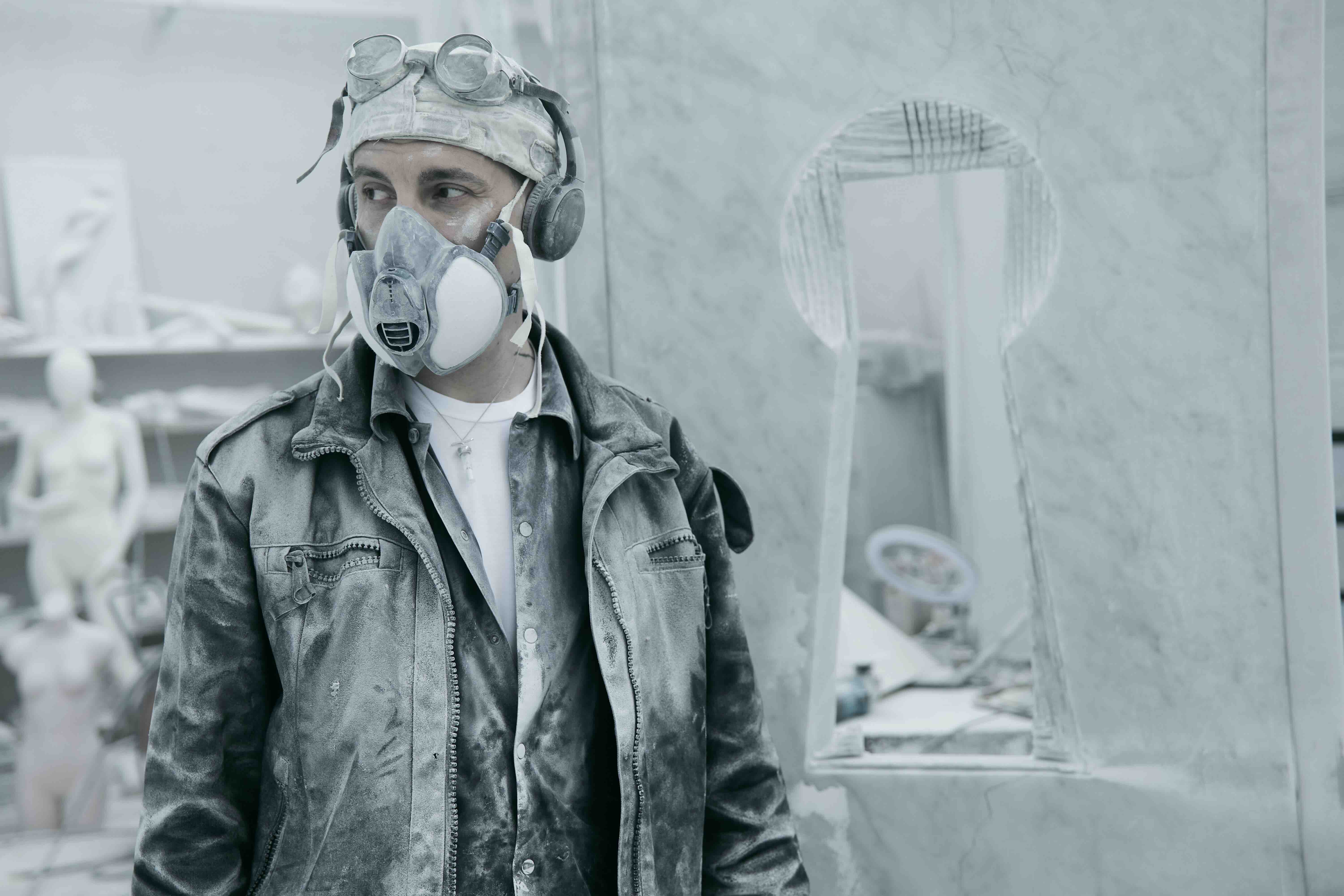
When I first met marble artist Nazareno Biondo, and especially when I visited the Turin studio and had the chance to experience how he creates sculptures, I instantly thought, this certainly has to be “the hand of God.”
During an NFT conference, I first crossed Nazareno Biondo's work last year in Lugano. Some friends from Valuart invited me to visit the show they curated in Villa Ciani (where I was also presenting a show), and besides the amazing artists who I already knew for a very long time, like Fabio Giampietro, Skyolpe, and Jesse Draxler, at a particular moment we entered a room where I saw a bitcoin made in marble and a marble fossil of the Cryptopunks.
What was that, and who was that? A fossil? Of the Cryptopunks? In marble? All handmade?
No machines sculpting the marble, no drafts, no 3d models, nothing: only the artist and his tools. Then, after meeting him in person, I started digging more into his art.
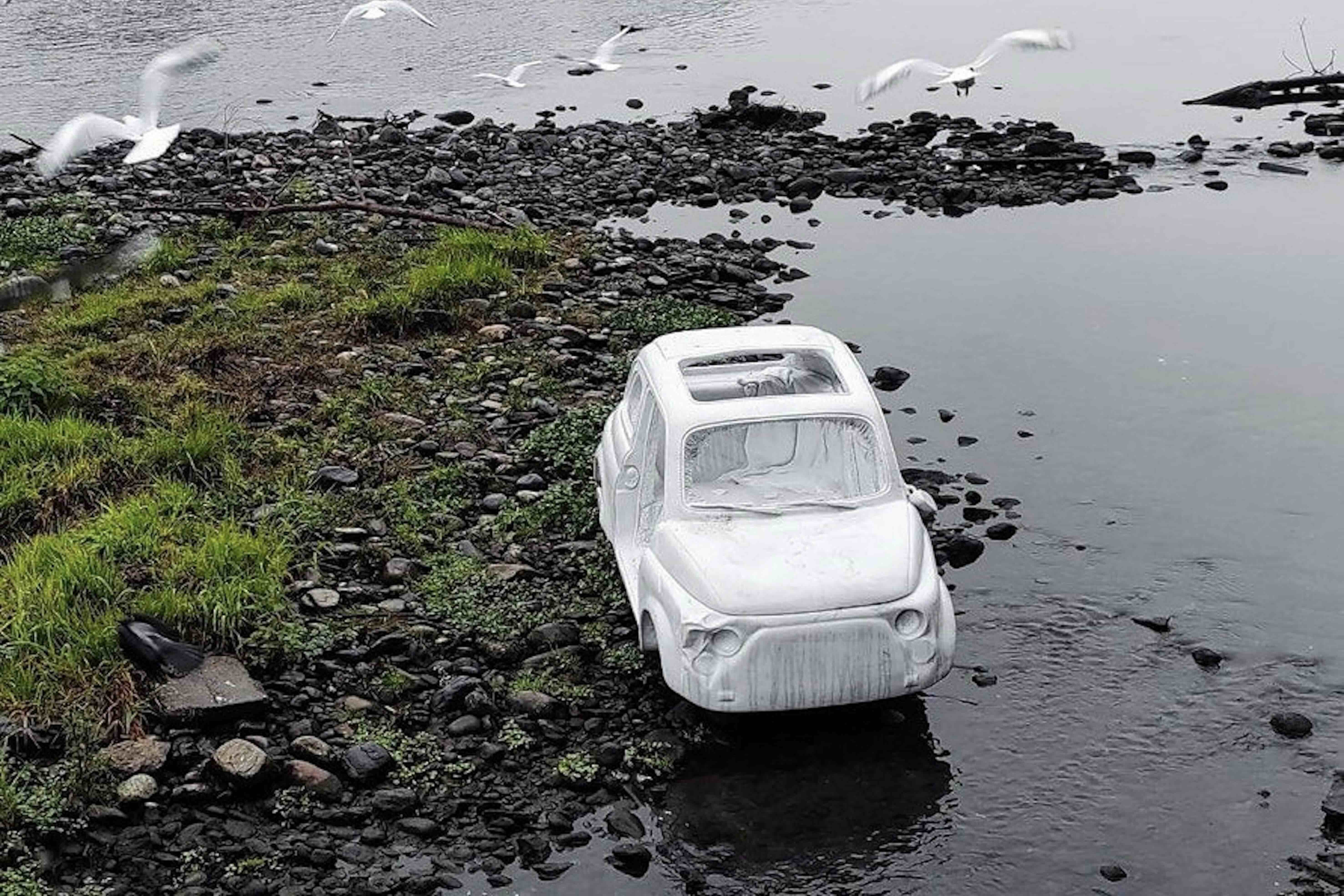
There is one masterpiece that Biondo sculpted today. Many of his works are breathtaking, but there is one that goes beyond any definition.
Also, last year, while visiting DIA Beacon in upstate New York and standing in front of one of Louise Bourgeoise's spiders, I was asked by a friend what distinguishes an artist's excellent work and a masterpiece.
I answered by saying that I didn't have the correct answer but that a masterpiece is one of those works that don't need to be explained; they are just there, in front of you, full of life, sweating the recurrent moods and values and tragedies and feelings of the human condition.
Something you do not know is a masterpiece until you experience it with any of your senses and feel through your body that it is a masterpiece.
Well, "Old Lady," by Nazareno Biondo, is a masterpiece - not just because it is a Fiat 500 car reproduced in actual size in one single block of 19 tons of marble. There is so much more to it.

Biondo'a 500 is rough, crashed, missing some tires, with shattered windows and twisted. Biondo's 'Old Lady' is a thought-provoking exploration of consumerism, decay, and the endurance of modern artifacts in a rapidly changing world.
The artist explained how, besides the personal and intimate reasons that pushed him to create this artwork, another strong motivation stands behind the existence of this marble work.
When FIAT created the 500 in 1957, the car industry could still make an ecological choice on how to produce motors. The alternatives were already there, such as creating a product that wouldn't have caused pollution on our planet. Still, FIAT - and many others that followed since the 500 became a true icon in the industry - decided to go with the nongreen solution, and we all know the status of our planet today. And this is why the hyperrealistic marble reproduction of it is a "sick" 500, unhealthy, surviving.
But also, Biondo's "Old Lady" goes beyond a simple homage to Italian heritage because it serves as a commentary on how objects that once held functional value in society eventually become obsolete yet paradoxically gain significance as cultural artifacts. The meticulous detail of the sculpture highlights the wear and tear of time, emphasizing the impermanence and the fleeting nature of technological progress. By carving this vehicle in marble - a material associated with permanence and classical art - Biondo challenges the viewer to reflect on what we choose to immortalize and why.
The piece speaks to the artist's broader practice of using marble to reinterpret modern waste, transforming everyday items like household appliances and cigarettes into lasting symbols of contemporary life.
In doing so, the artist creates a dialogue between the ancient traditions of sculpting and the disposable culture of today, questioning our relationship with the objects we consume and discard. "Old Lady" becomes a powerful statement about memory, decay, socio-cultural and economic choices, personal responsibility, and the human desire to hold onto fragments of the past.
I personally found this artist's approach toward digital art exceptional and exciting. The choice of the Cryptopunks fossil, inventing an origin story for the Punks, amongst the most amazing art characters of the past decades, as well as the value of Bitcoin, the promise of permanence of this currency translated into the eternal permanence of marble.
Marble resists everything, it resists time, and it is one of the few materials that, no matter what happens, we can still find.
So why am I seeing similarities between digital frogs and marble? Isn't it so obvious yet? Marble and blockchain, two materials shaped by different eras, with a shared essence of permanence and timelessness. Marble, standing as a physical embodiment of humanity's dialogue with eternity. The vessel for timeless creations, a testament to our desire to leave a mark that defies the passage of time.
Blockchain, our digital marble, capturing this same spirit in code. Securing data in a way that, like stone, resists alteration.
Immutable and transparent, a modern monument to truth and trust, a lasting record that promises a future built on the integrity of today’s decisions. Both transcending their mediums, blending tradition with innovation, embodying the human impulse to create, preserve, and communicate beyond the limits of our own existence. Functioning as eternal guardians of memory and meaning, the bridge that unites the tangible and the intangible in our eternal pursuit of legacy.
And this is how this summer, in frogs and marble, I found another of the infinite truths.