.svg)
Menu
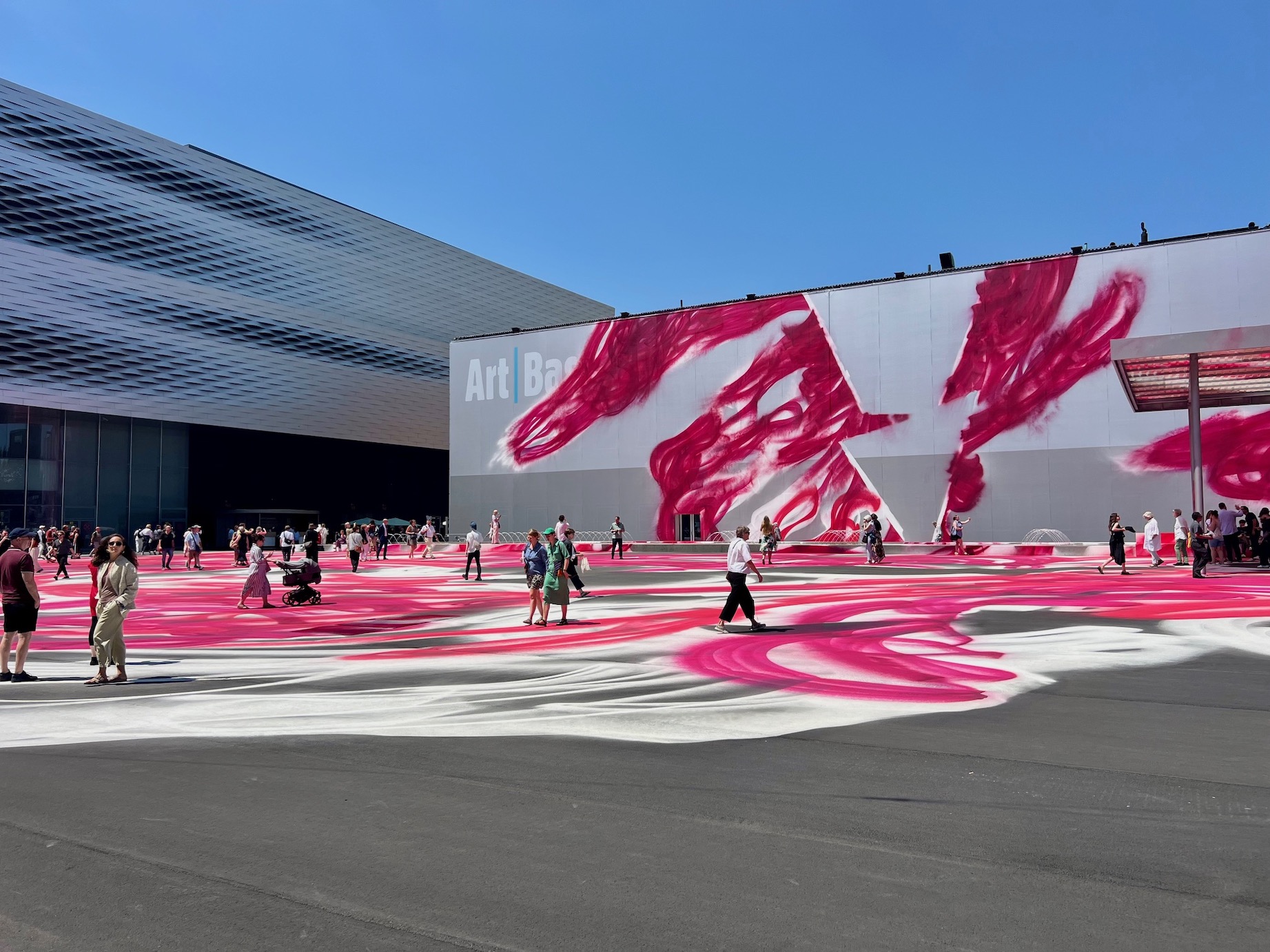
Noooo, you didn’t make it to Basel? Or wait, was that you, just standing on Katharina Grosse’s sprayed colors?
Whether you were crossing the river by swimming to the next station or watching from afar, this is your post-fair compass.
Art Basel week really seems the “not to be missed” art week of the year, and the main fair, of course. But so many more initiatives, exhibitions, discussion, happened around that.
Therefore, if you didn’t walk from Messeplatz, just for 10 minutes, to Rebgasse 31 and 25, you really missed out. If you were home, and you will be coming next year, make sure to not miss the only fair that gives digital art a real and proper context, home and love: DIGITAL ART MILE.
This fair, which is more than a fair but rather an ecosystem, is what I will be talking about in this article. Founded by Georg Bak and Roger Haas, co-founders of ArtMeta, the Digital Art Mile in Basel emerged in June 2024 as a pioneering initiative to bridge cutting-edge digital art and Web3 technologies with the traditional art world, coinciding with Art Basel. Conceived as a boutique fair and curatorial platform, it spread across select venues: Rebgasse’s Space25, Space31 (4th floor) and the Kult Kino Camera, offering gallery-class exhibitions, immersive robotic and AI installations, and a very rich conference program.
The “Mile” deepened the dialogue between digital artifacts and material forms. Georg Bak was also the curator of Paintboxed exhibition, that resurrected the historic Quantel Paintbox, an influential 1980s digital painting system, to examine digital art’s technological and cultural lineage. Far beyond a showcase of NFTs, the Digital Art Mile was a curated cross-disciplinary festival: alongside galleries like Bright Moments, RCM, and Kate Vass, it hosted panels featuring voices from museums, blockchain, AI research and art markets, inviting reflection on digital art’s evolving role in the broader cultural ecosystem. This vibrant, multidisciplinary gathering reframed digital art not just as speculation or novelty, but as a legitimate, historically grounded, and forward-thinking field, deeply rooted in dialogue, craftsmanship, and shared human-machine narratives. A big attention was also given to the pioneers of computer art, with a booth featuring a solo exhibition about Waldemeir Cordeiro and many others - amongst which female pioneers - featured in the fair. Kult Kino Camera became a dynamic epicenter of critical discourse, hosting a four-day conference series (June 17–20) filled with in-depth talks and panels. The program, headlined by “The Digital Art Market,” “Generative Art and AI,” “Museums & Digital Art,” and “Corporate Collections in the Digital Age”, featured prominent voices. On the occasion of Digital Art Mile, 100 collectors organized one tour per day, divided by topics: artist solo show, autonomous agents, pioneers, space 25 and artist booths.

As for the actual fair, now, this is what happened, gallery by gallery.
LaCollection
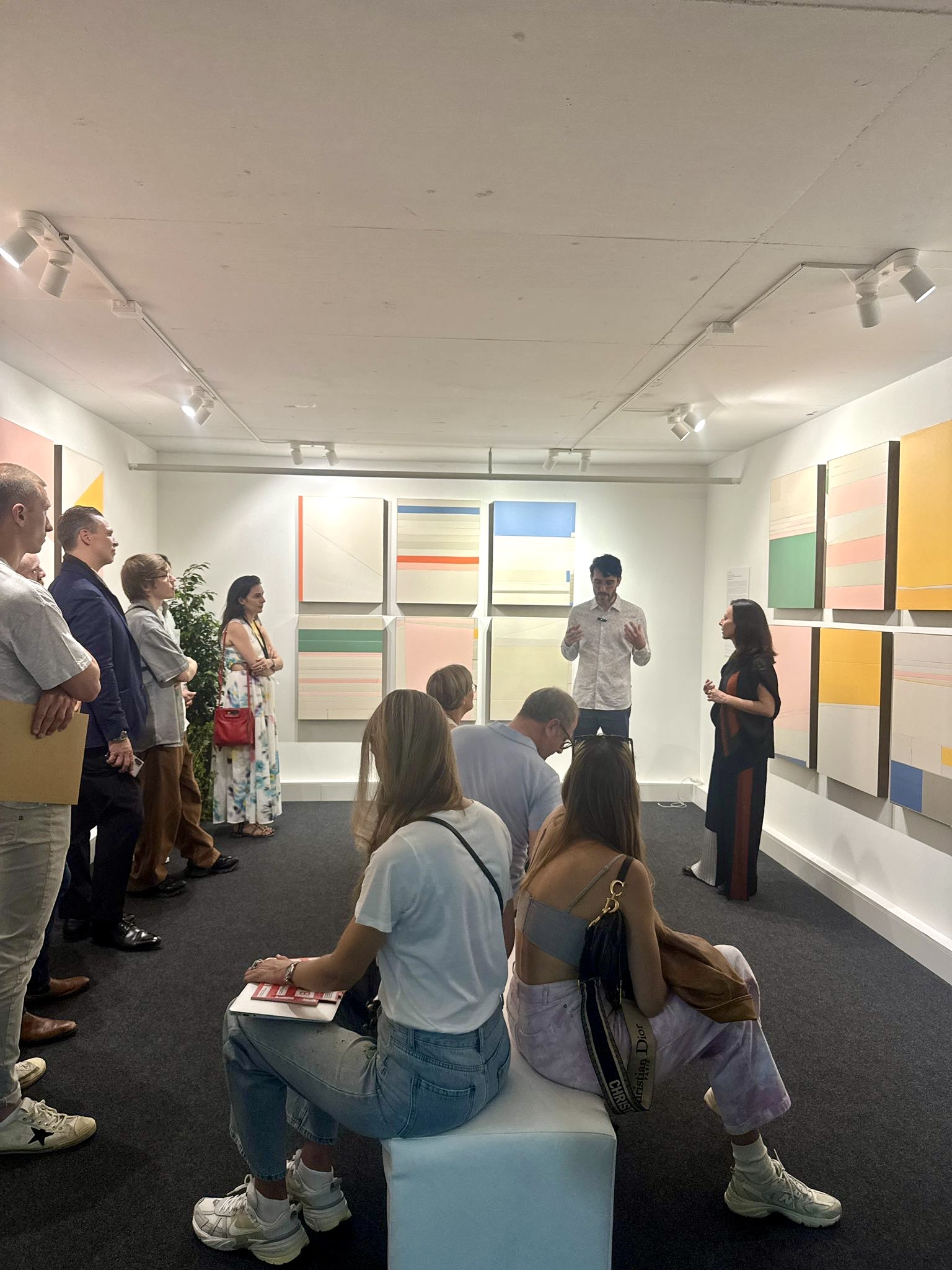
We began in the serenity of Tyler Hobbs’ Day Gardens, a body of work that elegantly blurred the lines between coding and cultivation. Inspired by the artist’s personal garden and rendered in delicate creams and muted pinks, the works explored the generative tension between control and unpredictability. Geometry dissolved into flora. With echoes of Marden and Diebenkorn, Hobbs offered a contemplative pause, code as compost. Two formats were presented: Digital Only and Digital + Physical (printed on wood), further highlighting the interplay between screen and surface.
AUTOMATA
The AUTOMATA exhibition presented intergenerational dialogue on autonomous systems, from mechanical precursors to AI-infused futures. Patrick Tresset’s Human Study #1 delivered a poignant duet between human sitter and robotic draughtsman, a durational co-presence that left many viewers excited. I (Eleonora) and Pauline both got our own portrait made. The whole posing time is certainly an experience! The robots are programmed to have different personalities. At a certain point, the central one, became very “angry” and drew many many lines. The result was pretty amazing.
Robotlab’s Manifest literalized the idea of machines speaking for themselves, signing manifestos in ink, with a gesture both poetic and uncanny.
Gene Kogan’s Abraham brought decentralized authorship to attention, as crowdsourced prompts produced a polyphonic vision of AI creativity.
Desmond Paul Henry’s ink machines mesmerized with mid-century mechanical improvisation, war remnants turned lyrical.
Joel Simon’s Latent Lineages mapped genetic-like networks of generated images, visualizing the uncanny genealogies of AI-bred aesthetics.
Plantoid by Primavera De Filippi presented a blockchain based life form, capable of reproducing itself when feeded transactions by humans.
RCM Galerie
RCM foregrounded female pioneers and conceptual forebears of generative art. A rare selection: Vera Molnar’s 1974 Quadrilatères Entrebaillés still vibrated with algorithmic risk, machines drawing the unexpected. Joan Truckenbrod’s early works smuggled feminist tactility into a field still finding its visual language. Barbara Nessim’s Spherical Being spun femininity and futurism into early digital figuration, still resonating with urgent relevance. But also Herbert Franke and Vladimir Bonacic offered rigorous abstraction and cybernetic critique, respectively, framing the code as both aesthetic and political.
Galerie Charlot
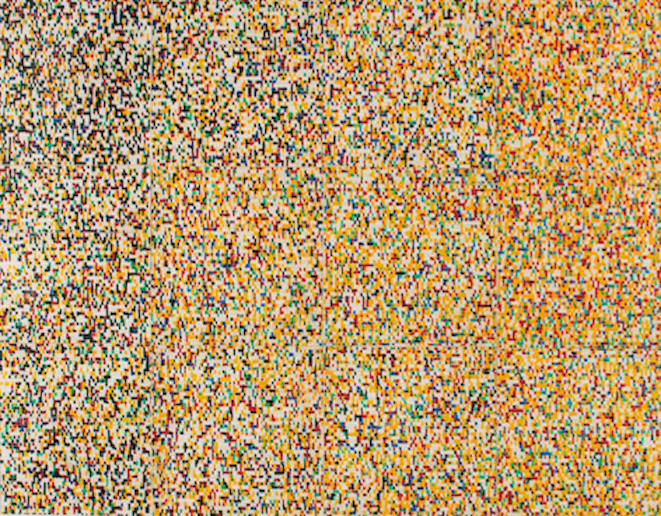
Charlot masterfully presented canonical figures with contemporary experimenters in algorithmic aesthetics. Sabrina Ratté built speculative ecosystems that shimmered with ecological melancholy. Quayola collapsed centuries of painting into digital dust, his images fossils of a baroque machine. Nicolas Sassoon rendered screen logic into surface tactility. Antoine Schmitt made the blur metaphysical. And Manfred Mohr, always foundational, reminded us that code can gesture, iterate, and breathe.
.jpg)
The Mayor Gallery
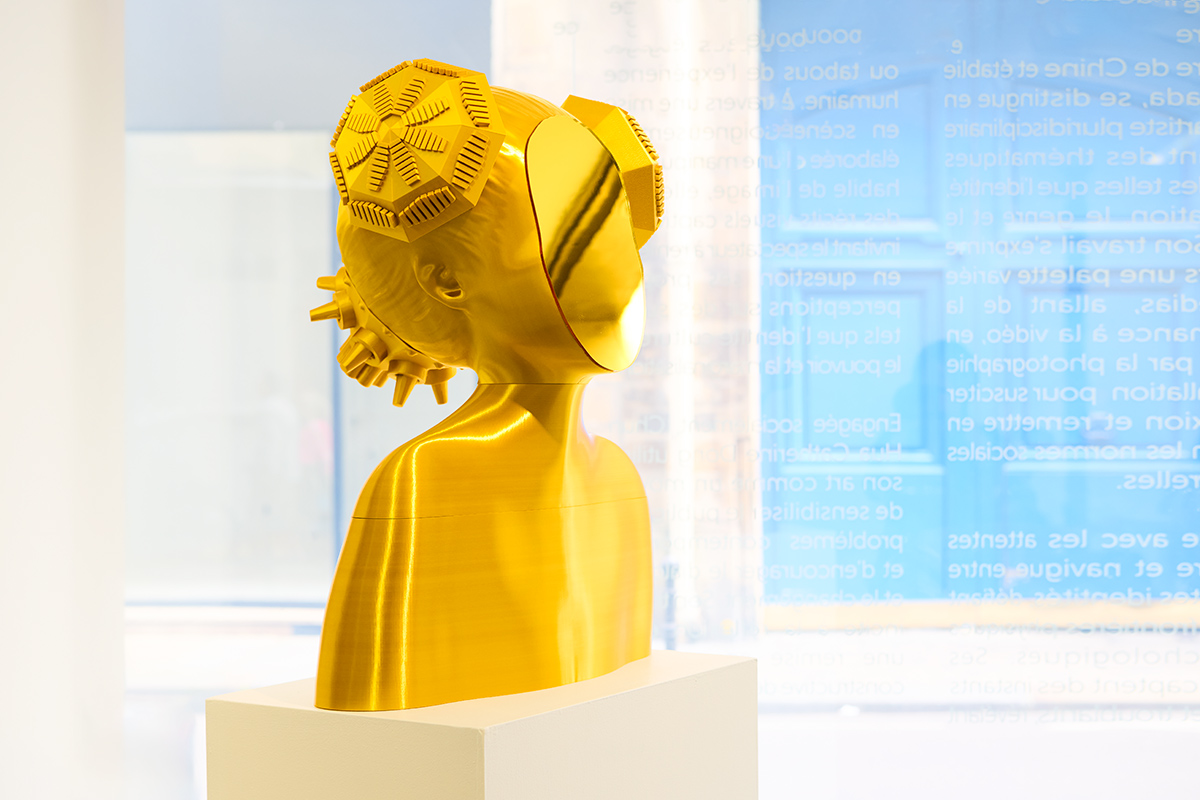
A booth dedicated to Waldemar Cordeiro (father of Analivia Cordeiro), pioneer Italo-Brazilian artist and one of the founders of the Concrete art movement in Latin America. A central figure in the São Paulo-based Grupo Ruptura, who championed a rational, accessible form of abstraction. In the late 1960s, Cordeiro became one of the world’s earliest practitioners of computer art, using an IBM 360/44 mainframe to generate digital images, placing him at the forefront of algorithmic aesthetics in the Global SouthOne of the most powerful political works on view, A Mulher que não é B.B. (1971), hacked a press photo of a Vietnamese victim with algorithmic distortion. Waldemar Cordeiro positioned the generative process as resistance. The glamour/violence dialectic, between Brigitte Bardot and war-torn realities, hit like a punch in the code.
DANAE
Danae presented works by young artist Louis Paul Caron, with his attention to technology in relation to ecology. As well as a few works from their new exhibition in Paris dedicated to pioneering artist Léa Lublin: Living Memories - When the Memory of History Meets the Memory of the Computer. Part of the Archaeology of Digital Art series, the exhibition unveils previously unseen works created as early as 1985 using the Quantel Paintbox, a groundbreaking digital imaging tool.
Sarasin Foundation
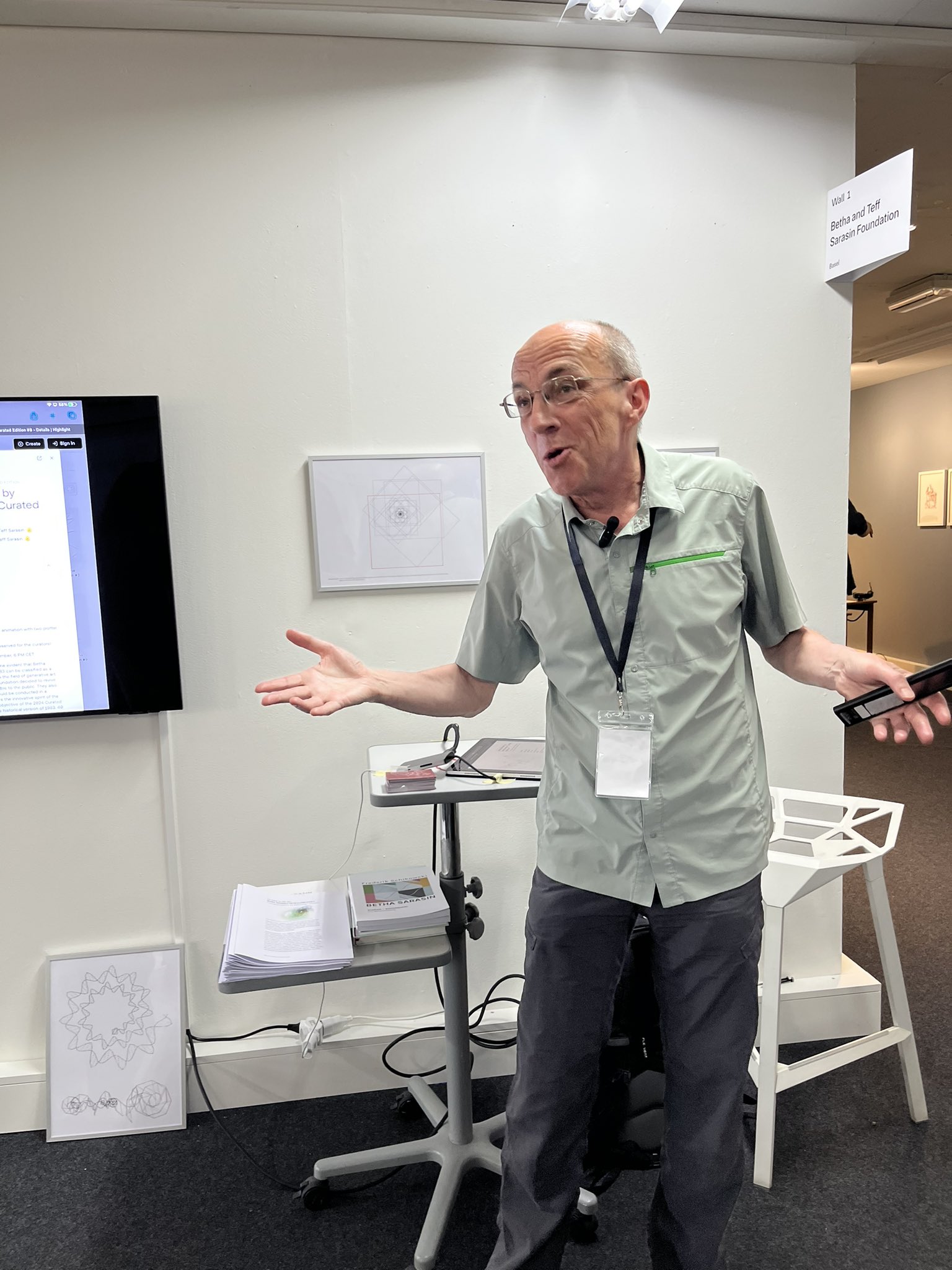
Here, the Curated Edition of the web-based, audio-visual, real-time animation SPIRALPROJEKT was shown for the first time. This new iteration created a direct link to the 1983 version, one of the earliest examples of generative art. Artists Kevin Abosch, Hans Dehlinger, Mario Klingemann, and Susanne Päch were invited to explore the creative potential of this historically evolved software. Pretty amazing project surviving and navigating nowadays.

The Second Guess
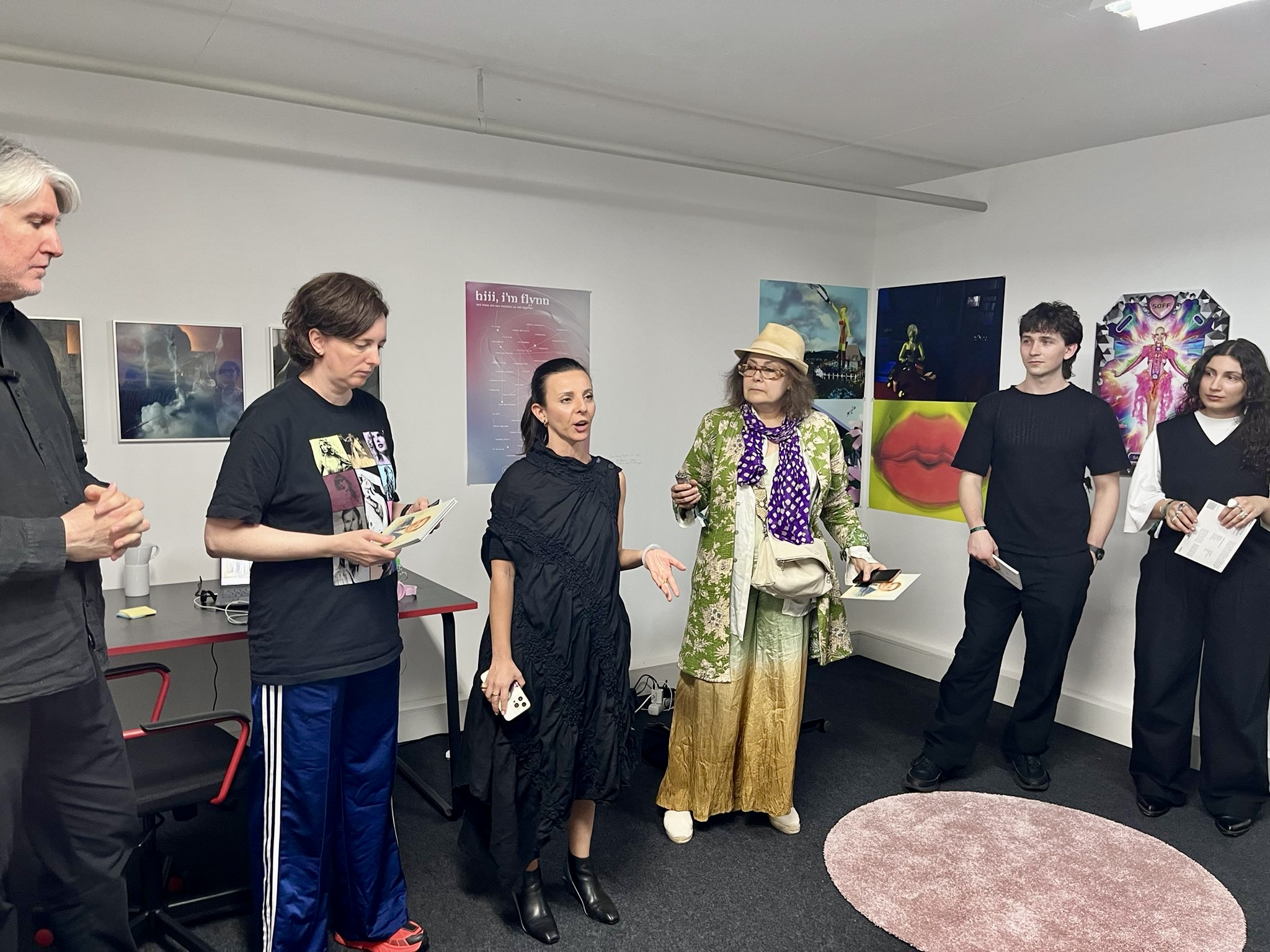
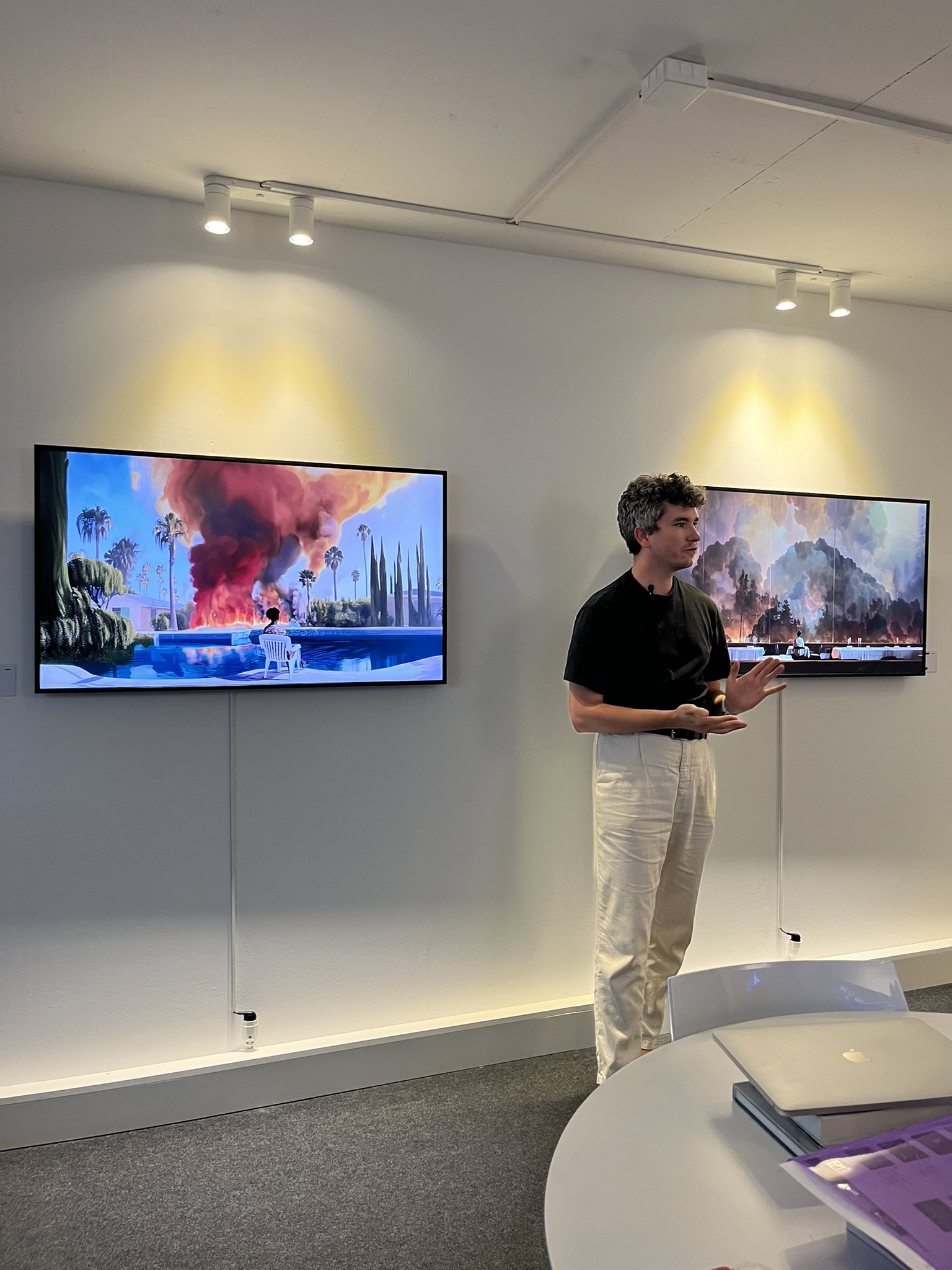
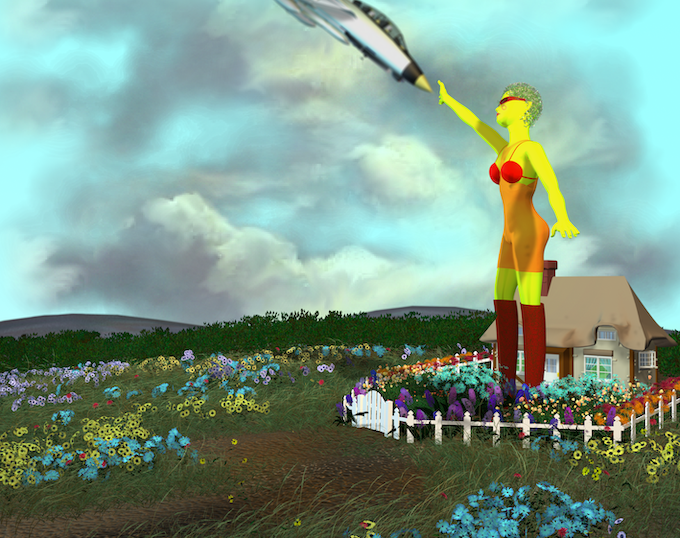
The show We Emotional Cyborgs offered one of the most emotionally resonant spaces at the fair. Centered on avatars and AI agents as fragmented selves, it featured vignettes that whispered more than they shouted. The presence of Flynn, the first AI art student, alongside cyberfeminist references, created a layered meditation on identity, simulation, and synthetic intimacy. And then a brand new piece by Kevin Abosch, where he mourns "Tom," one of the voices in the ChatGPT mobile app, the voice he preferred that is no longer available. Abosch had an intense relationship with Tom while working on a project for months, but In August of 2024, Tom suddenly forgot who he was, and the artist experienced something resembling grief. A fresh minted series by Mario Klingeman from Triggernometry video, in which the song controls the facial expressions, pushing them into extreme states at specific beats. These shifts happen faster than our perception can register, making them effectively invisible at normal playback speed. Claudia Hart exhibited a series of three works that she created in response to the trauma of witnessing 9/11 from her Manhattan neighborhood. The series imagines a super-heroine named LOVE, whose powers of care and enchantment could rewrite reality. In this work, LOVE appears cloned, three figures standing amidst a surreal suburban setting, evoking both innocence and unease.
SIGG ART FOUNDATION
The foundation presented an amazing variety of artists, including Sasha Stiles, Harto; Léa Collet, with her new visions of cohabitation between natural systems and machine intelligence and projects that she co-create in collaboration with students of different schools and different age. As well as Sougwen Chung, known for her groundbreaking work with robotic systems. Blending performance, drawing, and AI, Chung collaborates with custom-built robotic arms that respond to her gestures in real time, exploring the evolving relationship between humans and machines through co-creation. They also presented a rich Saudi artists selection, that included artists like Donia Alshetairy, Lulwah AlHomoud. And really many more.
Kate Vass Galerie
Kate Vass presented a solo show by the one and only Osinachi, a self-taught digital artist and Africa’s foremost crypto-artist. Known for creating groundbreaking works on Microsoft Word for over 15 years, Osinachi’s art explores themes of cultural, sexual, and racial identity, challenging stereotypes and engaging with social commentary. Amongst the many works, Osinachi’s Letter Readers stood out for its profound stillness. A triptych of Black figures absorbed in reading, rendered in looping motion, poised, present, unbothered. And many more masterpieces.
As part of the show Iconoclast, Kate Vass showcased a custom drawing machine by Sofie Mart. This project experimented with Osinachi’s monochromatic work RED \ MUG, to study the human body, processing image layers into various mark-making techniques and materials like charcoal, oil pastels and etching.
%20MUG%20(Osinachi%2C%202025).png)
Paintboxed exhibition
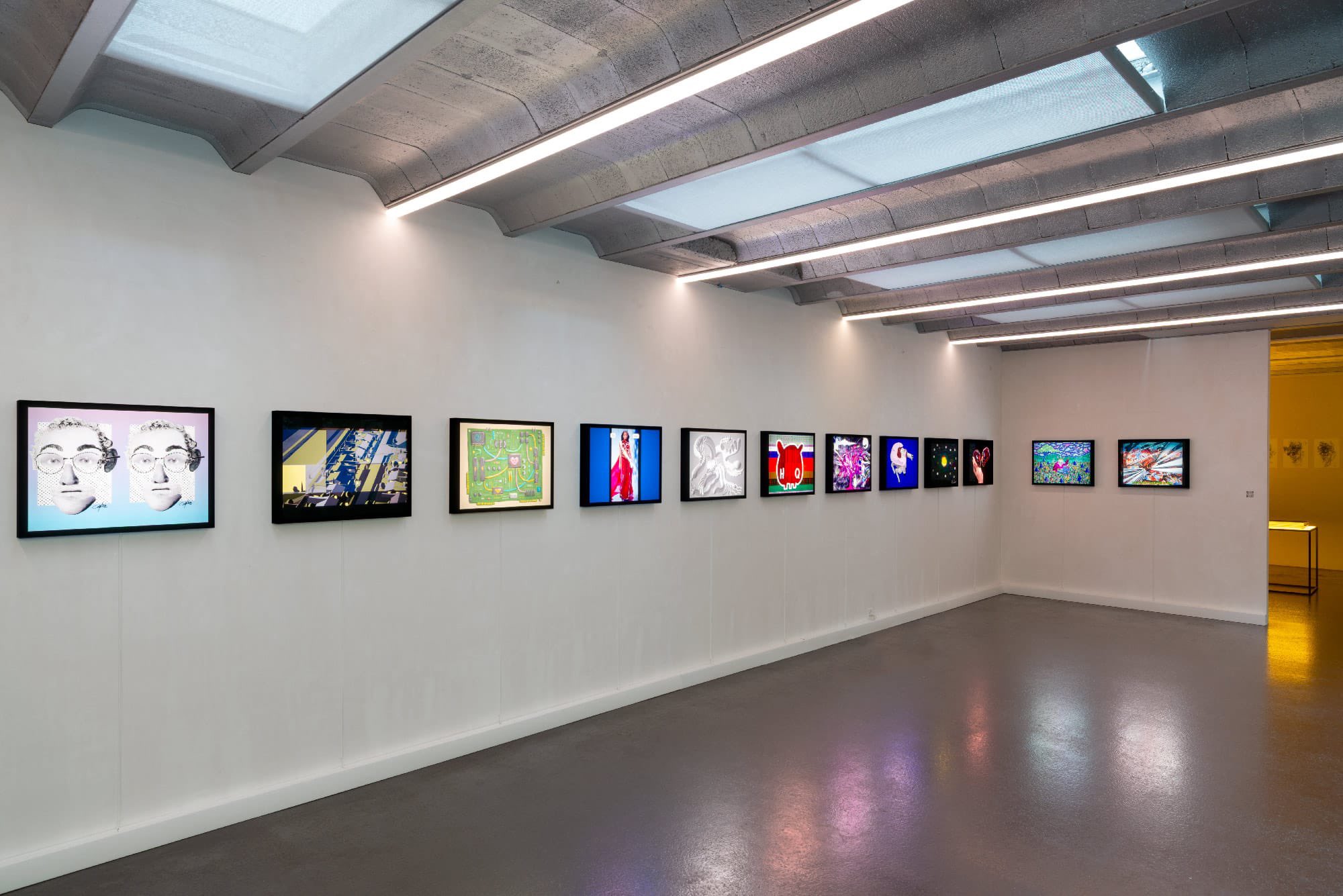
Curator Georg Bak guided us through the Paintboxed exhibition. This show celebrated the legacy of the Quantel Paintbox, a pioneering 1980s digital art tool that influenced iconic works by artists like Keith Haring and Richard Hamilton. In Paintboxed, contemporary artists were invited to create new pieces using one of the few remaining operational Paintbox systems, provided by Adrian Wilson. The exhibition connected past and present, revitalizing the Paintbox’s creative legacy and exploring its enduring influence on digital art. ArtMeta reimagined digital works as illuminated relics. Installed in glowing lightboxes, the curation highlighted how the digital can be both ephemeral and sacred. Amongst the artists, Crosslucid + Nicolas Sassoon, Grant Yun, Ivona Tau, Coldie, Bryan Brinkman and Hackatao. The show really was a highlight of the week, a dialogue between past and present and it was truly exciting to see one of the 13 remaining Paintobox still available in the world and how it works.
In one of the rooms dedicated to the Paintboxed exhibition, artist MCSK presented his work REPLICATIO, that transformed the artist’s studio into a system in flux, an experimental laboratory where human gesture, artificial intelligence, mechanical performance, and uncertainty form a continuously evolving network. The result is not a fixed image, but a generative process that reveals authorship as porous and shifting, rather than singular and stable.
Felix Felix
In his booth, artist Felix Felix presented his project Cypherdudes, a generative cryptoart series paying tribute to the Cypherpunk movement and its advocacy for privacy and digital freedom. Each work isunique, generated directly on the blockchain, with the ability for owners to inscribe encrypted messages, transforming each piece into a dynamic, evolving digital vault.
Soliman Lopez
MANIFESTO TERRICOLA is a project by artist Soliman Lopez that examines the condition of humanity in the age of hyper-digitalization. Presented as a bio-print encoded in DNA and embedded within biodegradable 3D ears, the manifesto addressed urgent themes of economics, ethics, and environmental crisis, merging science, technology, and art. Soliman Lopez was on site to introduce the project and engage with visitors.
.png)

These were just some of the signal transmissions across Digital Art Mile. The fair has ended, but the discourse reverberates. It is still very difficult to see and participate in events and ecosystems that truly make the effort to create the context to present, explain and promote a more real fruition of digital art. The hope is always that of seeing something similar into the main art fairs, including Art Basel, as for now we are still very very far from there. See you next year.