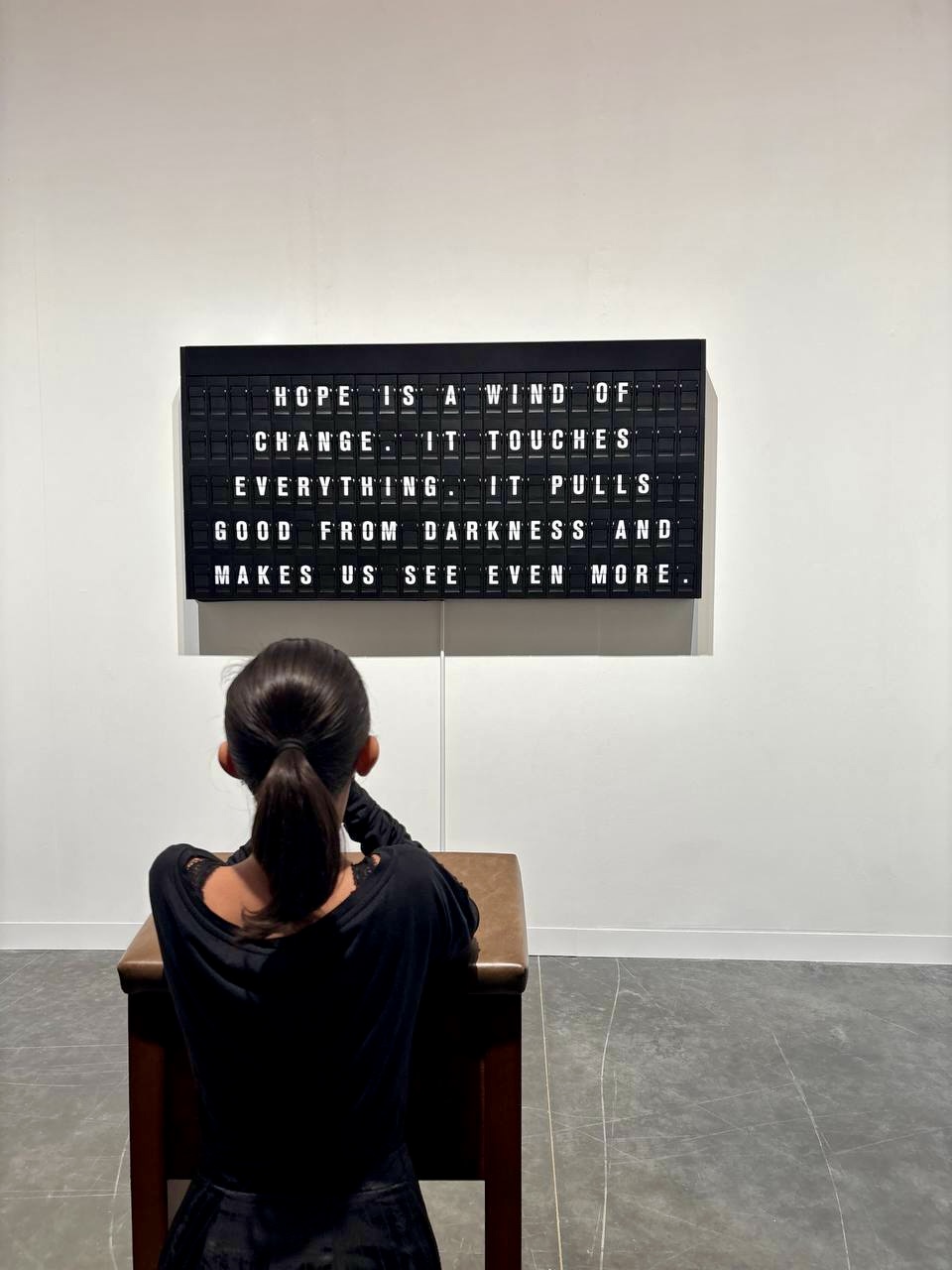
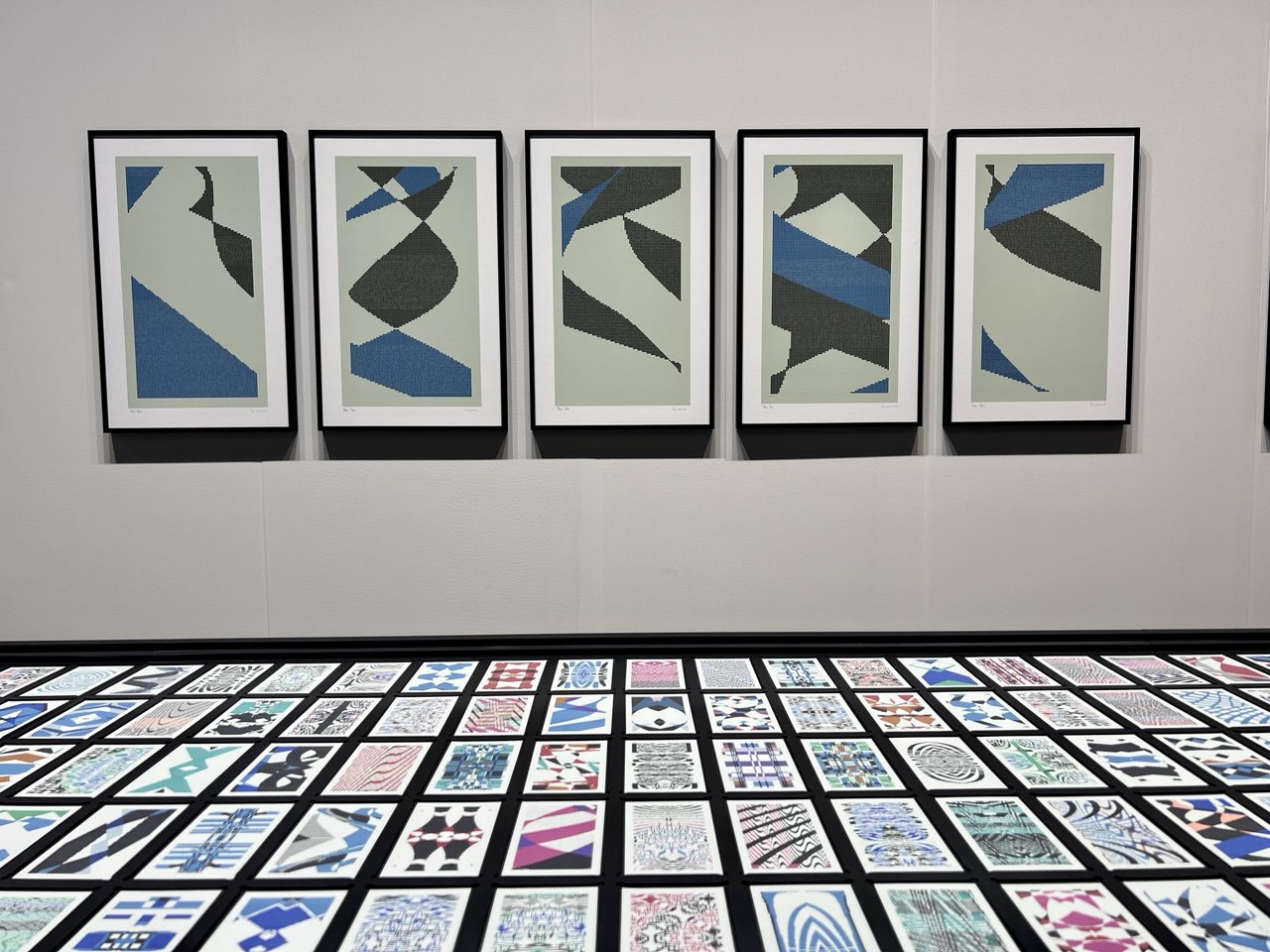
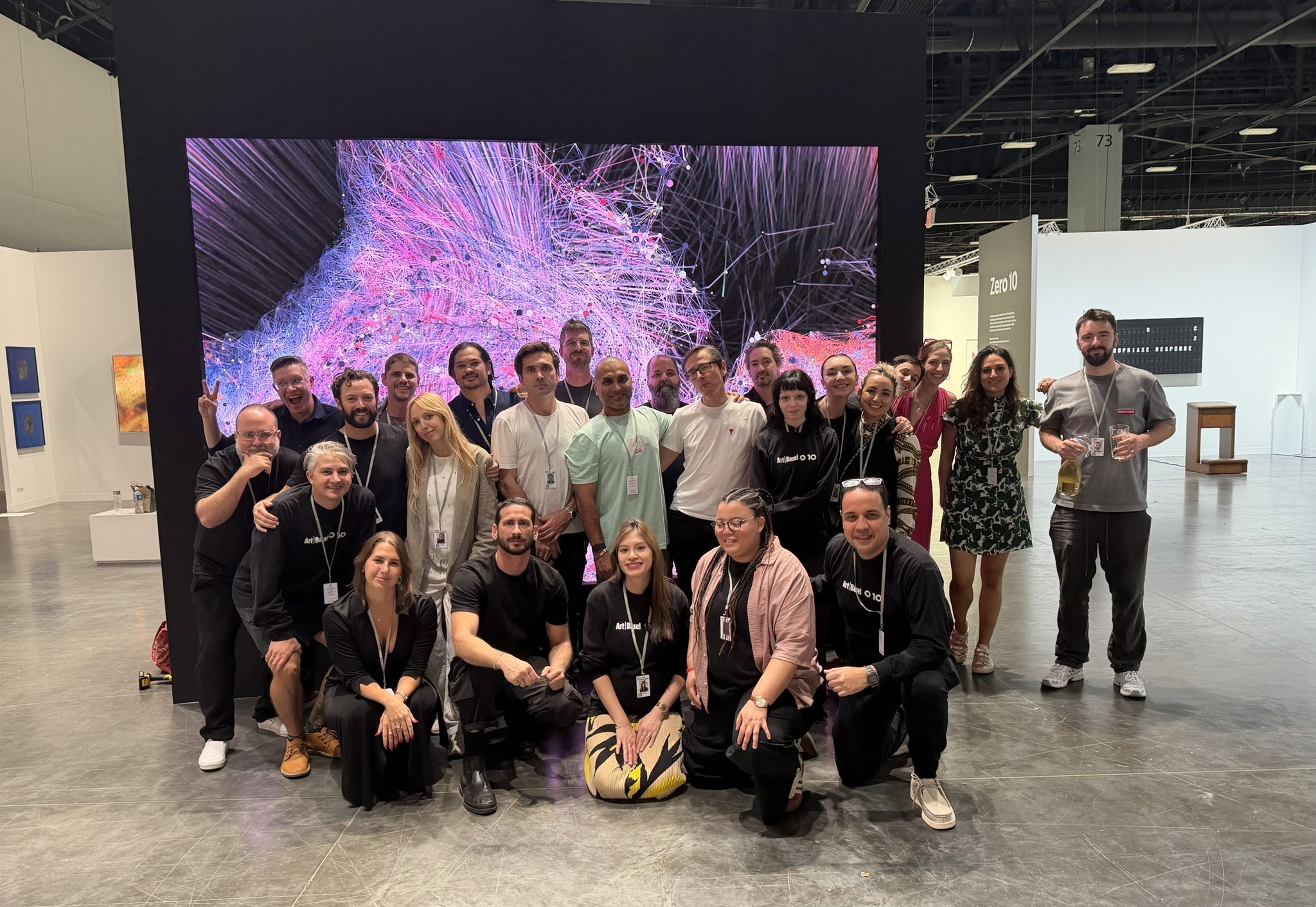
One of my absolute favorites was Mario Klingemann’s installation, Appropriate Response, presented by Onkaos. To engage with the piece, visitors had to kneel - a gesture loaded with cultural and spiritual weight, especially for those like myself raised in predominantly Catholic countries. When you kneel, you trigger a machine that produces a personalized 120-character AI-generated sentence. But something extraordinary happens in that moment: the act of kneeling transforms the encounter into a kind of ritual. It feels sacred. It feels like receiving a prayer. The sentence, though short, arrives with a surprising emotional resonance, as if the AI truly intended it for you. In my opinion, Klingemann’s genius lies in creating a situation where technology becomes a vessel for spirituality, collapsing the distance between devotion and algorithm, belief and computation. It is a piece about compression, language, and authorship, but above all, it is a piece about faith, a faith redirected toward a machine, a new kind of oracle for a new era.
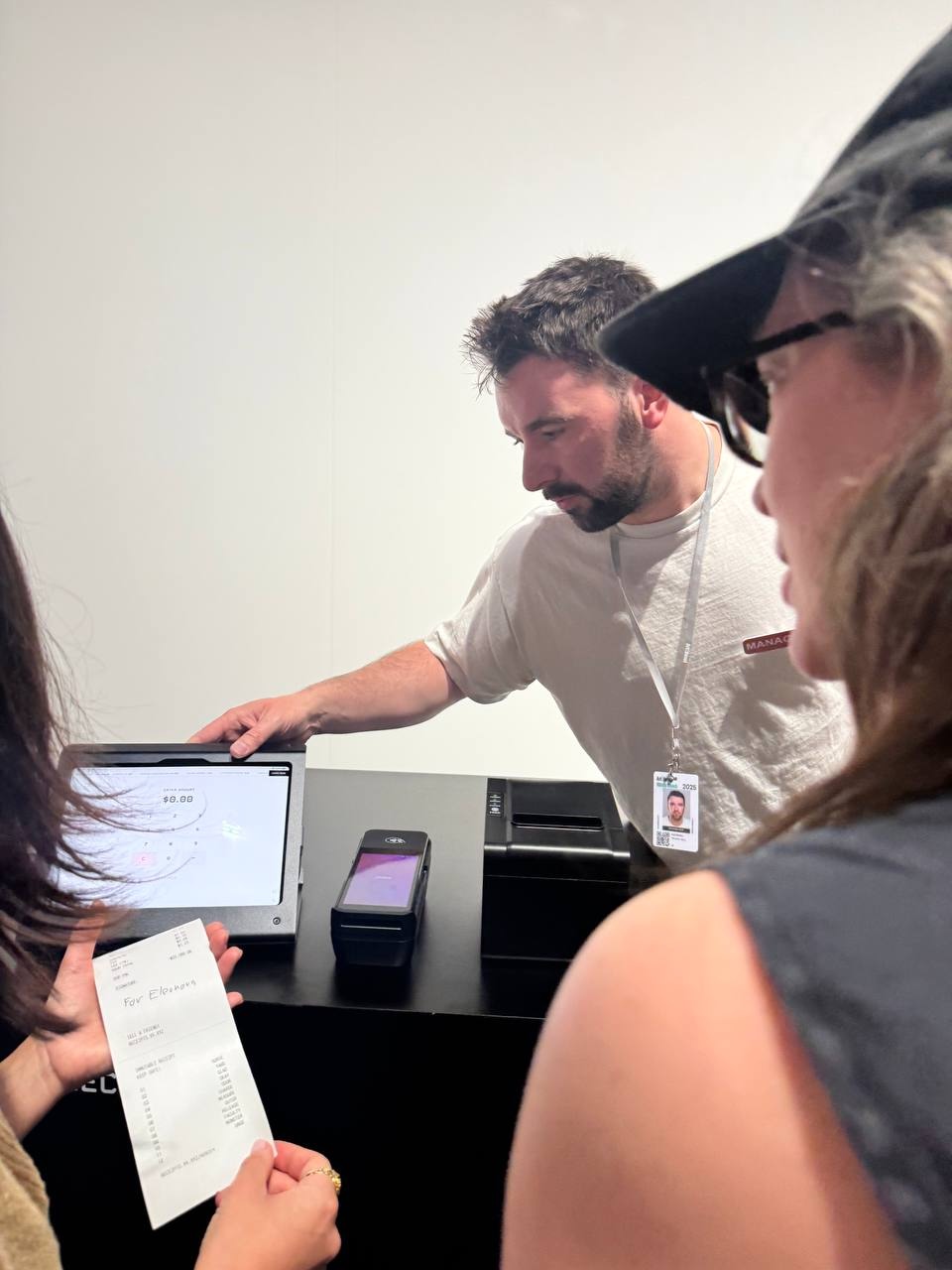
Another participatory highlight was Jack Butcher’s artwork for Visualize Value. The premise was simple: you swipe your credit card, pay anywhere from $1 to much more, and you receive a printed receipt that is itself the artwork (you can then redeem the NFT if you'd like). But in this gesture, Butcher condensed an entire critique of value, economy, and art-market absurdities. One thing that made it particularly charming and fun was the moment of signing the transaction. Visitors quickly realized they could alter their digital signature so that their printed receipt would include dedications, jokes, personal notes. One friend even made mine say “for Eleonora.” And then there was Butcher’s perfect punchline: the more you paid, the longer the receipt became. It was conceptual clarity at its best, minimalistic, sharp, ironic, and deeply accessible even to those unfamiliar with crypto or blockchain. People who had never interacted with NFTs suddenly found themselves participating in a conceptual art transaction, paying for “value,” receiving “value,” and questioning what “value” even means.
Then came XCOPY’s Bubble(s), one of the most fun and conceptually rich installations at the fair. XCOPY, one of the undisputed disruptors of the crypto art space, collaborated with Mimi’s Nguyen Wahed Gallery to build a laundromat inside Art Basel. Visitors queued in front of washing machines to receive a laundry slip asking them what kind of service they wanted - wash, dry, or humorous allergy checks (“Are you allergic to influencers?”). You then provided your email, and the gallerist handed you a plastic bubble containing soap and a QR code. Scanning the code revealed how many digital “bubbles” you had received. I got 100; others got 250, etc. But here is the artwork’s conceptual pivot (all coded and happening on the blockchain): for ten years, one bubble will pop every single day, until only one remains. And the holder of the last bubble is the owner of the final artwork. It is a long-duration performance, and for me personally, the work reflects the countless bubbles we inhabit - the art market bubble, the digital art bubble, the crypto bubble, bubbles inside bubbles inside bubbles. As I wrote when leaving Miami: there were bubbles everywhere this year, like always, but at least this time they were beautiful and made by XCOPY.
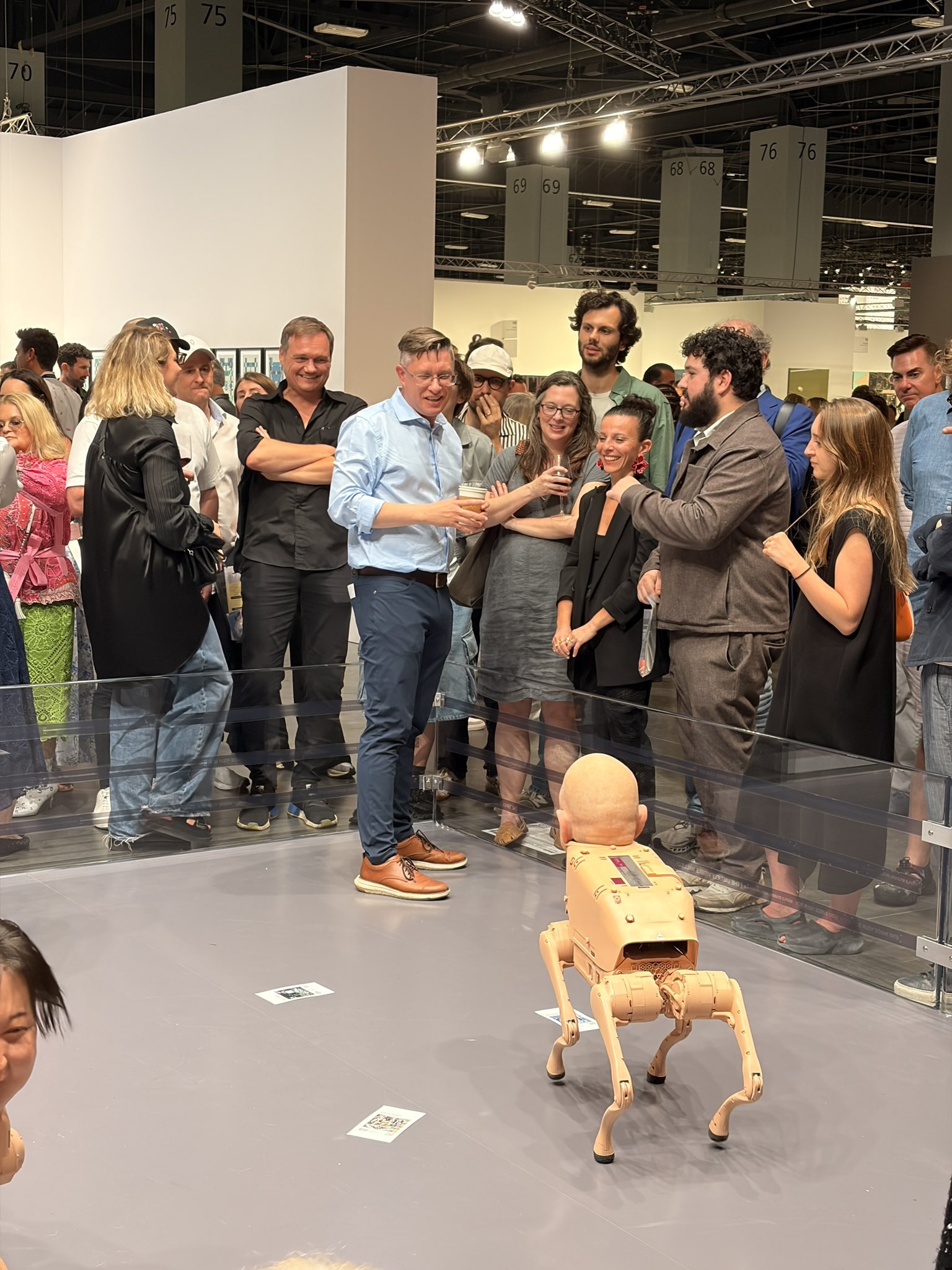
But nothing compared to Beeple’s Regular Animals, which quickly became the phenomenon of Art Basel Miami Beach. The installation featured animatronic robot dogs wearing hyper-realistic silicone masks of Elon Musk, Jeff Bezos, Mark Zuckerberg, Picasso, Warhol, and even Beeple himself. These robotic “animals” wandered inside a fenced pen, photographing visitors with cameras embedded in their heads, processing the images through AI filters tied to each persona, and then excreting the resulting prints as satirical artworks. The prints - and sometimes NFTs - were free, but could only be obtained by physically standing there and waiting for a dog to “poo.” The crowds were enormous. By day two, it felt like a pilgrimage site. The installation appeared in newspapers, magazines, national TV, international TV: everyone came to see the dogs. Unlike certain infamous fair controversies (yes, the banana), nothing had to be removed. Despite the chaos, the atmosphere remained fun, communal, and strangely harmonious. I believe this is because the digital art community is fundamentally more open and welcoming than the traditional art world. People didn’t feel policed or out of place; they felt invited. Underneath the absurd spectacle lay a sharp critique of control, power, identity, and the absurd mechanics of value in today’s algorithmic society. Beeple did what he always does: provoke, disrupt, entertain, and trigger real reflection.
.svg)