.svg)
Menu
Menu

Art Dubai’s Special Edition 2026 delivered something rare: a digital sector that felt genuinely alive. With twelve galleries presenting practices ranging from AI-generated forms to blockchain-based preservation projects, this intimate format proved that smaller can sometimes mean sharper.
Taking place during a particularly tense moment for the region, this Special Edition also carried a distinct atmosphere — one where conversations, encounters, and cultural exchange felt especially meaningful.
As Art Dubai celebrated its 20th anniversary, the fair reaffirmed its commitment to experimentation, dialogue, and the evolving role of digital art within the broader contemporary art landscape.
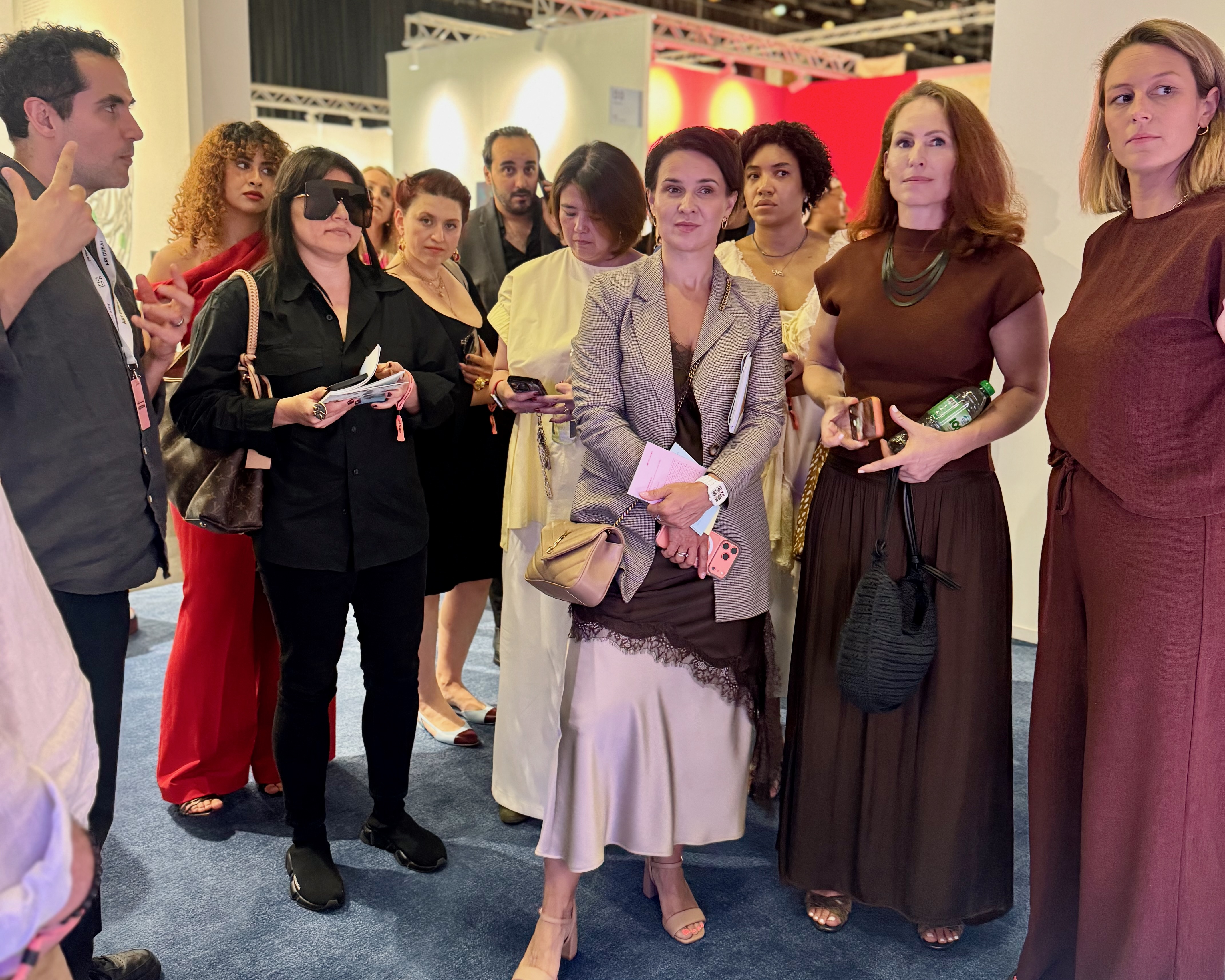
This was not simply another art fair edition. The reduced format created space for longer conversations, deeper engagement, and more meaningful encounters between artists, galleries, and collectors.
As institutional partners, 100 collectors was present throughout the fair with collector tours, Meet the Artist conversations, physical guides, and discussions at Booth 13. Across the week, we met collectors, artists, curators, technologists, and visitors genuinely curious about how digital art is experienced, understood, and collected today.
What stood out most was not only the diversity of practices presented across the twelve galleries, but also the quality of the exchanges happening around them. Our collector guides were received with great enthusiasm, and the tours and artist conversations revealed a growing appetite for contextualized approaches to digital art collecting.

Curated by Ulrich Schrauth and Nadine A. Khalil, the sector also carried a broader curatorial intention: to show that digital art is not separate from contemporary art, but increasingly embedded within it. Rather than presenting technology as a category in itself, many of the artists approached digital tools and systems as part of wider questions around identity, memory, politics, perception, ecology, and human experience. What emerged was not a definition of “digital art” as a fixed movement, but a landscape of contemporary practices shaped by the realities of technological culture.
Three recurring questions emerged across very different artistic practices: What does the body become under technological systems? How do we transmit memory and perception in a digital age? Where does the line between nature and technology actually sit today?
From Amrita Sethi’s voice-generated visual forms at Art Fungible to Yatreda’s documentation of Ethiopian cultural practices at Plan X, the breadth of approaches was remarkable. Video installation, generative systems, interactive works, sound, painting, blockchain-based projects, and hybrid forms all coexisted within the sector.

Body and Technology: Agnes Questionmark’s Opera Medica explored the body at the intersection of medical and computational systems, while Sofya Skidan’s AI-filtered videos presented hybrid figures that felt simultaneously local and cosmic.
Memory and Transmission: The Ethiopian collective Yatreda presented works documenting traditional dance practices and historical rituals tied to cultural transmission and resistance, raising urgent questions about how embodied knowledge and memory can be preserved through digital tools.
Expanding Digital Boundaries: SSK’s visualization of molecular aromas — accompanied by synthetic smells for collectors — and Soliman Lopez’s asteroid preservation project embedded in DNA demonstrated how digital art practices are increasingly moving beyond the screen and into material, sensory, and legal territories.
Regional Energy: A significant portion of attendees came from the Gulf and wider region, bringing a particularly engaged and invested energy to conversations around collecting and supporting digital art.
Context Matters: The strongest presentations were often those that encouraged discussion and deeper understanding. Collectors who stayed longer and asked questions left with richer connections to the works.
Beyond the Visual: Many of the most compelling practices extended into smell, archives, cultural preservation, legal frameworks, and scientific experimentation — expanding what digital art can be and how it can be experienced.
This momentum was also reflected institutionally during the fair itself. During Art Dubai, Dubai Culture and Dubai International Financial Centre announced the launch of MODA, the Museum of Digital Art, set to open in Dubai in 2030.
The announcement signals a broader regional commitment to digital culture and reinforces the role Dubai is increasingly playing as a meeting point for artists, technologists, institutions, and collectors shaping the future of the field.
This edition demonstrated that digital art collecting has moved well beyond novelty. The works presented were no longer asking whether technology and art should intersect, but rather how that intersection can help address broader questions around identity, memory, perception, and human experience.
Beyond the works themselves, this edition reminded us that digital art deeply benefits from context, conversation, and shared discovery.
Across the tours, artist encounters, and discussions at the booth, one thing became very clear: curiosity around digital art collecting is growing, and collectors are increasingly looking for spaces that help them navigate it with more clarity, proximity, and confidence.


