.svg)
Menu

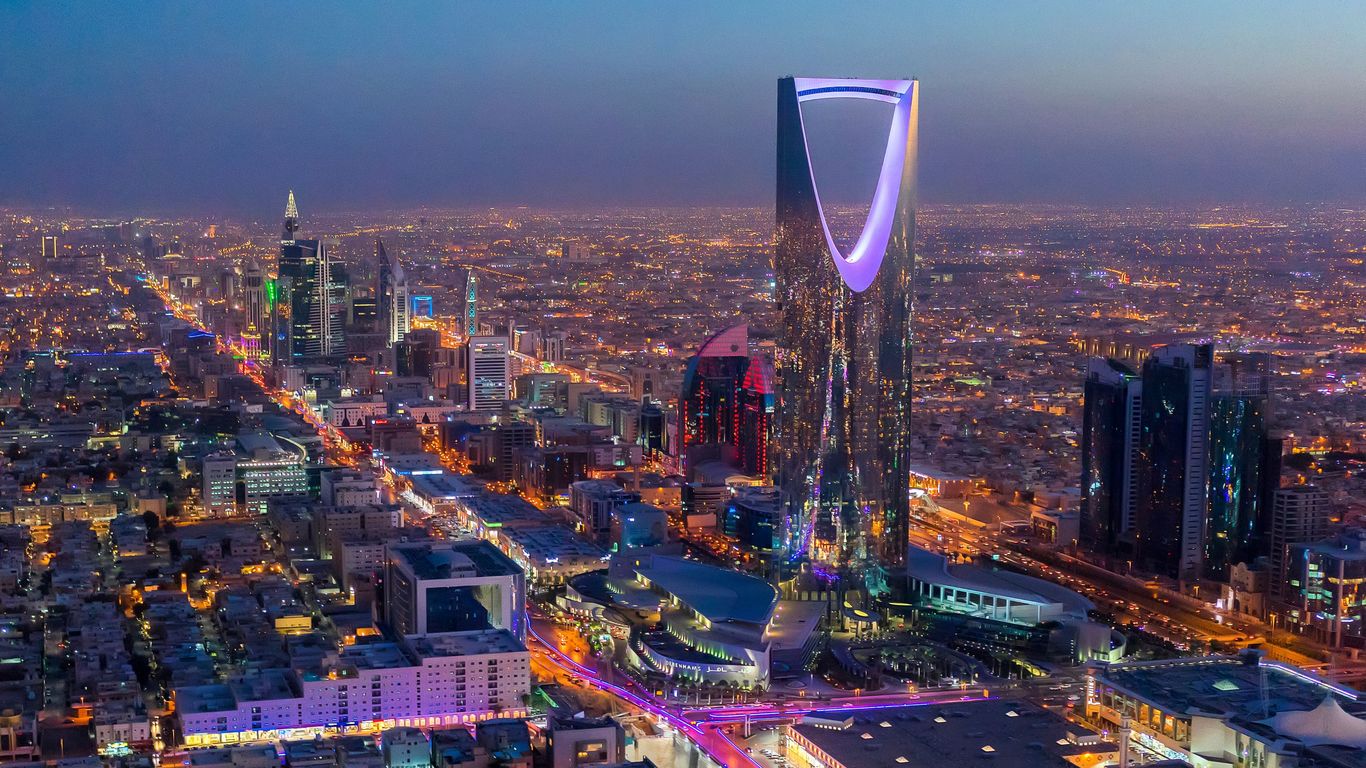
Saudi Arabian capital Riyadh becomes a site of aesthetic inquiry in Noor Riyadh 2025, where light negotiates the relationship between urban space, memory, and imagination. Under the curatorial direction of Mami Kataoka, alongside Sara Almutlaq and Li Zhenhua, the festival unfolds under the theme "In the Blink of an Eye", reflecting the accelerated transformation of the city. Historical districts, contemporary architecture, and infrastructural sites are interwoven to produce an environment in which illumination structures the experience of time, movement, and spatial awareness.
Within this curatorial framework, light operates as both material and method. The installations selected for the festival exemplify the ways in which illumination can organize space, shape perception, and establish a dialogue between the city and its inhabitants.
Constructing the Ephemeral: Light, Form, and the Contemporary City
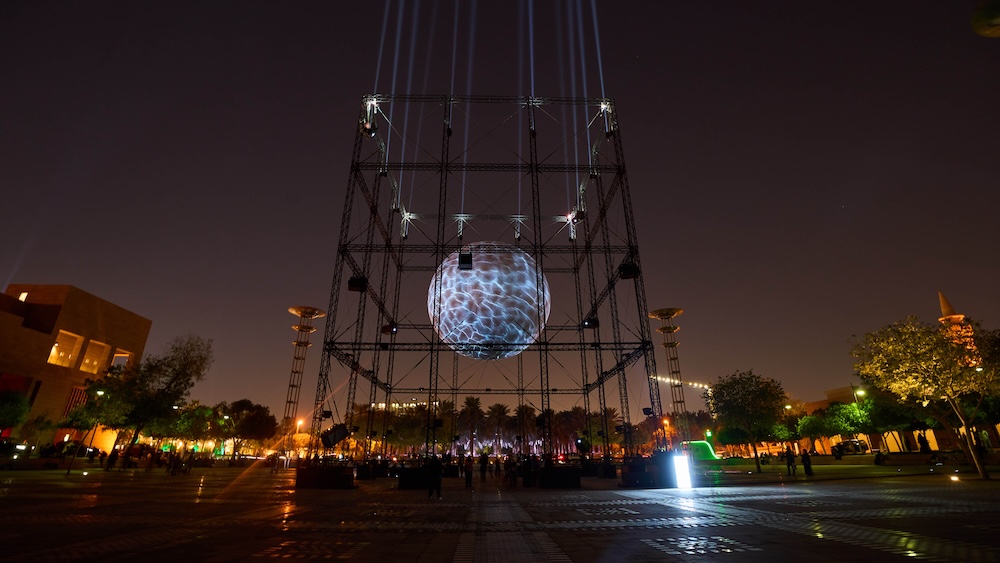
"Luna Somnium" by the collective fuse* translates scientific lunar data into an immersive architectural environment, transforming empirical measurement into a contemplative spatial experience. Drawing from astronomy, mathematics, and digital modeling, the work renders the moon not as a distant celestial body but as a rhythmic, perceptual presence unfolding in real time. Light becomes a medium of translation rather than representation. Data-driven movements generate shifting luminosities that seem to breathe, oscillate, and recede, inviting viewers into a suspended temporal zone where cosmic cycles intersect with human scale. Luna Somnium foregrounds the paradox of time, simultaneously vast and fleeting, and situates human perception within a continuum that exceeds urban acceleration, slowing the body and recalibrating attention.

In "Synthesis", Christophe Berthonneau and László Zsolt Bordos orchestrate an ambitious convergence of architecture, drone choreography, and projection mapping. The city becomes both stage and score, activated through a precisely timed interplay of movement, geometry, and light. Rather than treating architecture as a fixed support, the artists destabilize its solidity. Facades dissolve into floating grids, planes fracture into luminous vectors, and spatial coordinates are temporarily unmoored. Drones function as drawing instruments in the sky, extending architecture upward and transforming urban volume into a kinetic field. Synthesis embodies the festival’s dialogue between order and disintegration, control and flux, offering a meditation on systems, technological, urban, and perceptual, that collapse momentarily into abstraction.
In contrast, "Liminal Air Space-Time" by Shinji Ohmaki unfolds through subtlety and restraint. The installation envelops viewers in a delicate choreography of light, air, and motion, producing a heightened awareness of presence and duration. Ohmaki’s practice is attuned to states of transition, between visibility and disappearance, movement and stillness, beginning and end. Here, light is dematerialized, hovering at the edge of perception. Its slow, almost imperceptible shifts encourage the viewer to attune their body to micro-temporal changes, transforming the act of looking into an act of meditation. Within the festival, this work functions as a counterbalance to the city’s rapid tempo, introducing a space of pause in which time stretches and folds back on itself.
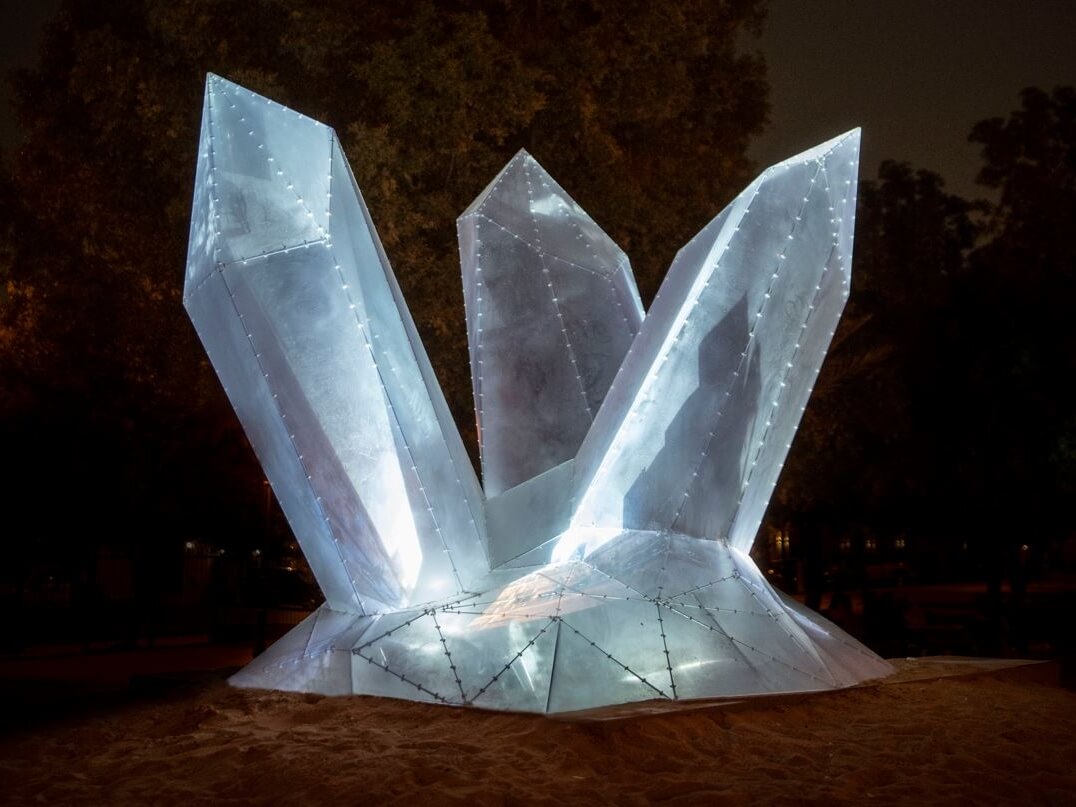
A vital grounding presence within Noor Riyadh is the work of Saudi artist Obaid Al Safi, whose installation "Seven Axes" introduces a locally rooted yet conceptually expansive perspective. Al Safi engages light as a vessel of memory and cultural resonance, drawing on the rhythms of landscape, architecture, and lived experience specific to the Saudi context. His approach privileges attentiveness over spectacle. Light traces rather than declares, revealing invisible strata of place, histories embedded in surfaces, gestures repeated over time, and emotional geographies that resist quantification. In contrast to data-driven or technologically assertive works, Al Safi’s installation emphasizes sensorial intimacy and embodied knowledge. His contribution anchors the festival in its immediate cultural terrain, demonstrating that futurity does not require rupture from the past, but can emerge through continuity, care, and perceptual sensitivity.
Light as a Conduit for Ideas
Taken together, the installations at Noor Riyadh situate the festival within a longer lineage of light-based artistic practices while extending them into the specific conditions of the contemporary city. Since the early experiments of László Moholy-Nagy, who conceived light as a material capable of reorganizing perception and social space, light art has consistently operated at the intersection of technology, phenomenology, and utopian thinking. Later figures such as Dan Flavin foregrounded light’s capacity to redefine architectural experience, while James Turrell transformed light into a tool for perceptual and spiritual introspection.
Noor Riyadh extends this history beyond the confines of the gallery and into the urban fabric itself. In doing so, it resonates strongly with urban theory, particularly Henri Lefebvre’s conception of the city as a produced space, one shaped not only by physical structures but by rhythms, practices, and sensory experiences. The festival activates what Lefebvre termed lived space, allowing light to articulate invisible social, temporal, and affective dimensions of Riyadh. Similarly, the works invite a rethinking of everyday urban navigation in the spirit of Michel de Certeau, transforming movement through the city into an interpretive and imaginative act.
What distinguishes Noor Riyadh is its refusal to treat light as mere ornament or technological display. Across the works, from data-driven cosmologies to meditative atmospheres and culturally grounded interventions, light functions as a structuring intelligence. It organizes attention, produces thresholds between past and future, and makes perceptible the tensions between permanence and transformation that define Riyadh’s present moment. Ultimately, the festival asserts that light is not only a medium but a conduit for ideas. It carries memory, speculation, critique, and possibility. It mediates between the material city and its imagined futures, between global artistic discourse and local experience. In Noor Riyadh 2025, light becomes a language through which the city thinks itself, momentarily illuminated, critically examined, and collectively reimagined.
