.svg)
Menu
I first met Jin Meyerson in the corridors of Loop Lab Busan, a video art festival staged inside a hotel in South Korea. Standing together and watching people move in and out of hotel rooms - each one temporarily transformed into a screening space - we began one of the most eye-opening conversations I had during my time in the country. A few weeks later, the conversation continued in his studio in Seoul, and it is part of that exchange that I share here.
Meyerson’s life story is deeply intertwined with that of Korea itself. Born in Incheon, South Korea, he was abandoned in a public market at around three or four years old, adopted by a Jewish-Swedish family, and raised in Minnesota, in the United States. His official birth date - May 8, celebrated as Parents’ Day in Korea - is shared by many other Korean adoptees, reflecting the lack of accurate records during the country’s period of mass international adoptions. The program began following the Korean War (1950–1953), and peaked during the 1970s and 1980s. During this time, falsified documentation, standardized birth dates, and the systematic separation of children from their families became widespread responses to the social, economic, and political crises of the post-war era in the country.
Later in his life, art became a way for Meyerson to make sense of the world. In the beginning of his career, he worked extensively with images drawn from American popular culture - cars, pop music, bands, brands - as a way of understanding what he was seeing and, in turn, understanding himself. He distorted these images until they began to make sense to him. This approach shifted when a friend introduced him to Photoshop, where a single click could fragment and distort an image without any clear logic. Today, with generative art at its peak, Meyerson transforms data into paintings, paintings into videos, and images back into brushstrokes in an ongoing cycle that reflects on where we come from and where we might be going.
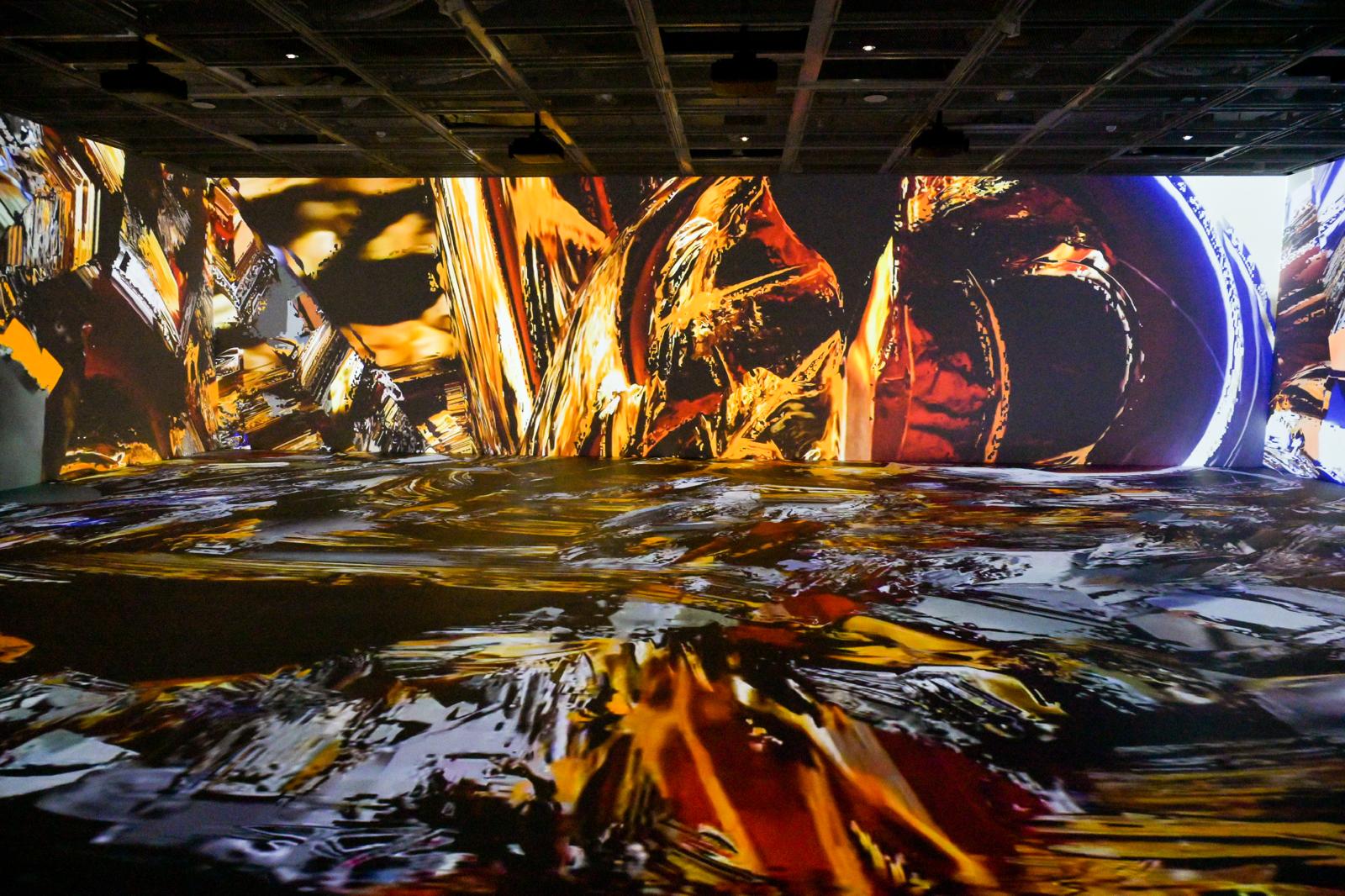
Currently, one of his works is on view at the Korean Cultural Center in Paris as part of the exhibition Colors of Korea: Spotlight on Contemporary Korean Art. Titled Once in a Lifetime, the immersive installation transforms floors and walls into shifting landscapes of colors and textures.
This interview is about Meyerson’s remarkable practice - but also about generation, inheritance, and identity.
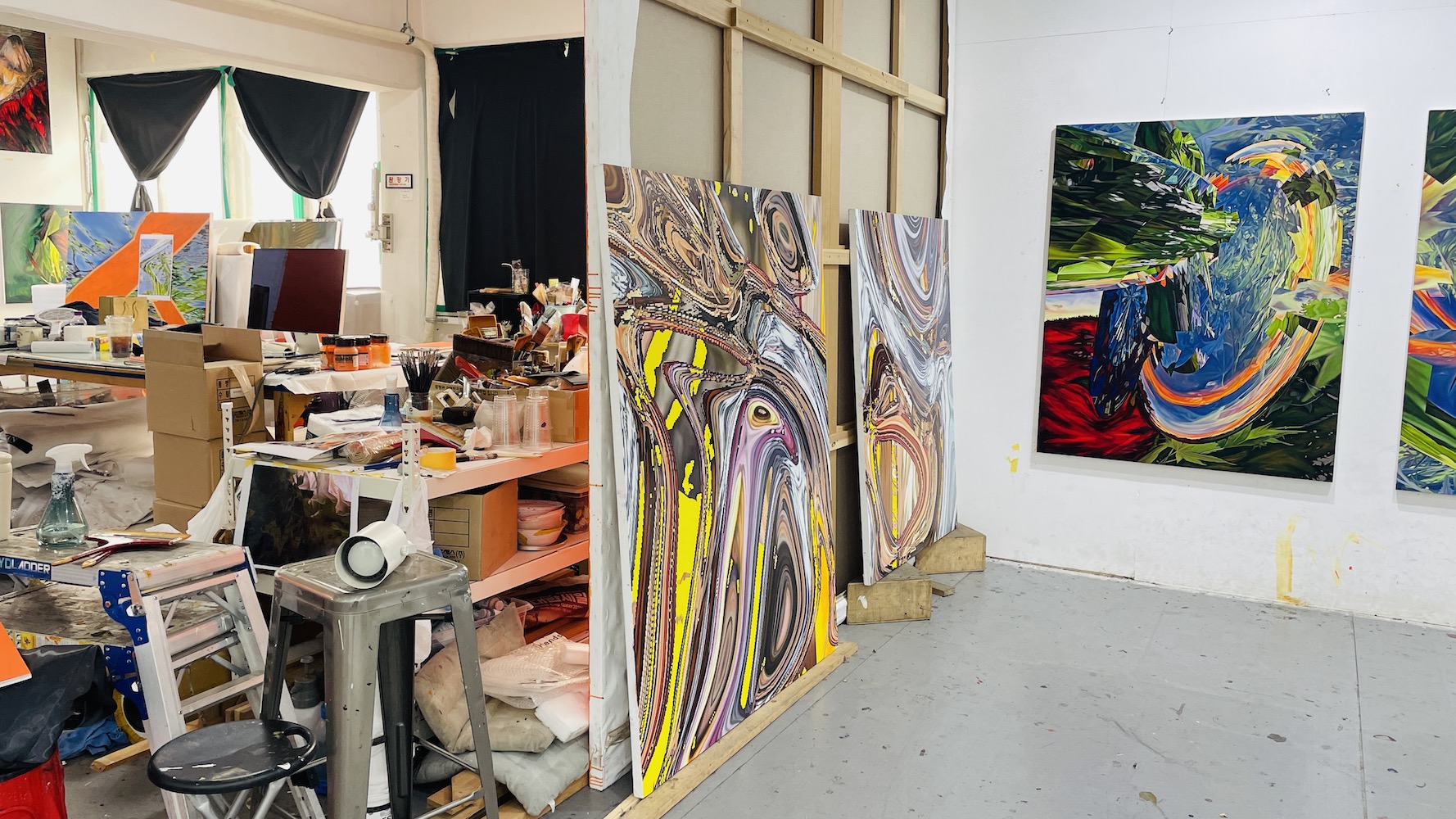
Jin Meyerson's studio in Seoul, South Korea
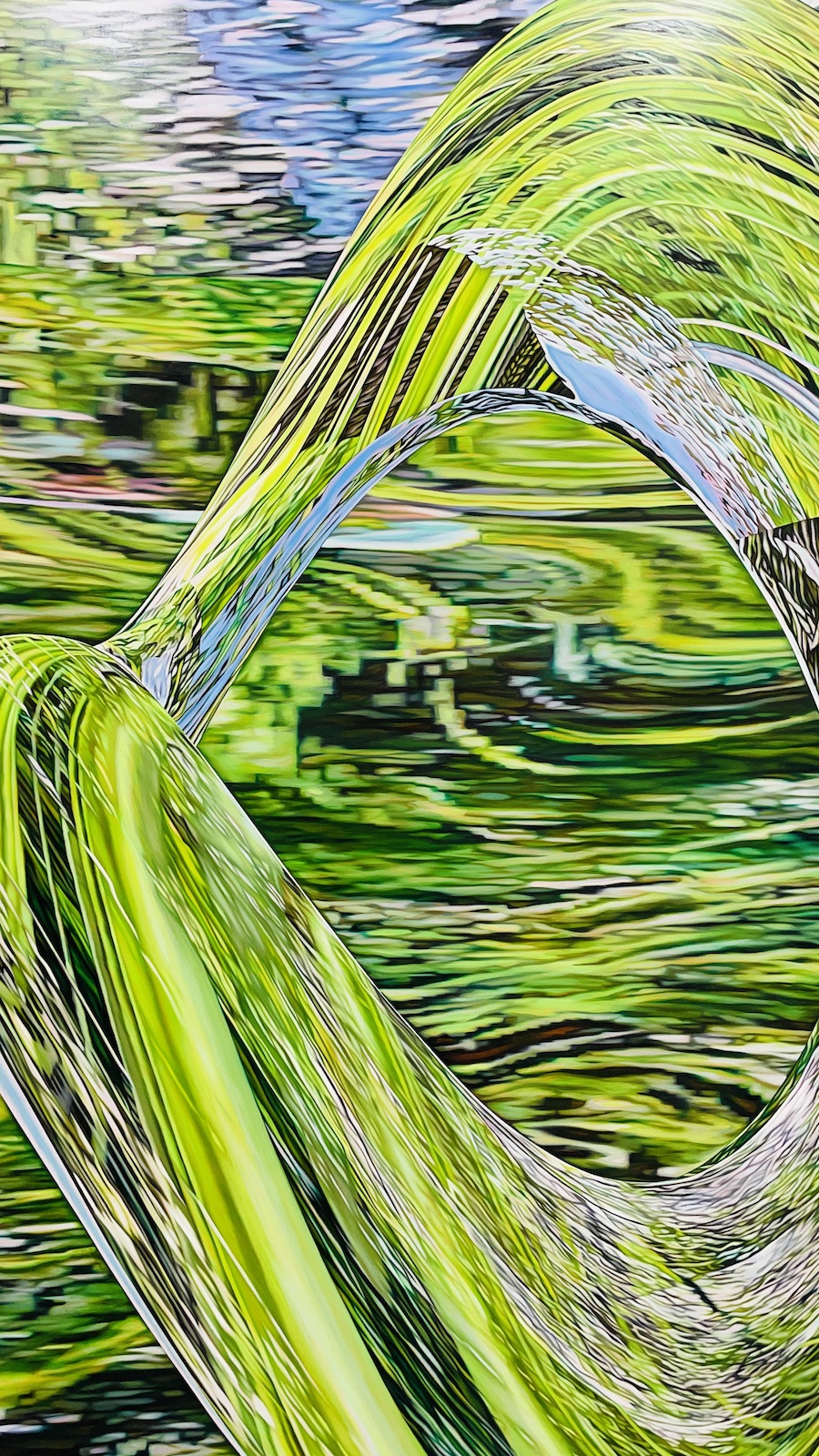
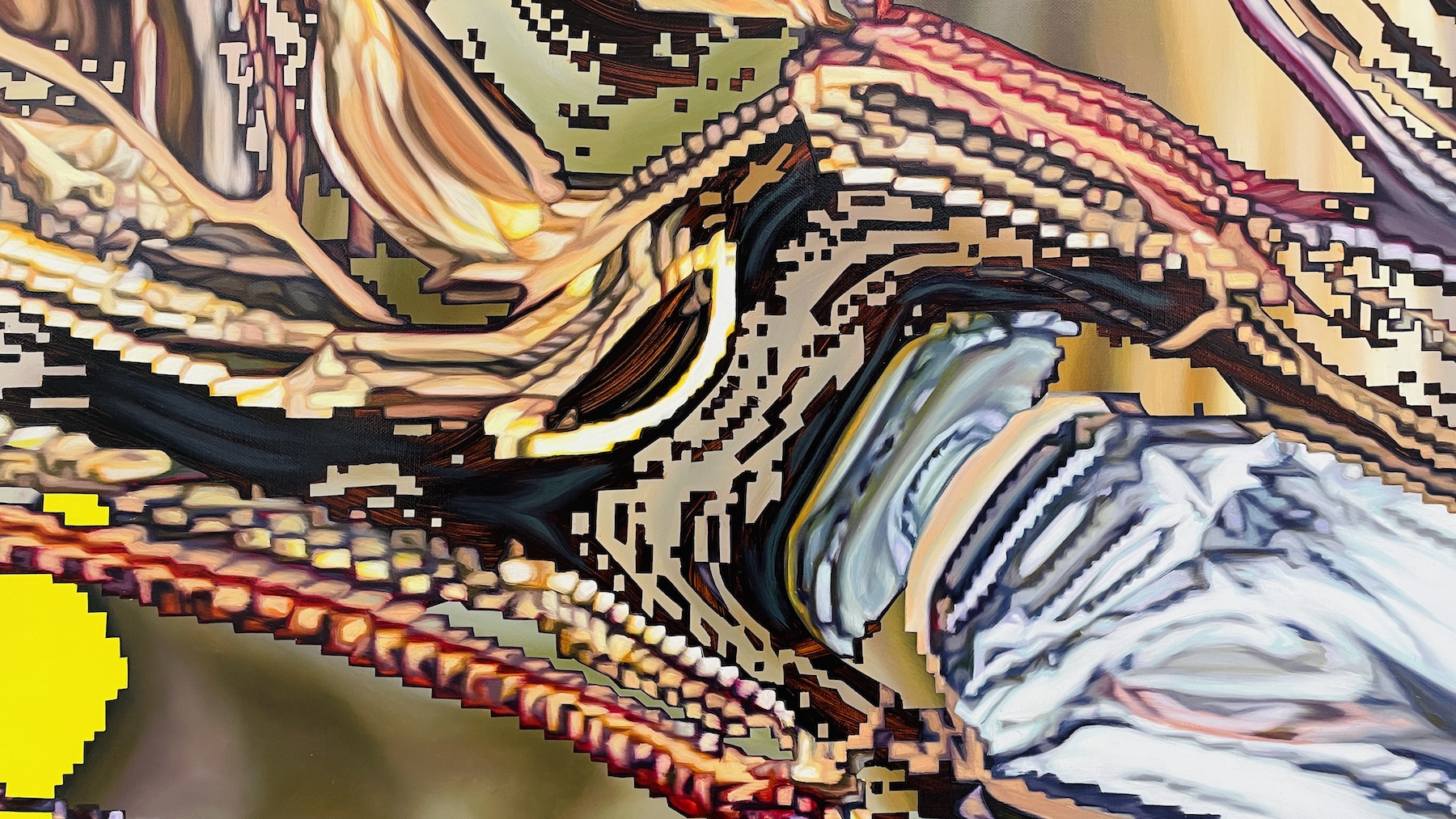
Detail of "Spaceship 1", 2025
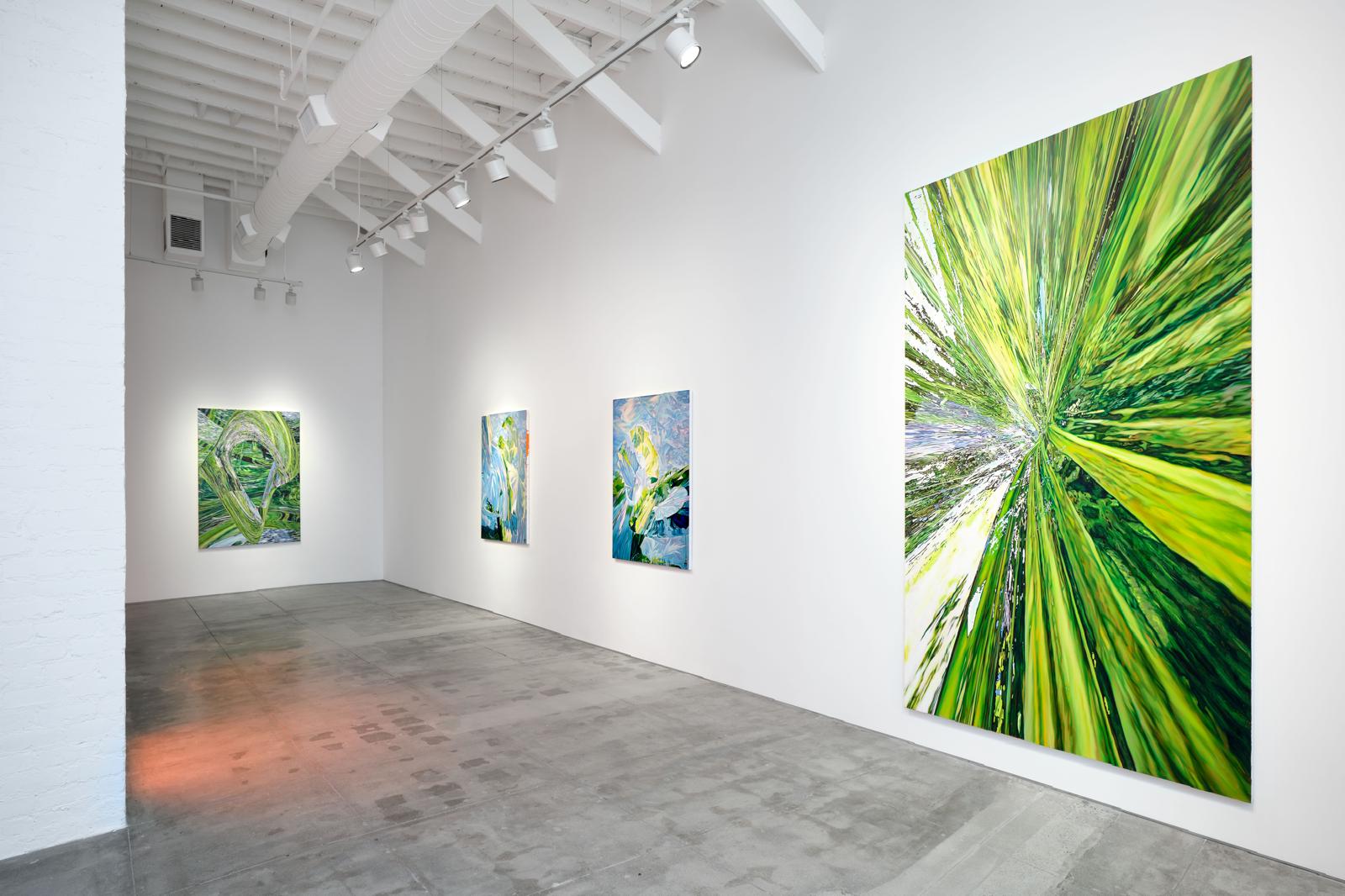
Last year's "Safe Space" exhibition at Perrotin Los Angeles
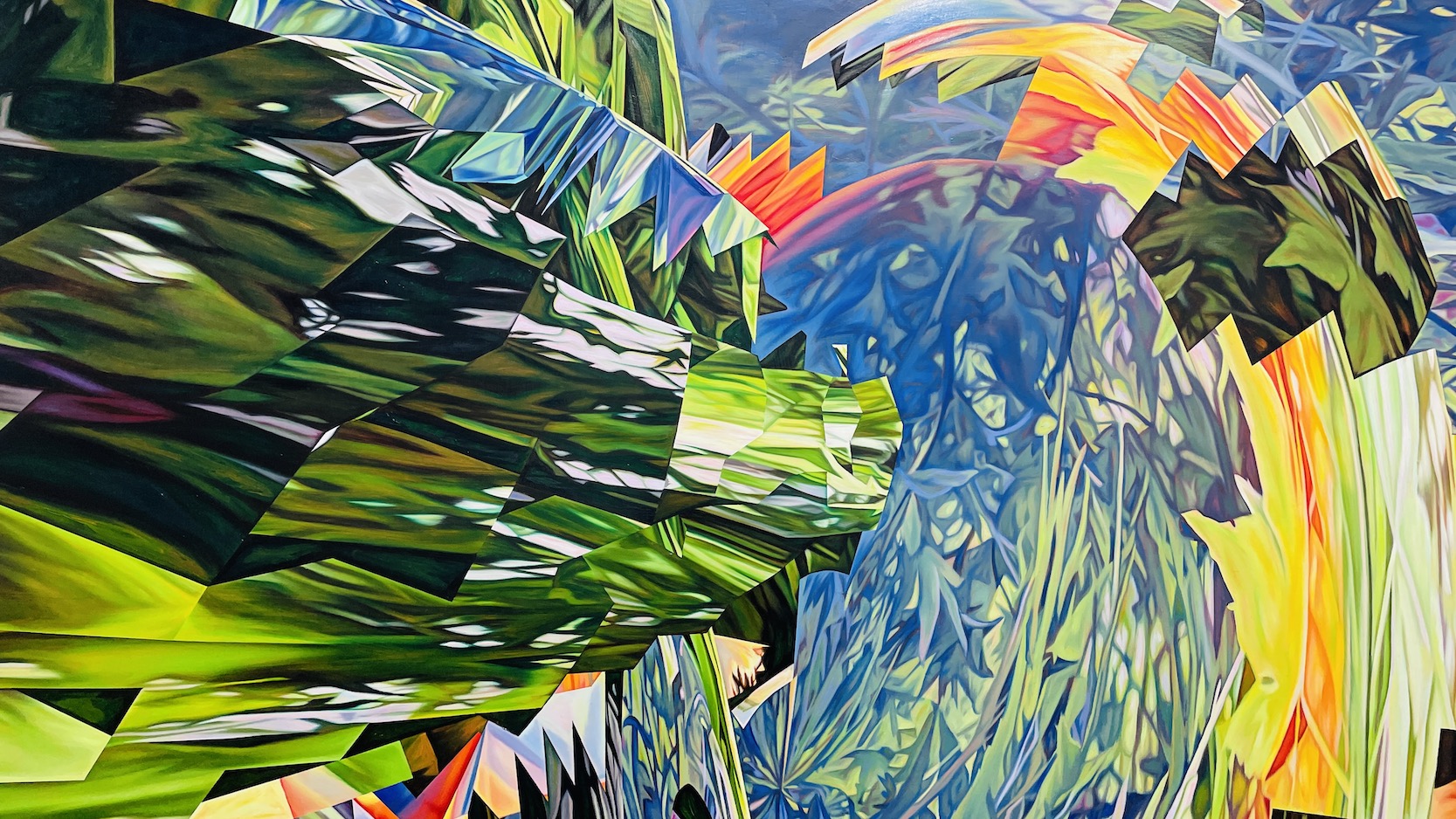
Detail of a painting

The artist's studio in Seoul
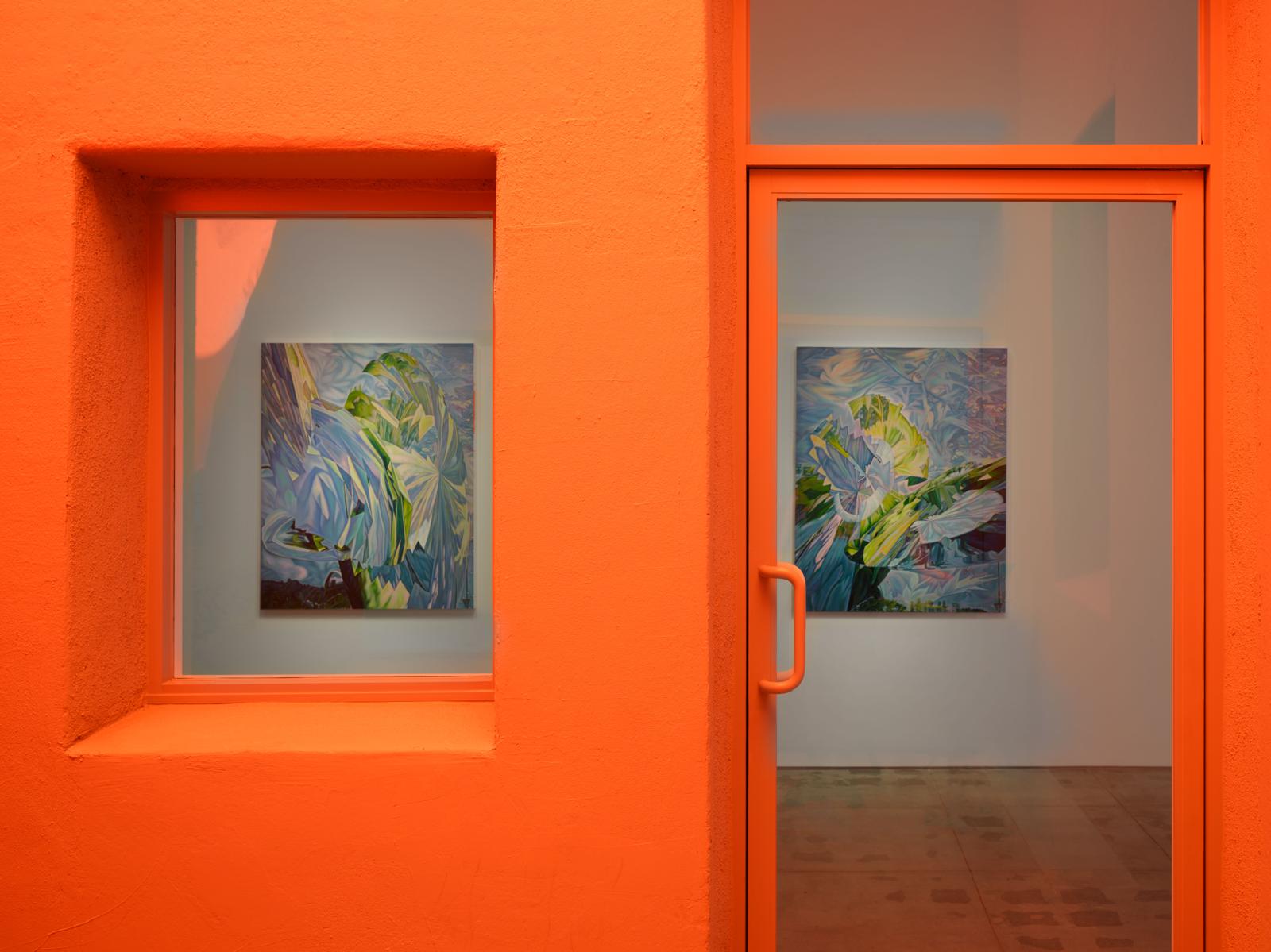
The artist's studio in Seoul
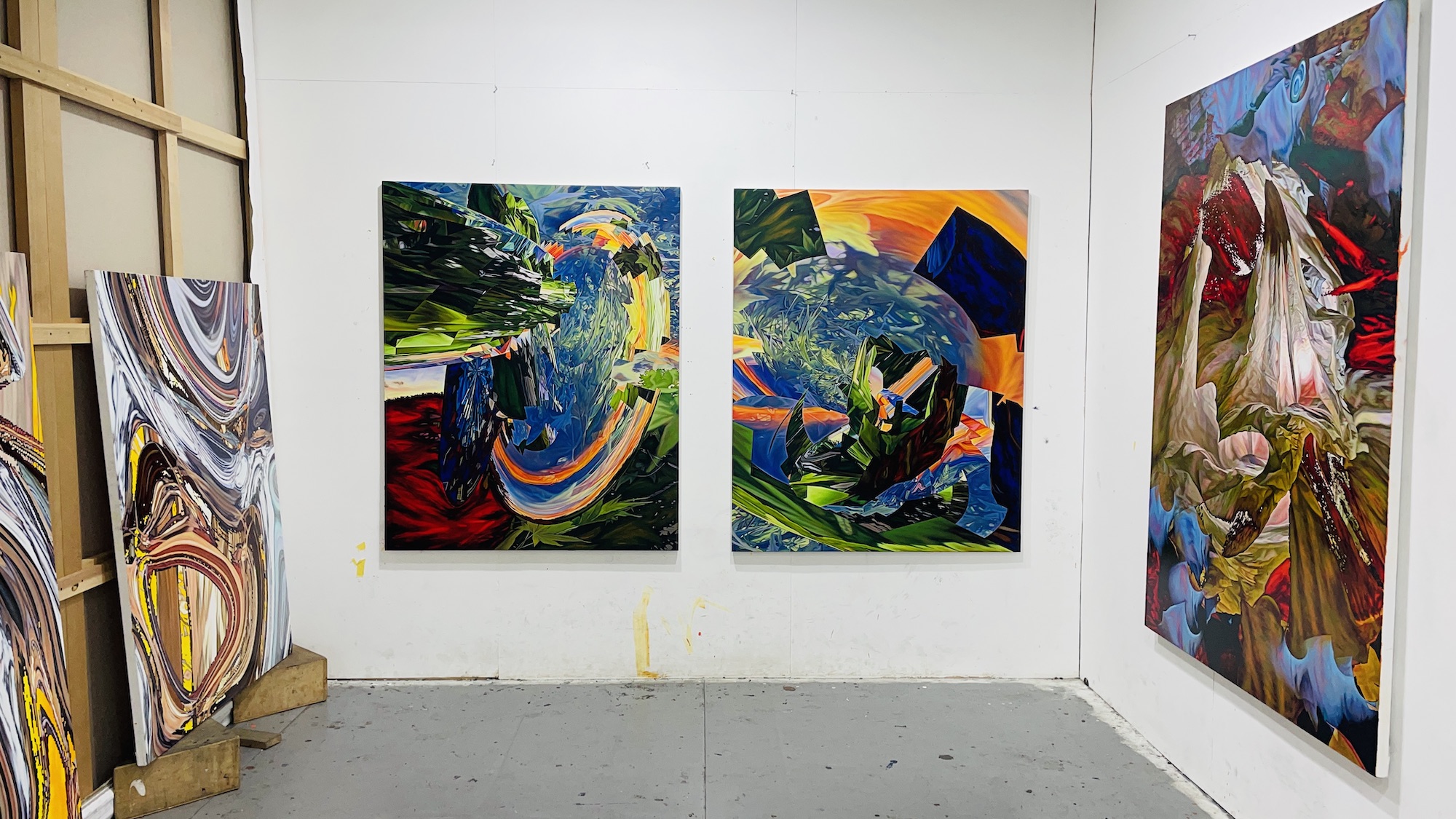
The artist's studio in Seoul
When someone encounters your work without knowing your story, what do you hope remains or resonates?
Even before I understood what I was doing - just finished grad school, moved to New York, 25, no idea what I was doing - I had urges. An urge is more animal-like and instinctual.
But my work has always been connected and parallel to the history of Korea, and the history of my birth mother - her experience of what Korea was, as I imagine it.
Koreans have suffered these lapses in having intelligent politicians - every country has - but the Korean War devastated everything. Every city was destroyed. To come from that into something sophisticated and technically elegant - my work has followed that, from early abstraction into what I do now. Half of my studio is programming and new imaging technology, and some of the most brilliant people are here in Korea.
When you think about the work and production behind Korean content, it comes from the narrative of Han - a tone specific to loss, longing, and survival. Other cultures have their forms, too. In Korea, that term is Han.
My work is connected to that. Even something seemingly superficial is connected to that. Parasite deals with class; Korean shows have that specific tone - dark, but rooted in longing and loss, and ultimately perseverance and problem-solving toward greater meaning.
That’s ultimately what I’m trying to get for myself, and what I hope viewers get from the work. That’s what I meant - how it’s all interwoven.