.svg)
Menu
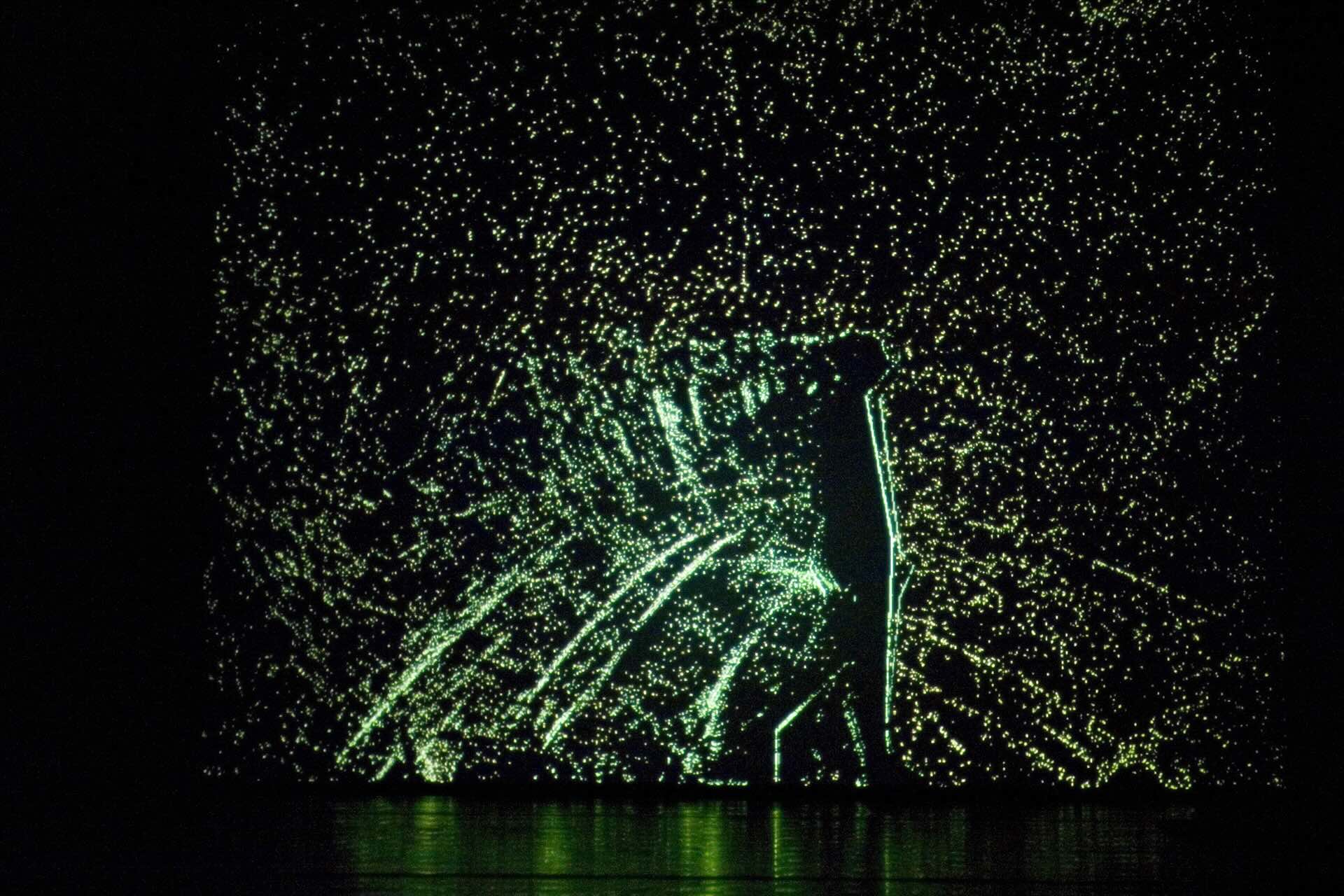
How does constant exposure to negative news shape our perception of the world? This question inspired "Sentiment Data Painting * World News 2024", a digital artwork that analyzes online news stories from across the globe and translates their emotional tone into data-driven brushstrokes. This innovative piece earned Rudolfo Quintas the prestigious Norberto Fernandes Prize for Art and Technology, and is just the starting point of this exciting interview. Spoiler: "Sentiment Data Painting" began archiving news during the ARCO fair in Lisbon in March 2024. On November 24, 2024, during the Prize exhibition at the Museum of Communications in Lisbon, the artwork's database already contained over 300,000 negative news stories compared to just over 70,000 positive ones.
Working in his Lisbon-based studio with neuroscientists, psychologists, perfumers, choreographers, data scientists, filmmakers, and designers, the artist incorporated AI into his work as early as 2001 to investigate the impact of information and communication overload on mental health, and the implications of autonomous systems of power and control in democracy.
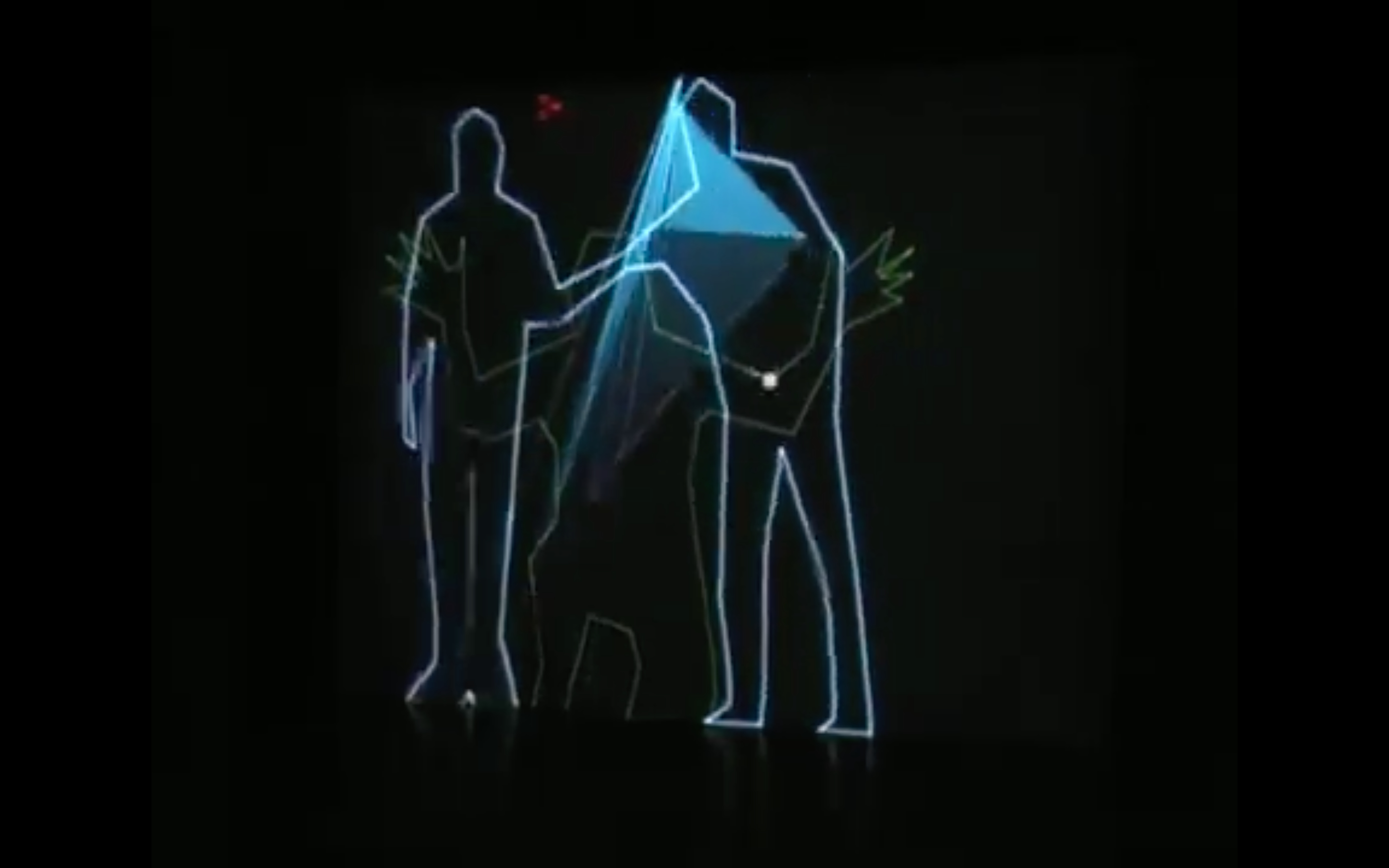
Displacement (2004, Rudolfo Quintas & Tiago Dionisio)
Julia Flamingo: Congratulations on winning the Norberto Fernandes Prize with "Sentiment Data Painting * World News 2024." The most interesting aspect of this project, and what gives it a unique character, is emotion. Beyond real-time data reading and transforming it into digital brushstrokes (data painting), what makes this project special is its connection to subjectivity (sentiment). Let’s start with this: what interests you most in the intersections and divergences between technology and the body?
Rudolfo Quintas: The intersection between technology and the body fascinates me because it allows us to explore how digital tools and AI can amplify or distort our sensory and emotional experiences. I strive to create works that act as interfaces—for example, in the interactive, body-centered installation "Displacement" (2004) which immerses visitors in cognitive experiences, challenging traditional perceptions and revealing hidden layers of human interaction with the digital world.What interests me most is understanding and expressing where the human stands amid these intersections and divergences. I am drawn to envisioning a human inseparable from nature in a technologically advanced world, capable of realizing their physical, mental, and spiritual potential.

Can I Hear You Dance? (2023, Rudolfo Quintas)
J: I’d like to understand more about how you approach mental health. You’ve used technology to critique our increasingly distant relationship with nature. Here’s a provocation: isn’t that contradictory?
R: I recognize the apparent contradiction, but I believe technology can serve as a critical mirror, reflecting and questioning our behaviors and relationships. On the other hand, I also see humanity’s relationship with technology as inseparable. Consider fire mastery or the advent of agriculture—these were as advanced technological experiences at the time as AI is today. Humanity is technology, just as technology expresses humanity. The issue lies not in the technology itself but in ethics.If I speak about feeling distanced from nature, it’s because I feel it. I hike in forests—they inspire me. I swim in the sea or dance in nature and sense the importance of that connection. But when I express these ideas, I use digital tools, because art is a realm of creation. For example, if I want to speak about reconnecting with nature, I don’t necessarily need to bring a plant to a gallery or take people on a nature walk. I must create an imaginative space that prompts people to question and feel their relationship with nature.
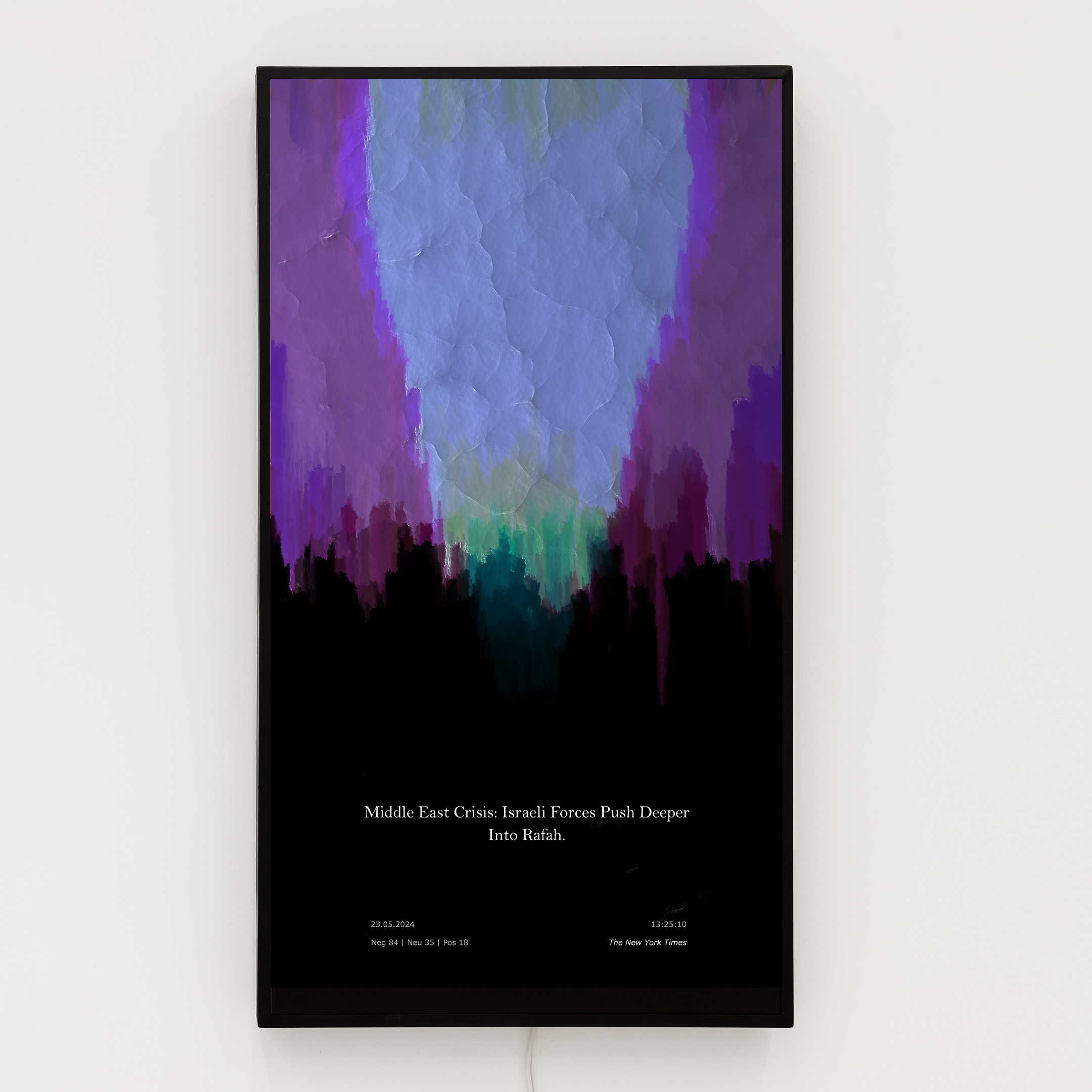
Sentiment Data Painting * World News 2024 (2024, Rudolfo Quintas)
In "Can I Hear You Dance?" (2023), a digital piece about encountering nature, I invited two blind people to dance with nature. The work resulted in a multi-channel audiovisual installation and a second interactive sound installation called "Shades of Waves" (2023). By using digital tools and AI to highlight the infodemic’s impact on mental health, as in "Sentiment Data Painting * World News 2024" (2024), I aim to promote awareness about the constant exposure to negative news and how it alters our perception of the world. I approach mental health from an artistic perspective while integrating scientific insights, working with psychologists on my projects, and participating in academic debates alongside psychologists and psychiatrists.The most crucial aspect of my approach in mental health is its holistic nature, emphasizing the relationship between body, individual, and society.
SAWP (2005, Rudolfo Quintas, Tiago Dionisio & Dance by João Costa)
J: When did you start incorporating artificial intelligence into your work? Did this coincide with questioning the neutrality of the technology? Why is this questioning important?
R: I began integrating intelligent systems into my artistic projects during college, around 2001. My works could recognize visitors’ presence and develop interactions. I incorporated computer vision—a field of computing that enables machines to "see" like humans—in the interactive, generative audiovisual installation "New Media As Cyborg" (2001). This installation transformed visitors' gestures into digital expressions.
Later, I deepened my understanding of code as an artistic medium by studying computer graphics engineering after my art studies. This led to pioneering projects, such as the dance and technology collaboration SAWP (2005) as one of the first augmented dance performances worldwide.
In 2019, I integrated natural language processing (NLP) into projects like "KEYSTONES I, II, III, IV", where we trained a language model to autonomously read and write in Portuguese based on social media data. This AI was embedded into a piece that read major Twitter accounts, producing reflections on global events during an exhibition at the Museum of Contemporary Art in Chiado, Lisbon.From the beginning, I questioned AI's neutrality, aware that algorithms could perpetuate biases. This questioning is crucial to ensure technology is used ethically and inclusively, avoiding the reproduction of prejudice and fostering more human interactions.

Black Hole (2018, Rudolfo Quintas)
J: I was particularly intrigued by your project "DARKLESS", where you connect the experience of blind individuals, their body movements, and gestures to those who can see. Could you explain this project and what "decolonising body language" means?
R: "DARKLESS" is a project aimed at expanding the digital imaginary in collaboration with blind individuals, creating a space where diverse ways of perceiving the world are valued and integrated. I began this artistic investigation in 2015 and have since produced various works.In "DARKLESS – Black Hole" (2018), the installation transforms people’s gestures and movements into sound, creating a new communication language that bridges gesture and sound. The result is abstract soundscapes that describe bodily movement in space. This allows blind individuals to interpret body movements through the sound they hear, fostering sensory mediation where blind and sighted individuals can share perceptions through movement and sound. It also serves as a manifesto for digital inclusion through art, proposing new ideas that challenge the digital divide.
Decolonizing body language means freeing the body from culturally learned gestures and movements. This liberation can restore a more expansive perception of the body, positively affecting mental health. It involves shedding cultural norms and expectations, allowing for more authentic and inclusive expression. This concept underpins many of the interactive, body-centered installations I created between 2001 and 2018.
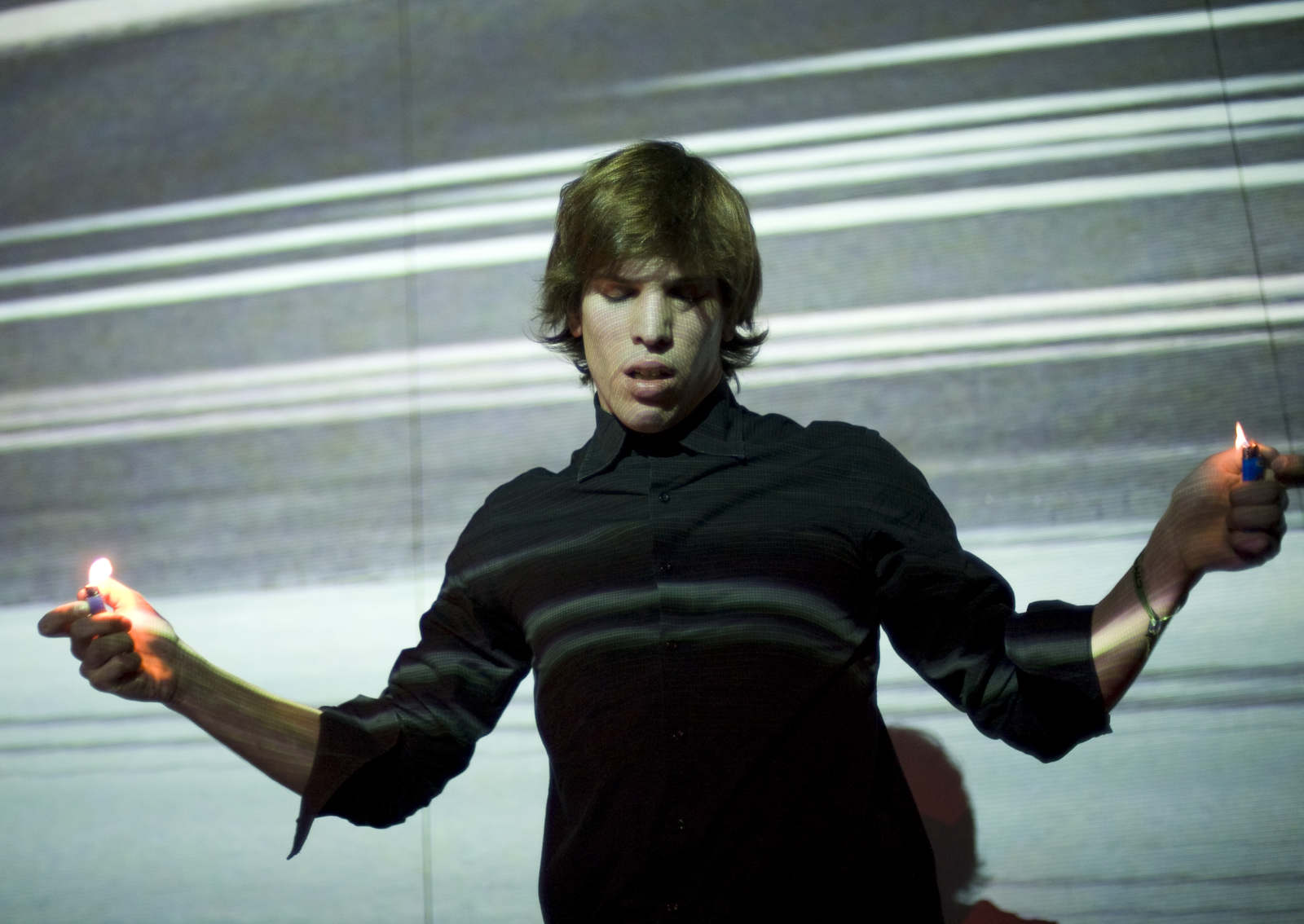
Black Hole (2018, Rudolfo Quintas)
J: Could you describe another piece where you used performance and technology? How do you believe these artistic experiences can foster connection and empathy among individuals?
R: "Burning The Sound" (2007), I used fire and sensors to transform movements into soundscapes, merging primordial elements with advanced technology.
By involving the audience in immersive sensory experiences through performance, I aim to break barriers and cultivate empathy, allowing participants to connect more deeply with each other's emotions and perceptions. In this piece, the audience could feel my sweat and nervous system in real-time—a rare moment of shared vulnerability.
This work was significant to me as it marked my first international award, the Transmediale Distinction Award (2009) in Berlin.
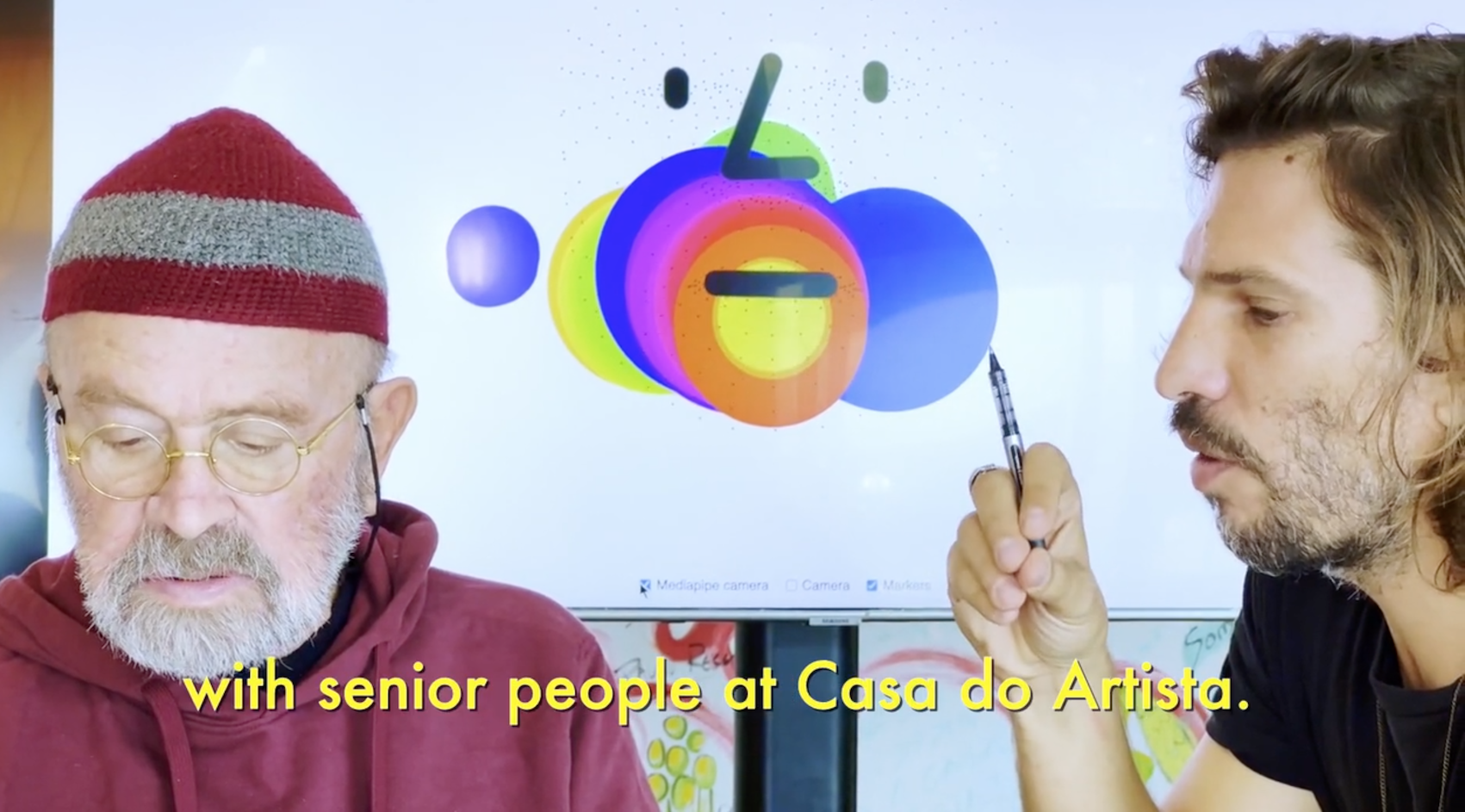
O Ato Ciênsivel (2023, Rudolfo Quintas)
J: Lastly, could you share more about your studio in Lisbon? How many people work with you, and what are their specialties? How does the process work, and how long does it take to create a piece?
R: My Lisbon studio consists of a multidisciplinary team specializing in creative programming, sound design, electronic engineering, and artistic production.Some projects involve teams of 20–30 people, including neuroscientists, psychologists, perfumers, choreographers, data scientists, filmmakers, and designers. For example, in the artistic research "O Ato Ciênsivel"(2023), developed in collaboration with AI researchers from Champalimaud Foundation neuroscience lab, we successfully expanded elderly individuals' memory. Other projects, like "Burning The Sound" (2007), were deeply personal—I designed and programmed the entire instrument and performance myself.
For each concept, I assemble a team, which is a considerable effort but allows me greater conceptual freedom. When successful, these teams often stay on a project for years, as with "DARKLESS".Our work is collaborative and iterative, involving research, development, and testing. Production time varies depending on complexity, ranging from a few months to over a year. One of our upcoming projects involves exploring what it means to dine with AI, with a series of dinners planned throughout 2025 at my studio.