.svg)
Menu
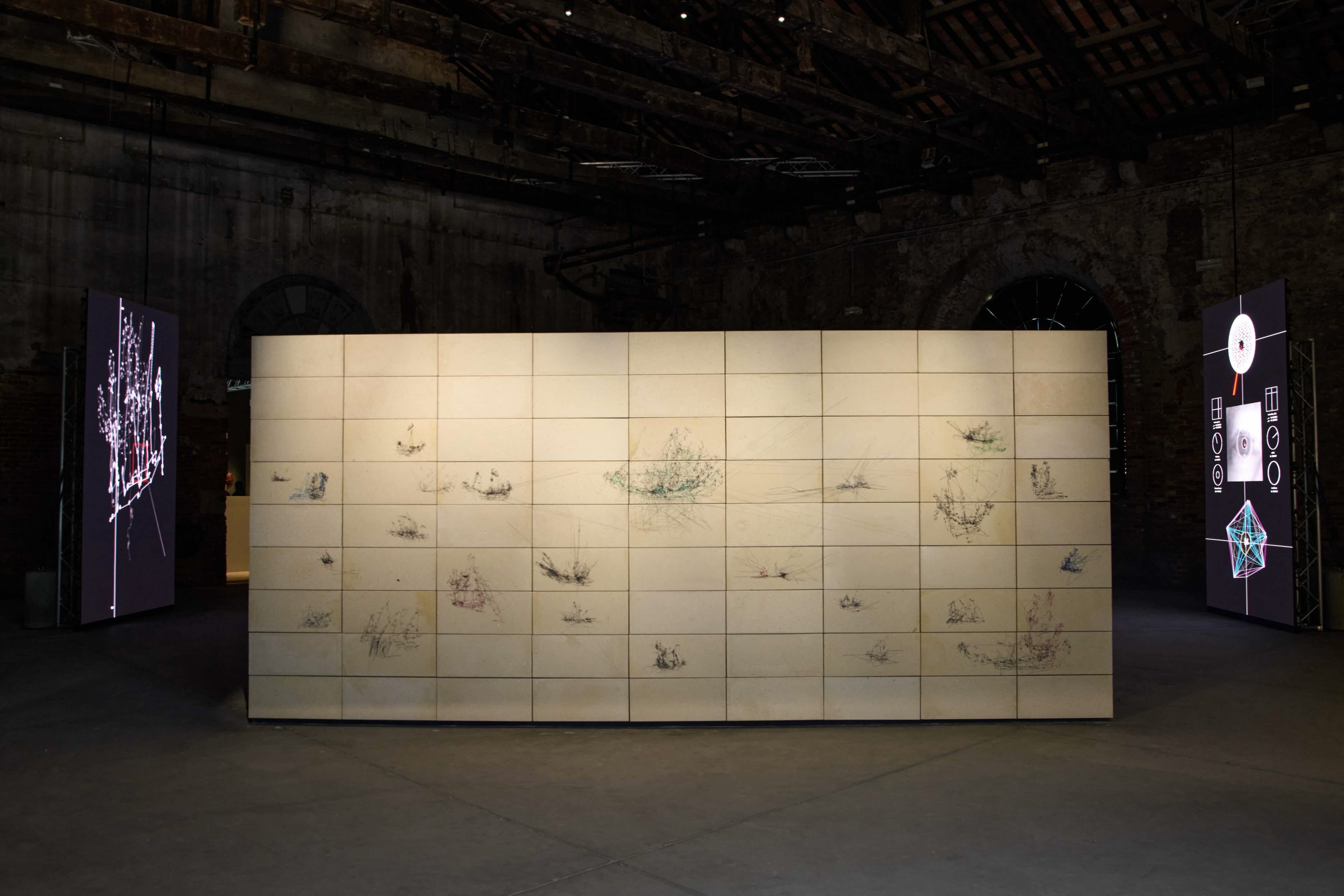
Eighty-seven national pavilions are participating in the 60th edition of the Venice Biennale, the most celebrated contemporary art event which takes place until November. Every two years, dozens of nations worldwide present their autonomous exhibitions in pavilions spread all over the city. Amongst the most exciting venues of Biennale 2024, there is one dealing with digital art: the Malta Pavilion.
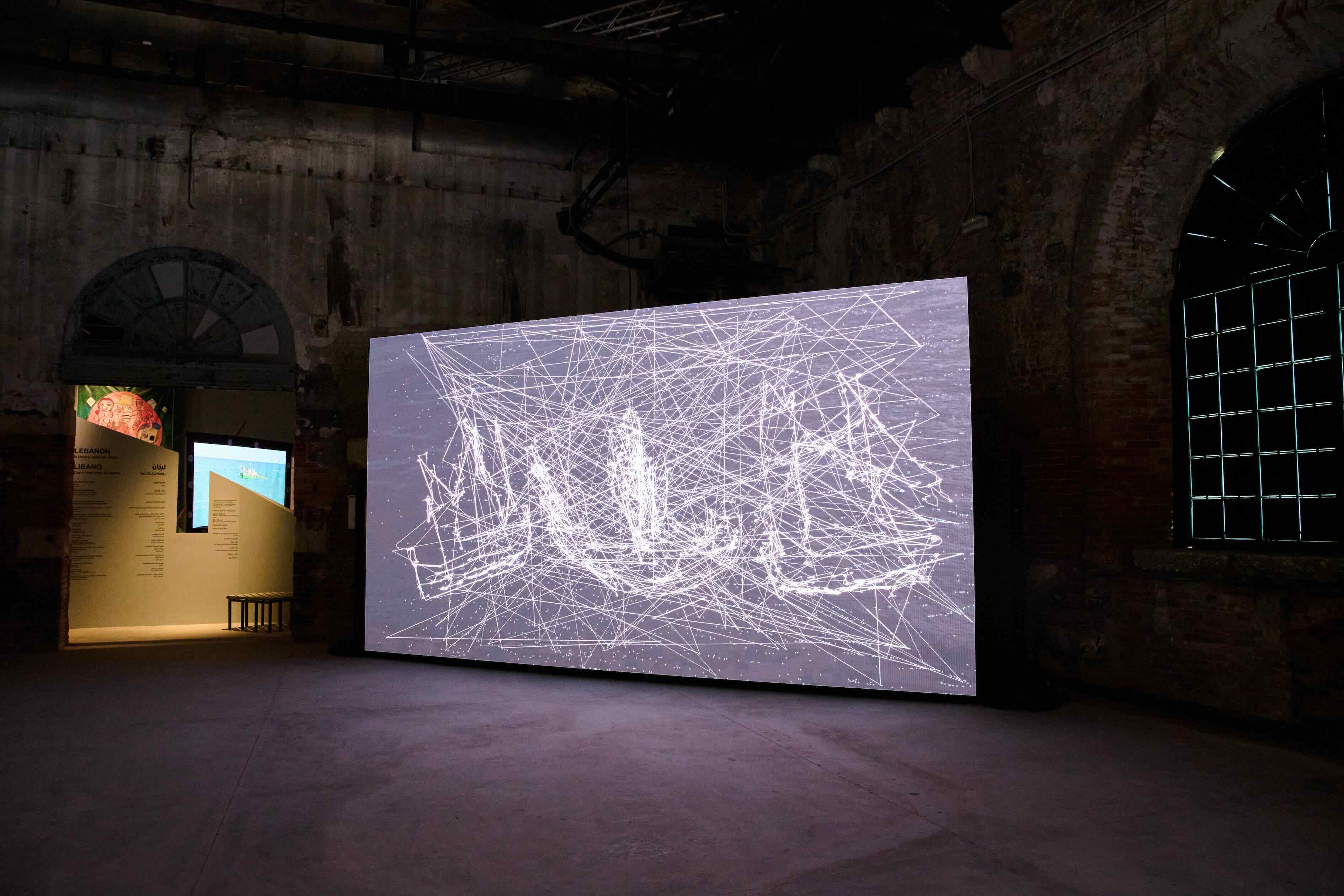
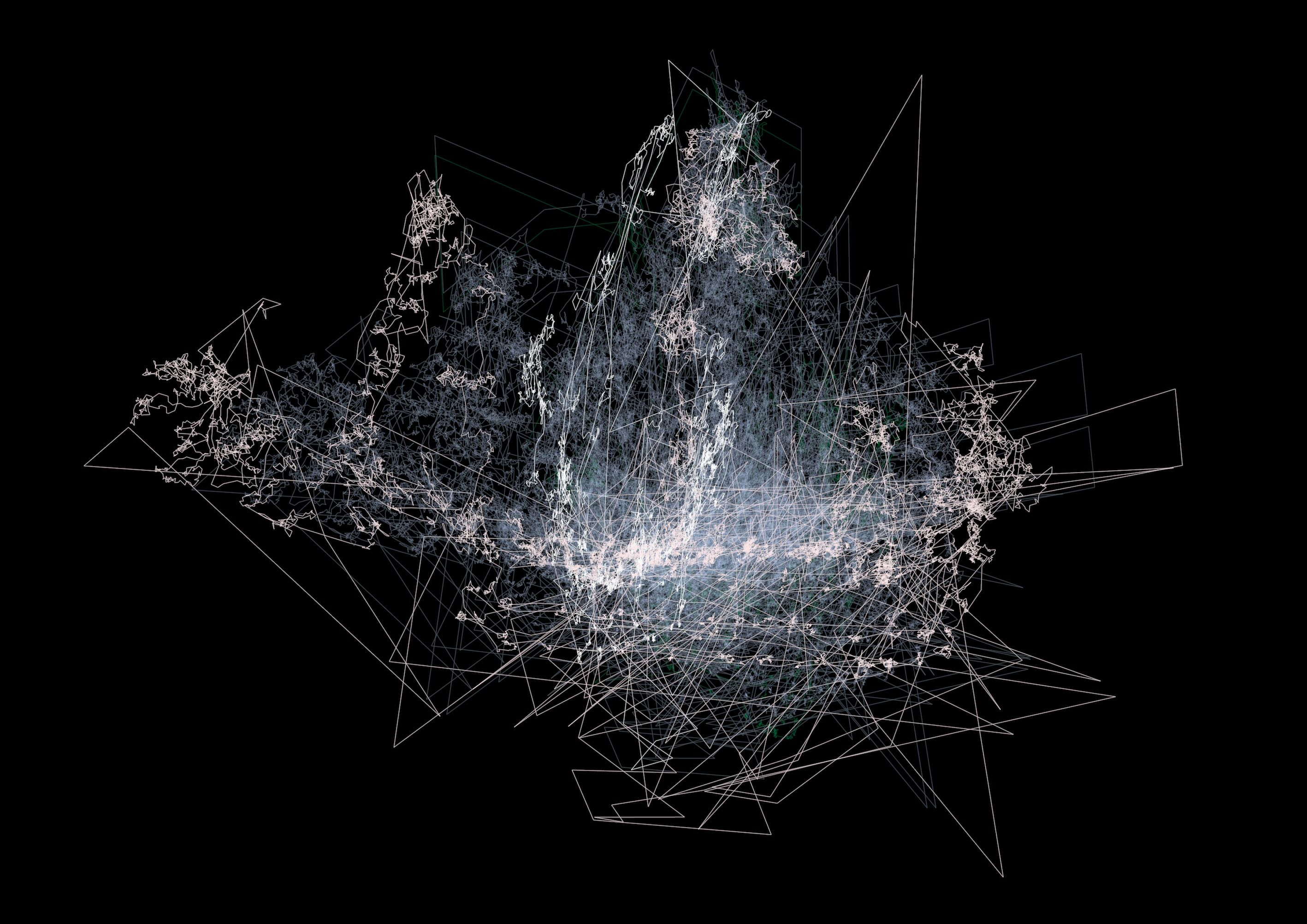
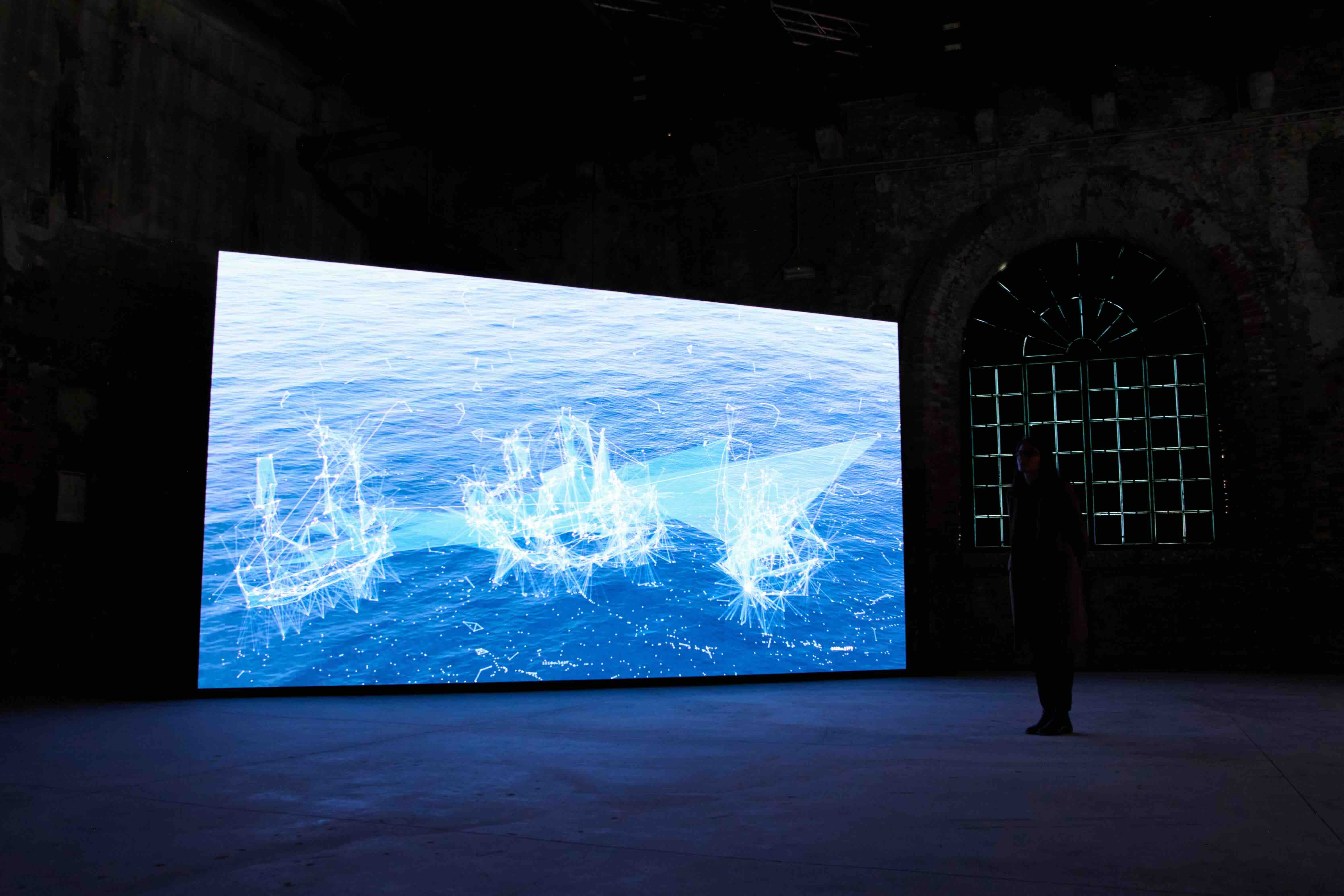
Titled I WILL FOLLOW THE SHIP, Matthew Attard’s solo show, located at the Arsenale building, uses historical drawings on stones on the facades of wayside chapels throughout Malta as a starting point to develop a fascinating and poetic narrative around collective memory, shared beliefs, imagination, and technology. These ancient graffiti dating back from the 15th to the 18th Centuries denote dreams, wishes, fear, and anxiety of people in different periods. They did stone incisions of ships as a unifying metaphor for hope and survival. Attard used an eye-tracking device to trace the historical lines, and used AI to develop digital drawings which are then explored in several ways throughout the exhibition. Audiences are also invited to play and draw digital ships on their mobiles, contributing to a web of speculative thought. The most simple lines become part of a database of collective imagination.
Co-curated by Elyse Tonna and Sara Dolfi Agostini, the sharp and accessible exhibition explores wall art—the most ancient form of human artistic expression—as a means of discussing culture in contemporary times: communication, connectivity, manipulation of images, digital art, and the relationship between humans and technology.
Julia Flamingo - I am passionate about your work at the Biennale because of its many layers. It can be straightforward and understood by a child who draws a boat. But it also leads to discussion in the realms of imagination, history, and philosophy. It offers a complex universe and still doesn’t ignore beauty, form, and poetry.
So, my first question would be about the creative process of the work. What came first: the drawings, the boats, the idea of subjectiveness/collectivity, or the technology?
Matthew Attard - Thank you; that is a much-appreciated comment. I always think that the most difficult part of an artistic process is to give concepts a visual form without being simplistic. The process of getting to the work we see at the pavilion was as multi-layered as the result itself. I had the intention to converge the significance of historical graffiti for our present day, notions of the act of drawing, and the influence of digital technology. In a way, none of them came first - they are parallel processes that feed each other.
My sources of inspiration vary widely, encompassing diverse things, practices, and processes themselves, and they are not all directly tied to art making. I believe every impactful encounter has the power to provoke some reaction within one's own practice, and it is the endless experimentation of the work itself that helped in this convergence and formalisation. As a result of this, a large part of the process concerned unknowns.
JF - In terms of technology, I am curious to understand how you created the glasses. How are they connected to the movement of the eyes? More specifically, how are brain—eye—glasses connected?
MA - I didn’t! The glasses are commercially available, and I adapted them to a practice. I sometimes even misused them. The software that generated the video works from the data that was created for the show. Regarding the use of commercially available eye-tracking technology, I am partly influenced by Jonathan Crary’s writings in his critique of how eye-tracking data has also become a post-capitalist tool in our times and how this has repercussions on our visual perception.
At the same time, the technology acts as a metaphor in my project, highlighting the gaze and attention towards the narratives of the historical imagery. We should also keep in mind that eye-tracking technology has a long and fascinating history as a scientific device, while in our digital era, it now spans disciplines and utilities. In some sectors, it has also become invisible, which, like in the case of other tracking technologies, doesn’t make it neutral. The eye-tracker does not read the brain. In its simplest form, it measures our gaze in data form, which is very specific and intricate. However, wearing the eye-tracker in front of the historical graffiti undoubtedly instigated and influenced my experimentation with ways of seeing.
JF - What are the algorithms trained for?
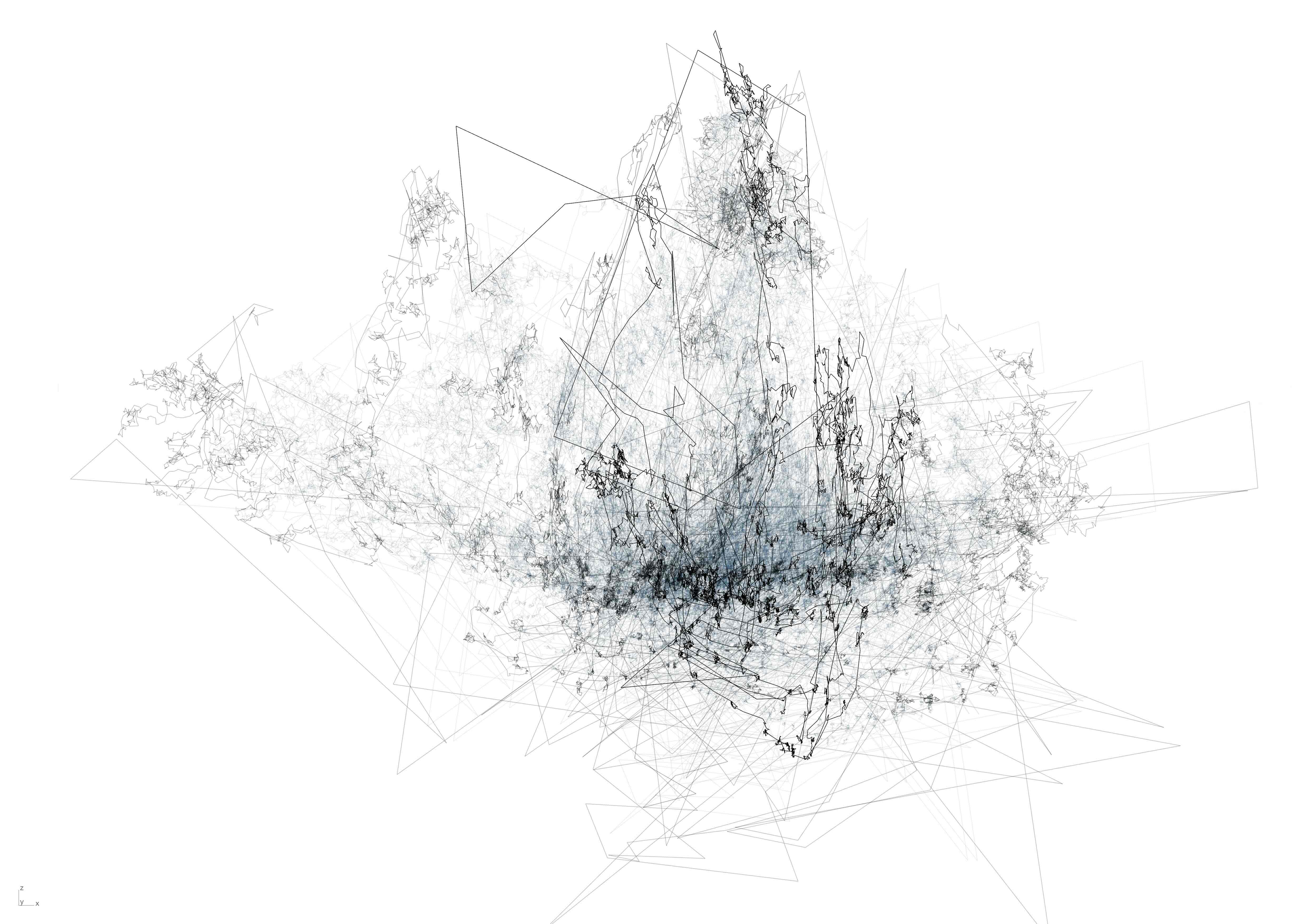
MA - The algorithms were not trained, and the influencer and use of AI are not in the direct output of the imagery. For the generative video piece, I wanted to produce a work that highlights the human labour that AI processes are based on. I wanted to dissect this and, therefore, developed my own libraries of the eye-tracking drawing data and of the sea imagery. Algorithms were then developed to output the generative work that we see in the pavilion, and the visual output itself was partly influenced by AI imagery that I had developed throughout this long process - think of it as a sketchbook. In terms of AI, I am interested in works that investigate and illustrate a form of deceit that AI brings with it, such as one found in the brilliant book ‘The Atlas of AI’ by Kate Crawford.
JF - In some texts, I read that, with this work, you criticize our blind faith in the digital. However, aren’t we very suspicious of digital nowadays? Especially because of the discussions around AI, we are all tending to be very critical about what we see online….or not?
MA - Yes, I agree that we are suspicious, and yet, we still live with it! I wanted to emphasise how digital technology is not neutral. A particular example that half-surprised me is how some people were observed trying to avoid physically crossing the gaze path of the moving digital eye on the vertical screen because they thought they were being recorded. Of course, the minute they realised that the image of the eye was recording nothing they laughed, and I would imagine that was one moment that made one aware of how we perceive technological material. This is only a minor example.
The generative screen then evokes a more contemplative attitude. In a way, I didn’t want to be either in a position of technophobe or techno-deterministic, but I wanted to offer a space that makes us aware of how we relate to technology. And I did this through historical and contemporary drawings. Other things are, of course, evocative on different levels, such as the imagery of the sea and the fictitious conversation with technology. I wanted a sense of critical questioning to be deliberate and one’s perception of the work to be active and as open-ended as the act of drawing itself.
JF - Your project elevates the expectations for how AI can be used in art. For audiences, I find it consistent, challenging, and generous. What is your personal view on how AI has been incorporated into art?
MA - As I said before, AI was more of an influence used for the build-up of the project and not something that directly outputted an image. I think that AI is, of course, a reality that we are now living with, and its implementation brings an array of contradictory questions about what it means to be human, along with all the doubts and hopes that technology exerts. For example, AI is now applied for the processing of eye-tracking databases themselves: what does that really mean? And what will that mean in a decade’s time?
Art can play an important role in this and in the shaping of the understanding of our underlying relationship with technology. Art cannot operate on its own in this either. For example, I believe that it is important to look at the entire history of how we have shaped technology and how it has shaped us all along, something that, for example, posthuman philosophy does very well. Without sounding controversial, what doesn’t interest me is when Art uses AI as ‘the future’ as a ‘new renaissance’. I think that is too temporary and necessitates depth.

JF - I didn’t see any other AI work in the Biennale, and there were actually very few digital artworks. What do you think that is so?
MA - I do not have an actual answer to this, as I do not think that it is imperative to work with digital technology—I myself do not always do so! Also, one can be influenced by notions of digital technology and produce a pencil drawing. In Venice, however, we did see an extremely refined exhibition that incorporates an incredible use of digital technology, Pierre Huyghe’s at Punta della Dogana.
JF - Can you please select two or three examples of previous works that can give a broader view of your artistic research?
MA - Sure! A project I had been working on related to the theme of the Ship of Fools. This had an ironic take on the historical allegory, where I was utilising a software Joey Borg (the same software designer for the work at the pavilion) had given me to test, which allowed me to draw with emojis.
Another project reflected on the act of staring at the ceiling. I did a number of works with the eye-tracker as I stared at the ceiling while lying down on my bed during the COVID-19 isolation period. I wanted to use this project to highlight aspects that bordered on boredom and the freely roaming gaze.
JF - After the Venice Biennale, what is next?
MA - I will go back to the drawing board! Since this project was so multi-layered, a lot of possibilities that emerged during the process remained unexplored, so I am eager to do so next.