.svg)
Menu
Digital art is undeniably one of the least liquid segments of the entire NFT market. This lack of liquidity may appear as a sign of disinterest from buyers or as a difficulty in reselling artworks, but in reality, it should be interpreted as a sign of the digital art market maturing compared to other segments.
In 2021, a digital artwork was resold on average within just 33 days, a level of liquidity nearly 20 times faster than that of traditional art. Today, this rate is gradually aligning with that of traditional art, due in part to the decline in speculation. This slowdown in liquidity presents an additional challenge for any crypto art evaluation, as it must consider previous sales that may have taken place during the height of the NFT boom, when speculation was rampant and many prices were overinflated.
Takeaway: For rarer assets (typically 1/1s), be cautious of historical sales that date back several years—their prices may no longer reflect current market realities.

Another common mistake in evaluating an artwork is to consider all of the artist’s sales on the marketplace in question (e.g.: SuperRare, KnownOrigin, MakersPlace, etc.).
This approach tends to overlook the fact that most digital artists often release collections on multiple marketplaces over time, depending on their preferences, trends, or simply to experiment with new platforms.
Therefore, while this presents a significant technical challenge, it is crucial to take into account the artist's overall activity when analyzing their sales history.
Takeaway: The comprehensiveness of the marketplaces analyzed is one of the key factors in ensuring an accurate and unbiased evaluation.
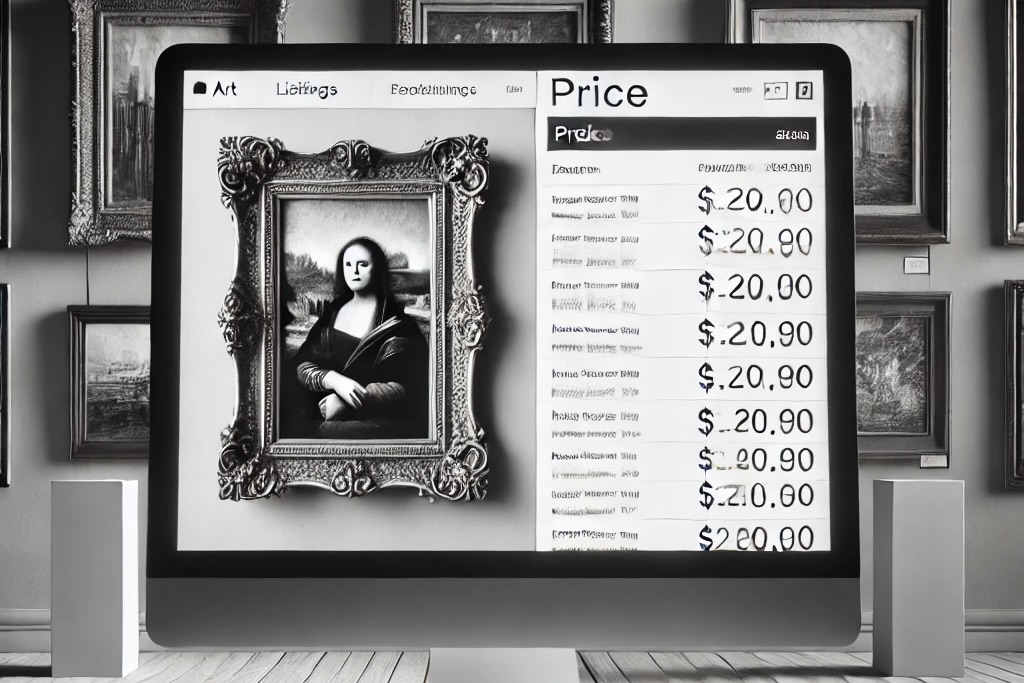
We previously mentioned that the Floor Price is a misleading indicator to be avoided whenever possible, as it reflects the price sellers are asking for. The same applies to Offers and Bids that can be found on various marketplaces, which represent the other side of the problem: they indicate what potential buyers would like to offer to acquire the artwork.
The issue with these offers is that, upon closer examination of the marketplaces in question, you will quickly notice hundreds of offers at ridiculously low prices (just a few cents, for instance), which are likely made by bots flooding the market with absurd bids, hoping that someone might eventually accept them (probably by mistake).
So, if we can't rely on the Floor Price or Offers, what are we left with? It's not that simple. Let's say the artworks in a collection are listed at a Floor Price of 10 ETH, but the offers on this collection are as follows:
Remember, the market price of an asset is determined by the point where Supply and Demand meet.
Takeaway: In the example analyzed above, the price would likely fall between 9 ETH and 10 ETH (barring any specific characteristics of the artwork being evaluated).
Finally, once all these principles have been applied, it is crucial to pay attention to one last, yet significant, aspect that remains far too common in NFT markets: wash trading and market manipulation through fictitious sales.
It would be a bit too technical (and not necessarily engaging) to explain how these sales can be identified, but it’s important to understand that excluding such sales is critical to avoid any bias in the evaluation of digital art.
Takeaway: It is important to always remember that certain sales must be removed from the dataset in order to achieve a neutral, objective, and accurate evaluation, free from any bias.
Evaluating a digital artwork can prove to be more complex than it may seem, despite the full transparency of NFT markets. Indeed, a number of pitfalls related to the multiplicity of data sources, psychological factors affecting sellers, or buyer strategies can introduce biases that will inevitably lead to a skewed or even entirely inaccurate valuation. We recommend seeking the expertise of professionals with sufficient experience to help you avoid these traps.