.svg)
Six Artistic Positions to Watch
Art Basel Qatar revealed itself less through spectacle than through positioning. What stood out was a group of practices grounded in origin, research, and long-term inquiry rather than immediate effect.
Across the fair, artists returned to recurring questions—land, memory, violence, regeneration, belief—through restrained, precise gestures. For collectors, the most compelling works were not the most visible ones, but those shaped by continuity: artists who return to the same questions over time, allowing their practices to deepen rather than react.
Hazem Harb - Presented by Tabari Space
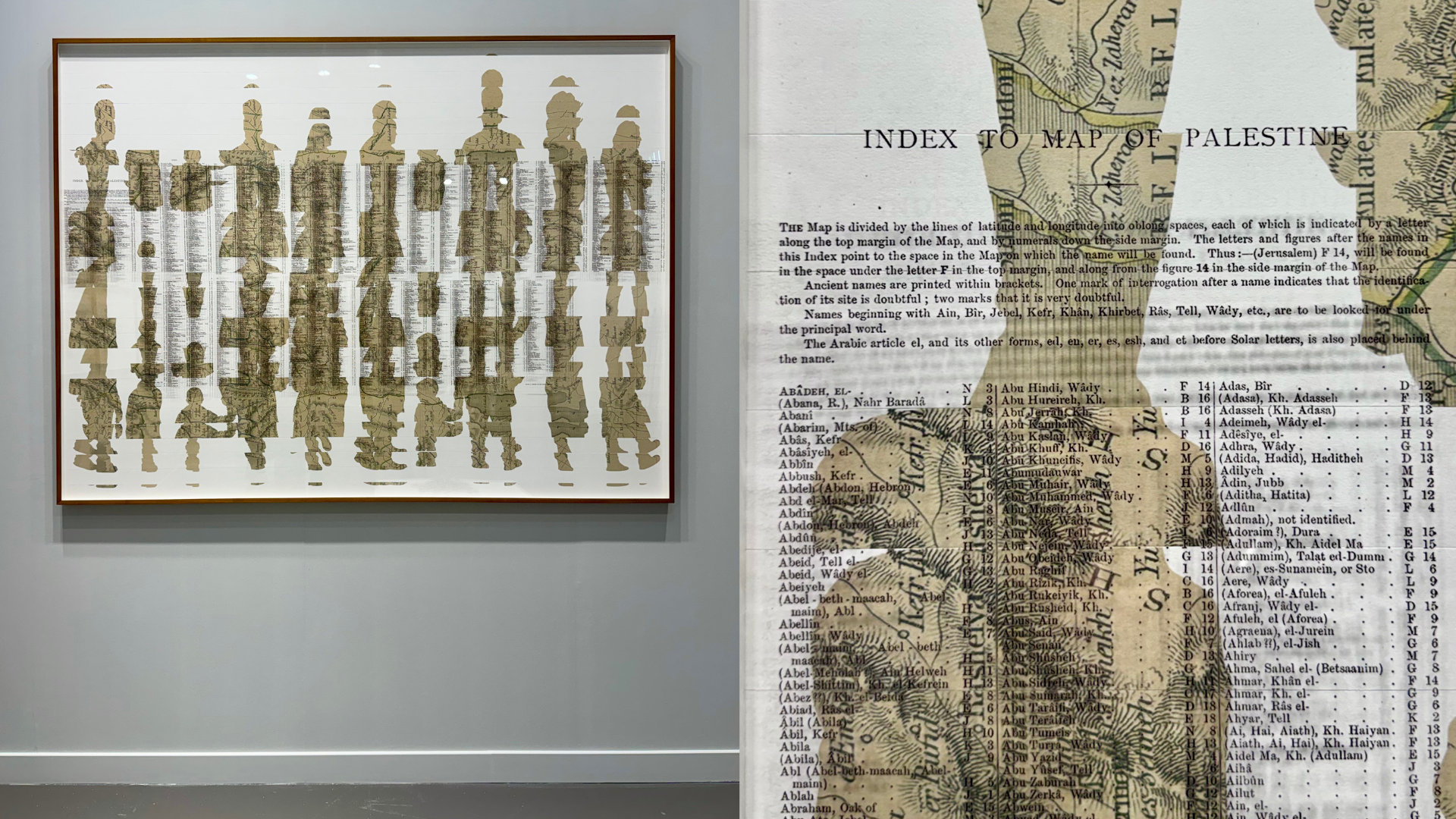
Built from fragmented historical maps of Palestine, Hazem Harb’s work dismantles cartography as a neutral language. Human silhouettes emerge from cut and layered archival material, merging bodies and territory into a single unstable surface. Borders blur, names fracture, and geography appears as something continuously imposed rather than fixed. By treating the map as both document and fiction, Harb moves away from nostalgia and instead exposes how identity, land, and power are repeatedly rewritten. Grounded in research and held within major institutional collections, this practice operates on a long historical arc—one that extends well beyond the immediacy of the fair.
Ali Banisadr - Presented by Perrotin
Born in Iran and shaped by the violence of the Iranian Revolution and the Iran–Iraq War, Ali Banisadr’s paintings translate lived trauma into dense, immersive worlds. Marked by synaesthesia, his compositions function as visual soundscapes: figures, creatures, and architectural fragments surface from turbulent layers of colour and gesture. The work initially draws the viewer in through its complexity and painterly construction, but slowly reveals a deeper register of pain, instability, and conflict. This tension—between attraction and discomfort—is central to Banisadr’s practice. The paintings do not narrate violence directly; they make it felt, holding the viewer in a space where beauty and brutality coexist without resolution.
.png)
Ahmed Mater - Presented by Athr Gallery
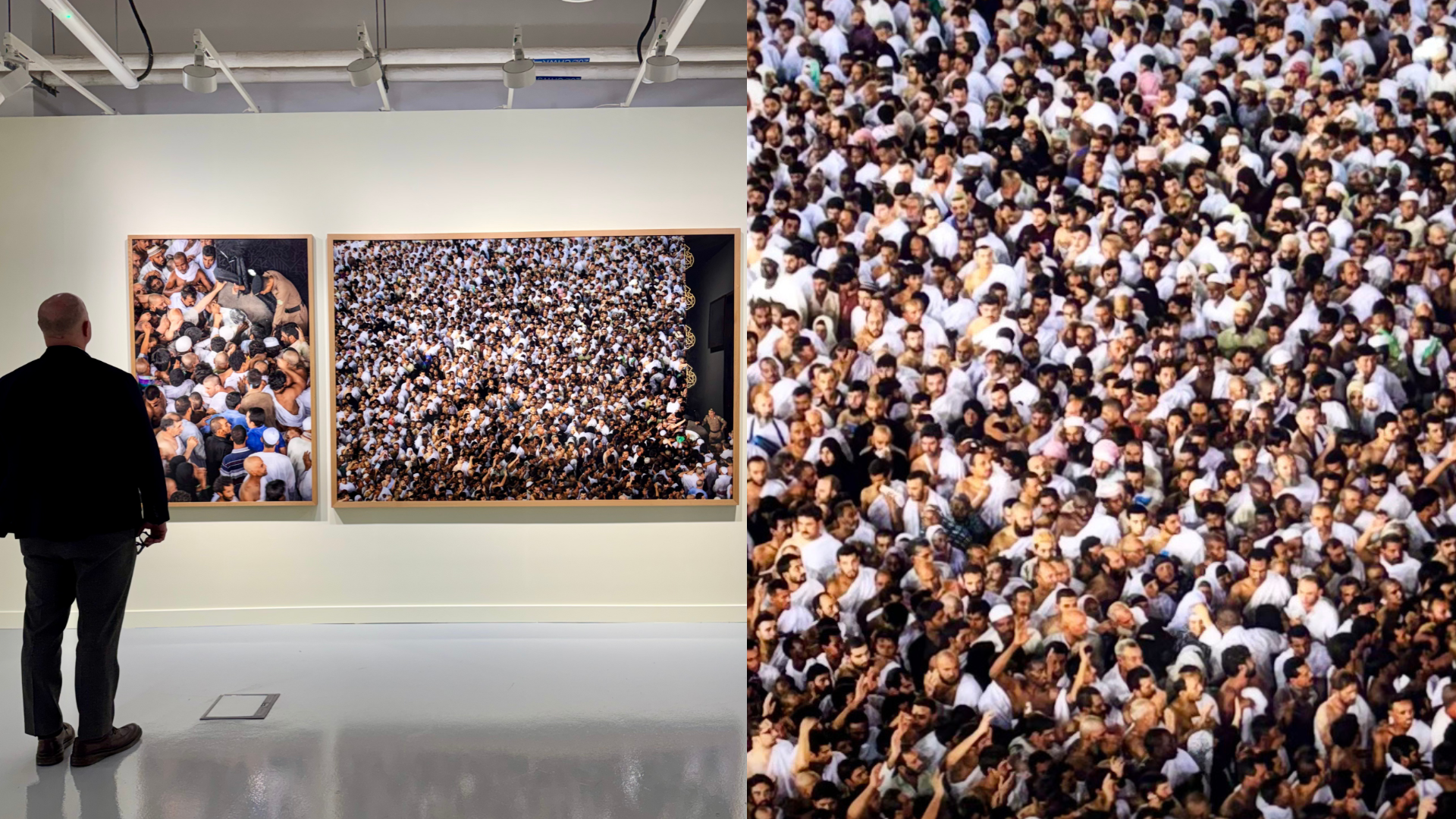
Ahmed Mater’s long-standing engagement with Mecca is not devotional imagery in the traditional sense, but a sustained investigation into movement, transformation, and power. Born in Saudi Arabia and trained as a physician, Mater approaches Mecca as both a spiritual epicentre and a site of intense urban, political, and economic pressure. This body of work stems from years of observation and research into the mass expansion of the city and the choreography of pilgrimage—where millions of bodies are drawn toward a single point through forces of attraction, circulation, and control. From afar, the images read as abstract patterns; up close, individual bodies reappear, caught within systems far larger than themselves. What makes this work compelling is its refusal to reduce Mecca to either reverence or critique: instead, Mater frames it as a living organism, where faith, infrastructure, and modernisation collide. For collectors, this practice stands out for its depth and continuity—an artist returning to the same subject over time, not to exhaust it, but to understand how it keeps changing.
Kutluğ Ataman - Presented by Niru Ratnam
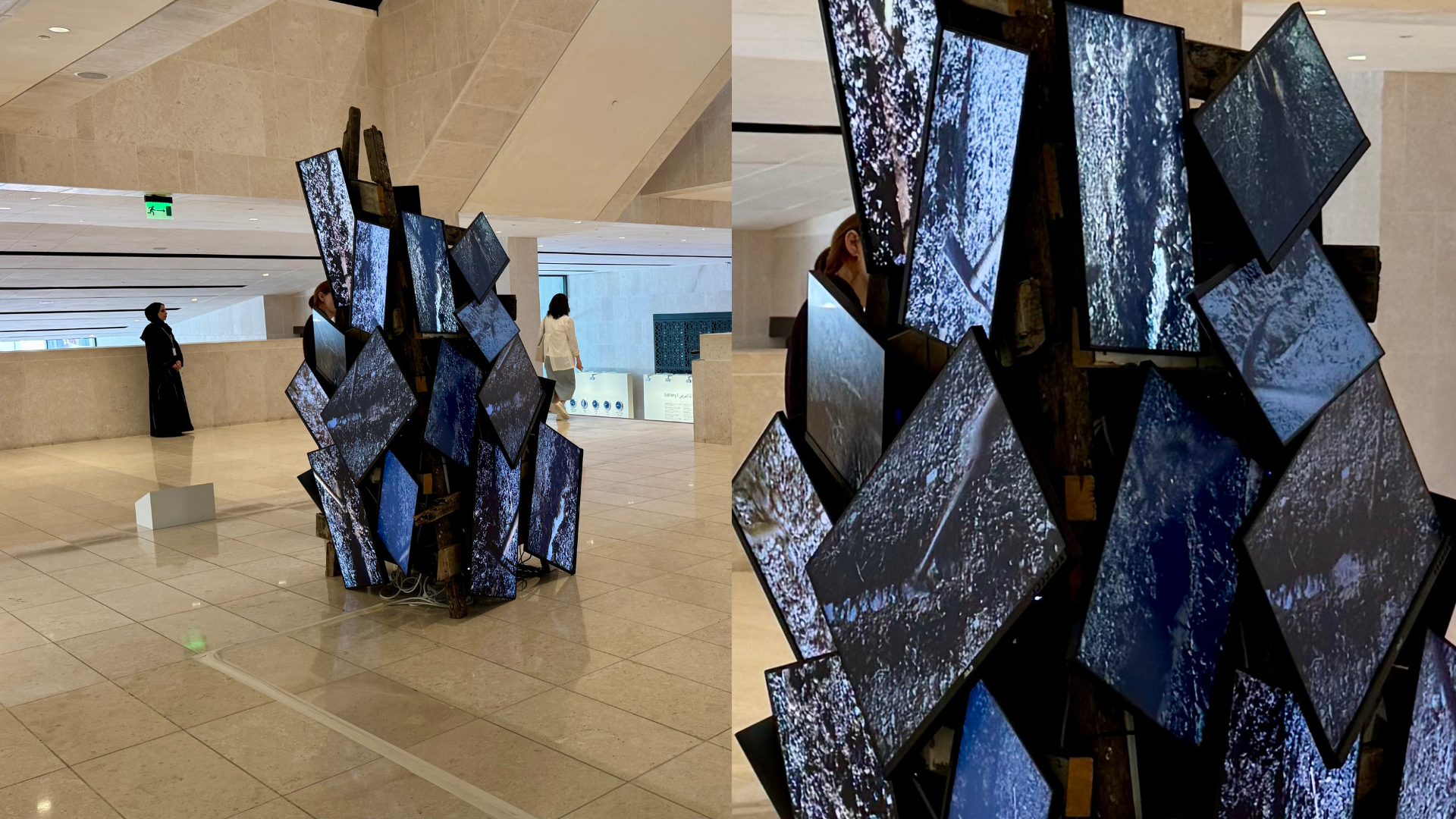
Known for decades primarily as a filmmaker, Kutluğ Ataman’s presence here stood out precisely because of its quietness. The Stream (2022) is a video installation composed of multiple screens showing a repetitive, almost meditative gesture: the creation of irrigation lines in the earth. Made after Ataman withdrew to the countryside and committed himself to working the land, the work reads as both an agricultural act and a personal one. Regeneration operates on two levels—soil being made fertile again, and an artist reconfiguring his own practice after a life in cinema. Installed using reclaimed televisions, the piece resists spectacle and instead insists on duration, repetition, and care. In a fair with relatively little video installation, this work lingered as a reminder that slowness and withdrawal can themselves be radical artistic gestures.
Rashid Rana - Presented by Chemould Prescott Road
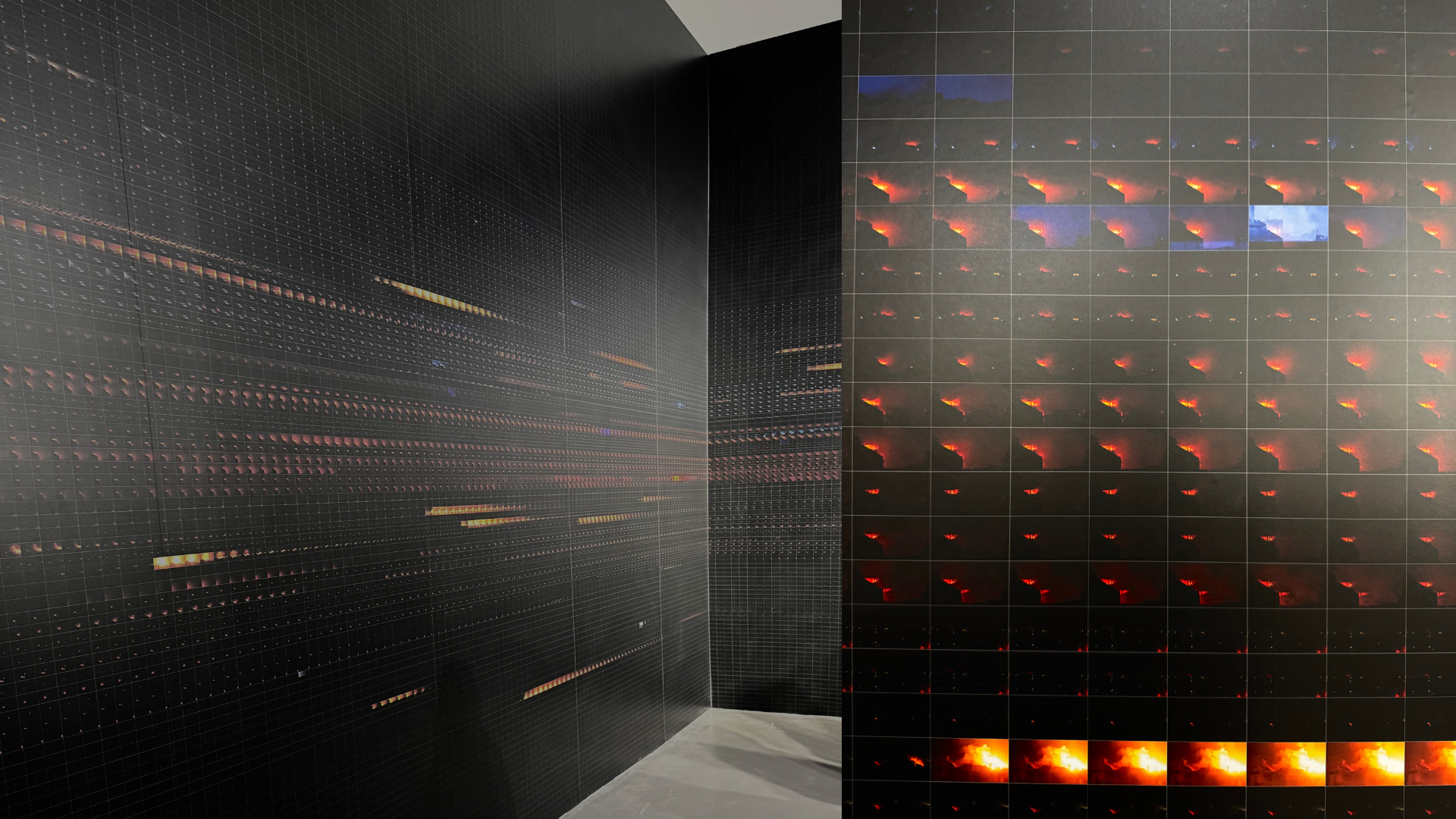
Rashid Rana’s Fractured Moment condenses violence, time, and repetition into a deceptively restrained installation. Originating from Pakistan, where Rana has long examined the aesthetics of conflict and surveillance, the work draws from CCTV footage and freezes it into a grid of repeated images. From a distance, the installation reads as abstract and almost minimal; up close, moments of explosion, rupture, and chaos begin to surface. The power of the piece lies in this oscillation—between order and breakdown, stillness and event. By fragmenting a single instant across hundreds of units, Rana stretches time and forces the viewer to confront how violence is consumed, archived, and normalized through mediated images. Simple in structure yet relentless in rhythm, the work lingers as a sharp reflection on how contemporary conflict is seen—and seen again.
Maryam Hoseini - Presented by Green Art Gallery
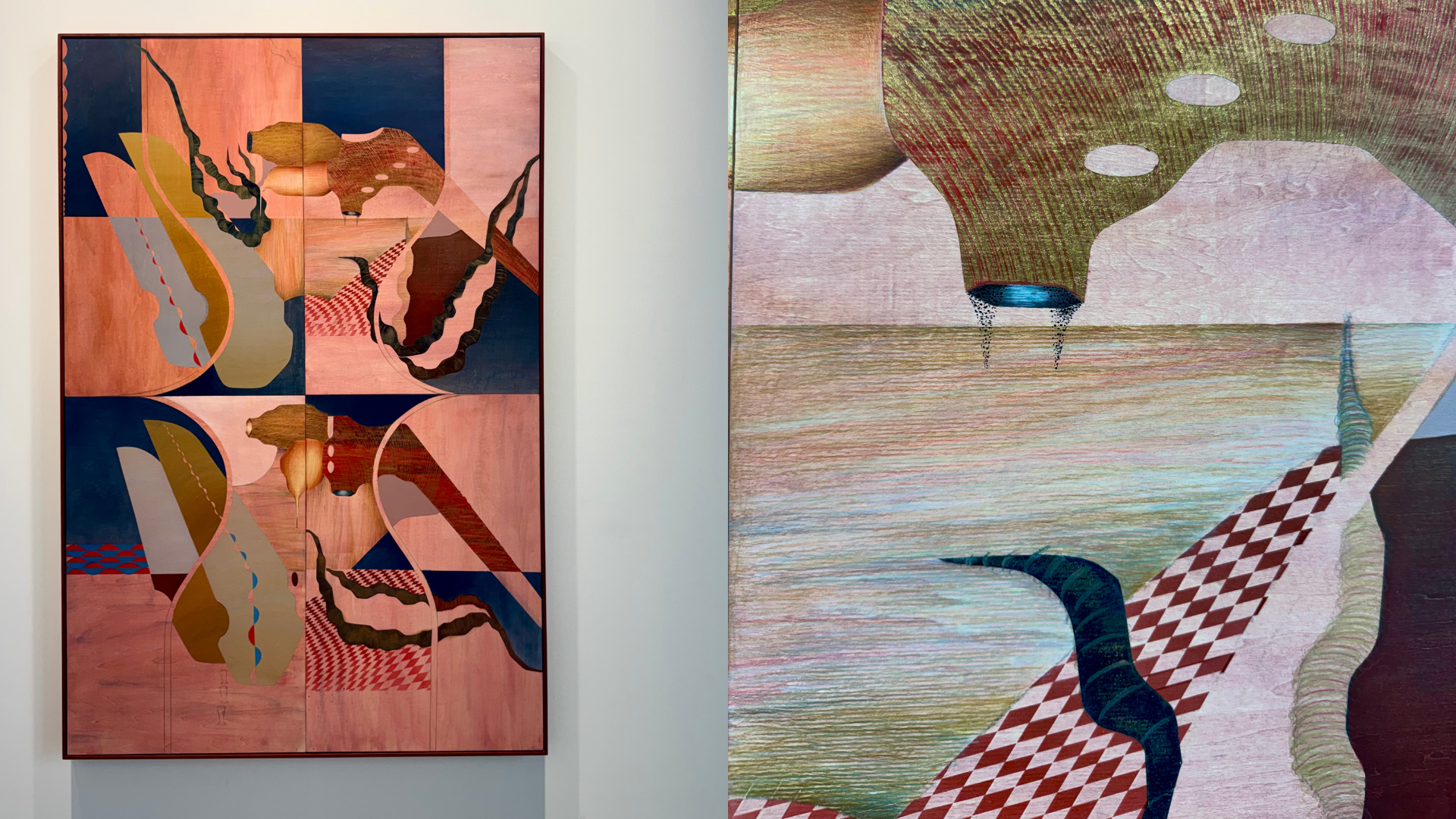
Maryam Hoseini’s work unfolds through fragmentation—of bodies, space, and narrative—where abstraction becomes a charged, feminist language. Rooted in diasporic experience, the paintings presented here hover between figuration and dissolution: sensual forms appear, fracture, and slip back into pattern. The compositions resist clarity, embracing excess and tactility as a way to push against fixed readings of identity and intimacy. What initially reads as abstract reveals a persistent corporeality—bodies that are at once present and erased, gendered and ungendered. This tension is where the work holds: sensual without being decorative, political without being literal, offering a quiet but insistent resistance through form.
What ultimately marked Art Basel Qatar was not the promise of a new market, but the clarity of certain artistic positions within it. The most convincing works were not those trying to explain the present, but those insisting on its contradictions—holding violence, belief, sensuality, and technology in tension rather than resolving them.
Across these six practices, repetition, fragmentation, and return recur as strategies. Artists come back to the same sites—land, body, memory, nature—not to fix them, but to test how they shift over time. This insistence on duration, research, and lived experience stands in contrast to the accelerated logic of a fair itself. It suggests a different rhythm of looking and collecting: one attentive to trajectories rather than moments.