.svg)
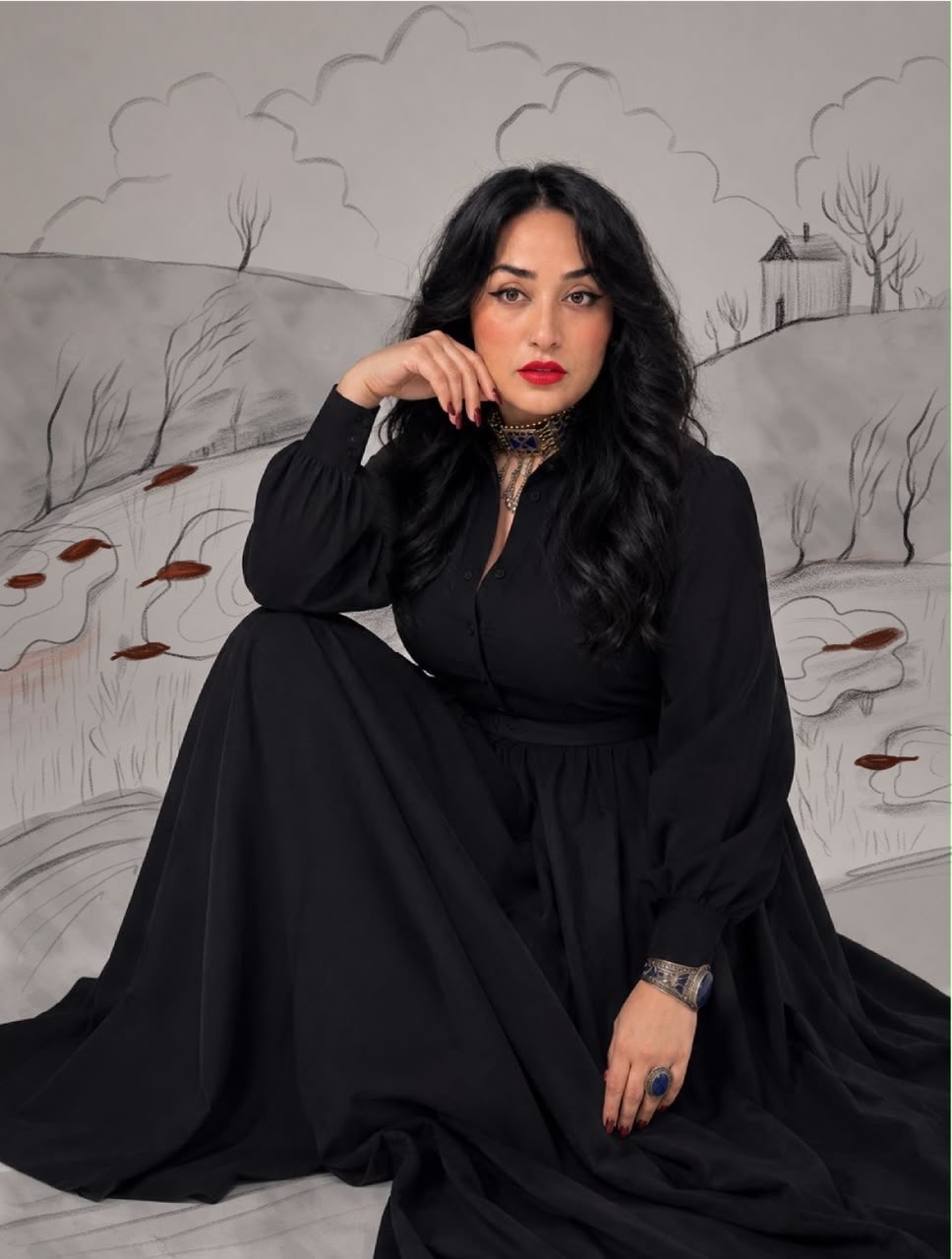
Can you take us back to the beginning - how did your journey as an artist start, and how did you arrive at the practice you have today?
I have never been someone who finds it easy to speak about feelings. Even now, when I try to explain what is happening inside me, words often feel insufficient. In that sense, art became more than a choice for me; it became another language.
As a child, I wrote poetry. My family placed a great deal of importance on literature, and for a long time they imagined that this might become my path. From around the age of seven, I spent hours reading, and much of my childhood and adolescence unfolded in libraries. I think many of the images that appear in my work today began there - in the worlds I discovered in books and then continued privately in my imagination.
Painting, however, always felt more distant to me. It was a world I looked at from the outside and wanted deeply to enter, but I never pursued it as a child. That changed when I studied graphic design. Gradually, I understood that images could do what words had once done for me, perhaps even more precisely.
I have always carried an imaginary world inside me, and books taught me how to build it. Later, I simply learned how to paint it instead of writing it.
My practice today is still a continuation of that process. I do not necessarily explain my emotions; I build a scene for them. People, animals, objects, memories, and things that might never coexist in reality are able to inhabit the same world in my work.
For me, painting is the place where the things I cannot speak about finally take form.
Children and a childlike way of seeing appear throughout your work. Where does that perspective come from, and why is it important to you?
For me, childhood is not only about beauty, happiness, or play. I believe children experience the world with extraordinary depth. They feel joy, sadness, fear, and even language with an intensity that adults often underestimate.
We may say something casually to a child - even as a joke - and forget it a moment later, while that same sentence can remain inside them for years. Emotional experience in childhood is still unfiltered. Things can feel much larger, more frightening, more beautiful, or more magical than they do to us as adults.
That is one reason scale behaves differently in my paintings. A ladybird might be the size of an elephant because, in a child's inner world, it has not yet been reduced to the size we have learned to assign it. Emotion determines scale, not reality.
A small animal can become enormous. A room can become an entire universe. A single sentence can become something that is carried for a lifetime.
I am interested in that part of childhood - the moment before reality becomes completely fixed, when imagination and emotion are still shaping the world together. I think children perceive far more than we often give them credit for, and perhaps what I am trying to recover in my work is that same intensity of seeing and feeling.
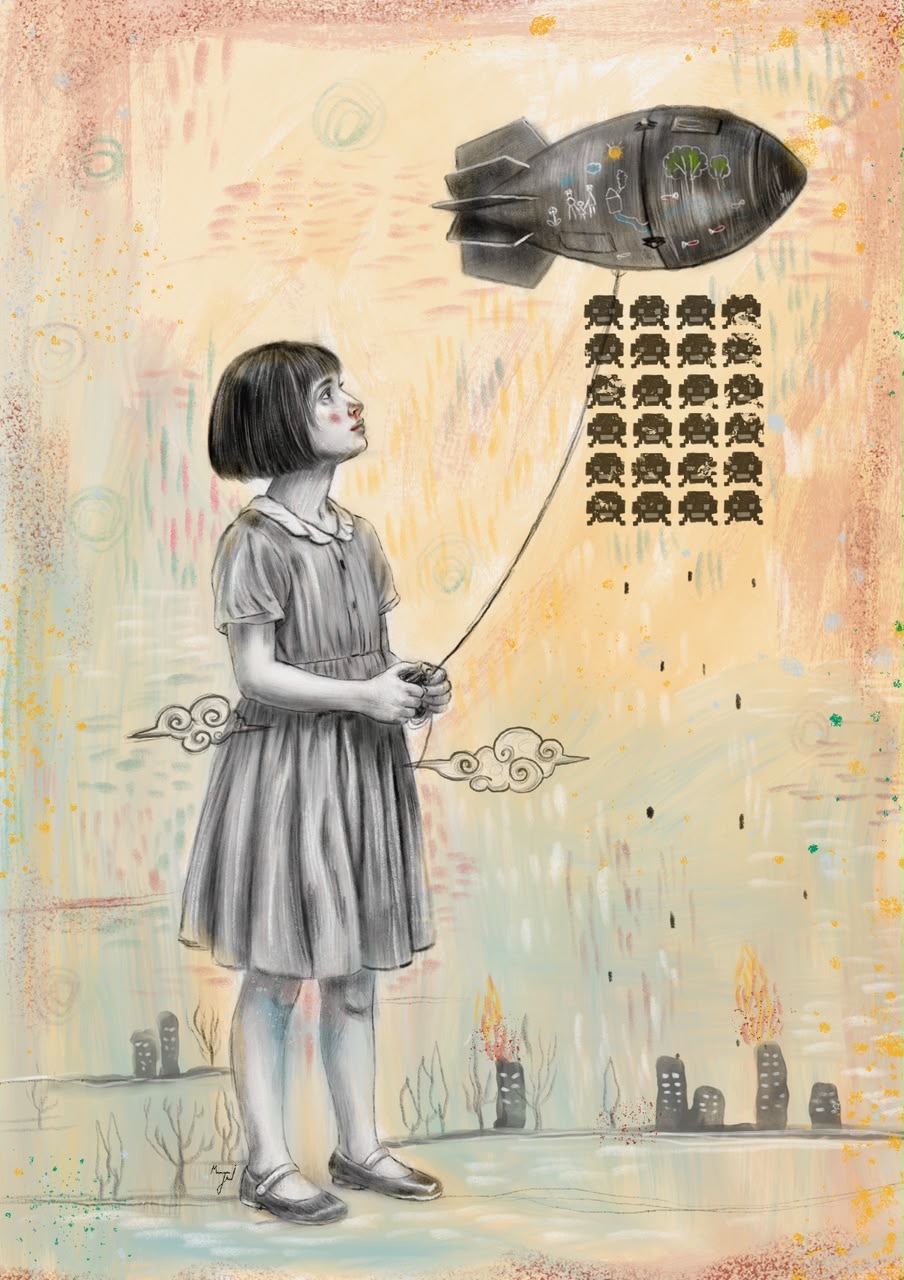
Do you remember the first time someone collected your work? What did that moment mean to you?
For years, I wanted to be an artist, but I was afraid of one question: could I actually build a life from art?
I worked as a graphic designer and carried a constant anxiety that if I stopped working for clients, I would lose the financial security I depended on. At the same time, what I wanted most was to become a full-time artist - to create without constantly calculating whether I could afford to continue, and to build the world that had always existed in my mind.
The first turning point came while I was still employed. I made one of my personal works, decided to offer it for sale, and within a few hours it sold for an amount equivalent to several months of my salary.
For me, that moment was not simply a sale.
I remember thinking: this is a sign. This is a spark. Perhaps it is time to begin the life I have always wanted, but have been too afraid to fully live.
My first collector did not simply acquire a work from me. That person gave me the courage to take myself seriously as an artist. In many ways, that first act of belief lit the beginning of a life that had existed inside me for years - the life of being an artist, not only someone who made art in the time left over from everything else.
What does a collector represent to you beyond someone who acquires your work? How important can that relationship become for an artist?
For me, a collector is never only someone who purchases a work. When someone chooses to live with a piece of my world, the relationship can become much more personal than a transaction.
Over time, some collectors begin to feel like part of my artistic family. They are people who trust me, care about the work, and support the path I am building. Sometimes, at moments when an artist is still uncertain about what comes next, a collector's confidence becomes a reminder to keep going.
They are not simply owners of individual works. They become witnesses to a life and a practice as it evolves. They may collect a piece at the beginning of a series and, years later, see how that world has changed, expanded, and transformed.
When it is genuine, the relationship between an artist and a collector can move far beyond buying and selling. It can become a form of companionship built on trust, conversation, and support.
That is why I do not think of my collectors only as collectors. Many of them become an important part of my artistic journey, and of my life - people who believed in the world I was creating and chose to become part of it.
Why did you want to create The Seven Valleys now, and which of the seven valleys feels closest to you personally today?
For me, The Seven Valleys is less about making a literary or mystical reference and more about an inner journey - one that I feel I have been living very directly in recent years.
Migration, change, loss, beginning again, and meeting different versions of myself have made me think about movement in a different way. We do not only travel from one place to another; throughout life, we also move from one version of ourselves into another.
That is why this felt like the right moment to create the work. I do not see the seven valleys as distant or abstract stages. I see them as human states: searching, loving, knowing, letting go, becoming one, becoming lost, and eventually allowing something of the old self to disappear.
At this point in my life, the valley I feel closest to is Bewilderment. I do not mean that negatively. I mean that I do not have all the answers. Many things around me are changing, and I do not yet know exactly what comes next.
But perhaps that uncertainty matters. Sometimes, when the path is no longer completely clear, you begin to see parts of yourself that were previously hidden.
For me, The Seven Valleys is not ultimately about reaching a destination. It is about accepting the journey itself.
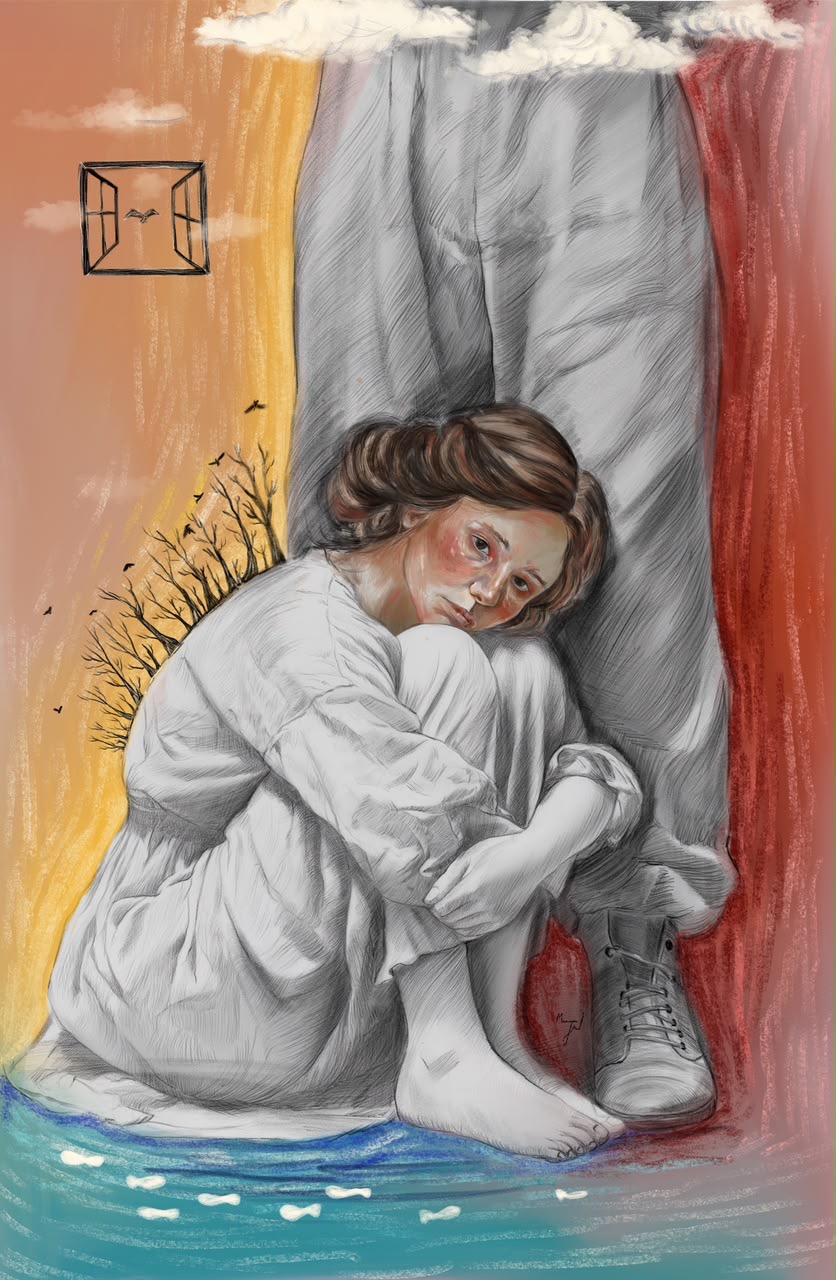
Basileus chose you as an artist he believes deserves to be seen. What does it mean when a collector goes beyond acquiring your work and chooses to bring other people's attention to it?
What Basileus has done for me goes far beyond collecting my work.
He was present during a period when I was still trying to understand whether I could truly continue on this path. His support did more than give the work visibility; it gave me confidence, courage, and the feeling that someone genuinely believed in the world I was building.
Some people enter an artist's life and take a work with them. Others change part of the artist's journey. For me, Basileus is one of those people.
I can say that his support gave me a new life in many ways, because it helped me believe more deeply in myself as an artist and continue this path with greater seriousness and courage.
When someone does not simply collect your work, but also wants other people to see it, speak about it, and discover you, that can be profoundly meaningful. Something you created alone is no longer held only by you. Another person believes in it strongly enough to stand beside it and help carry it into the world.
I have never experienced that as support for the work alone. To me, it is a form of companionship in life, and something I will always carry with me.
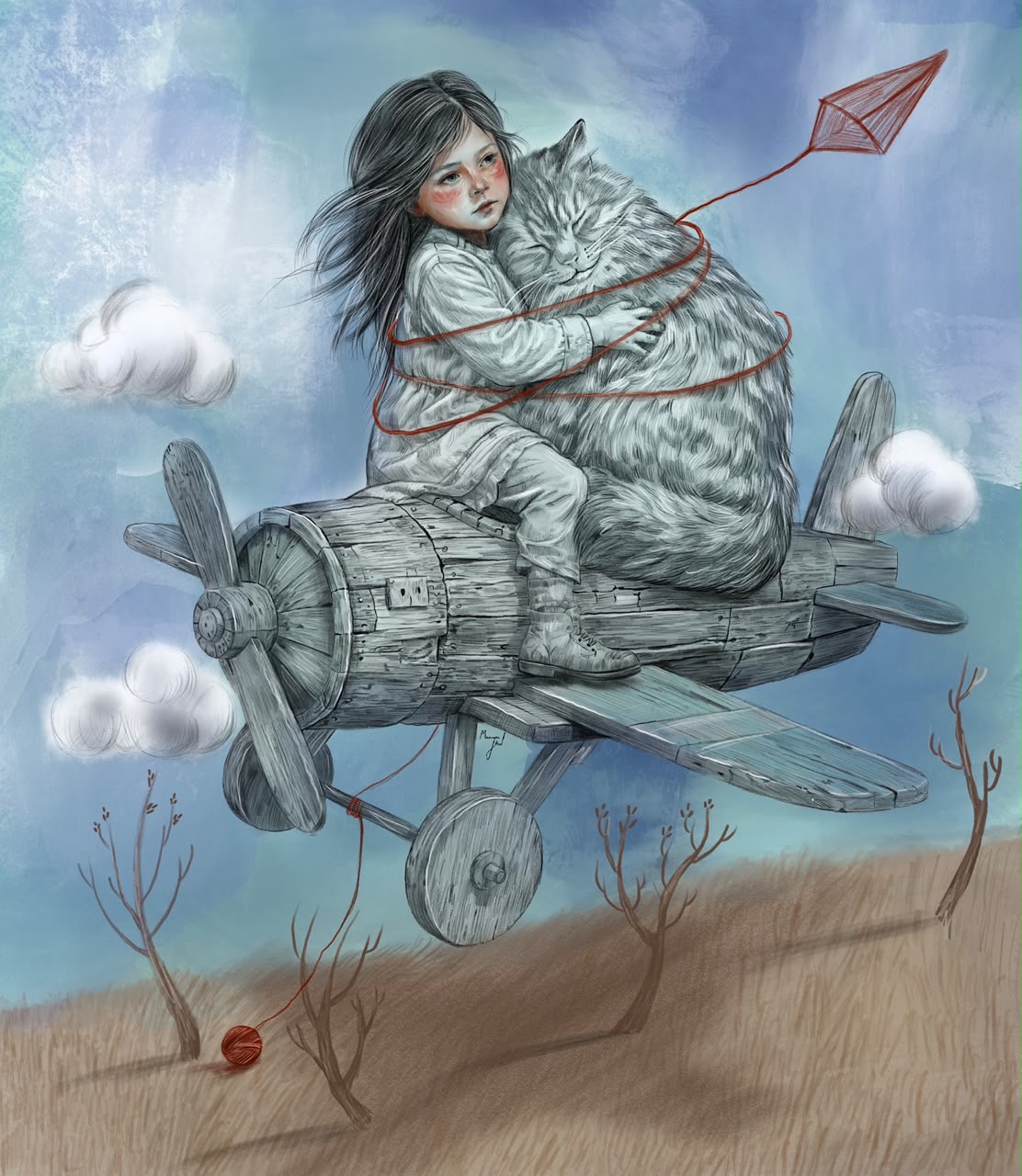
At the event, guests will be invited to look, question and reflect before talking about collecting. What do you hope they experience - or ask themselves - when encountering your work?
I do not want someone to encounter my work and immediately search for one correct answer or one fixed story. For me, it is more important that they feel something first, even if they cannot name that feeling immediately.
Perhaps an image feels strangely familiar. Perhaps it touches something from childhood, an old fear, a memory, or an emotion they had forgotten was still inside them. I like to think of my work more as a mirror than an explanation - a place where each person can discover something of themselves.
If there is one question I would like a viewer to ask, it might be: why does this image feel familiar to me, even though I have never seen this exact scene before? Or perhaps they might ask themselves what they are still carrying from childhood, from the past, from their fears, or from their dreams.
It is not important to me that everyone understands the work in the same way. In fact, I hope each person enters it through their own experience and leaves with something different. If someone stands in front of a work for a few moments longer, and something moves inside them - even if they cannot quite explain why - then, for me, the connection has happened.
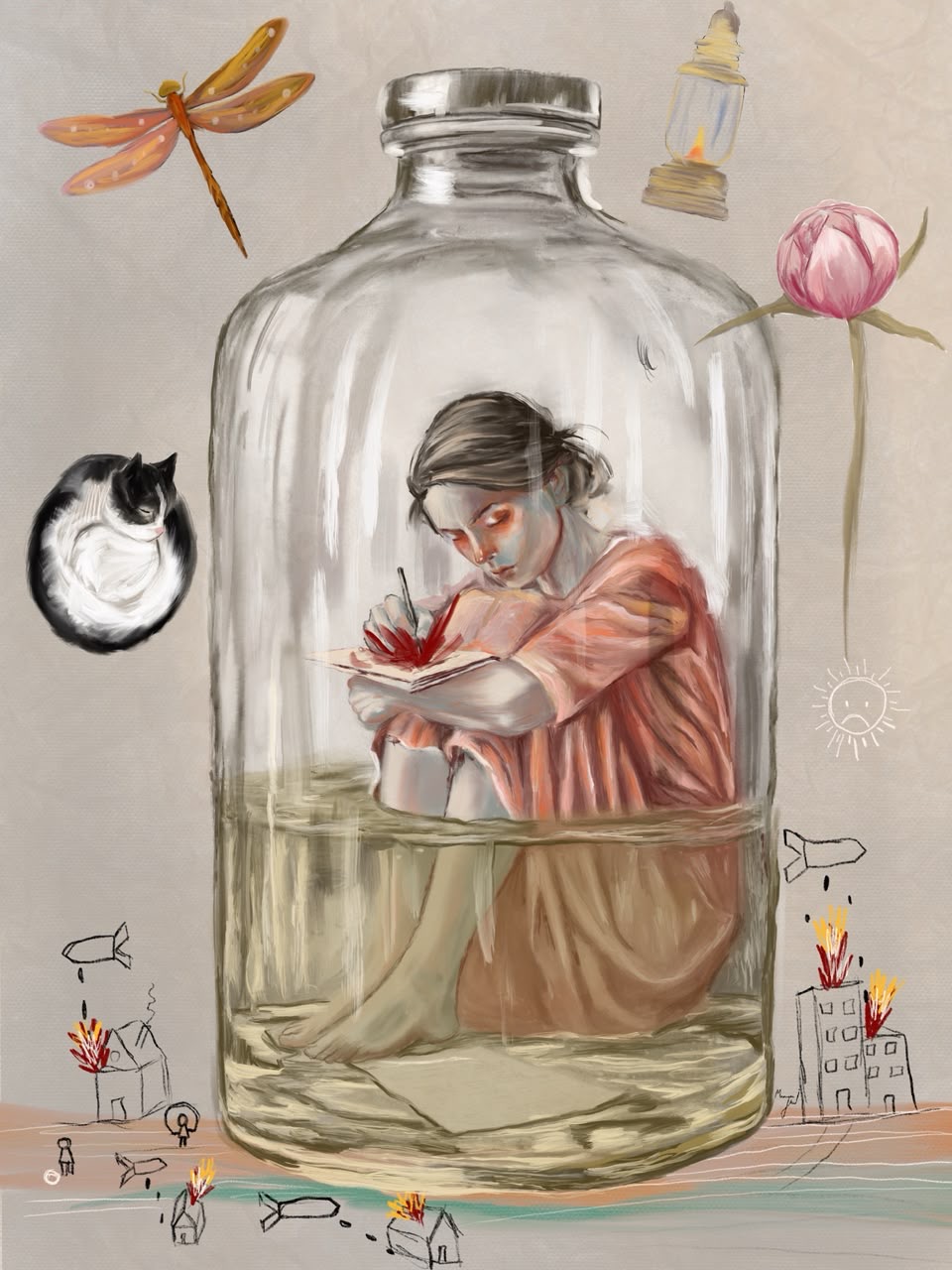
RSVP to the event at TheBlock in Dubai on Friday September 25 to discover Maryam's work in real life >
Note: The interview responses were written by Maryam Hassani in Persian and translated into English.