.svg)
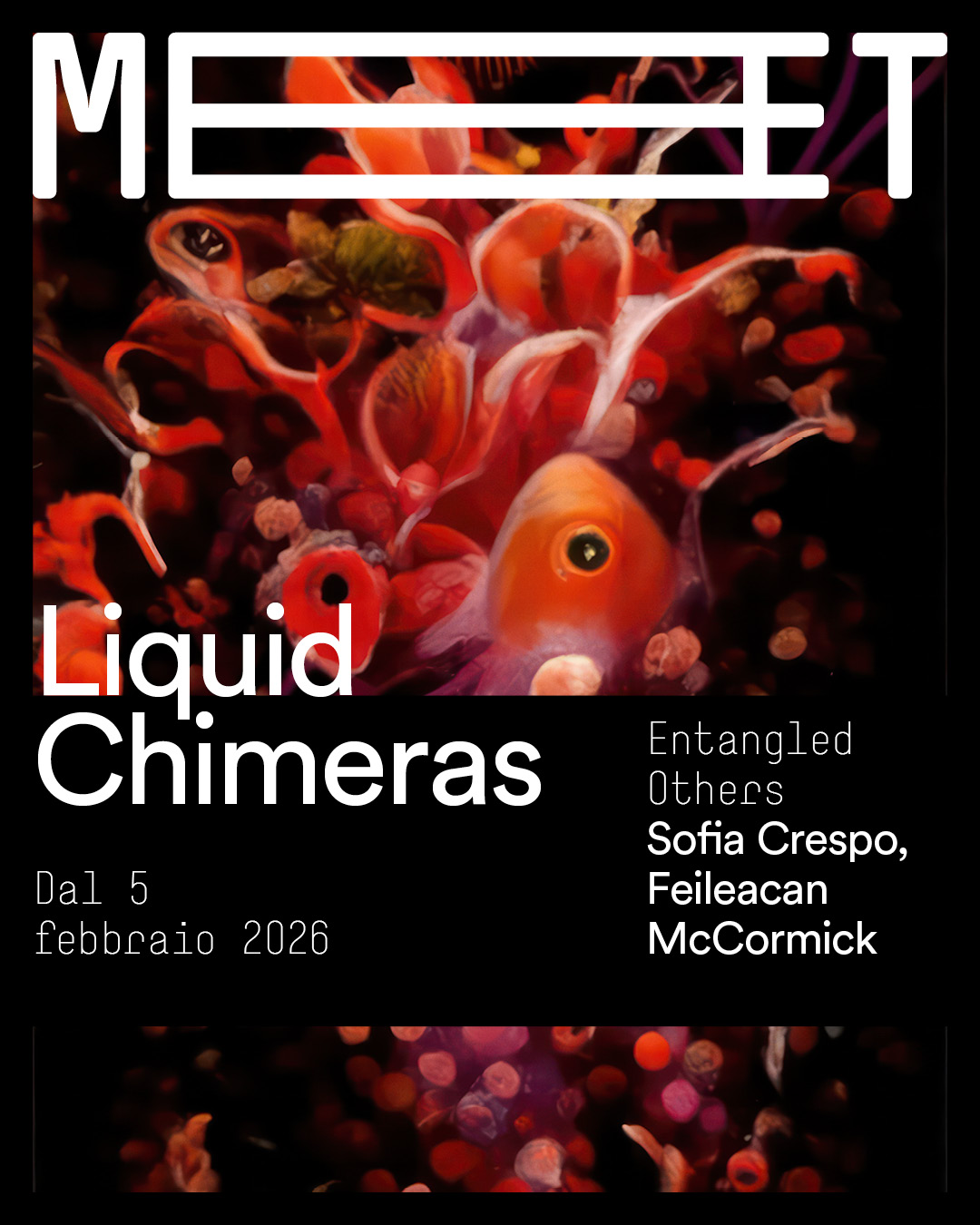
Liquid Chimeras emerged from the European art and science residency program STUDIOTOPIA, which brings together artists, scientists, and cultural institutions across Europe. Each institution was invited to present an artist whose practice could evolve through dialogue with scientific research. The MEET Digital Culture Center proposed the artist duo Entangled Others - Sofia Crespo and Feileacan McCormick - whose work moves between ecology, artificial intelligence, and generative systems.
Through the residency open call, artists and scientists were paired, leading to the collaboration with oceanographer Joan Llort. This encounter continued research the artists had already initiated with Liquid Strata and eventually produced a new body of work: Liquid Strata: Argomorphs. From this process, the idea of building a larger exhibition naturally unfolded, resulting in Liquid Chimeras, the first European solo exhibition dedicated to Entangled Others at the MEET Digital Culture Center in Milan. As I was part of the committee for MEET, I was later invited to curate the exhibition.
VIRTUAL VISIT
Gallery 1
Gallery 2
Gallery 3
Immersive Room
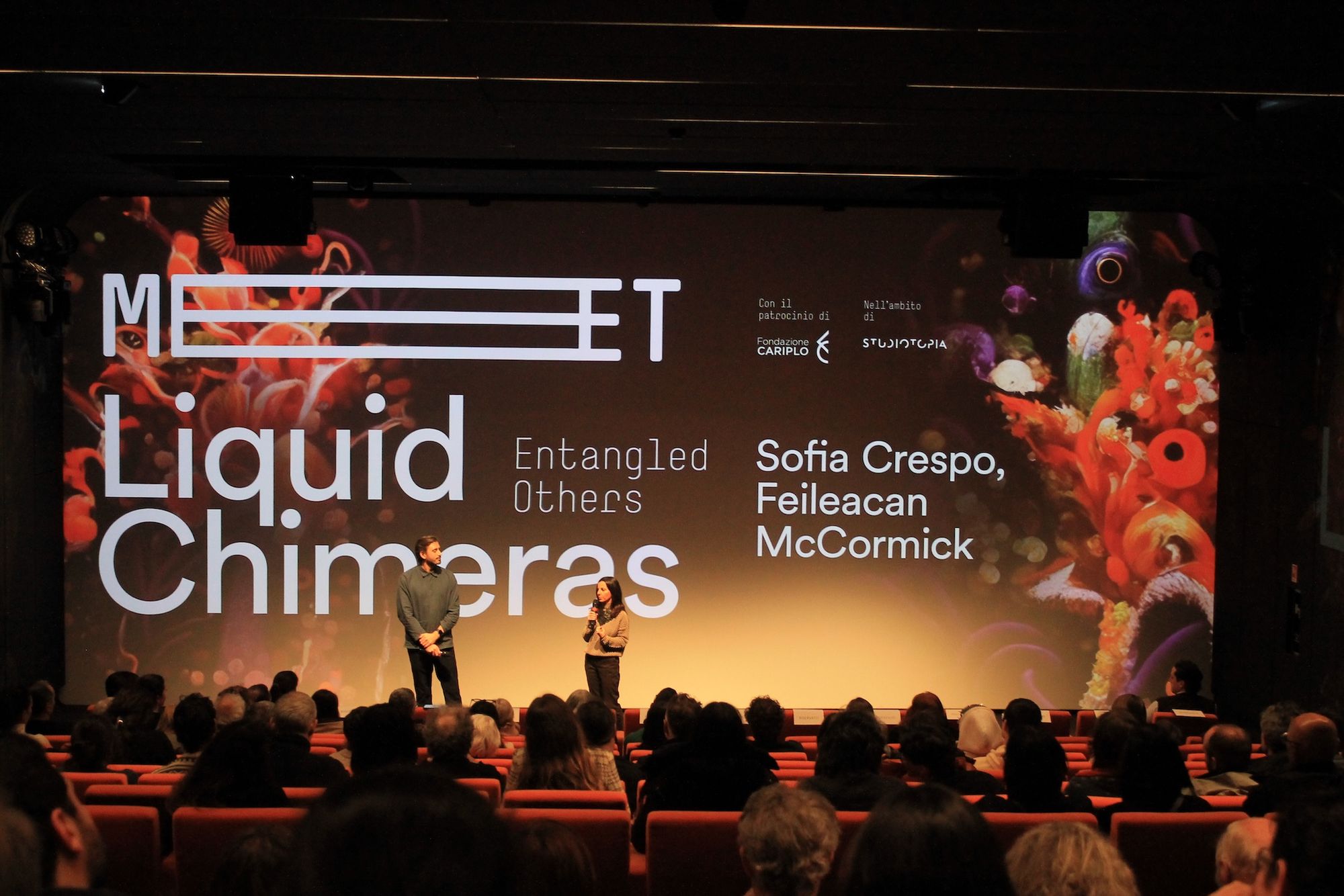
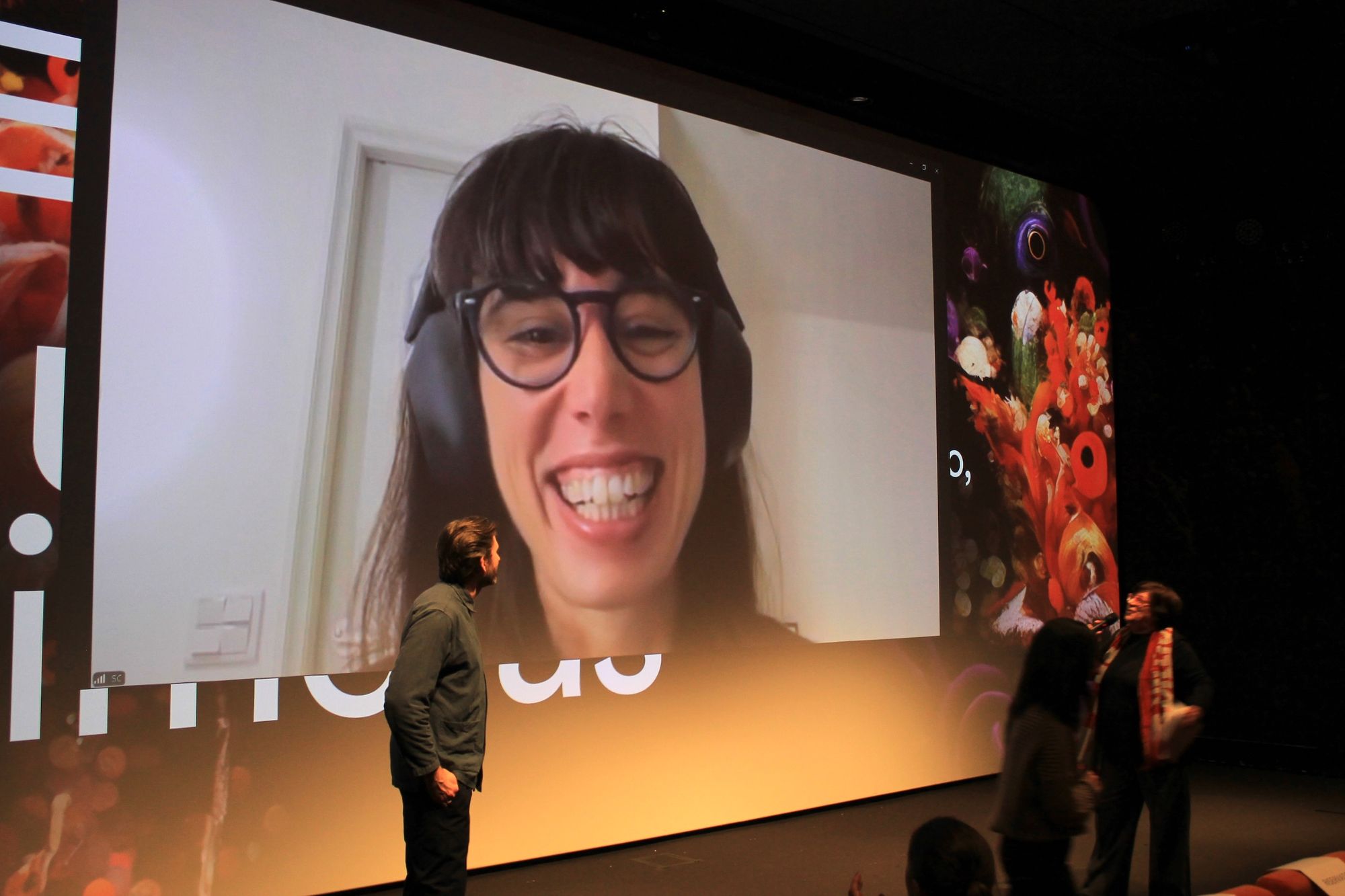
THE OPENING NIGHT
The exhibition opened on February 4th and will be on view until April 19th at the MEET Digital Culture Center.
Watch the video trailer from the opening night.

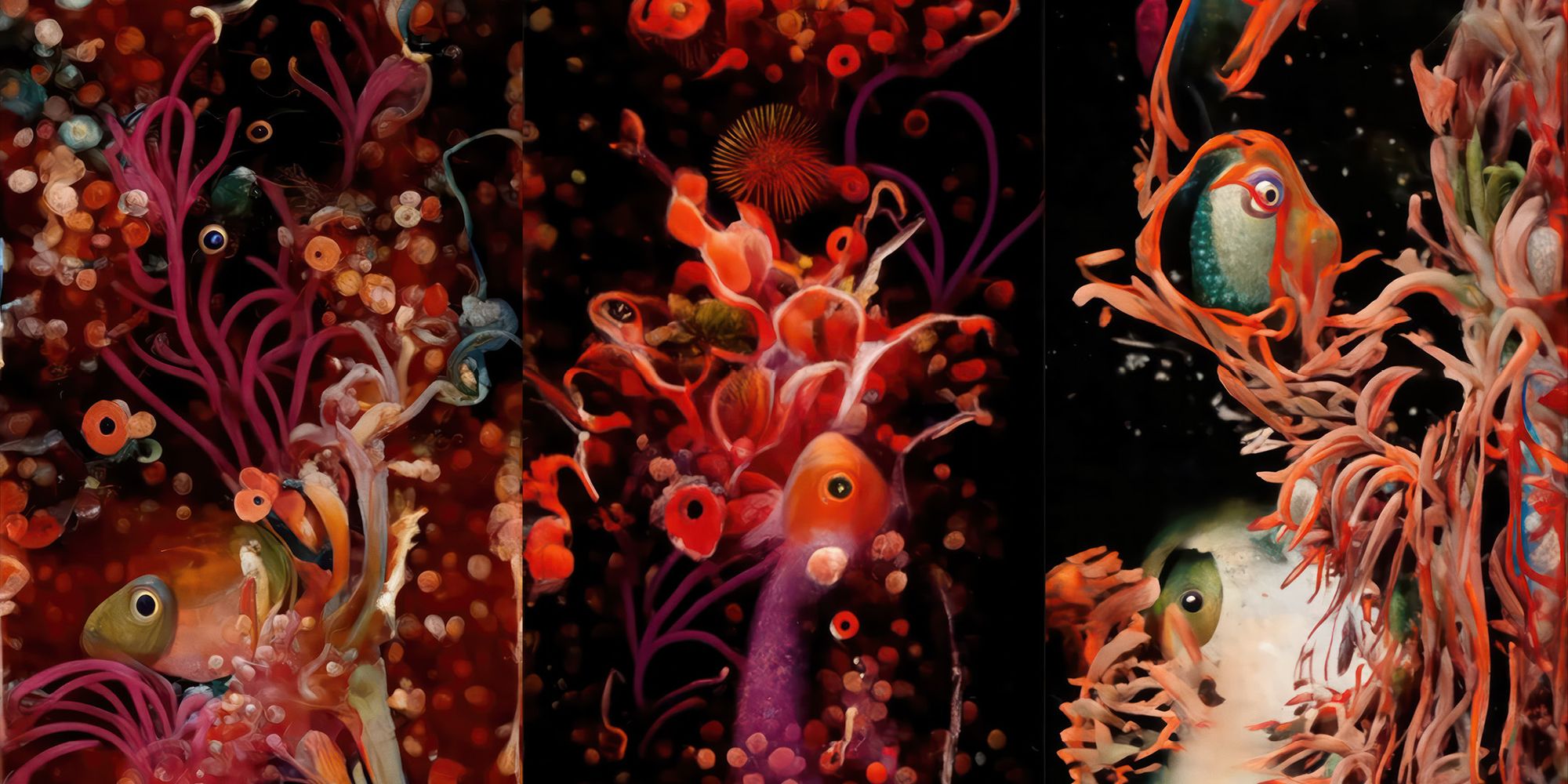
The exhibition begins from a condition that has accompanied humanity for centuries. Whenever knowledge reaches its limits, imagination appears. In the past, during the Middle Ages, for example, the absence of scientific understanding generated hybrid and monstrous creatures that attempted to give form to the unknown. Today the tools have changed, but the sensitivity remains strikingly similar. The issue is no longer only the absence of data; it is also the presence of data that exists beyond our perception, surrounding us yet inaccessible to our senses.
Working with artificial intelligence, algorithms, and computational systems, Entangled Others operate exactly within this space. Their work does not attempt to explain or simplify reality. Instead, it inhabits the zone where data fragments, where perception fails, and where imagination becomes necessary. Art here performs one of its highest functions: not to provide answers, but to speculate, to imagine what exists just outside our ability to see.
Their process unfolds through experimentation and constant adjustment. Failure, friction, and unpredictability are essential components, ways of allowing systems to reveal unexpected patterns rather than forcing them into stable representations.
" Our works come about in what might be framed as a some-what performative process. The focal point, or conceptual focus of the work is used to over time build and create a framework of rules that in turn form how the work is created. Some of these rules guide what datasets we need to create, others guide our selection criteria and aesthetic concerns, others become code and decide what algorithmic approach takes place. In the context of the works that involve machine-learning, or more complex algorithms, they primarily allow us to distill essential visual patterns from any given dataset, ones that in turn allow for the creation of more tangible interfaces into what might otherwise be intangible due to remoteness, complexity, or the mere fact of existing outside of what our senses can perceive." - Entangled Others
GALLERY ONE - SPECIOUS UPWELLINGS
The exhibition develops as a gradual descent through different oceanic phenomena, each addressing a different condition of (un)visibility.
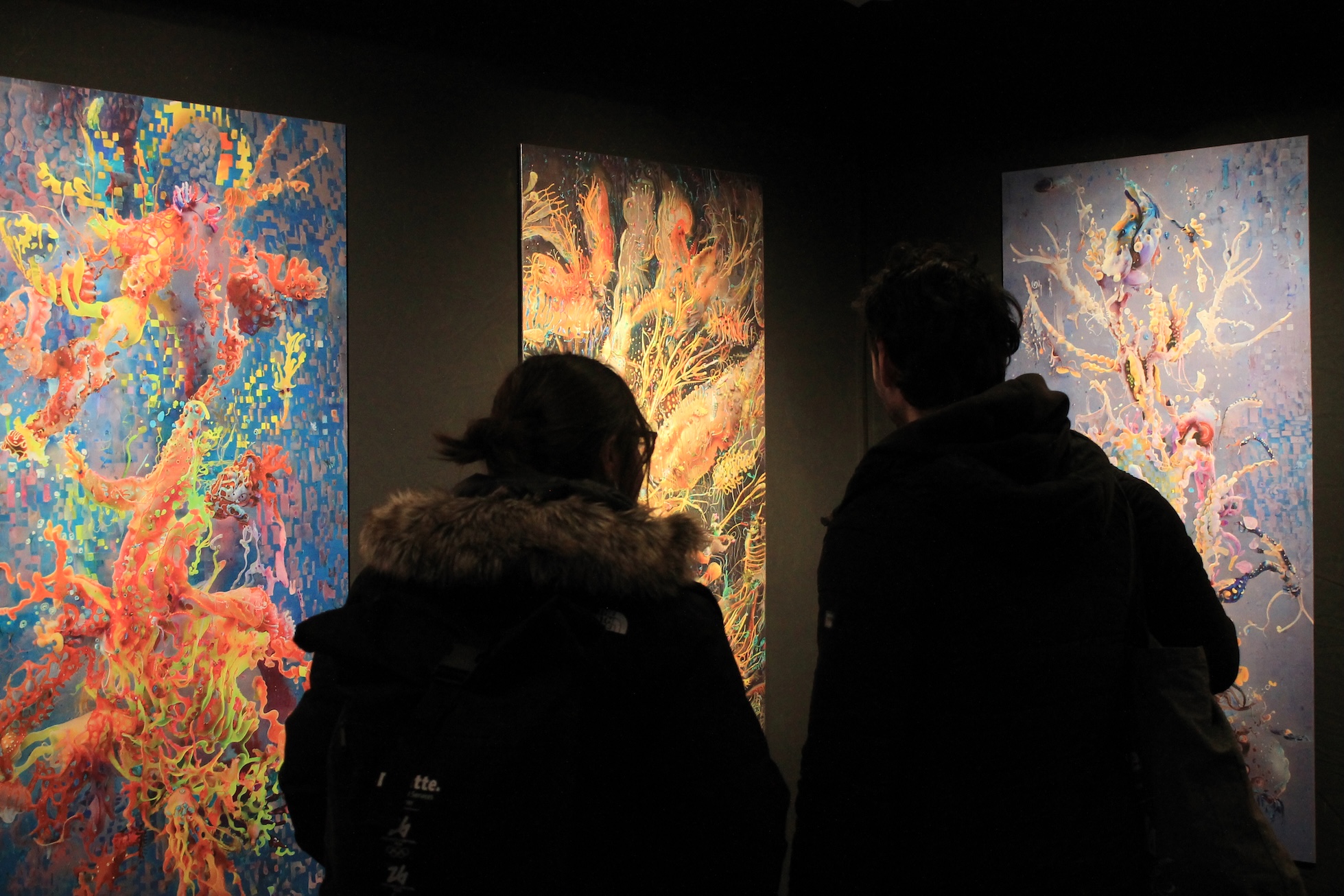
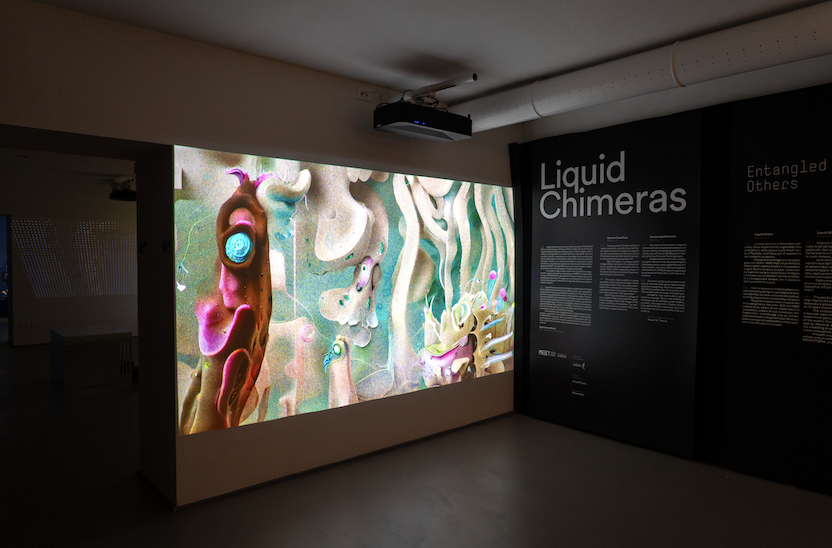
In the first gallery, Specious Upwellings continues Entangled Others’ long-term exploration of entanglement, the idea that life forms, ecosystems, and phenomena we perceive as separate are in fact deeply interconnected. The series focuses on oceanic upwellings, the surge of cold, nutrient-rich waters from the depths that sustain vast marine biodiversity yet unfold at a scale too immense and gradual for direct human perception.
Rather than reducing the phenomenon to dataset input within a conventional generative model, the artists construct an iterative system in which the subject actively intervenes in the image-making process. Two variations of the same image evolve simultaneously, guided by a decision structure influenced by computer vision and a simplified, mostly simulated quantum circuit. Through this entangled process, the upwelling itself leaves traces within the final composition.
Each work appears as a diptych, a monochrome and a color version of the same generative output, revealing the instability of representation. The visible artefacts produced by the system emphasize the artificial nature of the image, challenging any claim to accuracy. The more we attempt to reveal the interconnection of the more-than-human world, the less any single image can fully contain it. It is precisely this paradox that lies at the heart of Specious Upwellings.
.png)
GALLERY 2 - DECOHERING DELINEATION
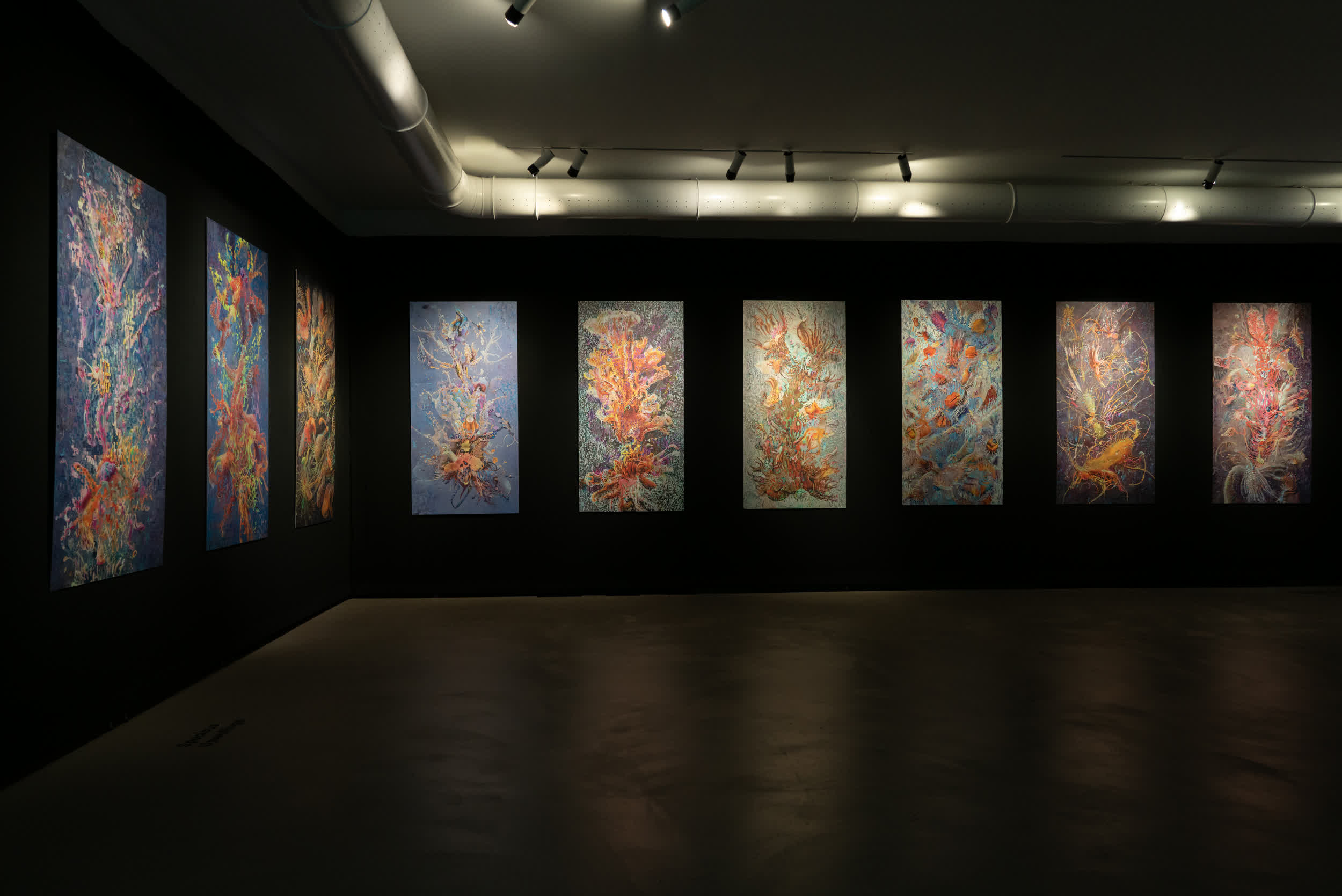
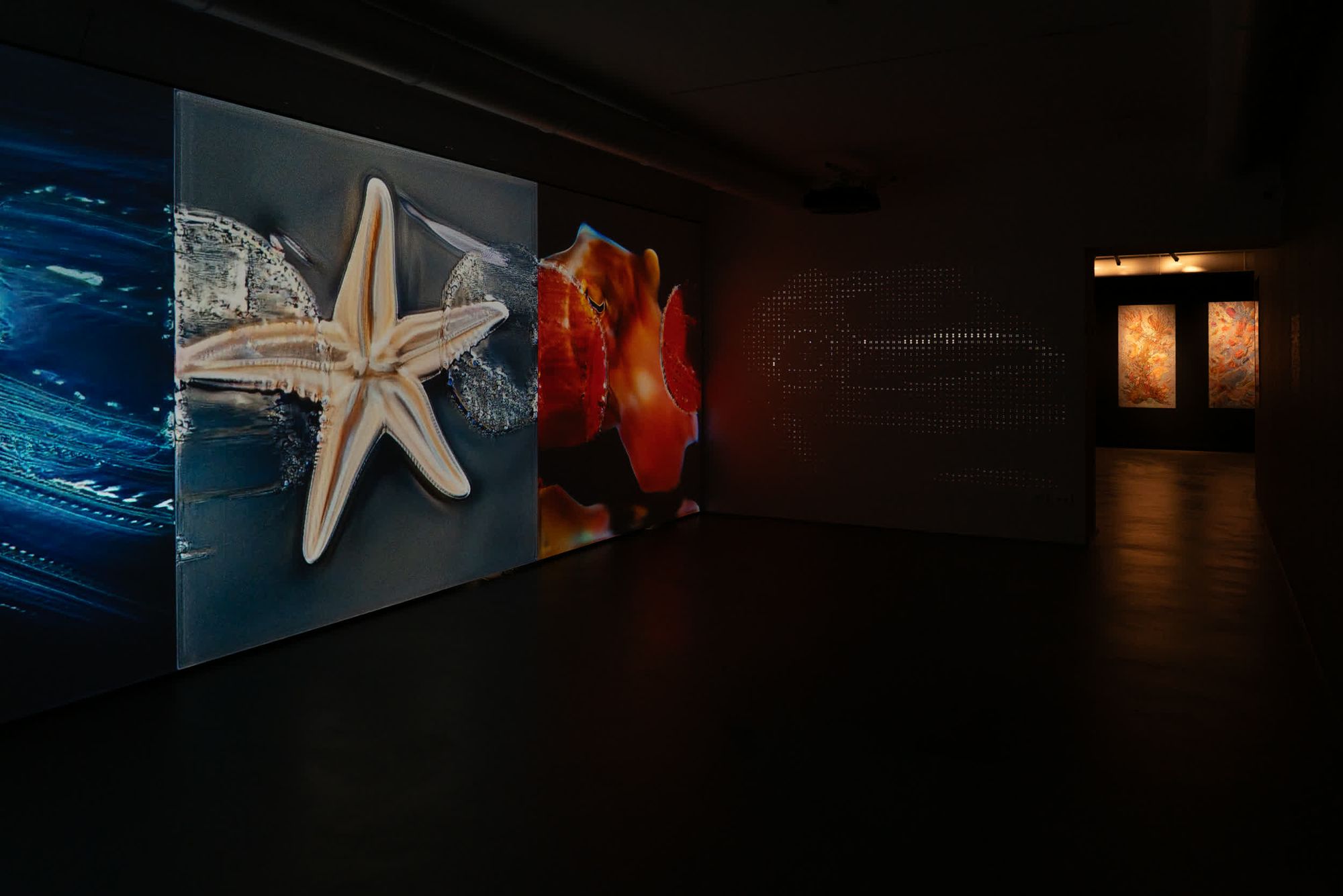
In the next gallery, Decohering Delineation explores the limits of human perception in relation to more-than-human systems. We perceive a bird calling, a fish surfacing, a gust of wind scattering seeds as distinct events. But when processes unfold across hours, days, or seasons, they exceed our immediate sensory grasp and become abstract categories rather than visible realities. The work questions this fragmentation of experience.
Through the entanglement of neural networks and oceanic data, the artists experiment with ways of making interconnection perceptible. While neural networks typically reproduce only patterns contained within their training data, here their outputs are influenced through quantum-inspired circuits and marine datasets, creating shifting zones of entanglement. These interactions allow patterns to emerge that no single network could generate independently, intertwining temporal scales, ecosystems, and artificial systems.
The result is a fluid visual environment in which boundaries dissolve: organisms, currents, and digital structures influence one another. Rather than presenting discrete forms, the work proposes a condition of continuous relationality, suggesting that digital systems and artificial life are not external observers but entangled participants within the same ecological fabric. In doing so, Decohering Delineation invites us to reconsider perception itself, not as a sequence of isolated moments, but as part of a larger, interconnected field.


GALLERY 3 - LIQUID STRATA: ARGOMORPHS
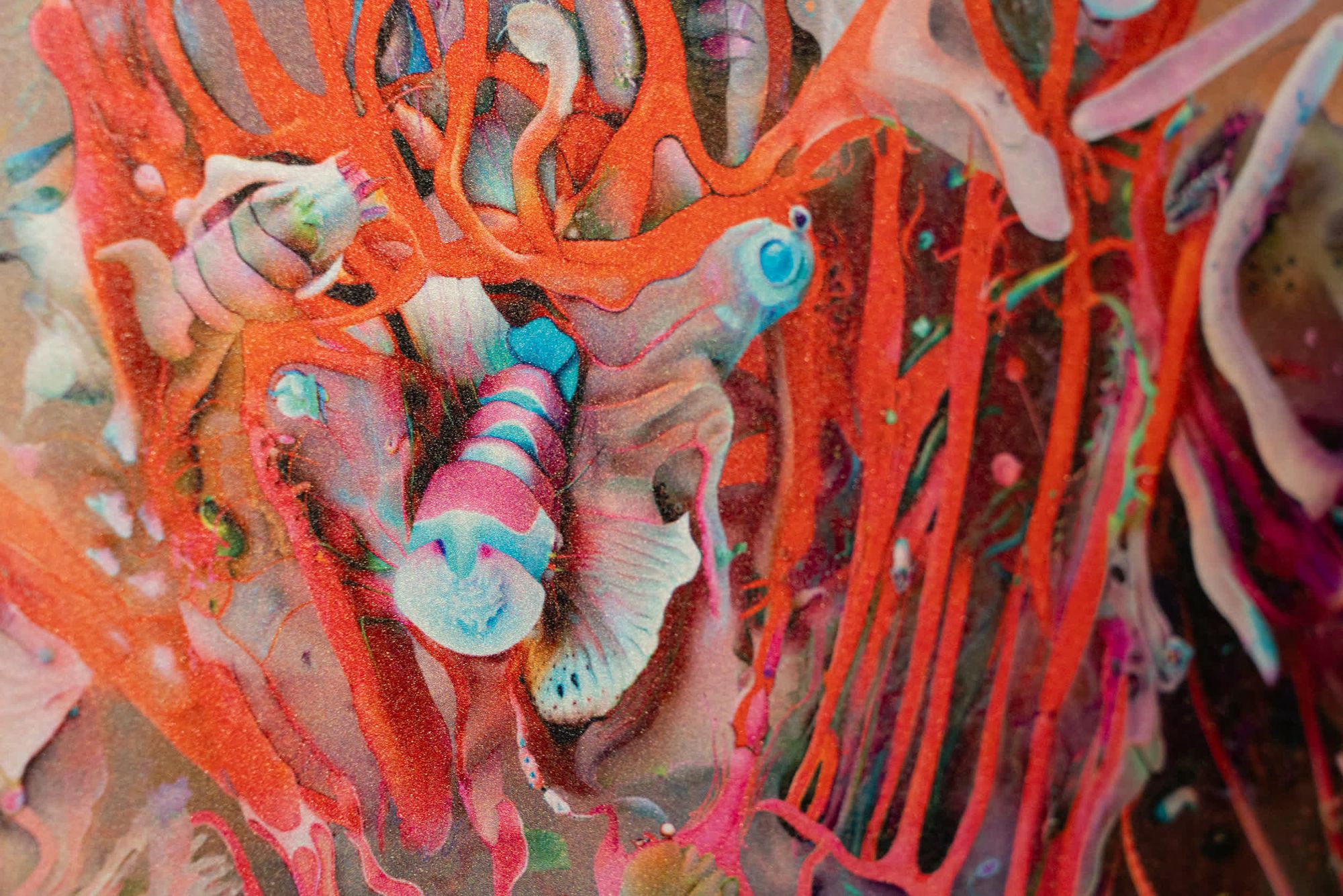
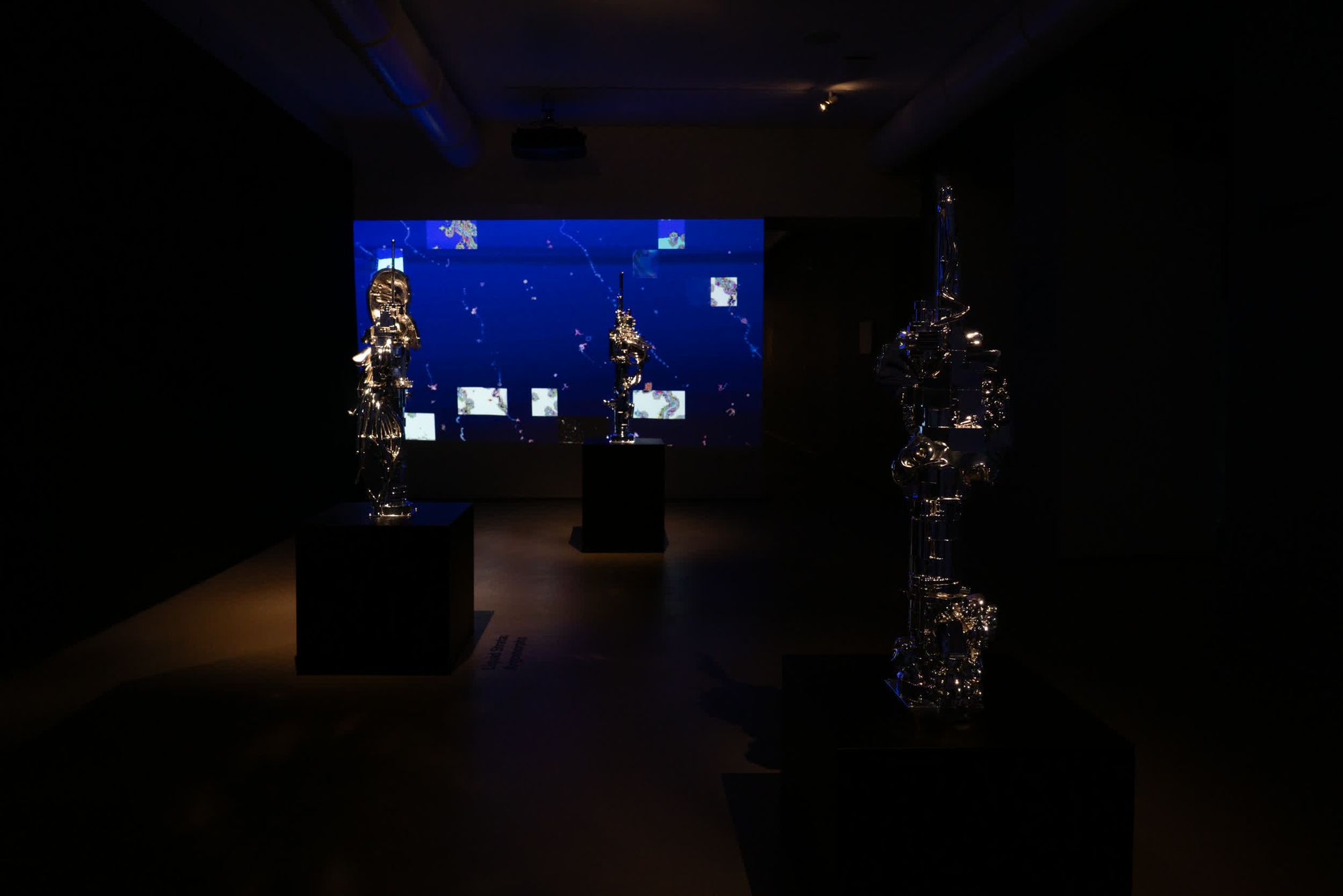
The journey continues with Liquid Strata, an installation focused on marine snow, the continuous fall of microscopic organic particles through the ocean’s mesopelagic zone. This phenomenon is fundamental to carbon sequestration but remains almost impossible to observe directly. Our knowledge comes only through fragments — buoy recordings, sediment traps, sonar signals. The installation translates this fragmented condition into an immersive environment where artificial-life simulations and data sonification allow visitors to experience a system that exists mostly beyond visibility.
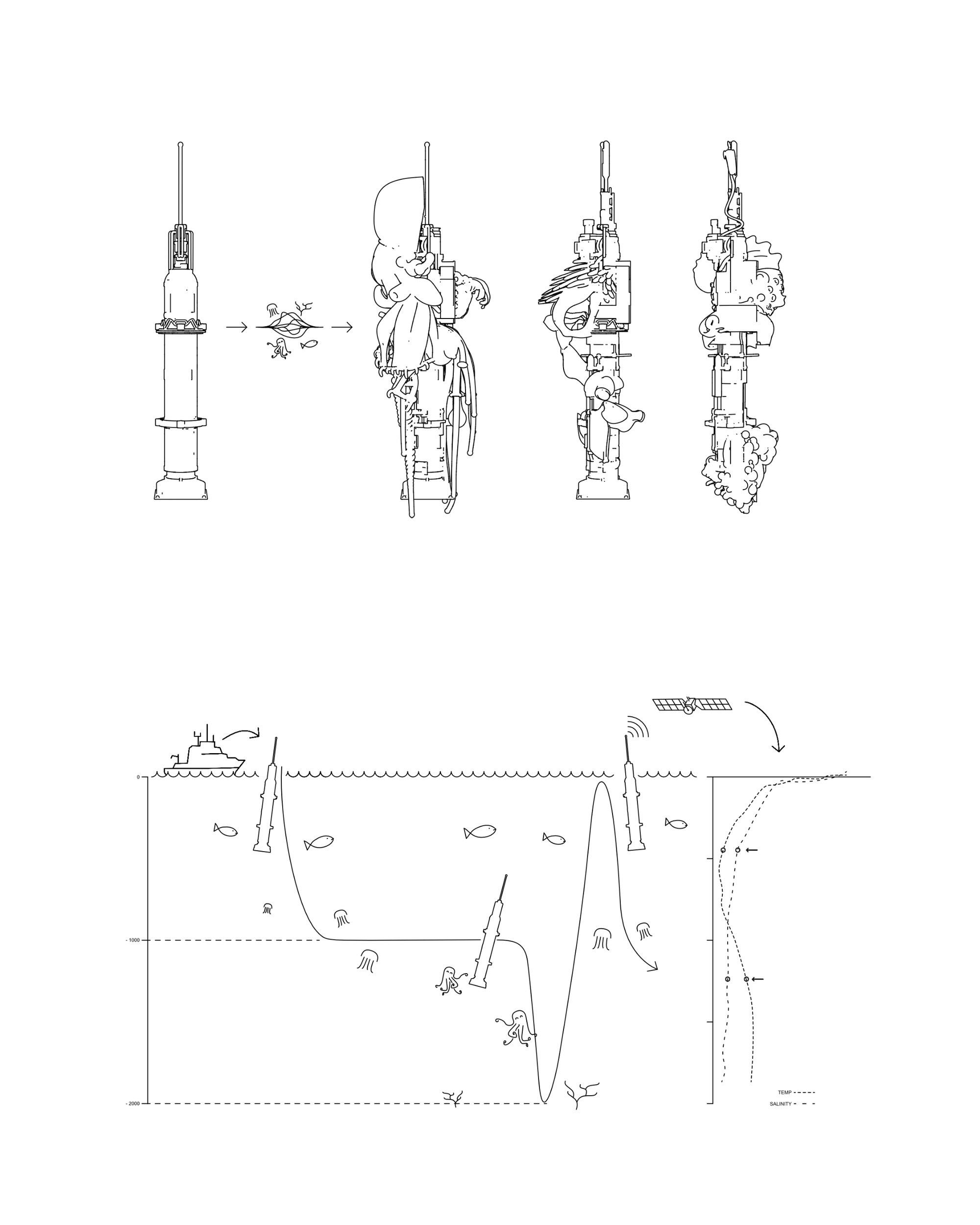
At the center of the exhibition stand the three sculptures of Liquid Strata: Argomorphs, developed during the Studiotopia residency and conceived as a continuation of Liquid Strata. The work begins with the real infrastructure of Argo floats, autonomous devices that descend through the ocean, collect data, and periodically return to the surface to transmit information. They are among our few technological eyes in the depths, yet the spaces between measurements remain vast and largely unknown. In recent years, funding limitations and technical fragility have made this system even more precarious, meaning that our understanding of these ecosystems remains partial and discontinuous.
The artists imagine what happens when these devices eventually stop functioning. Once their batteries die, the floats sink, becoming part of the ocean they once measured. Here speculation begins. Entangled Others imagine the moment when these instruments encounter marine flora and fauna on the ocean floor, merging with them, evolving into new hybrid entities.
The reference echoes the Middle Ages once again: where knowledge disappears, imagination creates forms. These are not monsters, yet they follow the same principle. They are chimeras, beings born in the gaps between data, where technology and nature merge into speculative life forms.
Liquid Strata: Argomorphs becomes the conceptual core of the exhibition. It materializes the question at the heart of Liquid Chimeras: what might exist in the vast spaces between what we measure and what we can actually know?

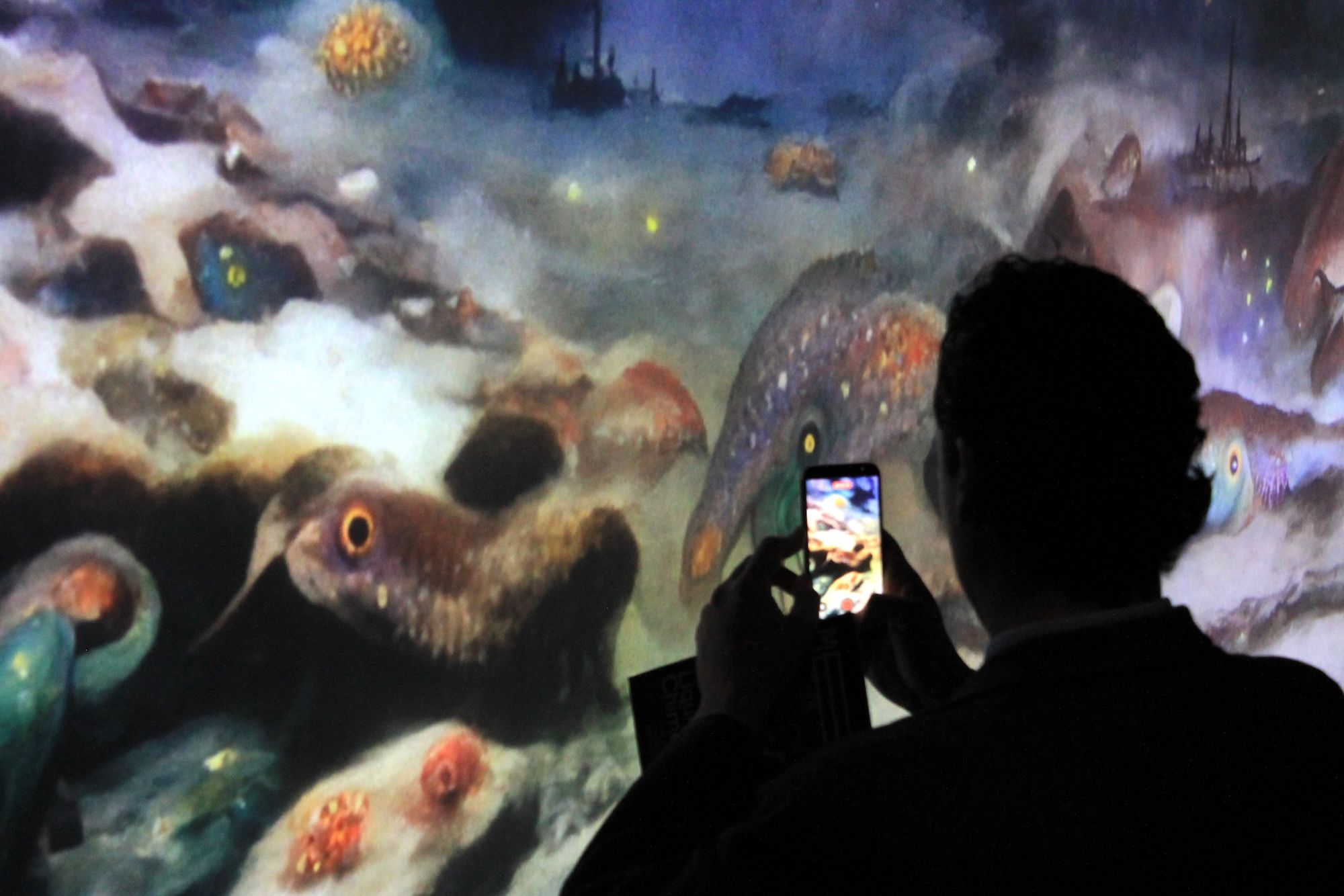
IMMERSIVE ROOM - SEDIMENT NODES
In the immersive room, Sediment Nodes turns attention to sediment-laden waters, environments that often appear opaque or disturbed, obscuring our view of aquatic life. The work was born from the artists’ own experience while diving, encountering moments in which suspended particles clouded visibility and transformed the underwater landscape into something almost abstract. What initially seemed like visual obstruction became an encounter with a different mode of perception.
Within these cloudy waters, inorganic particles of silt, clay, and sand coexist with algae, bacteria, organic matter, and microorganisms that find nourishment and shelter within this dense medium. Minerals and microscopic life forms scatter and refract light, producing complex chromatic and optical conditions at scales beyond our perception. What appears to us as murkiness is in fact a dynamic and vibrant ecosystem.
Through microscopic perspectives and generative processes, Sediment Nodes reveals the interconnections hidden within what we tend to dismiss as disturbance. The work emphasizes how invisibility is often a consequence of scale and light diffusion rather than absence. In doing so, it reinforces one of the exhibition’s central ideas: what escapes perception is not empty, it is densely alive.
When asked what audiences might discover in these generated ecosystems, the artists leave the experience open:
“Once a work is complete, it is no longer ours. We welcome that others might find perspectives and details we were not consciously aware of.”
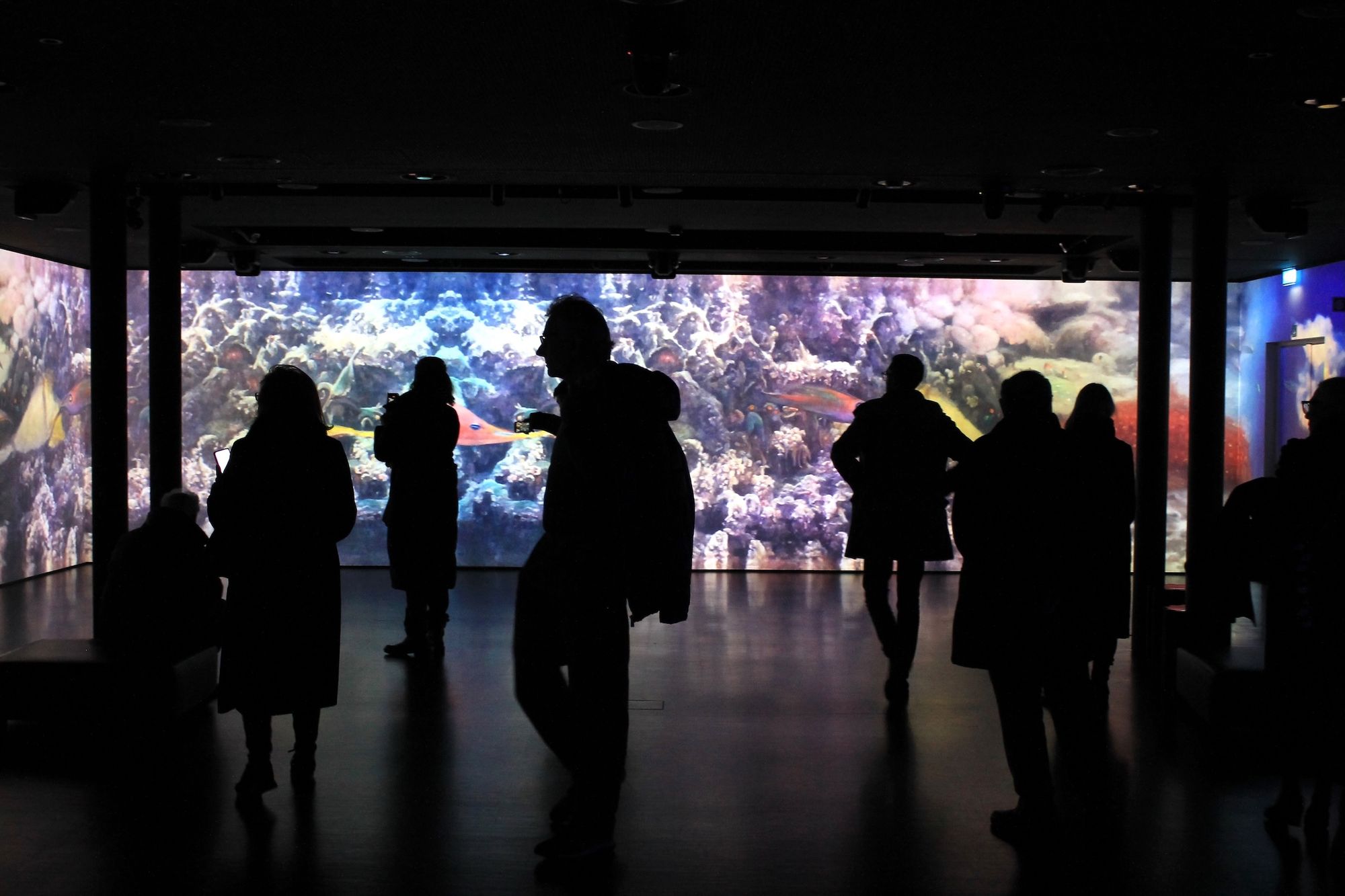
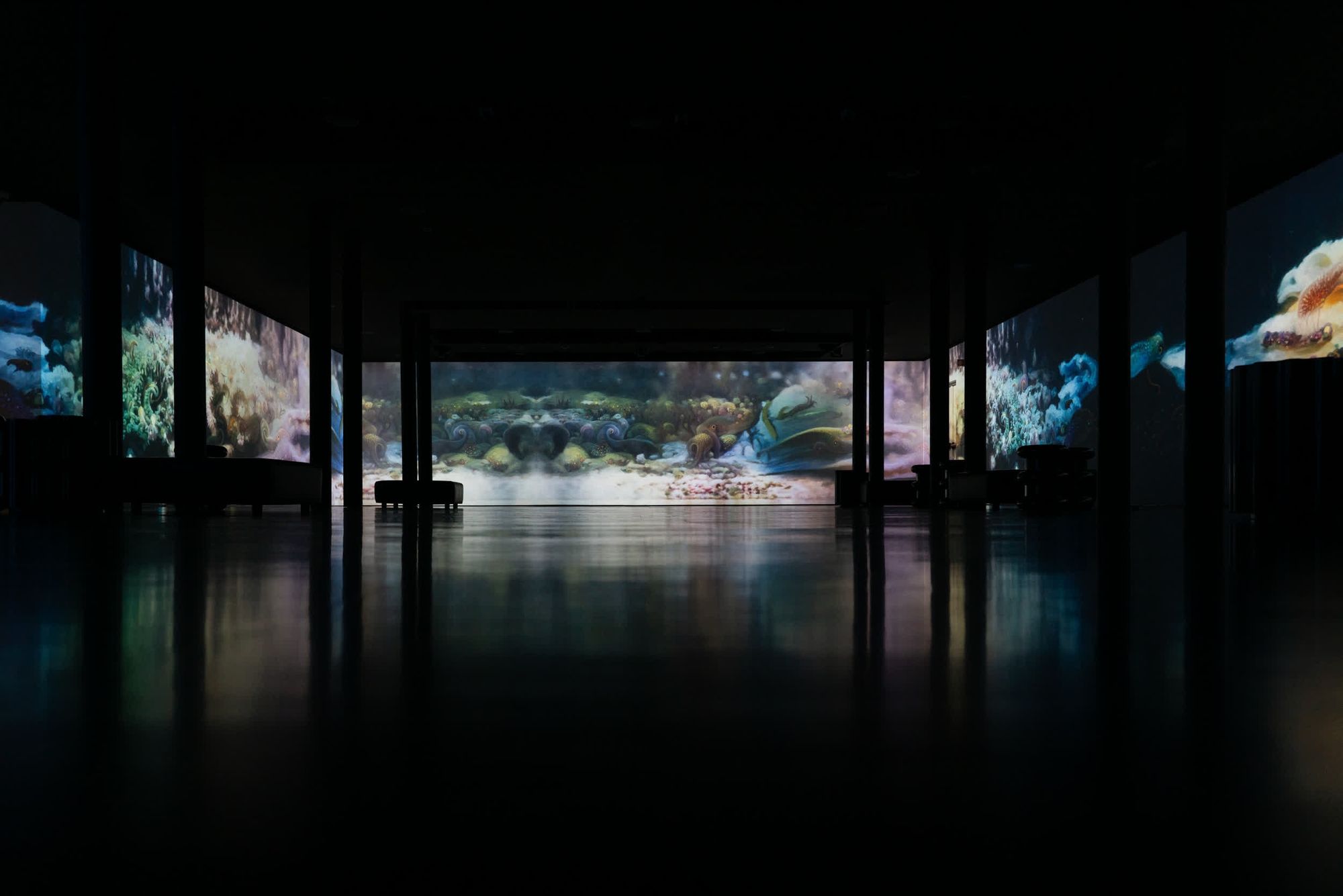

Taken together, the works of Liquid Chimeras do not seek to explain the ocean or stabilize its meaning, but to create a space in which uncertainty itself becomes a condition for perception.
It is through art that it becomes possible to inhabit these zones of uncertainty, spaces capable of generating new hypotheses, new sensibilities, and new imaginaries. Where data is missing, what emerges is not emptiness but creative opportunity: speculative scenarios, organisms, and forms of life that expand what we are able to imagine about the world, opening horizons that empirical knowledge alone cannot yet reveal.
The works presented in the exhibition, from sculptures to generative videos and immersive environments, form a hybrid ecosystem that refuses clear boundaries: between organic and artificial, between scientific and poetic. Together, they outline a new mode of perception, one based not on certainty but on relation (entanglement); not on the accumulation of data, but on the ability to interpret what remains invisible. The ocean emerges as an epistemic model, a complex organism reminding us that knowledge is always partial, situated, and never fully under our control.
Visitors are invited to navigate this liminal space a place where science meets myth, where technology becomes an extension of perception, and where art does not represent the unknown but allows us to feel it. An ecology of uncertainty transforms MEET into a speculative landscape, exploratory and oriented toward the future.