.svg)
It’s been a while since we last audited active art NFT marketplaces... And the key word is active. By that we mean alive, not dead, not rugged, and still recording at least some sales. With Christie’s recently announcing the closure of its on-chain platform, Christie’s 3.0, the moment feels right. Others have shut down less publicly, but the result is the same: a contracting market with sales concentrated on a handful of platforms.
For newcomers, the marketplace landscape can be tricky to navigate: launchpads vs. aggregators, open vs. curated, primary vs. secondary sales, marketplaces vs. galleries. To keep it simple, there are three main types:
- Open marketplaces: any artist can create and sell their work. [this article]
- Curated marketplaces: artists must go through a selection process. [part 2 coming soon]
- Thematic marketplaces: focused on one genre or niche, such as generative art or AI art. [part 3 coming soon]
Some platforms provide launchpad tools for creating NFTs (primary sales), while others also support secondary sales, or resales between collectors. Aggregators on the other hand index NFTs across platforms and contracts, making them most useful for secondary trading and discovery. In practice, these categories often overlap.
This first article focuses on open marketplaces, the platforms that anyone can use, without curation or gatekeeping.
Note: hybrid thematic platforms like Art Blocks and fxhash, which are open but also curate sales, will be covered in part 3 of this series.
Key Definitions
Aggregator:
Platform that indexes NFTs from other marketplaces (ex: Opensea).
Blockchain:
The underlying network (Ethereum, Tezos, Bitcoin, etc.) where NFTs are minted and then displayed on the marketplace front end.
Curated:
Artists need to go through a selection process by a curatorial team, focusing on quality over volume (ex: SuperRare)
Launchpad:
A platform that provides artists with tools to mint and release NFTs, ranging from simple, no-code interfaces to advanced smart contract deployment and distribution features.
Minting:
The act of creating an NFT by publishing it on a blockchain. It’s the moment a digital artwork becomes a verified, ownable asset that can be collected or traded.
NFT platform:
A digital marketplace where NFTs (non-fungible tokens) are minted, bought, and (re)sold.
Open:
Anyone can mint and sell NFTs without any approval process to do so (ex: Zora).
Primary sales:
The first time an artwork is sold.
Royalties:
Contrary to common belief, royalties are not embedded in NFTs and platforms can decide to respect or bypass them.
Secondary sales:
Resales of NFTs between collectors.
Smart contract:
Self-executing computer program on a blockchain that manages the creation, ownership, and transfer of NFTs. Artists can make their own or use contracts provided by platforms at minting (convenient, but less customizable).
Thematic / niche:
Marketplaces dedicated to one genre, like generative art (ex: Art Blocks).
Visual Mapping
.png)
See the constantly-evolving excel version for the geeks →
Open Marketplaces (Alphabetical)
BEST IN SLOT
Website: bestinslot.xyz
Chains: Bitcoin (Ordinals)
Established: 2022
Type: ✅ Aggregator, ❌ Launchpad / Primary Sales, ❌ Secondary S
Comment: Best in Slot started as a curated marketplace for Ordinals that highlighted what it considered “grail” inscriptions. It is now just a Bitcoin aggregator.
Fun fact: I have literally none.
BLUR
Website: blur.io
Chains: Ethereum
Established: October 2022
Type: ✅ Aggregator, ❌ Launchpad / Primary Sales, ❌ Secondary Sales
Comment: Still in second place for NFT trading volume after Opensea; not art-specialized but important for liquidity and traders. Known for its pro-trader tools (sweeps, bulk listings, analytics). Many users list NFTs with low or zero royalties, since Blur does not enforce royalties on-chain. In February 2023, Blur launched the $BLUR governance token, distributed via airdrops to active traders, which further boosted its dominance and created incentives around high-volume trading.
Fun fact: Looksrare was just another attempt at competing with Opensea, which is now with minimal trading volume.
BUILDTREE
Website: buildtree.io
Chains: Ethereum, Polygon, Base, Solana, and Optimism (all EVM)
Established: 2023
Type: ❌ Aggregator, ✅ Launchpad / Primary Sales, ❌ Secondary Sales
Comment: Buildtree was created by NFT Studios to allow creators to work with no-code tools to build, launch, and showcase NFT projects with more complexity than other NFT launchpads. Creators deploy their own smart contracts and customize drop pages, websites, and collection displays. Still in early access, Buildtree is offering curated drops to highlight established artists using the platform.
Fun fact: Gauthier Zuppinger, active contributor and friend of 100 collectors, is head of partnerships and artist relationships at Buildtree.
EMBLEM VAULT
Website: emblem.vision/
Chains: Ethereum, Polygon, Binance Smart Chain (wraps assets from Bitcoin/Counterparty and other chains into ERC-721)
Established: 2020
Type: ❌ Aggregator, ✅ Launchpad / Primary Sales, ✅ Secondary Sales (via wrappers)
Comment: Emblem Vault is a cross-chain vaulting protocol that allows collectors to wrap historical or non-EVM assets (such as Rare Pepes on Counterparty, Spells of Genesis cards, or Dogeparty tokens) into ERC-721 NFTs. Once vaulted, these assets can be traded on Ethereum-based marketplaces like OpenSea and Blur.
Fun fact: Emblem is essential for enabling secondary market liquidity of early cryptoart collections across chains.
Fake Rare Directory

Website: fakeraredirectory.com
Chains: Bitcoin / Counterparty
Established: 2021
Type: ✅ Aggregator, ✅ Primary Sales, ✅ Secondary Sales
Comment: Fake Rares is the spiritual successor to the original Rare Pepe Directory. It continues the meme-card tradition through curated “series” drops managed by the community. Artists submit new cards to be included, making it a living archive as well as a marketplace. The project preserves and extends the culture of Counterparty’s earliest art experiments.
Fun fact: This platform was created by Rarescrilla, a Pepe Scientist, who created the first Rarepepe that had music as unlockable content in 2019.
Gamma
Website: gamma.io
Chains: Bitcoin (Ordinals), Stacks (smart-contract layer for Bitcoin)
Established: 2021 (initially as STXNFT.com)
Type: ❌ Aggregator, ✅ Launchpad / Primary Sales, ✅ Secondary Sales
Comment: Key player in the Ordinals ecosystem. Gamma supports Bitcoin Ordinals (inscriptions) and Stacks-based NFTs; offers “no-code” tools for creators.
Fun fact: They also offer prints of some collections and focus on “high quality digital art on Bitcoin”.
Highlight
Website: highlight.xyz
Chains: Ethereum + L2s (Base, Optimism, Arbitrum)
Established: 2021
Type: ❌ Aggregator, ✅ Primary Sales, ❌ Secondary Sales
Comment: Highlight is a no-code launchpad that helps creators and communities release NFT drops on Ethereum and its Layer 2 networks. Artists can deploy their own smart contracts or use Highlight’s infrastructure to create editions, generative projects, or membership tokens. The platform focuses on primary sales and community building rather than secondary market trading. Collectors typically resell Highlight mints on marketplaces like OpenSea or Blur.
Fun fact: Highlight started with a focus on generative art to offer more advanced tools than Arblocks to generative artists. It then opened up its platform to more genres.
Magic Eden
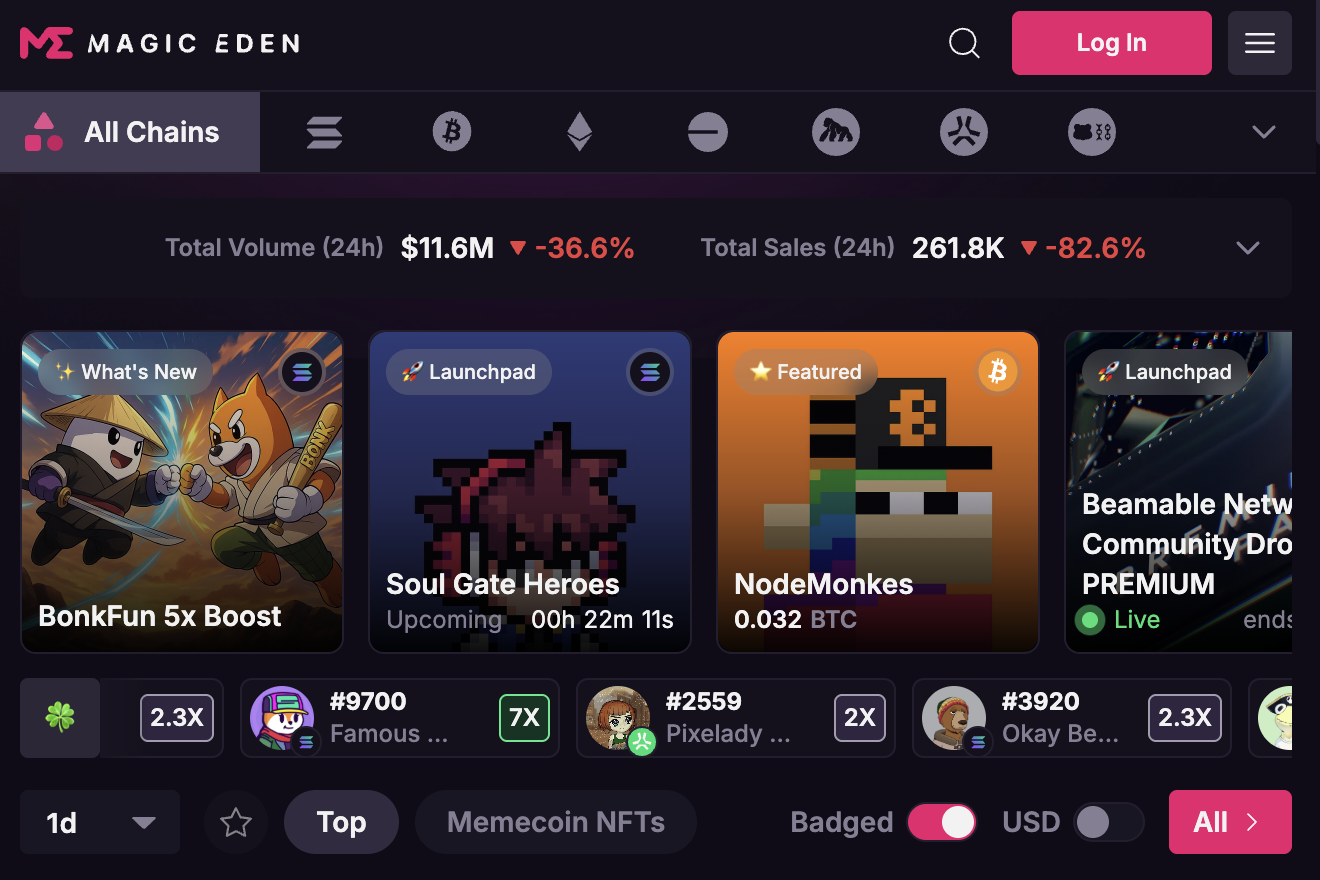
Website: magiceden.io
Chains: Solana, Ethereum, Polygon, Bitcoin
Established: 2021 (originally on Solana)
Type: ✅ Aggregator, ✅ Launchpad / Primary Sales, ✅ Secondary Sales
Comment: Launched as the main NFT marketplace on Solana, Magic Eden quickly expanded to Ethereum, Polygon, and Bitcoin (Ordinals) to become one of the biggest multi-chain platforms. It has positioned itself as the closest thing to an “OpenSea alternative” across chains. While it has strong liquidity, its focus leans toward collectibles and gaming assets rather than art.
Fun fact: Magic Eden is an essential part of the Ordinals ecosystem.
Manifold
Website: manifold.xyz
Chains: Ethereum, Optimism, Base, Shape, Polygon
Established: 2021
Type: ❌ Aggregator, ✅ Launchpad / Primary Sales, ❌ Secondary Sales
Comment: Artists deploy their own smart contracts and retain full ownership & provenance. Manifold Studio provides no-code tools for creators; contracts created here are compatible with major NFT marketplaces. Superrare integrated Manifold’s minting contracts so artists could mint directly via Manifold and list on Superrare. This gave creators more flexibility as they could retain provenance under their own smart contract while still benefiting from Superrare’s curated marketplace visibility. It was part of a broader trend: Manifold positioned itself as the infrastructure layer (minting tools), while marketplaces like Superrare handled curation and sales.
Fun fact: Manifold is owned by a16z, who might have a way to access / change contracts created on Manifold in the future. Always DYOR (do your own research) on the technical tools and their ownership structure.
Objkt
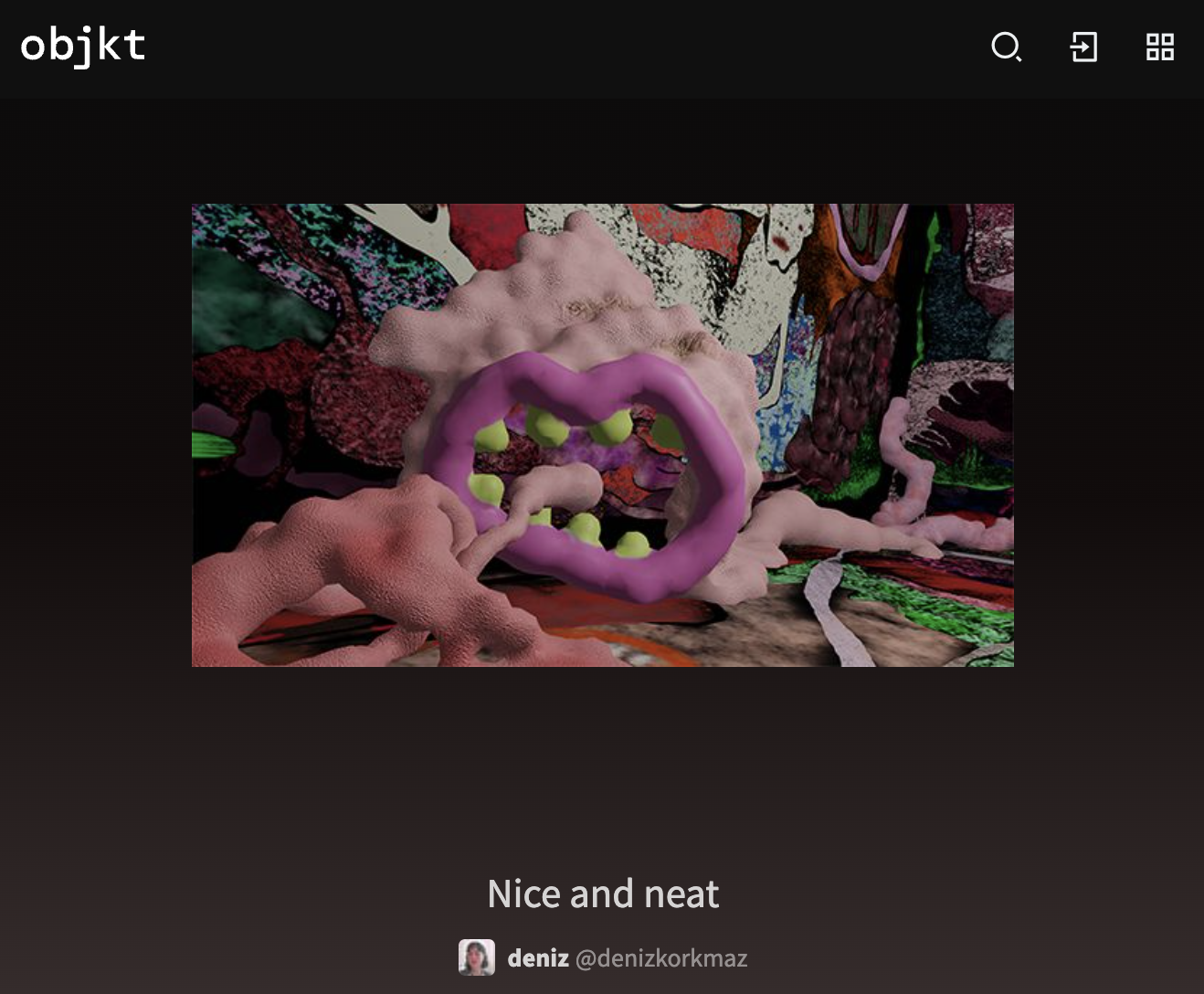
Website: objkt.com
Chains: Tezos
Established: 2020 (objkt.com began as a secondary marketplace and later added minting)
Type: ✅ Aggregator, ✅ Launchpad / Primary Sales, ✅ Secondary Sales
Comment: Tezos’ largest NFT marketplace aggregates tokens across contracts (e.g. from other Tezos platforms), supports auctions, trades, and series. It is the art platform of choice for Tezos with a full curatorial team helping curate collections, organizing artist residencies and programs alongside IRL activations and exhibitions with sales happening on Objkt.
Fun fact: Kika Nicolela, head curator of Objkt, is a member of 100 collectors.
OpenSea
Website: opensea.io
Chains: Ethereum, Polygon, Base, etc => 19 chains in total
Established: 2017
Type: ✅ Aggregator, ✅ Launchpad / Primary Sales, ✅ Secondary Sales
Comment: Still the largest NFT aggregator by volume, though less specialized in fine art. In May 2025, OpenSea launched its rebuilt platform OS2 out of beta, expanding token trading across 19 chains and introducing new features such as the Voyages XP rewards system, a revamped community hub.
Fun fact: While OS2 modernized the marketplace for traders, it has become impossible to navigate for art collectors. Besides, the new version does not correctly display older art NFT collections, highlighting ongoing tensions between trading focus and art preservation.
ORBITAL Marketplace
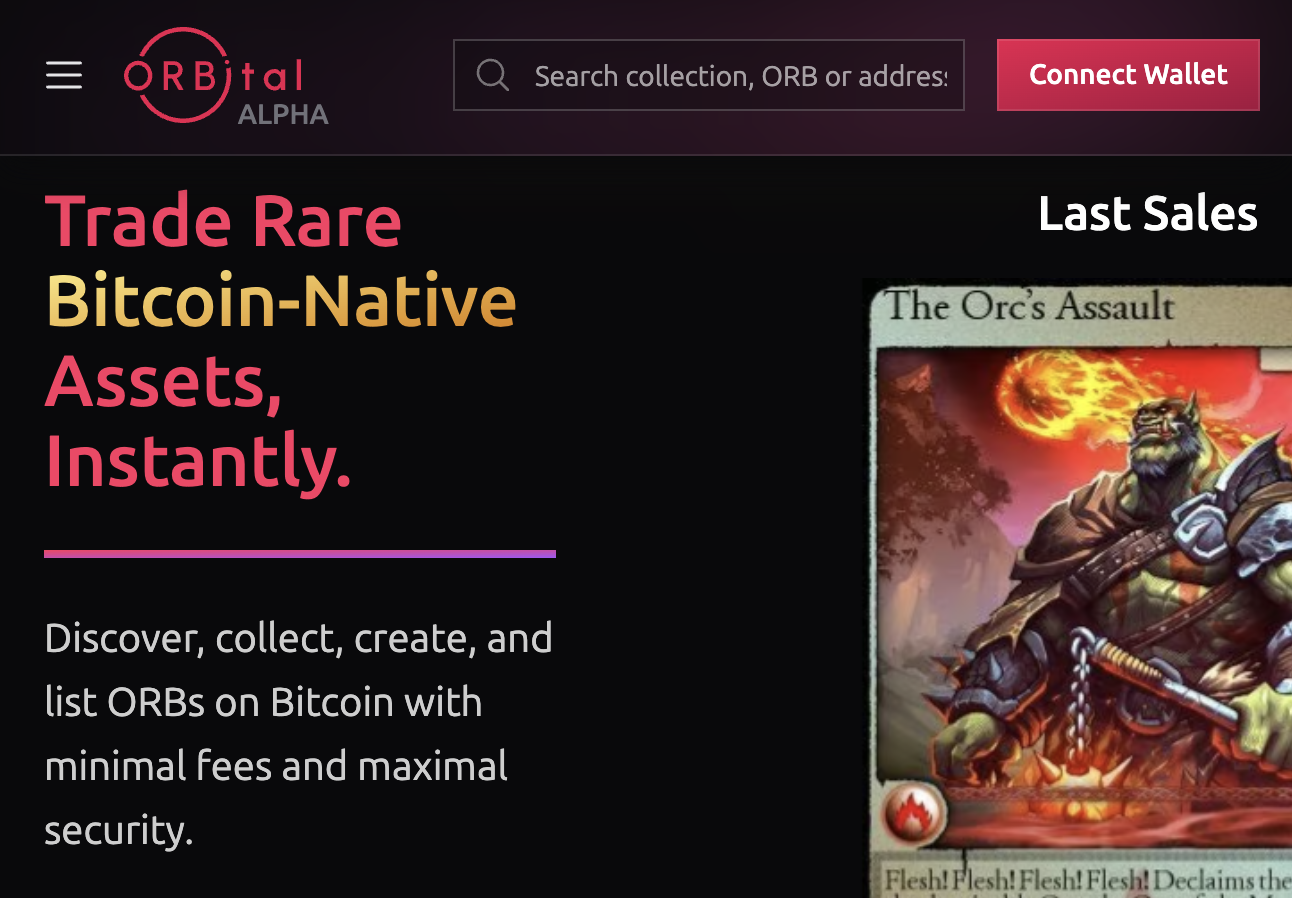
Website: orbital.market
Chains: Bitcoin
Established: 2025
Type: ✅ Aggregator, ✅ Launchpad / Primary Sales, ✅ Secondary Sales
Comment: ORBITAL is a dedicated marketplace on Bitcoin to create, trade and collect Bitcoin-based assets (ORB = Ownership Recorded on Blockchain). The ORBital platform is based on three core pillars: Decentralized Marketplace, Intuitive Tokenization Tool (Minter), and Hyper-personalized AI-driven Curation Assistant.
Fun fact: ORBITAL was founded by Shaban Shaame, founder of Spells of Genesis and member of 100 collectors.
Ordinals Wallet
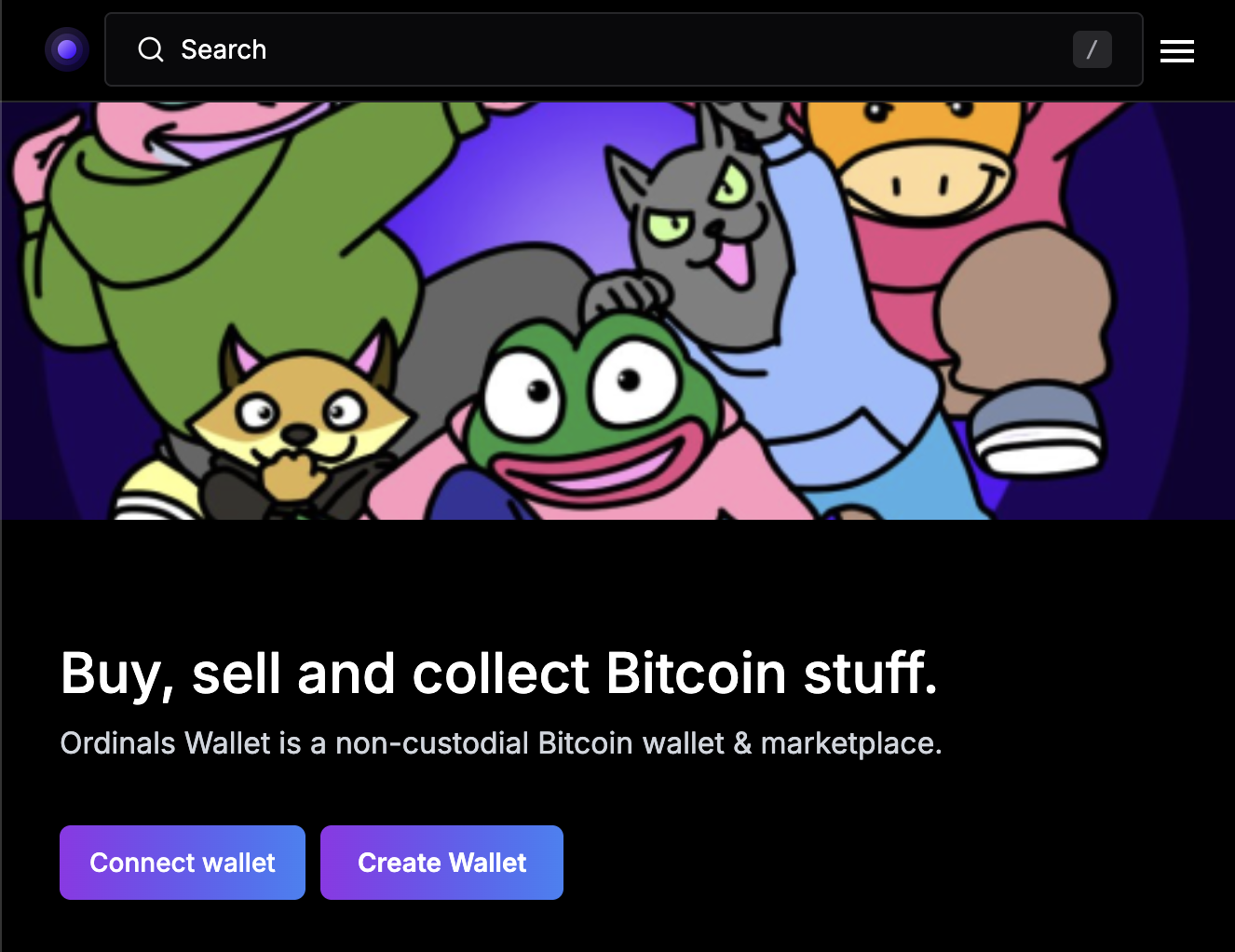
Website: ordinalswallet.com
Chains: Bitcoin
Established: 2023
Type: ❌ Aggregator, ✅ Launchpad / Primary Sales, ✅ Secondary Sales
Comment: Ordinals Wallet is both a wallet and marketplace for Bitcoin Ordinals. It includes an inscription tool, allowing artists and collectors to mint new inscriptions (primary sales), while also supporting resales (secondary sales) directly in the wallet’s marketplace. Unlike aggregators, it only lists items inscribed and managed within its own system, making it a hybrid between a minting tool and an open marketplace.
Fun fact: I don’t have any…
Pepe.wtf
Website: pepe.wtf
Chains: Bitcoin (Counterparty)
Established: 2022
Type: ✅ Aggregator, ❌ Primary Sales, ✅ Secondary Sales
Comment: pepe.wtf is a community-driven index and archive for the original Rare Pepe cards minted on Bitcoin’s Counterparty protocol (2016-2018). It serves as a reference point for collectors and traders on the secondary market. It keeps the Rare Pepe ecosystem visible and accessible within today’s NFT market.
Fun fact: The platform was founded by Pepe, a member of 100 collectors.
Rare Pepe Wallet
Website: rarepepewallet.wtf
Chains: Bitcoin (Counterparty)
Established: 2022
Type: ✅ Aggregator, ❌ Primary Sales, ✅ Secondary Sales
Comment: It combined a wallet with a marketplace, allowing collectors to buy, sell, and store cards from the official Rare Pepe Directory and indexes the whole Counterparty dex.
Fun fact: Rare Pepe Wallet was the original platform for collecting and trading Rare Pepe (est. 2016). This new site was founded by the Rare Pepe founder and scientist, Joe Looney later on to keep the history of the project alive
Rarible
Website: rarible.com
Chains: Ethereum, Polygon, Tezos, Immutable X, Flow
Established: 2020
Type: ❌ Aggregator, ✅ Launchpad / Primary Sales, ✅ Secondary Sales
Comment: One of the first community-focused NFT platforms, Rarible enabled artists to mint directly without coding and introduced the $RARI governance token. It supports several blockchains and has positioned itself as both a marketplace and infrastructure layer (Rarible Protocol).
Fun fact: Jake Brukhman and Coinfund are early investors in Rarible.
Raster
Website: raster.art
Chains: Multi-chain (aggregates across Ethereum, Tezos, L2s, and soon more)
Established: 2025
Type: ✅Aggregator, ❌Launchpad / Primary Sales, ✅Secondary Sales
Comment: Conceived as an art-focused alternative to Opensea, Raster pulls together works from multiple blockchains and marketplaces into a single profile for each artist. This means collectors can see an artist’s complete body of NFT work (across wallets and chains) in one place, improving discoverability and context. Raster supports secondary sales (resales without commission) but does not host primary drops, making it closer in spirit to an online catalogue raisonné than a minting site.
Fun fact: The platform was founded by Jan from thefunnyguys (who also founded LeRandom and is a member of 100 collectors.
Teia

Website: teia.art
Chains: Tezos
Established: 2022 (after the closure of Hic et Nunc in late 2021)
Type: ❌ Aggregator, ✅ Launchpad / Primary Sales, ❌ Secondary Sales
Comment: Community fork of Hic et Nunc, sustaining grassroots Tezos art culture. Teia is a non-profit, open-source platform for digital art assets. It operates as a collective, and is entirely owned, maintained, and improved by its community. Teia has become a cultural anchor for artists seeking an alternative to corporate Ethereum NFT platforms, keeping alive the experimental and decentralized ethos of hic et nunc.
Fun fact: After the founder of Hic et Nunc abruptly quit the project, the community gathered quickly to decentralize and continue the project, making it one of the most interesting examples of a successful community-based decentralization. Diane Drubay, active contributor of 100 collectors, was instrumental in this historic event.
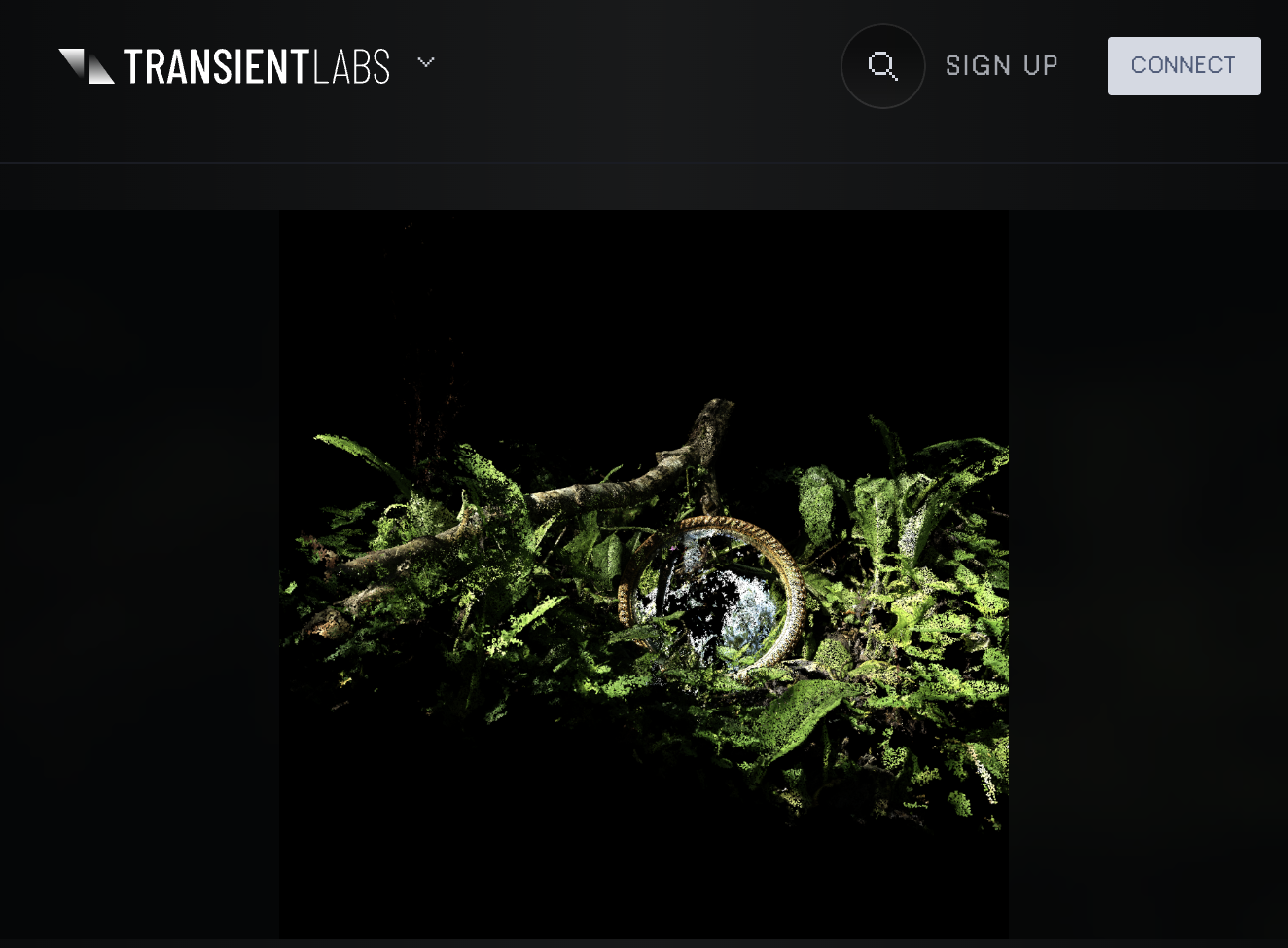
Transient Labs
Website: transient.xyz
Chains: Ethereum + L2s
Established: 2021
Type: ❌ Aggregator, ✅ Launchpad / Primary Sales, ❌ Secondary Sales
Comment: Known for giving artists control over their own contracts and metadata, including features like Story Inscriptions and dynamic modules for generative art. Primarily a creator-first infrastructure provider, though it occasionally curates drops.
Fun fact: SuperRare and Transient Labs have recently partnered to combine curated collecting with innovative smart contract tooling. Through Transient’s contract infrastructure, artists on SuperRare can release works that evolve over time, carry narrative layers, or embed richer provenance.
Unisat
Website: unisat.io
Chains: Bitcoin (Ordinals + BRC-20)
Established: 2023
Type: ❌ Aggregator, ✅ Launchpad / Primary Sales, ✅ Secondary Sales
Comment: Unisat is one of the earliest and most widely used wallet + marketplace solutions for Bitcoin Ordinals and BRC-20 tokens. It lets users inscribe new assets (primary sales) directly, manage them in a self-custody wallet, and trade on the built-in marketplace (secondary sales). Unlike aggregators, Unisat only lists assets inscribed or imported by its users, making it an infrastructure tool more than a discovery aggregator.
Fun fact: I'm a bit dry...
Zora
Website: zora.co
Chains: Ethereum + L2 (OP Stack)
Established: 2020
Type: ❌ Aggregator, ✅ Launchpad / Primary Sales, ❌ Secondary Sales
Comment: Zora is best known as a platform for artists to release affordable editions and experimental projects. It runs on its own lightweight blockchain built on Ethereum, designed to make minting faster and cheaper.
Fun fact: Zora has expanded into a kind of social network for art, where posts themselves can be collected. One drawback for newcomers is that buying on Zora sometimes requires moving funds over from Ethereum, which can add complexity.
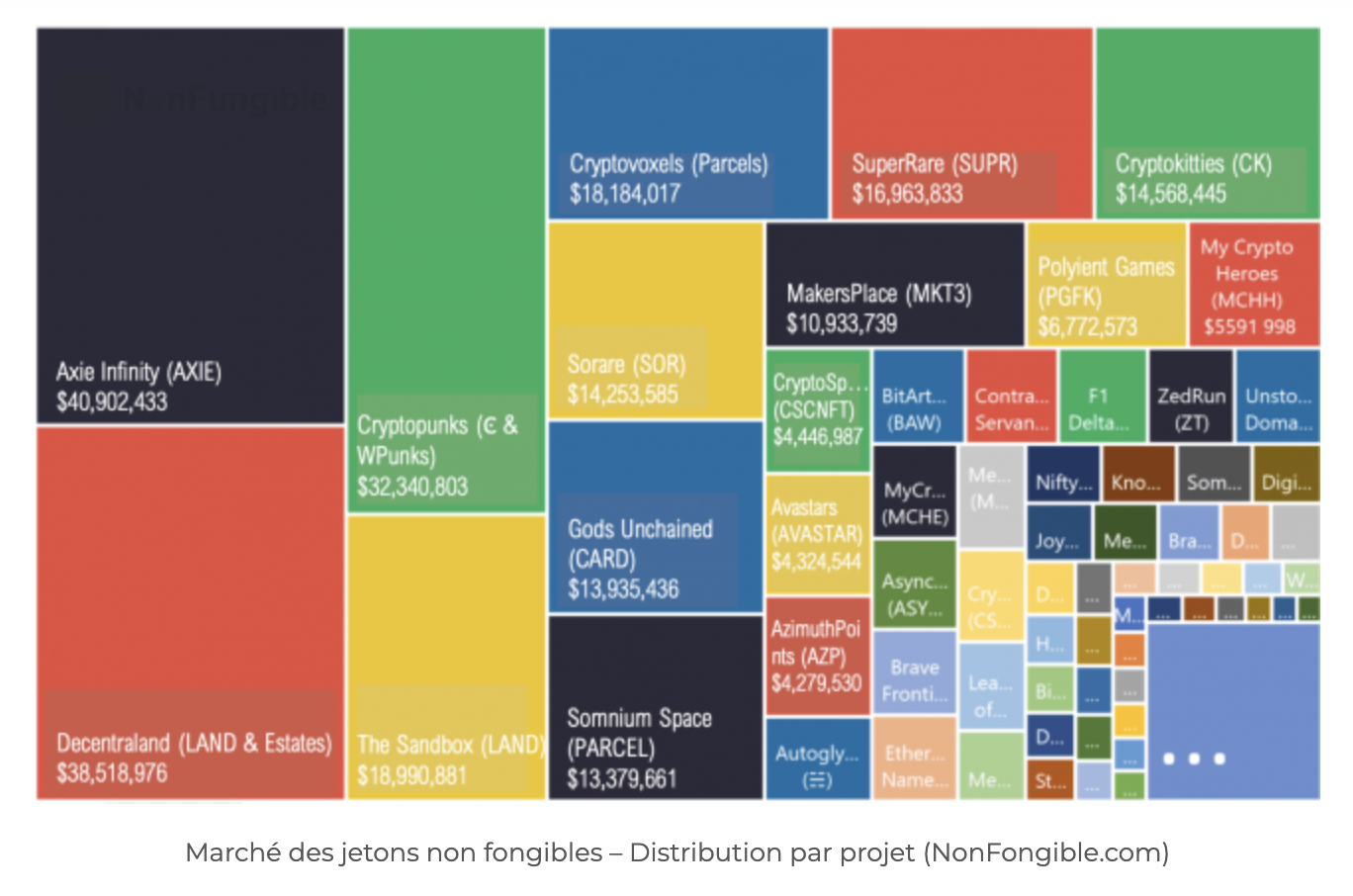
History of Visual Mapping
For fun and reference, here is some earlier mapping…
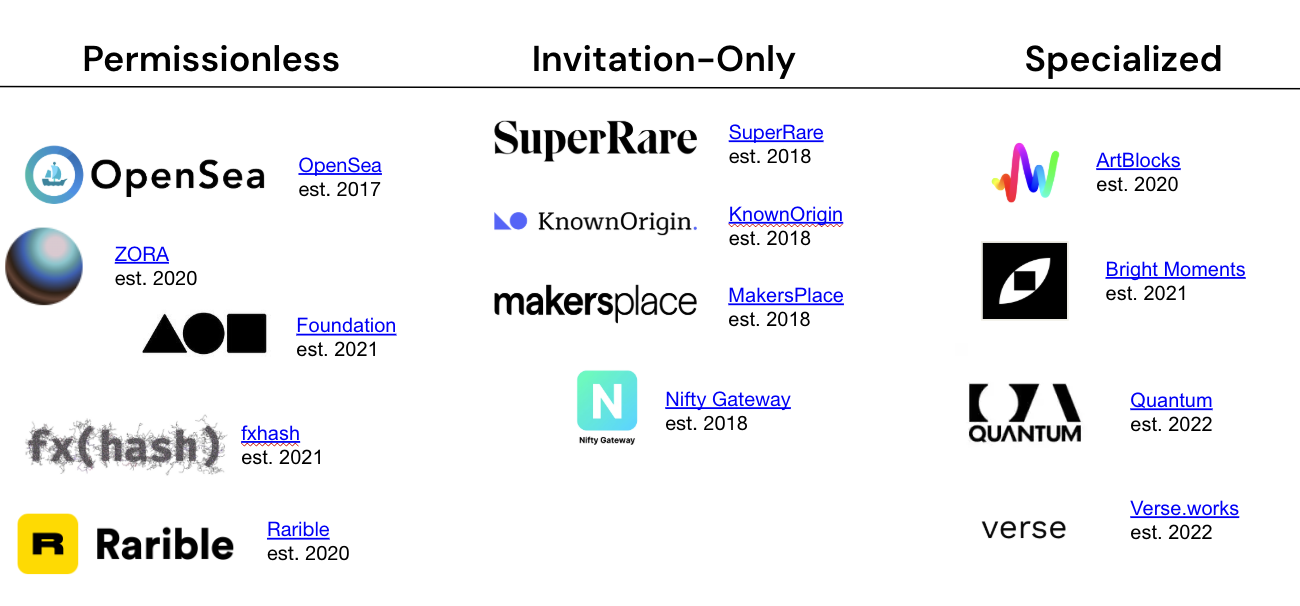
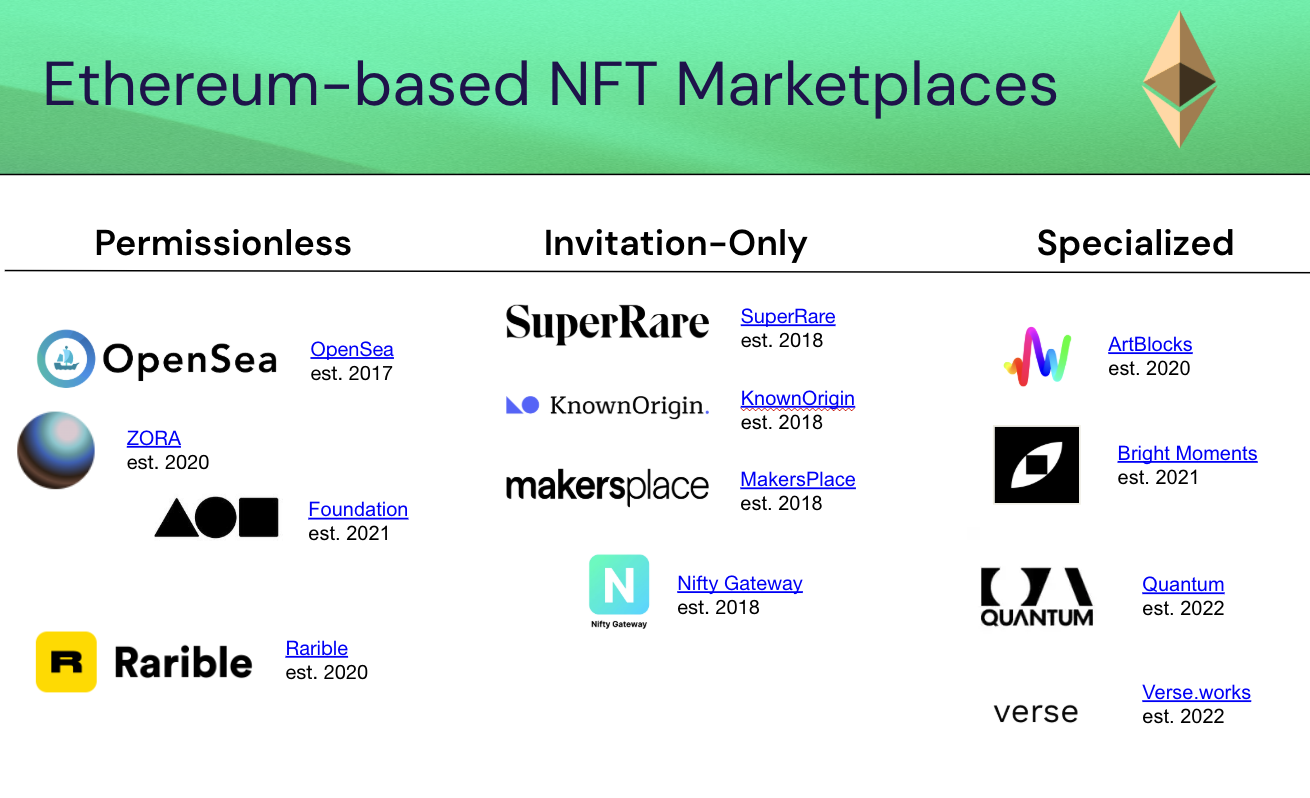
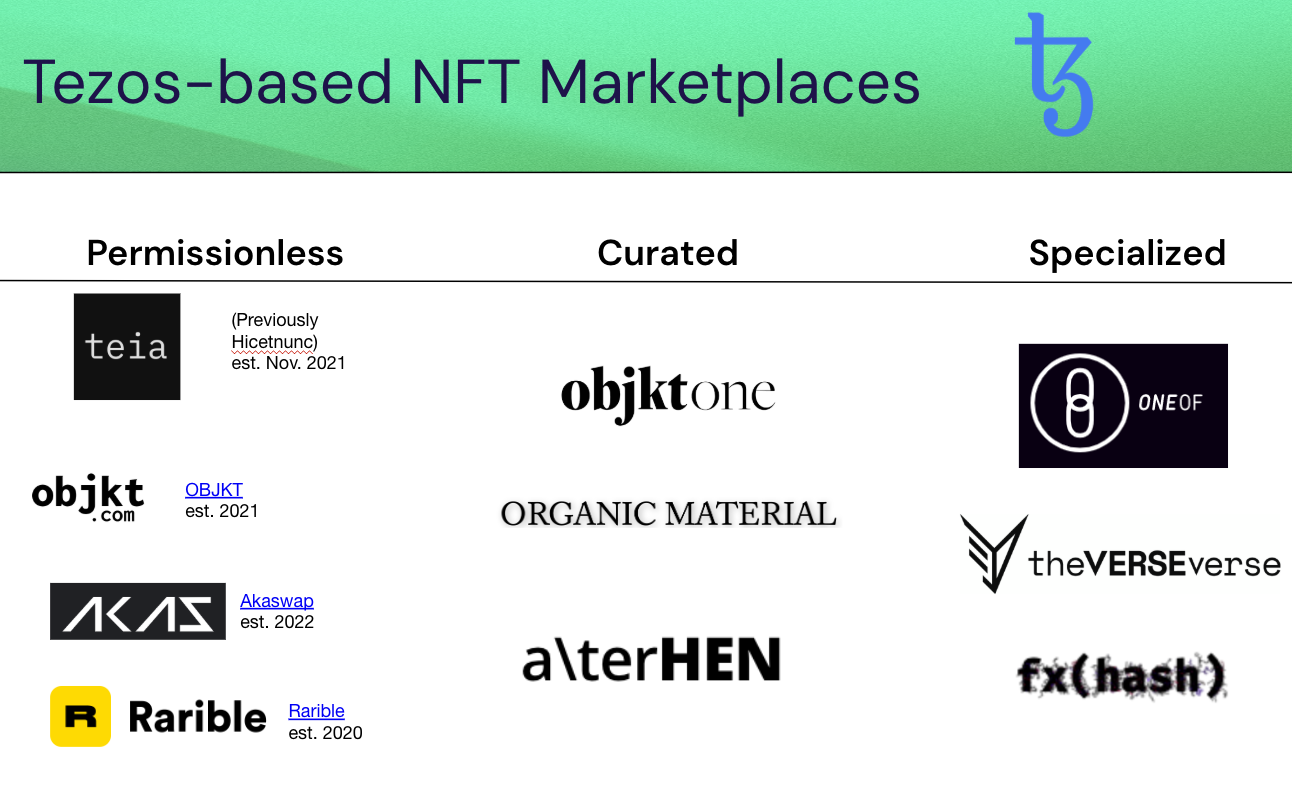
RIP List
Like at the Oscars, let’s take a moment to remember the projects that shut down, closed, went quiet, or shifted away from NFTs:
1stdibs, Artnet ArtNFT, Ascribe, Async.art, Blockparty, Cargo, Christie’s 3.0, Digital Objects, Editional, Expanded.art, Hic et Nunc, Kalamint, KnownOrigin, MakersPlace, Mintbase, misa.art, OG.art, Pace Verso, Portion, Quantum.art, Rare Art Labs, Showtime, snark.art, Sotheby’s Metaverse, Versum, VeVe, X2Y2
These projects are not to be mocked. They are part of the ecosystem’s history and the reason we are here today. Many were too early, but without them paving the way, we wouldn’t be building the future of art collecting.
Respect!

Let us know if you know of other marketplaces (active or not) to improve this mapping in progress. And remember that we’re trying to keep a focus on art, not listing all NFT marketplaces, only the ones collectors are using.
See you soon for part 2 (curated marketplaces) and part 3 (thematic marketplaces).