100 collectors at The Art Business Conference: Art & Tech 2026
by | Fanny Lakoubay | Oct 2026
On 16 October 2026, 100 collectors took part in the Art & Technology edition of The Art Business Conference in London. Organised by Louise Hamlin, the one-day programme brought together museums, auction houses, start-ups, investors and collectors to look at how technology is changing the way art is made, researched, sold and owned.
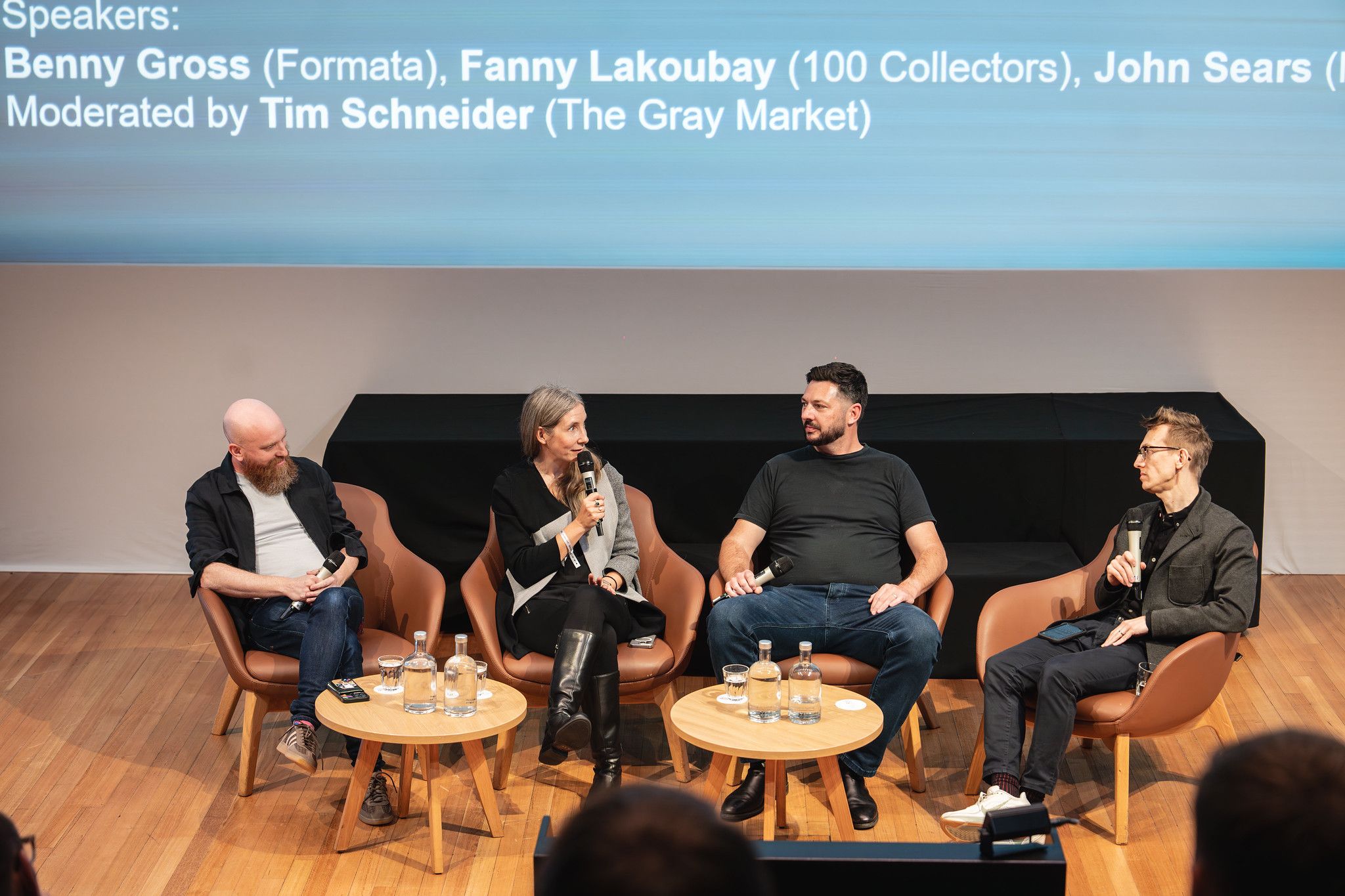
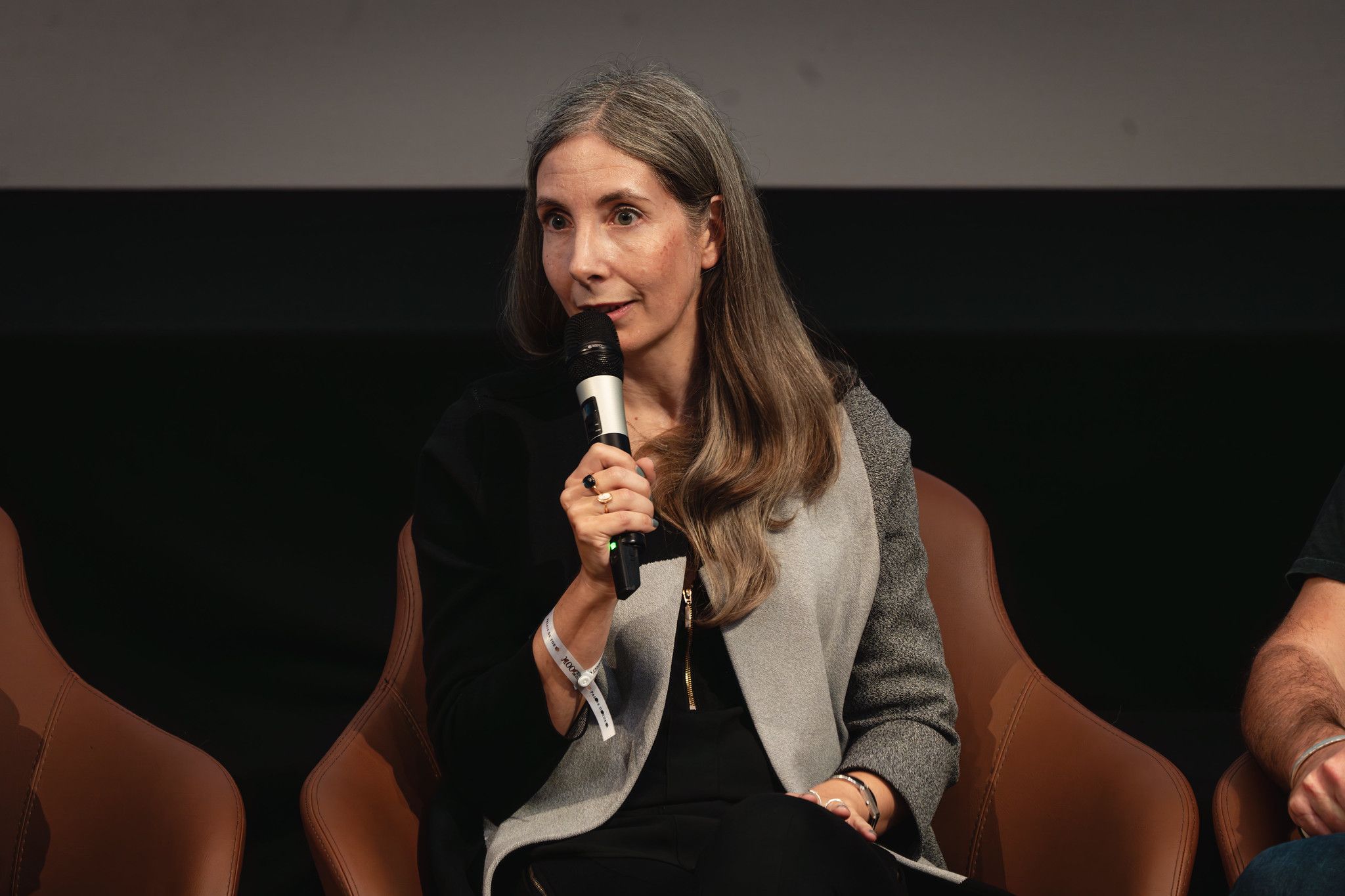
Our co-founder Fanny Lakoubay joined the afternoon panel on the collector's view, alongside two 100 collectors members, Benny Gross and John Sears.
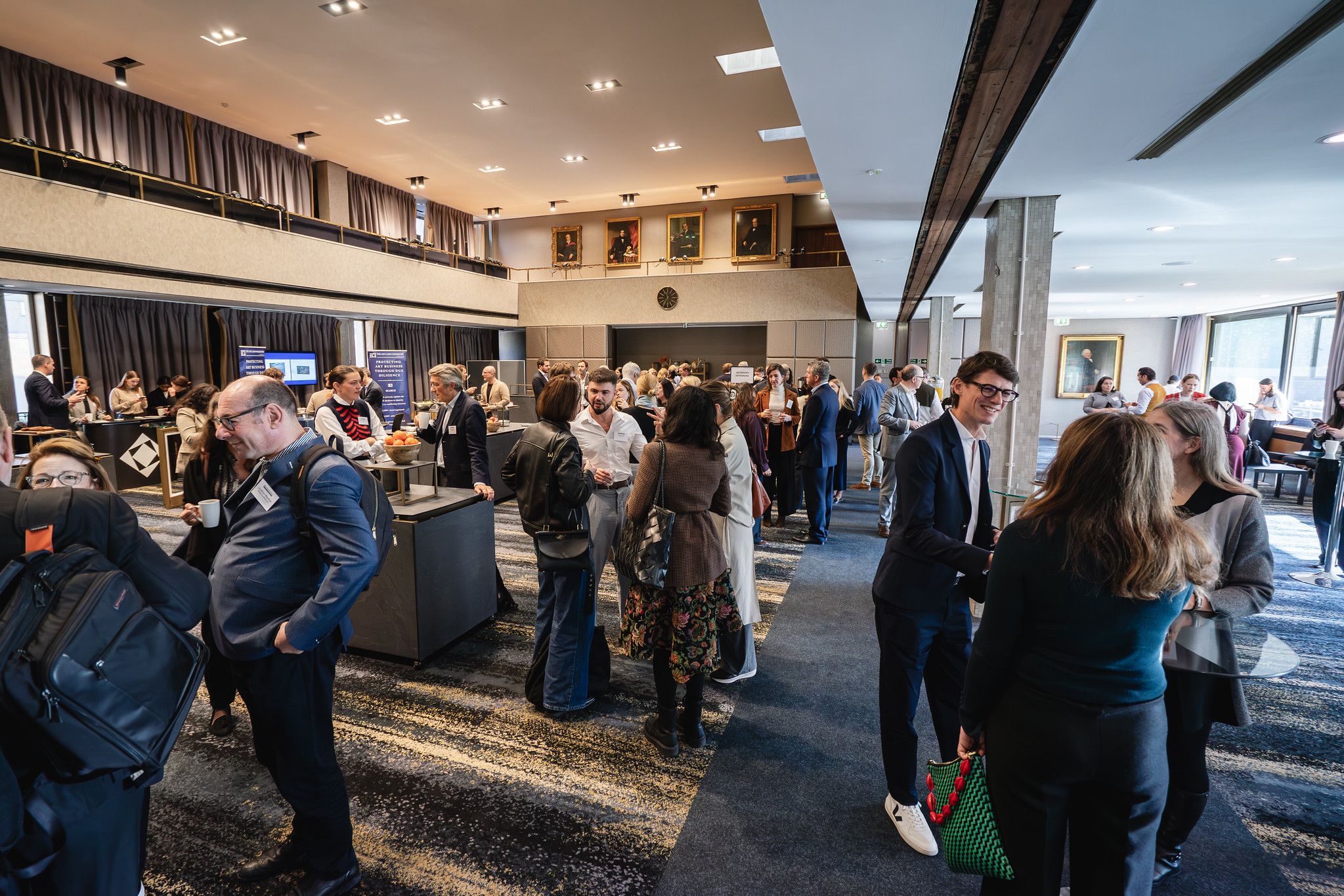
A day on art and technology
The programme opened by reversing the usual question. Rather than asking how technology transforms the art world, the first panel looked at how artists and cultural organisations act as testing grounds for AI, spatial computing, robotics and blockchain. Kay Watson (Arts Technologies, Serpentine), Freya Salway (Google Arts & Culture), artist Ben Cullen Williams and Tao-Tao Chang (British Council) discussed this with art journalist Naomi Rea.
Nicholas Eastaugh of Vasarik followed with a talk on AI agents in art market research: fast and capable, but not always reliable, and what it would take to make them trustworthy.
Before lunch, Roman Kräussl (Bayes Business School), Natalie Kali (Christie's), Emilia De Stasio (Artscapy) and Roland-Philippe Kretzschmar (The Art Bystander) looked at technology as an enabler rather than a replacement for expertise. The conversation covered where technology solves real problems, where it creates new ones, and what a healthy Art Tech ecosystem needs, from data standards and interoperability to trust between galleries, auction houses, collectors and museums.
In the afternoon, Marie Didier of TRIVECTO, winner of the 2025 pitch competition, reflected on her first year taking an idea to market, and Amelia Manderscheid of Legacy Art Partners gave a short retrospective on whether technology has ever truly disrupted the art market.
Quick-fire pitches
Five shortlisted companies, NALA, Isee.art, Art Circles, MENRVA and Bernard, each had up to three minutes to answer one question: how will your company have changed the art world by 2050? Entries were judged on the strength of the idea, the progress made so far, the size of the problem, the ethics of the business and its long-term prospects.
The jury included Jennifer Schipf (AXA XL), Tobias Halloran (NVIDIA), Adam Prideaux (Hallett Independent), Jean-Baptiste Costa de Beauregard (ArtNova), cultural strategist Marc Spiegler, James Hendy (Crozier Fine Arts) and Marine Tanguy (MTArt Agency).
The prize went to MENRVA, the only company pitched by a woman.
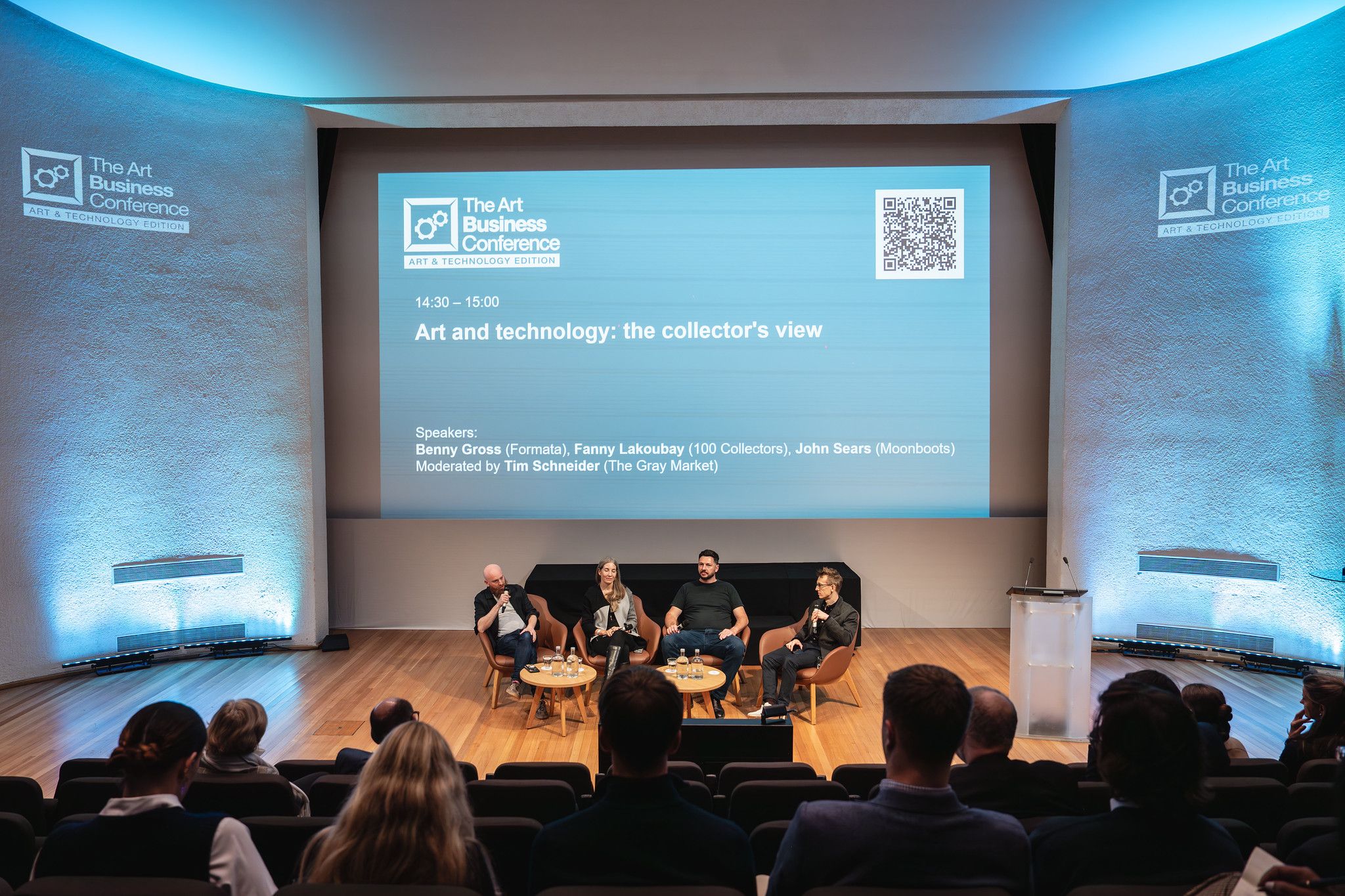
Art & Technology: the collector's view
The closing panel asked what collectors actually want from technology, and how it is changing the way they discover, evaluate, buy, own and experience art. Fanny Lakoubay spoke alongside 100 collectors members John Sears (Moonboots) and Benny Gross (Formata), with Tim Schneider of The Gray Market as the moderator.
Having three collectors from the same network on one stage reflected something we see every day at 100 collectors: collecting digital art is rarely a solitary decision. It is shaped by conversations with artists and with other collectors.
Fanny's contribution drew on two perspectives, as a collector and as co-founder of a club for digital art collectors. Her central point was simple: collectors do not necessarily want more technology. They want tools that make discovering, buying, owning and living with art easier.
She noted that technology has widened access to the art world, but access is not the same as belonging. Old gatekeepers can be replaced by new ones, such as algorithms, technical language and complicated interfaces. Women in particular often tell her they are "not really collectors" or do not understand the technology well enough. You do not need to understand blockchain to appreciate or collect digital art.
On ownership, she argued that the market solved how to transfer digital art before it solved how to live with it. Preservation, provenance, display, authentication and platform obsolescence remain underserved. Her advice to collectors: start with the artists, who can often advise on display or may produce physical editions you did not know existed.
On transparency, she acknowledged that public transaction data on the blockchain is a real change from the traditional market, while noting its limits. Not everything happens on-chain, and more data does not automatically lead to better decisions.
What stays with us
Across the day, a shared thread emerged: the most useful technology is the one that supports human expertise and relationships rather than replacing them. For collectors, that means tools that recede so the artist and the artwork remain central.
As Fanny put it on stage, a platform can help someone complete a transaction, but a community helps someone become a collector. The question worth asking of any new tool is whether it deepens the relationship between artists, artworks and collectors, or simply optimises the transaction.
Thank you to Louise Hamlin for organising the conference, to Jean-Baptiste Costa de Beauregard for the invitation, and to John and Benny for sharing the stage.