101 · New to digital art? · First cohort filled · Winter cohort registration now open · Jan-Feb 2027 · 101 · New to digital art? · First cohort filled · Winter cohort registration now open · Jan-Feb 2027 ·

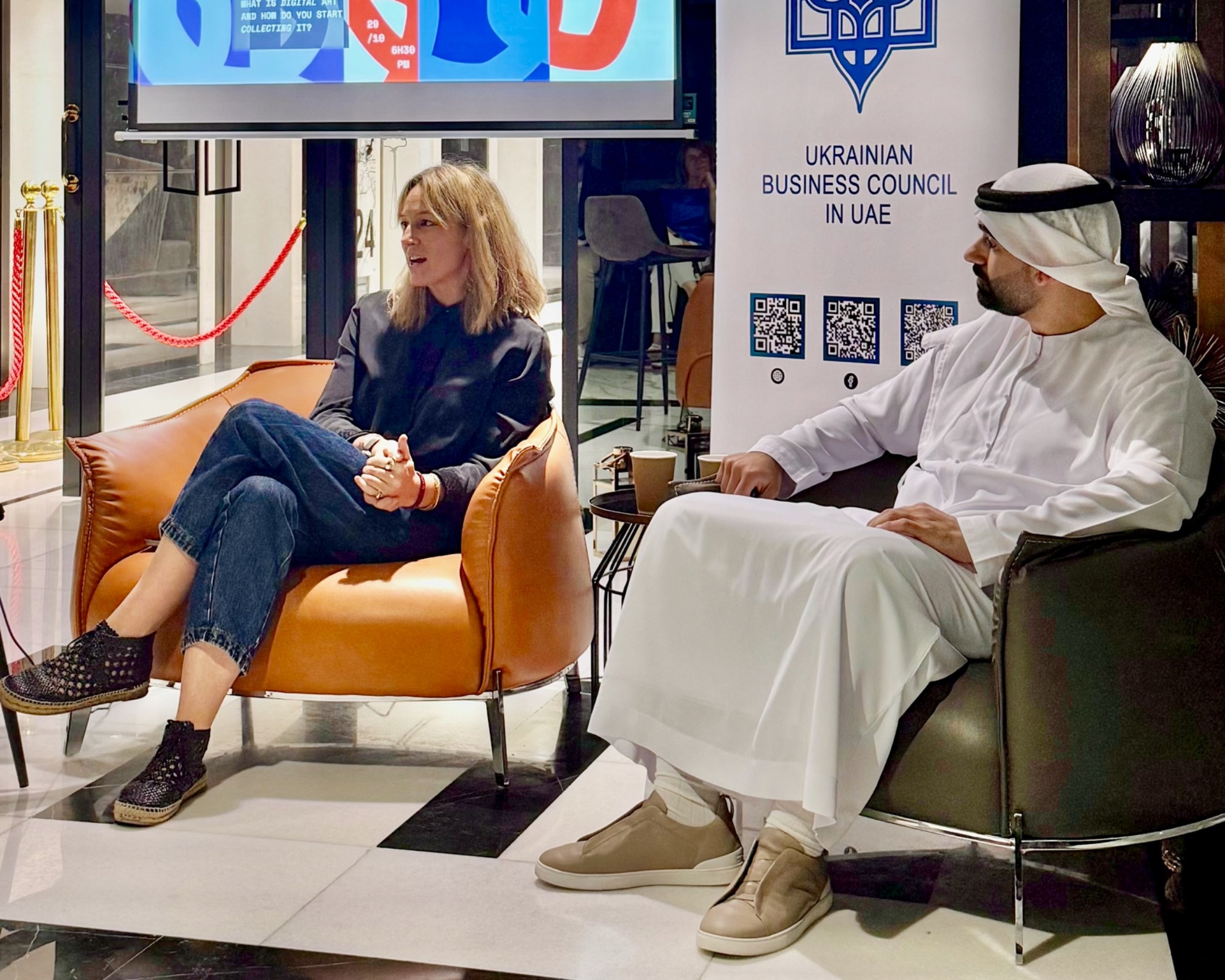
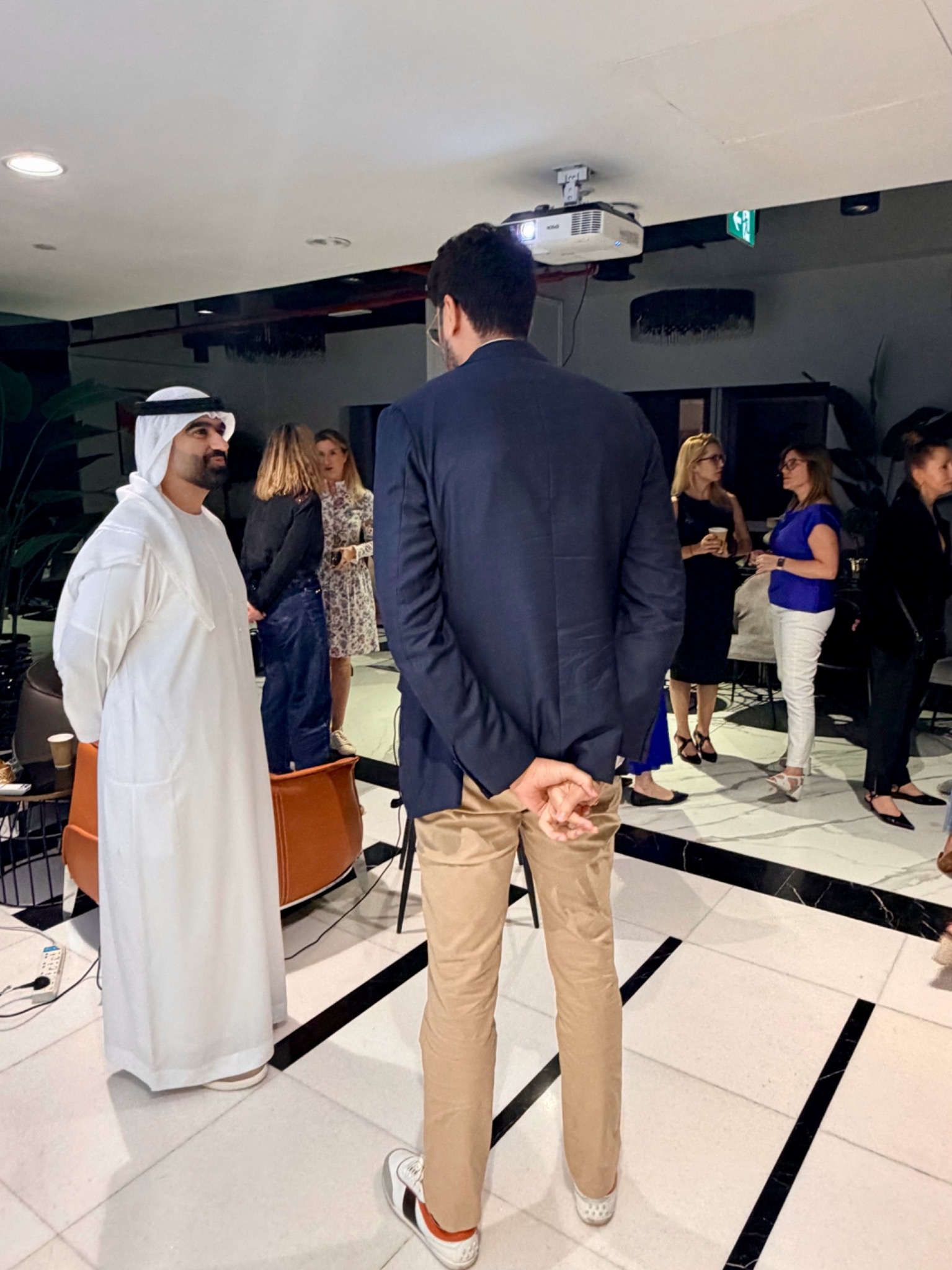
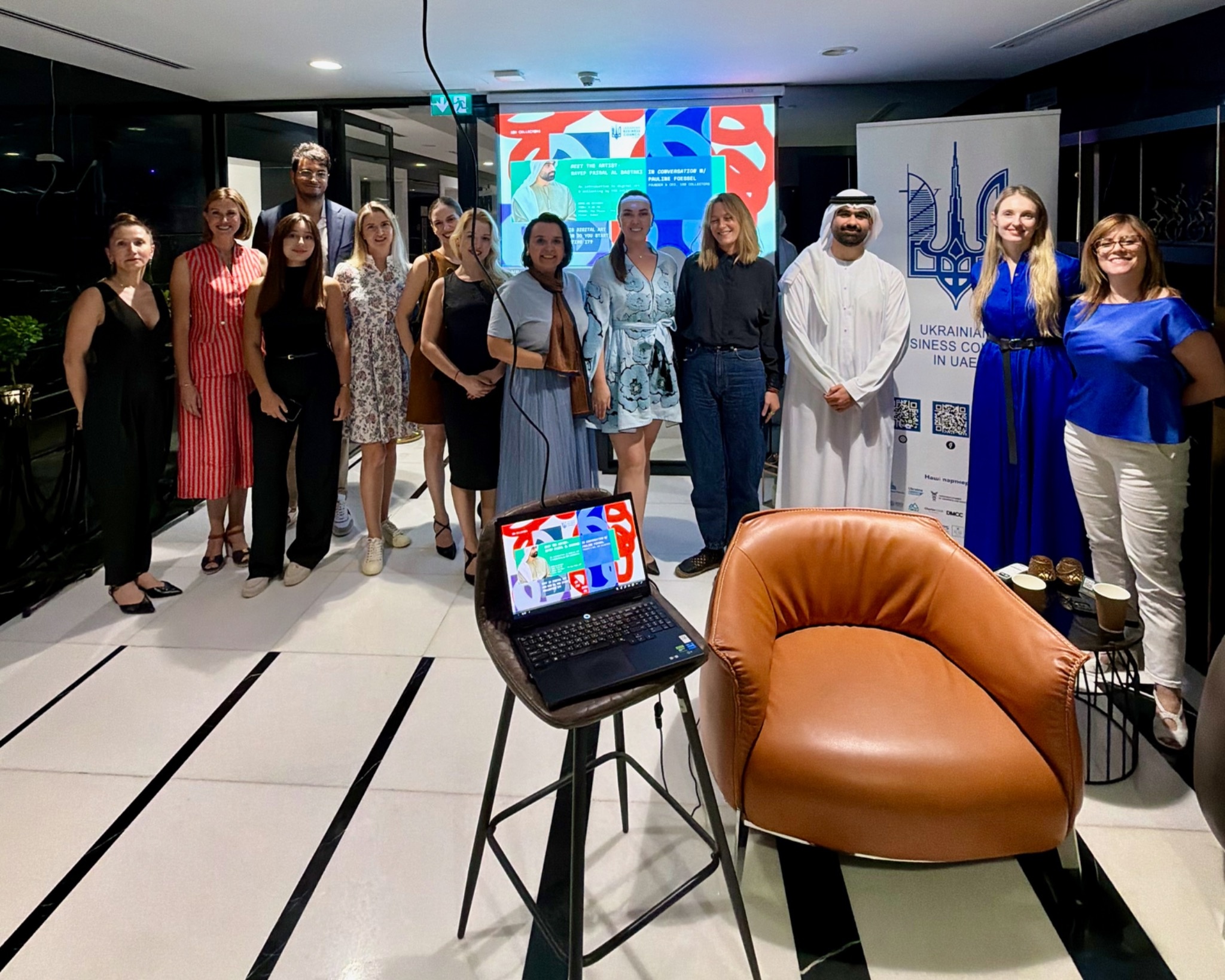
On October 28, 100 collectors and the Ukrainian Business Council welcomed Emirati artist and designer Nayef Al Bastaki to The Place in One Tower, Dubai. The evening brought together a conversation about his practice, an introduction to digital art collecting and a live experiment that soon had the room laughing.
Several guests had first encountered 100 collectors during our visits at Art Dubai. Their return offered an opportunity to take that discovery further: to spend time with an artist, understand the decisions behind his work and experience how an idea becomes an interaction.
Nayef grew up surrounded by oil paintings in his father’s studio, in a family where culture was an important part of everyday life. His father, himself a painter, was initially surprised to see his son turn towards technology.
That upbringing provides a useful starting point for understanding Nayef’s practice. His materials have changed, but questions about people, place and memory remain central. With a background in multimedia design and strategic design management, he approaches an artwork with close attention to the person encountering it: what draws them in, how they participate and what they take away.
During the conversation, he described a path through video, augmented reality and virtual environments towards his more recent experiments with sensors and movement. His interest in testing new tools is accompanied by a consistent concern with what they allow an audience to experience.
Presented at Sikka Art Festival in 2026, What the Water Keeps draws on generations of life along Dubai Creek in Shindagha. Water becomes a medium through which family memory and local heritage can surface.
The installation invites tactile participation. Using ropes to disturb the water, visitors reveal images and voices beneath its surface. Historical imagery enters an experience shaped by their own gestures, connecting the act of looking back with something happening in the present.
The work gives physical form to the transmission of memory. Stories emerge through contact, and the visitor takes an active role in uncovering them. For an audience discovering Nayef’s practice, it offered a clear example of how an interactive mechanism can carry an artwork’s meaning.
Blinking Eye, showcased at Art Dubai in 2022, turns from the memory of a place towards the body’s responses.
Nayef spoke about recording the heart rates of dozens of participants as part of his research. Experienced through virtual reality, the project uses colour and light to explore the relationship between a person’s physiological state and their surroundings, seeking to guide them towards calm or excitement.
Here, the interaction moves in both directions. The body informs the work, while the experience is designed to affect the body. It introduces a different way of thinking about an artwork: as an environment capable of changing how someone feels over time.
Seen alongside What the Water Keeps, the project revealed the breadth of Nayef’s interests while making a connection between them. In both, participation shapes the encounter.
For the evening, Nayef prepared a sensor-based demonstration that allowed guests to test an interaction directly.
As people stepped in front of the system, words appeared as it attempted to identify what it could see. Hair, hats and jeans featured among its interpretations. One participant, to the room’s amusement, was identified as a punching ball.
The humour made the demonstration particularly effective. Guests could observe the system’s responses, move and try again, discovering its capabilities and misreadings through experience. The process became a shared experiment, with Nayef encouraging the audience to take part.
He also shared a glimpse of a work in development, offering those present a more personal insight into his current thinking.
The closing discussion moved from how these works are made to why someone might collect them. An audience question about the relevance and timing of collecting digital art brought the evening’s wider context into focus.
Pauline Foessel, founder of 100 collectors, pointed to the role technology already plays in daily life. It shapes how we communicate, work, remember and understand the world. Artists engaging with it are working with the materials and conditions of contemporary experience.
Nayef also described a project connecting a physical QR code with a virtual reality work, opening a practical conversation about what a collector acquires and how an artwork can be accessed and experienced.
For newcomers, the field offers opportunities to follow artists as their practices develop and to begin forming a collection through that understanding. This encounter provided a way in: through the artist’s own explanations, close attention to individual works and the pleasure of discovering something together.
Thank you to Nayef Al Bastaki for his generosity, the Ukrainian Business Council and all who joined us, and especially to Anastasiia Bobrysheva for organising the evening.