.svg)
Menu
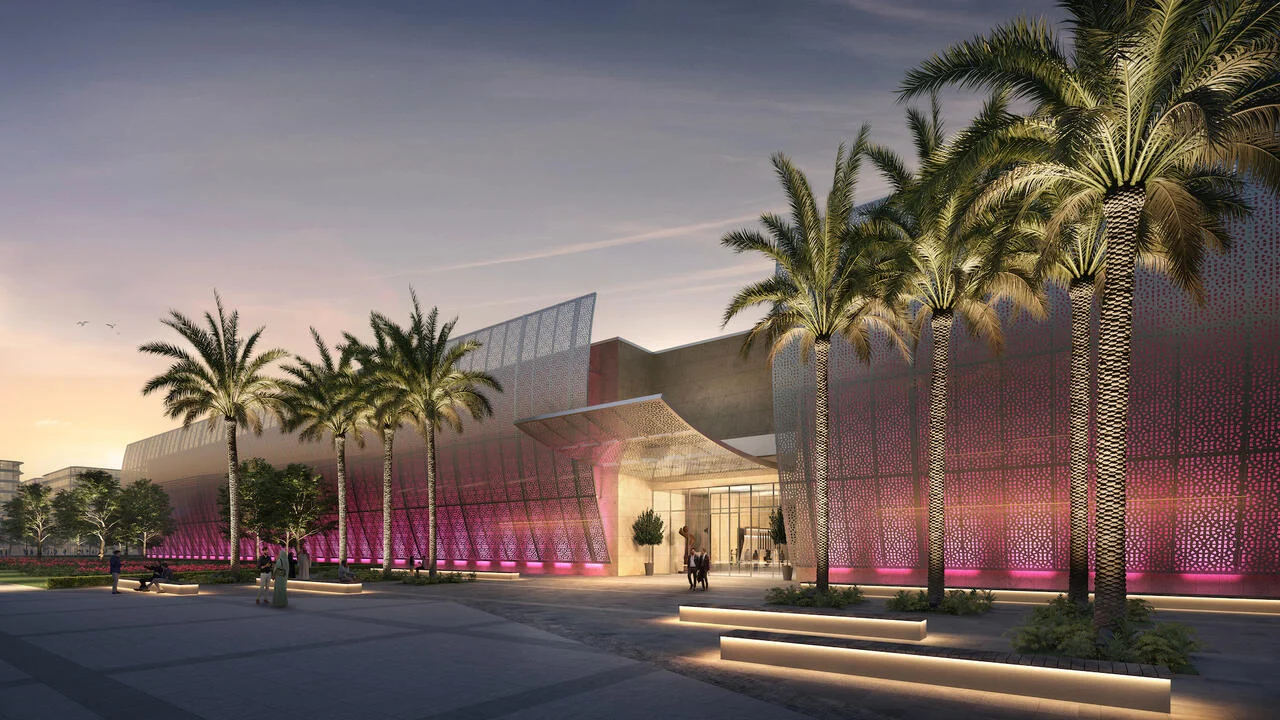
Frieze Abu Dhabi's inaugural edition arrives this November as one of the more consequential launches on the 2026 calendar — not simply a new fair, but the rebranding and relaunch of an eighteen-year-old institution. Abu Dhabi Art, which has anchored the emirate's cultural calendar since 2007, evolves this year into Frieze Abu Dhabi under a new partnership between Frieze and the Department of Culture and Tourism – Abu Dhabi, running November 19 through 22 at Manarat Al Saadiyat within the Saadiyat Cultural District — the same venue that hosted the fair under its previous name, now carrying considerably higher international visibility.
The transition matters for members tracking the broader realignment of the Gulf as an art market destination. Frieze's move into Abu Dhabi arrives as its rival Art Basel simultaneously launches its own Gulf fair in Doha, Qatar, and the timing is not coincidental — both organizations are responding to a region whose museum infrastructure has expanded dramatically over the past several years, from the Louvre Abu Dhabi's now well-established presence to the eventual opening of Guggenheim Abu Dhabi, still under construction on Saadiyat Island. Dyala Nusseibeh, who has directed the fair through its Abu Dhabi Art years, remains at the helm for the transition into its new identity — a continuity that matters for exhibitors and collectors who have built relationships with the fair over its previous editions and want assurance that its regional expertise carries forward rather than being displaced by an entirely new team.
For its inaugural edition under the Frieze name, the fair introduces two curated sections built specifically around the region rather than imported wholesale from Frieze's other fairs. Global Futures will present solo exhibitions by early- to mid-career artists whose work intersects with cultural production from the UAE and the wider West Asia, North Africa, and South Asia region — a deliberate emphasis on discovery rather than an already-established roster. Frieze Masters Abu Dhabi, meanwhile, brings the historical-survey format that has defined Frieze Masters in London into a regional context for the first time, presenting exceptional objects and artefacts from West Asia spanning antiquity through the early twentieth century — an approach that treats the region's own artistic legacy as a legitimate historical through-line rather than a purely contemporary showcase. Guest curators for both sections were still to be announced as of this writing.
Frieze has also built in a meaningful support structure for the region's emerging gallery scene: bursaries of up to 30% are available for younger galleries participating in the inaugural edition, a signal of intent to genuinely nurture the market's next generation locally rather than simply importing an international gallery list wholesale. The fair positions this expansion explicitly as, in Frieze's own words, its "gateway into the Global South" — a framing worth noting for members interested in how the fair intends its Abu Dhabi presence to function within its broader eight-fair global network, alongside London, Los Angeles, New York, and Seoul.
For collectors newer to the Gulf specifically, Abu Dhabi's appeal has always rested on a particular combination: a museum infrastructure of genuinely international caliber, a collector base reflecting the emirate's cosmopolitan reach, and a fair week considerably less saturated than the calendar's more established autumn fixtures. That combination should, if anything, sharpen under Frieze's stewardship as the fair scales its international profile while — at least according to its own stated intentions — remaining anchored in the emirate's own cultural priorities rather than becoming a franchise outpost.
100 collectors will be watching this inaugural edition closely, and members with an interest in the Gulf's rapidly developing collector ecosystem should treat this launch as a genuine inflection point worth experiencing firsthand rather than waiting to see how it develops. First editions under a new name are rarely repeated in quite the same way — this is very much the one to be at.
true


