.svg)
Menu
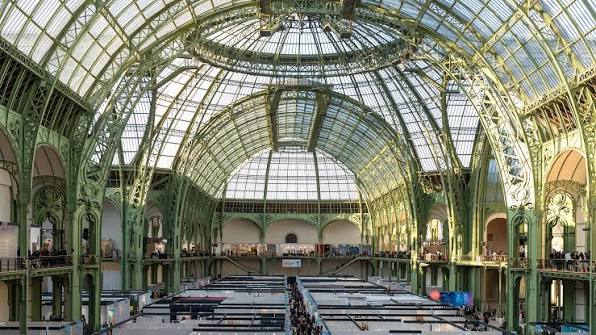
Paris Photo returns to the Grand Palais for its 29th edition this November, and 2026 carries particular weight: the fair's programme this year is built around the bicentennial of photography itself, marking two hundred years since the medium's earliest fixed images in 1826. Running November 12 through 15, with a by-invitation vernissage the evening before, the fair will bring together more than 220 exhibitors from over 30 countries — its largest edition yet, with organizer RX France targeting roughly 75,000 visitors including some 18,000 collectors and VIP guests.
For 100 collectors members whose interest sits specifically at the intersection of photography and digital or generative practice, the fair's Digital sector remains the most relevant point of entry, and it has grown into a genuinely established fixture rather than a novelty addition. Introduced in 2023 under founding curator Nina Roehrs — Paris Photo was, notably, the first major European art fair to dedicate a formal section of its programme to digital art — the sector returns for 2026 under curator Marco de Mutiis with 15 participating galleries, each selected specifically for work that treats digital realities not as a separate category bolted onto photography but as a genuine extension of what image-making means in the current moment. Expect generative image processes, blockchain-native photographic and video work, and platforms operating at the boundary between traditional lens-based practice and computationally generated imagery — a curatorial thesis that has only sharpened in relevance as AI-driven image tools have moved from novelty to standard practice across the medium.
The fair's broader structure for 2026 spans five sectors: Main, anchoring the fair's historical and blue-chip presentations and including the large-scale Prismes pathway for monumental works and installations; Voices, curated this year by Zasha Colah and Francesco Zanot, dedicated to ambitious curatorial propositions built around a shared theme; Emergence, spotlighting the contemporary and young gallery scene; Digital; and Book, the publishing sector that has helped make Paris Photo the largest photography book fair in the world. The bicentennial framing runs through much of the programme, including a retrospective installation by Thomas Ruff — the Düsseldorf School theorist and photographer — presented in collaboration with five galleries including David Zwirner, Konrad Fischer, and Sprüth Magers, alongside historical presentations from specialists like Hans P. Kraus Jr. showing some of photography's earliest processes: daguerreotypes, calotype negatives, and photogenic drawings by figures including Louis Daguerre and William Henry Fox Talbot themselves.
The Elles × Paris Photo programme, supported by the French Ministry of Culture, continues its multi-year effort to increase the visibility of women photographers within the fair — a share that has grown from 20% of exhibited artists in 2018 to 39% in 2025, with further growth expected this year. The fair also welcomes Centre Pompidou as a special guest this edition, presenting an exhibition of more than 100 works from its photography collection spanning nearly 30 historical and contemporary artists — a rare opportunity to see a major institutional collection placed directly in dialogue with the commercial fair around it.
For collectors newer to the category, the Digital sector's presence alongside Paris Photo's historical depth offers something genuinely useful: the chance to see two centuries of photographic practice and its most current computational extensions under the same roof, in immediate proximity to each other, rather than siloed into separate specialist fairs. That juxtaposition — daguerreotype beside generative print, nineteenth-century process beside blockchain-native edition — tends to sharpen rather than dilute the argument for digital and generative photography's place within the medium's longer history, and it is precisely the kind of context that rewards a slow, comparative walk through the fair rather than a section-by-section checklist.
100 Collectors members attending should expect our agenda to weight time deliberately toward the Digital sector alongside targeted stops in Voices and the Prismes pathway — the Grand Palais's scale makes an unstructured visit genuinely difficult to execute well across four days, and this year's bicentennial programming adds enough additional density to make advance planning more valuable than usual.
true


