.svg)
Menu
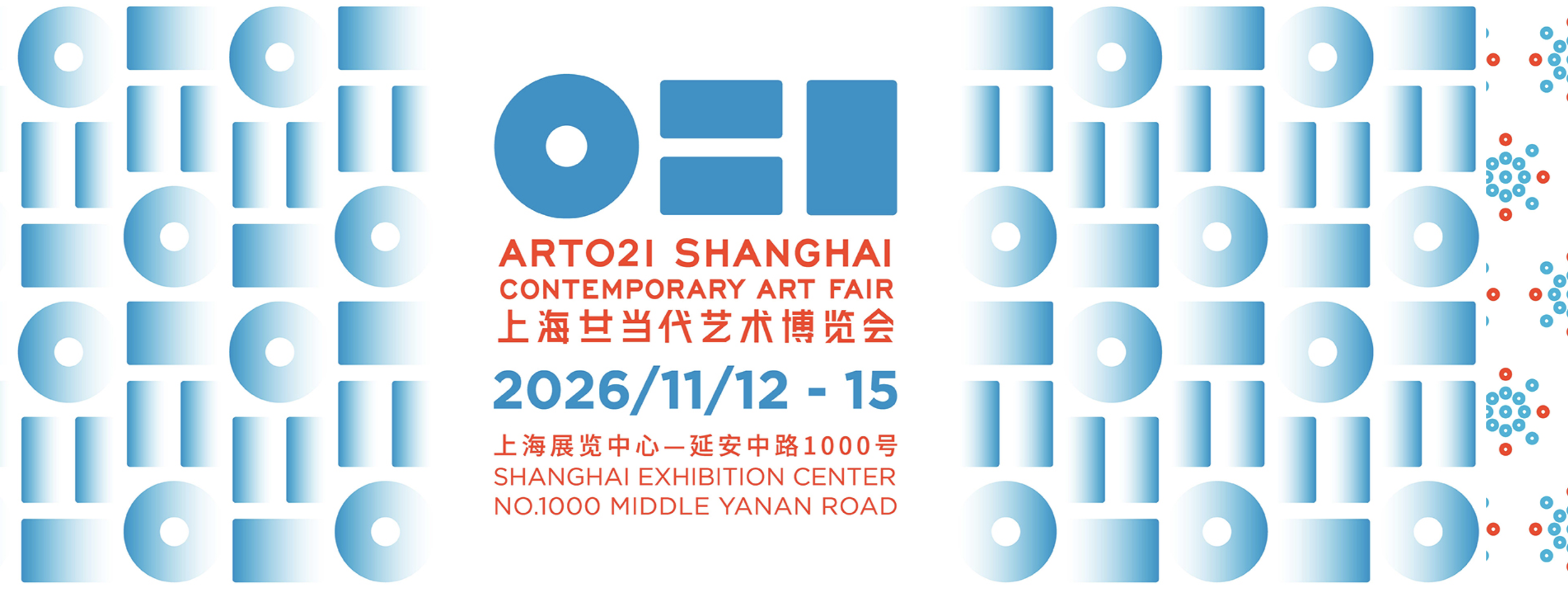
Shanghai Art Week remains the anchor point for anyone tracking the Chinese contemporary art market seriously, and its two flagship fairs — ART021 and West Bund Art & Design — continue to run concurrently each November, giving visitors a single compressed week to cover both the city's most established commercial platform and its most architecturally ambitious one. West Bund runs November 10 through 15 across the West Bund Cultural Corridor, while ART021 runs November 12 through 15 at the Shanghai Exhibition Centre — close enough in both timing and geography that most serious visitors treat the week as a single itinerary rather than two separate trips.
The contrast between the two fairs is part of what makes the week worth the trip. ART021, now well into its second decade since launching in 2013, occupies the grand Russian neoclassical halls of the Shanghai Exhibition Centre and has built its identity around a specific balance the fair itself describes as "global vision, local roots" — a deliberate bridging of international galleries with a strong core of Chinese contemporary practice, drawing more than 30,000 visitors across roughly 16,000 square meters of exhibition space. West Bund, by contrast, has since its 2014 founding positioned itself as the more architecturally ambitious of the two, anchoring the government-backed West Bund Cultural Corridor with its xiàn chăng programme — an ambitious strand dedicated to monumental, site-specific installations staged both within and beyond the fair's formal booths, giving the fair a scale and spatial ambition that a conventional booth-based format cannot match.
Together, the two fairs drew a combined 246 galleries in their most recent joint edition — the largest concentration of contemporary art programming anywhere on mainland China's calendar — and the week around them has grown correspondingly dense with institutional programming. The Shanghai Biennale at the Power Station of Art frequently opens in close proximity to Art Week, and museums across the city, from the Rockbund Art Museum to independent spaces like Antenna Space and BANK, tend to time their most ambitious solo and group exhibitions to coincide with the influx of visiting collectors, curators, and press.
For members of 100 collectors with an interest in digital and moving-image work specifically, Shanghai Art Week has produced some notable crossover moments in recent years — 3D-animated works and digital installations shown alongside painting and sculpture at both fairs, with several galleries pairing fair presentations with concurrent institutional solo shows elsewhere in the city, giving collectors the rare chance to see an artist's fair-context work and museum-context work in dialogue within the same week. That kind of layered programming — gallery booth, institutional survey, and citywide biennial context all overlapping within a few days — is part of what has made Shanghai Art Week increasingly essential for collectors building a serious position in Chinese and broader Asian contemporary art, rather than simply sampling it from a distance.
Logistically, the week rewards a degree of local knowledge that a first-time visitor may not have — gallery hours, satellite programming, and the precise relationship between the Shanghai Exhibition Centre and the West Bund Cultural Corridor's various halls are not always intuitive, and both fairs' own historical resilience through disrupted years has made them reliably well-organized once you're on the ground, even when logistics take some navigating in advance. Members should also note that both fairs, along with much of the surrounding institutional programming, run on a schedule that shifts modestly year to year — worth confirming precise hours and vernissage timing directly against each fair's site closer to November.
100 collectors' approach to Shanghai Art Week reflects the city's own particular rhythm: less about racing between two fairs on a fixed itinerary, and more about building in enough time to let the week's institutional and gallery programming inform how the fairs themselves get read. For members newer to the Chinese market specifically, this remains one of the more efficient single weeks anywhere on the calendar to build genuine context — two fairs, a biennial, and a city's independent gallery scene, all converging within a few compressed days each November.
true


