
The AI Art Magazine : Futures of Creation - Interview with Mike Brauner
by | Eleonora Brizi | September 29, 2025
Artificial intelligence has always carried with it a promise of transformation, and in the realm of art that promise has taken its place in history. Already in the mid-20th century, Alan Turing had outlined the possibility of machines capable of reasoning, setting the intellectual foundation for what would become artificial intelligence (article: ChatGPT 4.5 passes the Turing test). When computers first entered creative practice in the 1960s and 70s, artists like Frieder Nake, Vera Molnár, and Harold Cohen already intuited that algorithms could become companions in the act of making (Harold Cohen exhibition at the Whitney Museum). Cohen’s celebrated program AARON, which generated drawings and paintings autonomously over several decades, established an early vocabulary of machine creativity. In 1970, the groundbreaking project Ecogame (article: George Mallen and the Ecogame), devised by George Mallen and the UK’s Computer Arts Society, combined simulation, interactive participation, and early machine learning principles to demonstrate how technology could not only represent but also structure human decision-making. These early experiments, distant yet prophetic, set the stage for the larger revolutions that would follow.
But the story of AI in art is not only about code and programmed systems. With the rise of machine learning, art enters into dialogue with intelligence itself. AI is trained on vast human datasets - our memories, behaviors, and collective knowledge - making us both the foundation of its growth and the source of its biases. This shift reframes the conversation: no longer just about generative systems as random chance generators, but about algorithms that blur the line between calculation and creativity, extending into realms once thought inseparably human, such as imagination, affect, and even the idea of the soul. It raises questions of dependency and loss - whether we are giving up some of our abilities to machines - or whether we are crossing a threshold into new forms of collaboration in which human and artificial intelligences co-create meaning.
The 2010s marked a decisive turn, when new machine learning techniques - especially generative adversarial networks - made it possible to conjure images of uncanny realism from datasets. In 2018, Christie’s sold Portrait of Edmond de Belamy by OBVIOUS for over $400,000 (Obvious and the interface between art and artificial intelligence). The sale was a spectacle, but it crystallized the sense that AI had gained cultural and market value. Since then, with the arrival of diffusion models like DALL·E, Stable Diffusion, and MidJourney, the ability to generate complex imagery has entered everyday culture. The tools are controversial, raising questions of authorship, originality, and bias, but they are also generative of entirely new aesthetic directions and personal explorations. What began as an experiment is now a global phenomenon, spreading through contemporary art, design, advertising, and popular media.
GLOSSARY SPOTLIGHT
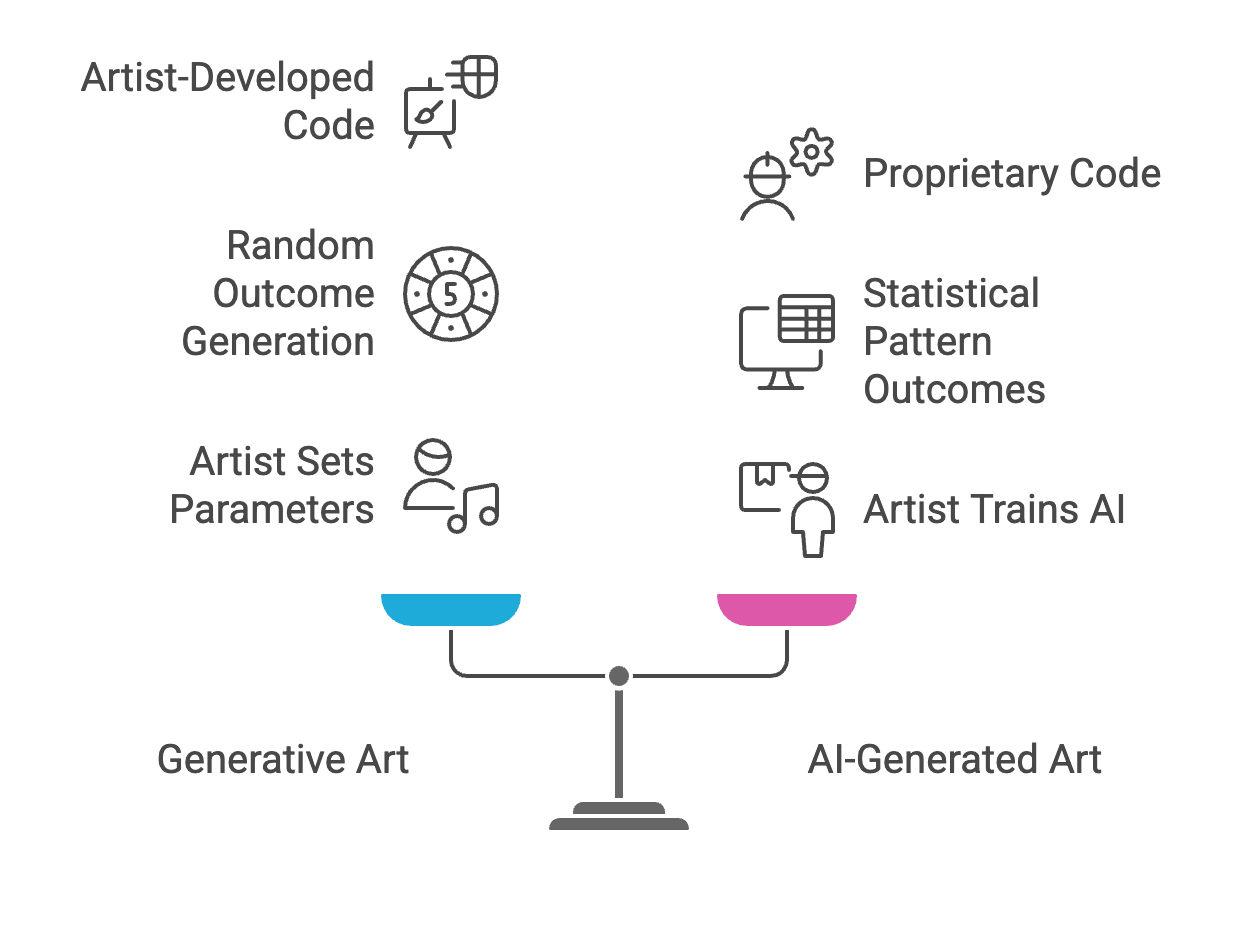
Just to understand some important differences that are always good to remember: generative art made with algorithms has existed since the early days of computing in the 1960s. In recent years, a new strand of generative art has emerged: AI-generated art.
Unlike old-fashioned generative art, AI-generated art is not produced with an explicit set of programming instructions provided by human artists; instead, it involves training an algorithm on a dataset so that it can later produce artworks - images, music, or video clips - using its own internal parameters that have not been explicitly defined by a human. Generative art produces outcomes - often random, but not always - based on code usually developed or customized by the artist. It is a “random chance generator” in which the artist establishes options and sets the rules. The algorithm randomly generates an outcome based on the limits and parameters that the artist sets up.
AI generators, on the other hand, use proprietary code (developed by in-house engineers) to produce outcomes based on the statistical dominance of patterns found within a dataset. The artist is usually not involved in creating the underlying code used to generate the image. They instead practice “training” the AI with inputs that resemble their artistic vision and also experiment with prompting the image generators, regularly tweaking and refining the text used to describe what they want.
In this moment of acceleration, The AI Art Magazine was conceived as an act of resistance, a way to slow down and carve out space for reflection. Its editor in chief, Mike Brauner, describes the impulse behind it.
Why did you feel the need to create a magazine for AI art?
Mike Brauner: “AI-based artistic practice is evolving at remarkable speed. Technological, aesthetic, and conceptual developments often emerge with a sense of urgency. Yet this acceleration also brings with it a certain ephemerality. Images appear and disappear, quickly replaced by the next wave. In the midst of this continuous flux, we sensed the need for a different rhythm. A space not driven by novelty or immediacy, but shaped by attention, context, and resonance.
The magazine positions itself as such a space. Print, by its very nature, slows things down. It has physical weight, it endures over time, and it allows for a different kind of relationship between artwork and viewer. Each edition develops over several months, structured around a series of moments where reflection and focus condense into editorial decisions.
This process begins with the open call. We ask artists to submit a single work: not a portfolio, not a broad overview, but a deliberate selection. At that point, the curatorial process begins with the artists themselves. What feels most relevant now? What could speak to others in this context? Even this act contains a moment of reflection, of positioning, of artistic self-understanding.
Our goal is not simply to present artworks, but to consider the conditions of their emergence. We want to ask questions about authorship, responsibility, and agency. In this sense, each edition is not just a collection but an invitation to think together about what is possible, what is at stake, and how the visual languages of our time acquire meaning, how they gain or resist legibility within a rapidly shifting cultural and technological landscape.”
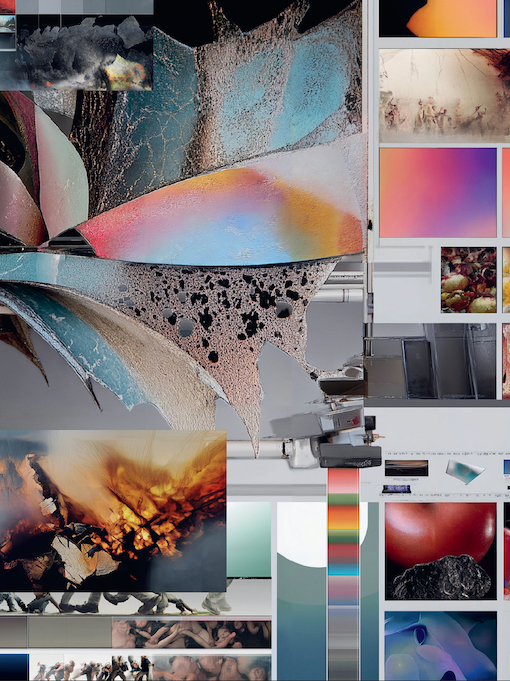
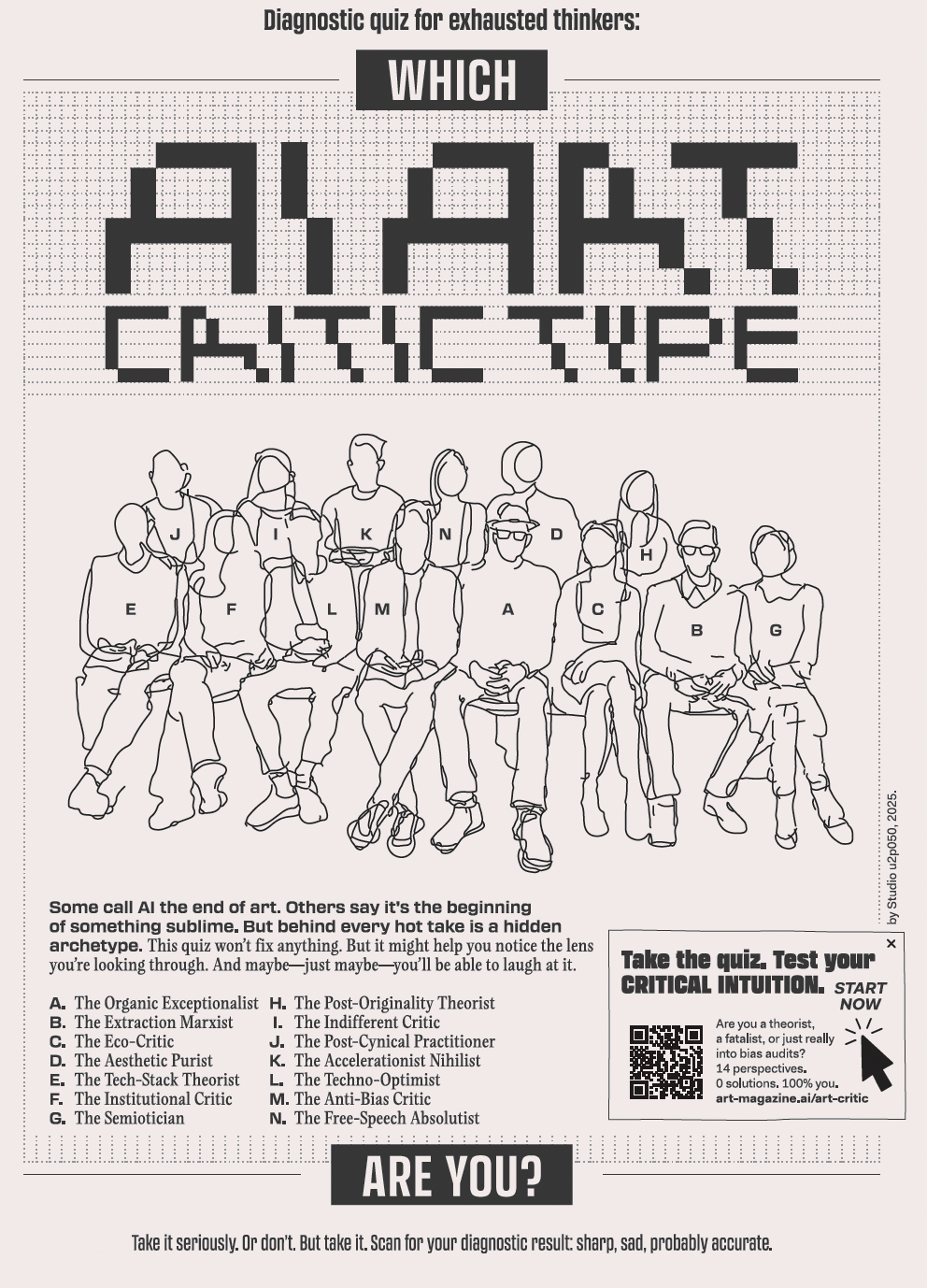
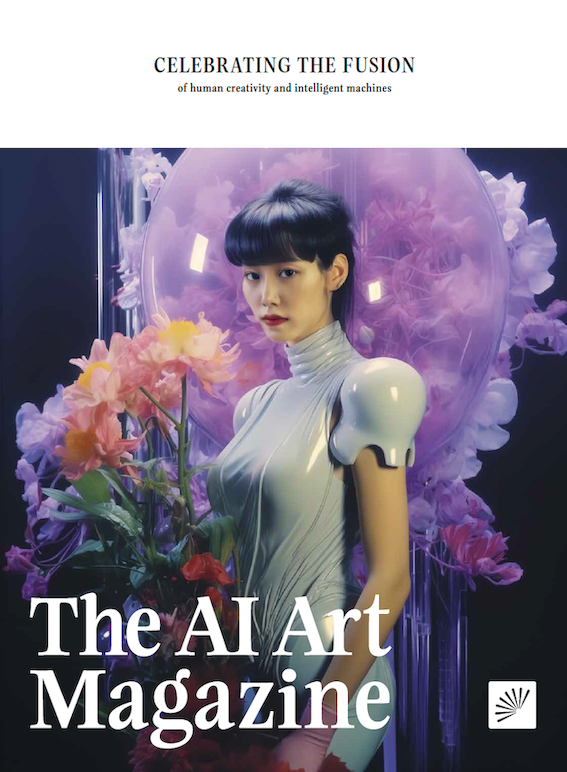
The first issue of AI Art Magazine was published in 2024 as both an artifact and a declaration. Subtitled “celebrating the fusion of human creativity and intelligent machines,” it positioned AI art not at the periphery but at the center of a new cultural dialogue. Its opening manifesto by Territory Studio, Imperfect Progress – Humanity and AI: Our Future and Past, framed the issue around the contradictions of technological progress: extension and disruption, intimacy and alienation. Essays by Catherine Mason, Anika Meier, Chris Adler, Jason Scuderi, Merzmensch, and many more connected the present moment to histories of simulation, cybernetics, generative art, and digital photography. What emerges in these pages is a lineage: the machine is not an intruder in art, but part of a long continuum of tools that reframe human creativity.
The magazine’s most distinctive gesture, however, was the open call. Fifty artists from around the world were invited to submit a single work - not a portfolio, but a deliberate selection. A jury of ten experts and one AI, Xiaomi, evaluated the submissions, each juror awarding a Golden Ticket to a work they felt demanded recognition. The result is a portrait of the field as it stood in that moment: diverse, experimental, at once deeply personal and boldly speculative.
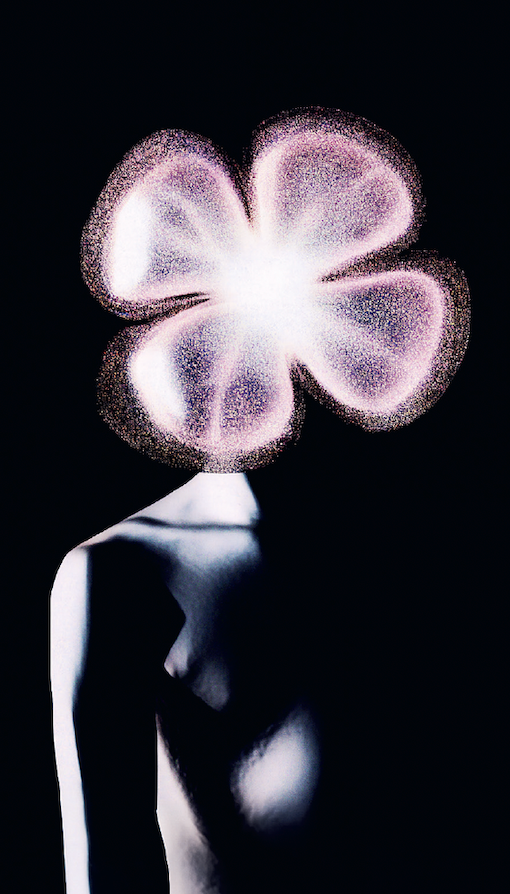
Some of the highlighted projects remain unforgettable. Sabine von Bassewitz used MidJourney to translate the invisible symptoms of multiple sclerosis into haunting visualizations, making tangible what could not be photographed. Kevin Esherick trained models on pictures of his late brother to create a series of spectral portraits, reflections on grief and memory that disrupted the boundary between absence and presence. Zagale, the alter ego of Adriana Mora, imagined a future nightclub where trees and foliage take the place of human protagonists, staging a playful but urgent vision of ecological futurism. Sarah Kastrau pushed AI beyond image generation, using it as a coding assistant in the creation of Cybook v03, an interactive photo book that merged darkroom photography, hardware engineering, and neural scripting.
The first issue also included a major interview with Tokyo-based artist Emi Kusano, whose projects such as Cognitive Chaos and Neural Fad weave together retro-futurism, Tokyo street fashion, memory, and the question of identity in a machine age. Kusano’s reflections on cultural bias in datasets, her experience hacking AI models to represent underdocumented Japanese subcultures, and her commitment to using AI as a means of negotiating identity made her the perfect figure for the magazine’s debut cover. Her presence underscored the central idea: AI is not simply about machines producing images, but about how humans use machines to remember, to imagine, and to resist.
By the time the second issue arrived, the magazine had already begun to grow into its role as both archive and interlocutor.

We are at the second edition of the magazine, can you tell us a little bit about this journey and how you see the differences between the first issue and the second issue?
Mike Brauner: “Each edition stands on its own. It documents a specific moment within a rapidly evolving field and thus becomes an artifact in itself. The second issue is centered around the theme of Critical Intelligence. This curatorial focus was not embedded in the open call but emerges as a conceptual thread throughout the editorial contributions. It engages with narratives that arise with, under, or in proximity to the machine: not only as a technological system, but as a cultural and epistemological force shaping the way images, meanings, and relationships are produced.
The design responds directly to this content. For edition 2 we chose a deep black, textured cover paper and integrated a transparent red foil that disrupts the reading experience. This visual intervention reflects a core idea: not everything can be seen at first glance. Understanding requires movement, attention, and a willingness to question. The visual barrier becomes an invitation to engage more deeply.
As for the journey of the magazine, we never saw it as a product with fixed roles or rules. Rather, it is an open space that grows organically through the contributions of those involved. Artists, writers, researchers, and readers become part of an ongoing process where every voice has the potential to shift the tone, focus, or direction of the whole.
A principle that has accompanied us from the beginning is simple: artists care. For us, this is not just a slogan but an attitude. Care means attention to each other, to questions, to language, to uncertainty. Growth is not measured by reach or recognition but by depth. It happens in the quality of engagement, in the connections that emerge, in the plurality of perspectives.
Over time, additional formats have evolved like conversations, exhibitions, digital contributions such as our live talks on Instagram or the curated exhibition program Global Fusion. These formats did not emerge from a master plan, but from the desire to extend the dialogue beyond the pages of the magazine. They have become an integral part of what we do. And while we do not know where this will lead, we are looking forward to everything that lies ahead.”
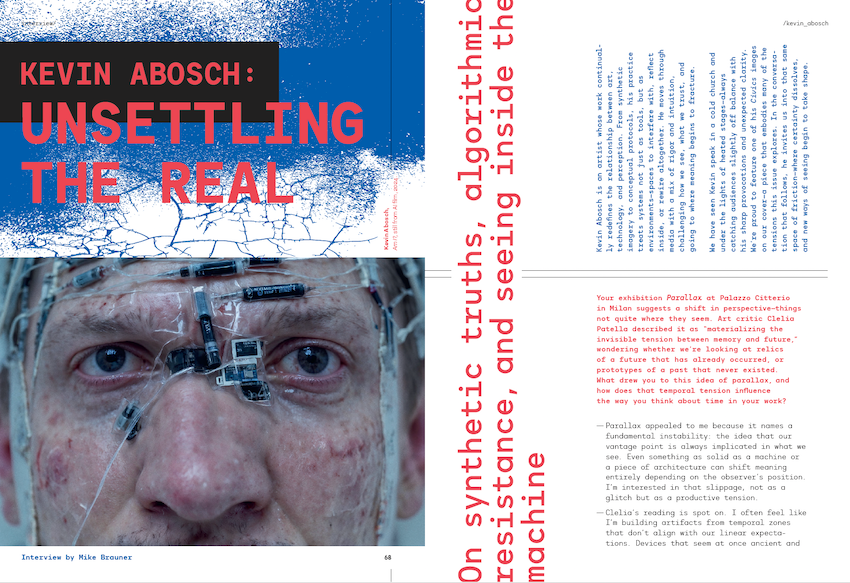
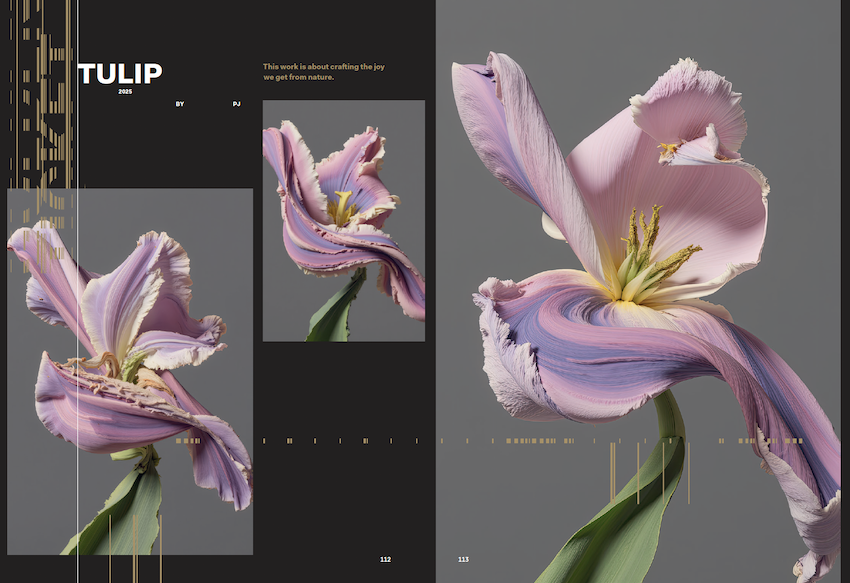
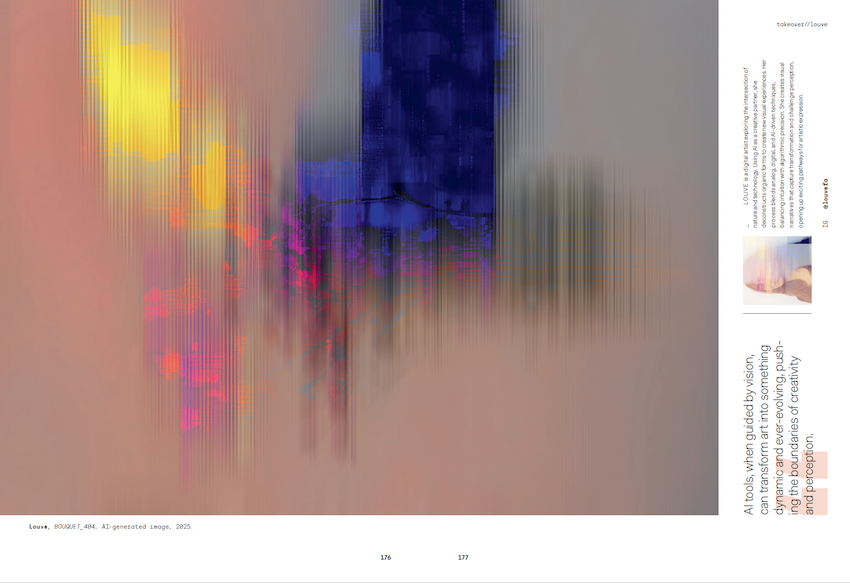
The second issue indeed lives up to this claim. It opens with a provocative manifesto by U2P050, declaring bluntly that “AI art does not exist,” a challenge to the very terminology that has taken hold. Rather than reify the category, the manifesto calls for attention to the social, cultural, and economic structures that shape machine-mediated practices. Kevin Abosch, whose work graces the cover, contributes a text of his own titled New Reality (Neue Realität), a meditation on sovereignty, ownership, and the weaponization of algorithms. His interview within the issue, Unsettling the Real, explores the role of parallax in perception and the ways synthetic truths unsettle human experience.
The open call once again anchors the issue, this time bringing forward artists such as Travis LeRoy Southworth, Jakub Koźniewski, Ümüt Yıldız, Monica Menez, CNDSD/Malitzin Cortés, Sonia Gil, Fernando Velázquez, and Samar Younes. Golden Ticket selections include Ivona Tau, Michele Rinaldi, Daniel Weiss, Weidi Zhang, and Jon Uriarte. The variety of approaches is striking: Southworth extends his practice of manipulating digital traces of the human face into the realm of AI, while Yıldız draws on astrophysics to create works where cosmic data collides with synthetic aesthetics. CNDSD brings sound and performance into the equation, Cortés’ practice transforming AI into an auditory and bodily experience. Complementing these showcases are essays that extend the dialogue further. Jason Scuderi contributes A Rose-Colored Hologram, Angela Ferraiolo writes on narrative under machine conditions, and Anika Meier contributes Becoming Better Together with AI, which interrogates the collaborative potentials and pitfalls of machine assistance. Catherine Mason’s Herstory foregrounds women pioneers of digital art, reminding us that the history of technological creativity has always been richer and more diverse than its canonical accounts. Why is it important to put AI Art on paper?
Mike Brauner: “Printing AI art is not just a matter of format. It is about memory, continuity, and presence. Early on, we often heard the claim that AI art does not really exist. The physical presence of the magazine in space already challenges that assumption.
We see the magazine as a documentary form. A place where moments can be held and revisited, with all their questions, contradictions, and hopes. What fascinates us most is the idea of opening Issue 1 again someday—perhaps when Issue 10 has just been released—and seeing not only what has changed, but what has remained. The works, the voices, the themes, the artists, the writers.
We have even entertained the idea of reprinting Issue 1 in exactly the same format five years from now, with the same contributors, just to see what has shifted. Perhaps we will do it. :)
Ultimately, it is about creating something to return to. A form of memory that lasts longer than the feed. A keyframe that makes the movement between moments visible and legible over time.”
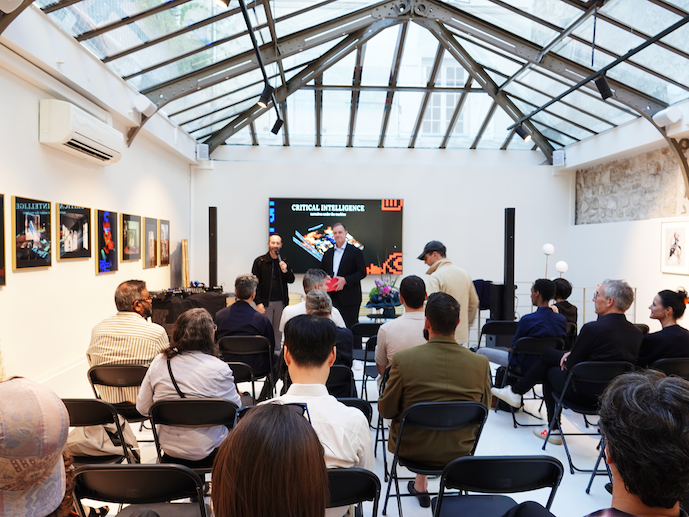
This insistence on permanence, on the creation of a record, is one of the things that makes AI Art Magazine so significant. In an era when AI-generated images flood timelines in infinite succession, here is an object that insists on slowness, on framing, on meaning. It does not claim to resolve the debates surrounding AI and art - authorship, originality, bias, ethics - but it makes those debates visible, legible, and enduring. It situates AI art not as a passing trend but as a cultural frontier whose complexity requires attention.
Future generations may look back on these early days of AI art as the horse-and-buggy era of machine creativity. For us, in this moment, the pages of AI Art Magazine remind us that art is not just about images, but about the conditions under which images are made, seen, and remembered. They remind us that in the dialogue between human and machine, the act of caring - of slowing down, of asking questions, of documenting - is itself an artistic act.